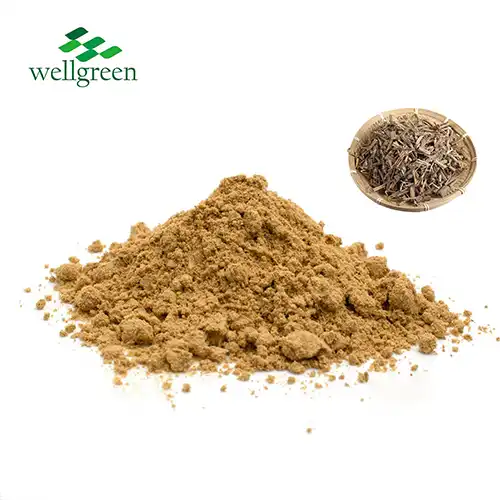
Bulk Bergamot Extract Supply: From Citrus Processing to Powder Production
2026-08-27 15:36:00
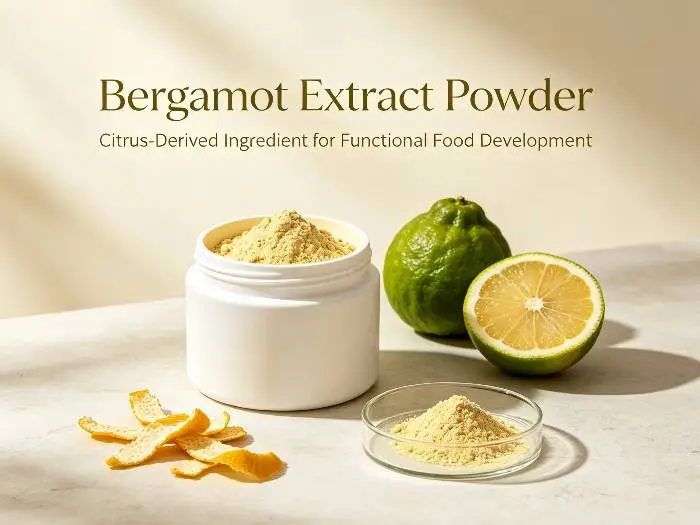
Bulk Bergamot Extract represents a highly standardized natural ingredient sourced from the fruit and peel of Citrus bergamia Risso, primarily cultivated in Calabria, Italy. Through gentle water-ethanol extraction and chromatographic purification, this powder retains the Bergamot Polyphenolic Fraction (BPF), including Neohesperidin, Naringin, and Neoeriocitrin. These distinctive flavonoids position the extract as a cardiovascular wellness ingredient and a clean-label alternative for nutraceutical, cosmetic, and functional food manufacturers seeking traceability and consistent potency.
Understanding Bulk Bergamot Extract: From Source to Supply
The Botanical Origin and Geographic Advantage
Bergamot grows best in southern Italy, which has a unique environment. The volcanic soil and Mediterranean weather make it easier for polyphenolic chemicals to build up. This geographic specificity isn't just for marketing purposes; the minerals in the soil have a direct effect on the secondary metabolite profile. This is why Calabrian bergamot is at the top of the market for ingredients around the world. Genuine Bulk Bergamot Extract is very different from other citrus extracts because it has unique glycosides that grapefruit and sweet orange don't have.
Wellgreen works with approved cultivation bases to make sure that full paperwork of the chain of custody is kept. This traceability meets the needs of regulatory oversight from quality assurance managers in the supplement and pharmaceutical industries, who want to know where the products came from to lower the risk of adulteration. Before going into the extraction facilities, each crop batch goes through a first screening process. This makes sure that only ripe fruit with the right amount of flavonoids makes it to the processing lines.
Extraction Pathways: Preserving Bioactive Integrity
There are carefully measured steps that are used to turn fresh bergamot into a standard powder. First, cold pressing is used to separate the essential oils. Next, aqueous-ethanol extraction is used to target the water-soluble polyphenols. This two-step process removes volatile aromatics from therapeutic flavonoids, which lets makers customize how the finished product is used. Compounds that lose their effectiveness above 85°C, like Neohesperidin, are not broken down by heat during cold extraction.
Chromatographic purification gets rid of furanocoumarins that aren't wanted, especially Bergapten, which is phototoxic in cosmetics. Bergapten levels below 0.1 ppm are reached using our own special column separation method, which meets the strict requirements of the EU Cosmetics Regulation. This Furanocoumarin-Free standard makes it possible for photosensitive ingredients to be used in skincare products and drinks without worrying about product responsibility.
Powder Conversion: Engineering Stability
To turn liquid extract into a powder that can be easily mixed, it needs to be spray-dried at temperatures between 150°C and 170°C, coming in at around 80°C going out. This fast loss of water keeps flavonoids in an amorphous framework, which stops them from crystallizing, which would make them less soluble. The powder that was made has particles that range in size from 80 to 120 mesh, which is ideal for both pill filling machines and liquid reconstitution.
One problem that citrus extracts always have is that their natural sugars tend to attract water, which makes them stick together when they are stored. We solve this problem with microencapsulation technology, which covers polyphenol particles in a layer of modified starch to keep them safe. This new technology keeps powder flowing even in environments with 75% relative humidity, so production lines don't have to stop because of caking. The bulk density is between 0.45 and 0.60 g/ml, which means that size 0 gelatin capsules can hold a high dose without needing too many binder agents.
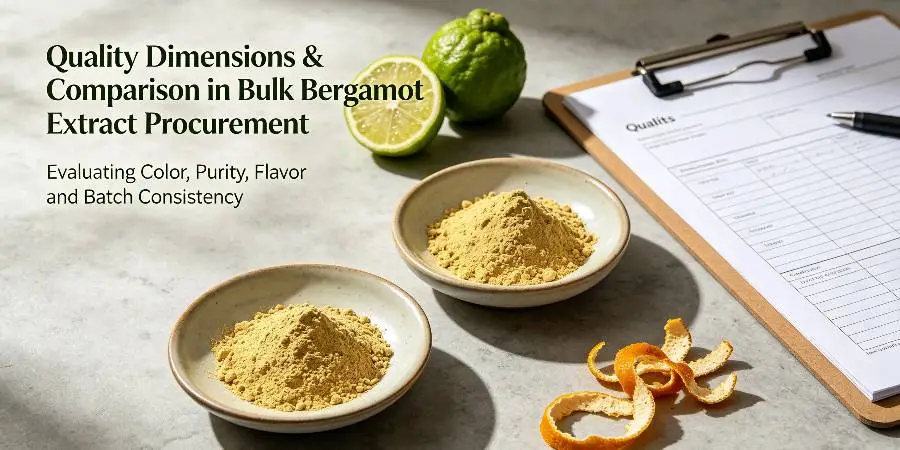
Quality Dimensions & Comparison in Bulk Bergamot Extract Procurement
Standardization Levels: Matching Potency to Application
When buying from businesses, buyers come across different standardization grades. These are usually given as total flavonoids or Bergamot Polyphenolic Fraction (BPF) content, which is measured by HPLC. Specifications like 25%, 30%, 38%, and 40% BPF are common. Higher concentrations lower the rate of inclusion in finished formulations. This lowers the cost of the raw material per dose and makes label claims easier to understand. 400 mg of 40% BPF in a 500 mg pill gives you 200 mg of active polyphenols, but 800 mg of 25% grade is needed to get the same effect.
Pharmaceutical clients put a high value on assay accuracy and expect papers that show values are within ±2% of what they were reported to be, and for Pure Bergamot Powder Supplier, when nutraceutical brands try to find the best balance between price and effectiveness, they often choose 30% grades, which have enough activity for cardiovascular support claims without charging a lot, and cosmetic makers like using smaller amounts along with full-spectrum co-factors because vitamin C and soluble fiber help the product work better on the skin. When nutraceutical brands try to find the best balance between price and effectiveness, they often choose 30% grades, which have enough activity for cardiovascular support claims without charging a lot. Cosmetic makers like using smaller amounts along with full-spectrum co-factors because vitamin C and soluble fiber help the product work better on the skin.
Organic Certification: Regulatory and Market Implications
Organic Bulk Bergamot Extract costs 20–35% more, but it opens up new markets where consumers are more interested in buying products with clean labels. For certification, growers must show that they followed USDA NOP or EU Organic standards the whole time, which means not using synthetic pesticides and making sure the food is not genetically modified. This is good for high-end supplement brands that want to attract health-conscious customers who are willing to pay more for guaranteed safety.
Pesticide residue tests are very strict on non-organic grades. They look for over 500 compounds, such as chlorpyrifos and imidacloprid, which are commonly used in citrus farming. We use both GC-MS/MS and LC-MS/MS for our testing to make sure we stay within the limits set by EC Regulation 396/2005. This thorough screening keeps buyers from having to pay a lot of money to return goods that were tainted during regular customs checks or audits by a third party.
Powder Versus Liquid: Processing Trade-Offs
For beverage makers, liquid extracts are easier to work with because they dissolve right away without the need for special tools. Because of worries about stability, the shelf life is limited to 18 to 24 months when kept cool, and the weight makes shipping more expensive. Powders make food last longer than 36 months at room temperature, lower the cost of shipping, and make it easier for contract makers who make a lot of different SKUs to keep track of their inventory.
The properties of solubility are very different. To fully dissolve, standard powders need warm water (40–50°C) and a lot of stirring, which can be hard to do with ready-to-drink drinks. We have grades that are water-dispersible and have been treated with natural emulsifiers. In 60 seconds, cold water can make clear solutions. This standard gets rid of sedimentation problems in canned functional drinks, which is a big problem for teams that make drinks.
Navigating the Bulk Bergamot Extract Market: Procurement Insights
Supplier Verification: Mitigating Adulteration Risk
Finding Your Way Around the Market for Bulk Bergamot Extract: Because bergamot is so valuable, it can be adulterated for financial reasons. Some dishonest sellers mix cheaper citrus products like grapefruit, pomelo, or sweet orange into bergamot powder, which weakens the flavonoid profile that is important for heart health. Buyers must insist on HPTLC fingerprinting showing the presence of marker compounds Melitidin and Brutieridin, which are not present in fakes.
Not just papers made by the supplier, but also Certificates of Analysis from accredited third-party labs. Total flavonoid content and individual glycoside ratios are confirmed by an independent HPLC assay. Through ICP-MS, heavy metal testing should show that there is less than 3.0 ppm of lead, 2.0 ppm of arsenic, and 1.0 ppm of cadmium, which is in line with both USP and Ph. Eur. standards for pharmacopeias.
Microbiological safety standards must match the type of application. To be supplement-grade, extracts must have a Total Plate Count of less than 1,000 CFU/g, yeast and mold counts of less than 100 CFU/g, and no pathogens, such as E. coli and Salmonella, in 25g samples. Cosmetic-grade standards may allow slightly higher microbe levels, but they also need more testing of the preservative's effectiveness to make sure the final product stays stable.
Packaging and Logistics: Preserving Quality in Transit
When shipped internationally, polyphenols are kept safe from oxidative damage by using the right packaging. We use triple-layer metal foil bags that are flushed with nitrogen to create an inert atmosphere that keeps air out and moisture out. The outer fiber drums protect the goods inside from damage during handling, and each drum has a net weight of 25 kg to make shipping as efficient as possible while still being easy for warehouse workers to handle.
Controlling the temperature during transit is very important. Long-term exposure to temperatures above 30°C speeds up the breakdown of flavonoids, lowering test results by 3–5% after six months. For places with extreme temperatures, we suggest shipping in climate-controlled containers, which adds 8–12% to the cost of freight but keeps the product's integrity. When reviewing prices from different suppliers, buyers should take this into account when figuring out the total landed cost.
Knowing the minimum order numbers helps with making purchases, and for Bulk Bergamot Extract, because of the economics of batch production, most manufacturers set MOQs between 50 and 100 kg for stock items, and in order to cover setup costs, custom formulas or unique standardization levels may need 500 kg minimums, and volume discounts usually start at orders of 500 kg, and at metric ton quantities, tiered pricing offers discounts of 5 to 8 percent. Because of the economics of batch production, most manufacturers set MOQs between 50 and 100 kg for stock items. In order to cover setup costs, custom formulas or unique standardization levels may need 500 kg minimums. Volume discounts usually start at orders of 500 kg, and at metric ton quantities, tiered pricing offers discounts of 5 to 8 percent.
Case Studies and Applications: How B2B Clients Use Bulk Bergamot Extract?
Cardiovascular Health Supplements: The Natural Statin Alternative
Nutraceutical companies market Bulk Bergamot Extract as a natural option to statins. They do this by using its HMG-CoA reductase inhibitory process to help keep cholesterol levels healthy. In clinical trials, taking 500–1,000 mg of 38% BPF extract every day for 12 weeks lowers LDL cholesterol by 20–30%, which is about the same as low-dose synthetic statins but doesn't cause muscle pain.
Bergamot can be put into pills by itself, or it can be mixed with red yeast rice and CoQ10 to help the heart in a more powerful way. Compared to fish oil or garlic supplements, the light lemon scent makes it easier for people to take. Regulatory teams like the strong GRAS safety profile because it makes NDI notifications and label claim verification easier.
For tablet compression to work, the excipients must be carefully chosen. Bergamot has a lot of polyphenols that can bind to magnesium stearate and slow down the rate at which it breaks down. Microcrystalline cellulose is the best main binder, and croscarmellose sodium breaks down tablets quickly, making sure that 80% of the active ingredient is released within 30 minutes, as required by USP dissolution testing guidelines.
Cosmetic Formulations: Antioxidant Defense Without Photosensitivity
Bergapten-free bergamot extract is used in anti-aging serums and whitening creams by skin care companies. The polyphenols stop the hyaluronidase enzyme from working, which keeps the dermal hyaluronic acid level high and the skin's flexibility. ORAC tests show that the antioxidant capacity is higher than 5,000 μmol TE/g, which protects against oxidative stress in the environment.
By balancing how well the product works with how it feels, formulators mix bergamot extract at a concentration of 1% to 3% w/w in emulsion systems. Higher amounts give the formula a yellowish color and could make it bitter if the pH goes below 4.5. We offer grades that don't change much in pH, so they can be used with both acidic vitamin C serums and neutral lotion bases.
Stability testing at high temperatures (40°C, 75% RH) shows that flavonoids are retained at levels above 92% for six months, which meets the requirements for global distribution channels' shelf lives. Patch tests on panels of sensitive skin show that the 5% concentration does not irritate them, which supports claims that the product is hypoallergenic.
Functional Beverages: Clean-Label Energy and Wellness
Bergamot powder that dissolves in water is added to ready-to-drink teas, protein shakes, and health shots by people who make drinks. The natural lemon taste goes well with the berry and green tea flavors, so less sugar is needed. Studies on thermal processing show that 95% of the polyphenols are kept when the food is pasteurized at 85°C for 15 seconds. This means that the label claim is still true after production.
It can be hard to get things to dissolve in fizzy systems. The acidity of CO2 can cause polyphenols to settle, which can cause haze and sediment. Our spray-dried grade that has been stabilized with gum arabic stays in solution at pH 3.2, which is normal for healthy drinks that fizz. This stops customers from complaining and sending items back because they don't look good.
Low microbial counts and no yeast are required for beverage-grade products because fermentation would change the taste and cause pressure to build up in sealed bottles, and for Pure Bergamot Powder Supplier, we test the extract's ability to work with potassium sorbate and sodium benzoate systems, which are widely used in drinks that last a long time. We test the extract's ability to work with potassium sorbate and sodium benzoate systems, which are widely used in drinks that last a long time.
Best Practices for Selecting and Partnering with Bulk Bergamot Extract Suppliers
Certification Infrastructure: Validating Manufacturing Excellence
Infrastructure for certification: proving excellence in manufacturing. Reliable suppliers keep a full portfolio of certifications that show how mature their quality systems are. ISO 9001 certification confirms written procedures for inspecting incoming materials, keeping an eye on things while they're being made, and testing the finished product before it's released. GMP certification for cosmetics or dietary supplements means that the building's layout, training for staff, and measures to stop contamination are in line with what the government wants.
For organic certification from the USDA, the EU, or a similar organization, there must be yearly checks that prove the chain of custody from the farm to the finished extract. Kosher and Halal approvals help brands that cater to religious dietary groups reach more customers. Food safety management and quality systems are combined in FSSC 22000 certification, which is especially useful for functional food manufacturers who need GFSI recognition.
Ask for audit rights terms to be added to supply deals so that your quality assurance team can do inspections on-site. Leading makers like customer surveys because they see them as chances to improve their partnerships. During trips, check the conditions of storing raw materials, making sure extraction equipment is clean, and making sure the lab can do tests. The fact that HPLC, GC-MS, and ICP-MS instruments are present shows that the lab can do more than just basic compliance tests.
Custom Formulation and Private Label Opportunities
Choose the Best Bulk Bergamot Extract Suppliers and Work with Them. A lot of companies offer contract manufacturing services that take care of the whole production process, from coming up with the recipe to packing it up. This plan works well for new brands that don't have the money to build their own production centers. Customers can brand bergamot products that come from private label programs. This cuts down on the time it takes to go from idea to retail availability.
Custom standardization lets buyers choose their own BPF values that are right for clinical studies or strategies for standing out from the competition. A supplement brand that wants to show clinical effectiveness might ask for 42% BPF that matches published research, while a brand that wants to show value would choose 28% that strikes the best cost-performance balance. Usually, the smallest amount needed for growth is 100 kg, and expert help is provided for studies of stability and dose optimization.
Find out how to protect the intellectual property of secret formulas. Reputable makers keep different production lines and sign non-disclosure agreements to keep their goods from getting mixed up with generic ones. This keeps your formulation investment safe and stops suppliers from selling identical products to other companies.
Building Long-Term Supply Relationships
The timing of the bergamot yield affects the supply of raw materials. Depending on the weather, annual crop amounts can change, and supplies may be low in Q1 and Q2 before the new harvest. By making yearly supply deals with volume promises, you can be sure that you will get priority during times of shortage. Many suppliers offer price cuts of 5–10% for 12-month contracts with deliveries every three months.
Set up rules for testing new materials, even if the sources you trust are reliable. Periodic verification testing finds differences between lots before they are put into production, which stops expensive batch failures. We tell our customers to keep reference samples from approved lots so that they can use them to compare and judge future orders.
Engage sellers as expert tools in addition to just buying things. Leading makers keep an eye on new research, changes to regulations, and market trends. They share their findings with you so that they can help you plan your product growth. When you work together with your suppliers, they become strategic partners who care about the success of your brand.
Conclusion
To get high-quality Bulk Bergamot Extract powder, you need to know about the whole value chain, from the orchards in Calabria to the technology used for extraction to the final powder specifications. The success of the procurement depends on making sure that the standardization is correct, that Bergapten is removed so that the cosmetics can be used safely, and that the particle characteristics match the production equipment. Tough seller evaluations that include certification reviews, scientific testing, and audits lower the risk of adulteration and help build trusting supply partnerships. Bergamot extract is a great ingredient for brands that want to stand out by using natural ingredients that are backed by science because of the growing demand for ingredients that are good for heart health and clean-label formulas.
FAQ
What differentiates bergamot extract from bergamot essential oil?
What makes bergamot essential oil different from Bulk Bergamot Extract? Bergamot extract has water-soluble polyphenolic flavonoids in it, such as Neohesperidin and Naringin, which improve heart health by changing the way lipids are used in the body. Essential oil, which is used for aromatherapy and fragrance, is made up of volatile terpenoids like limonene and linalool. The ways they are extracted are different. Essential oil is extracted by cold pressing or steam distillation, which captures volatile compounds. Extract is extracted using aqueous-ethanol solvents, which protect flavonoids. Different uses for these different chemical profiles: extract is good for vitamins, and essential oil is good for making perfumes.
How should I store bulk bergamot extract powder to maintain potency?
To keep its potency, how should I store Bulk Bergamot Extract Powder? Keep the items you want to store in covered cases out of direct sunlight and at temperatures below 25°C and relative humidity below 60%. If possible, open bags should be resealed with a nitrogen purge to keep polyphenols from being exposed to air, which breaks them down. Place desiccant packets in storage places that tend to get wet. If stored properly, it will last for 36 months after the date it was made. Testing every six months makes sure that the assay results have stayed the same, which is especially important for storage areas that are sensitive to weather changes.
What documentation should I request from bergamot extract suppliers?
What proof should I ask sellers of bergamot extract for? Ask for a Certificate of Analysis that includes the results of the HPLC test, the ICP-MS test for heavy metals, the bacteria test, the pesticide residue screening for 500+ chemicals, and the solvent residue analysis. Get BSE/TSE licenses, allergen labels, and GMO status statements. Check that the ISO, GMP, and organic certifications are still valid and that they don't expire. Chain-of-custody records that link raw materials to specific harvest regions prove their authenticity and help regulators do their jobs during product registrations or audits.
Bulk Bergamot Extract Supplier: Partner With Wellgreen for Premium Quality
The factory that Wellgreen uses is GMP-certified and specializes in making standardized botanical extracts that can be fully tracked and analyzed. Our Bulk Bergamot Extract powder meets cosmetic safety standards by being standardized at 25% to 40% BPF and being free of bergapten. Our large inventory allows us to complete orders quickly. Lead times for stock grades are usually 7–10 days, and lead times for special recipes are 3–4 weeks. Our quality systems are backed up by ISO 9001 and Organic certifications, and our flexible MOQs work for both new brands and well-known manufacturers. Email our technical team at wgt@allwellcn.com to talk about your bergamot extract needs, ask for samples, or look into working together as an OEM. You can find full information about their products and what they can do by going to wellgreenherb.com.
References
1. Gattuso, G., Barreca, D., Gargiulli, C., Leuzzi, U., & Caristi, C. (2007). Flavonoid composition of Citrus juices. Molecules, 12(8), 1641-1673.
2. Mollace, V., Sacco, I., Janda, E., Malara, C., Ventrice, D., Colica, C., ... & Muscoli, S. (2011). Hypolipemic and hypoglycaemic activity of bergamot polyphenols: From animal models to human studies. Fitoterapia, 82(3), 309-316.
3. Navarra, M., Mannucci, C., Delbò, M., & Calapai, G. (2015). Citrus bergamia essential oil: from basic research to clinical application. Frontiers in Pharmacology, 6, 36.
4. Gliozzi, M., Walker, R., Muscoli, S., Vitale, C., Gratteri, S., Carresi, C., ... & Mollace, V. (2013). Bergamot polyphenolic fraction enhances rosuvastatin-induced effect on LDL-cholesterol, LOX-1 expression and protein kinase B phosphorylation in patients with hyperlipidemia. International Journal of Cardiology, 170(2), 140-145.
5. Ferlazzo, N., Visalli, G., Smeriglio, A., Cirmi, S., Lombardo, G. E., Campiglia, P., ... & Di Pietro, A. (2016). Flavonoid fraction of orange and bergamot juices protect human lung epithelial cells from hydrogen peroxide-induced oxidative stress. Evidence-Based Complementary and Alternative Medicine, 2016.
6. Impellizzeri, D., Bruschetta, G., Di Paola, R., Ahmad, A., Campolo, M., Cuzzocrea, S., ... & Navarra, M. (2015). The anti-inflammatory and antioxidant effects of bergamot juice extract (Citrus bergamia) in an experimental model of inflammatory bowel disease. Clinical Nutrition, 34(6), 1146-1154.