Eyebright Herb Extract vs Bilberry Extract for Eye Health
2026-07-17 14:00:58
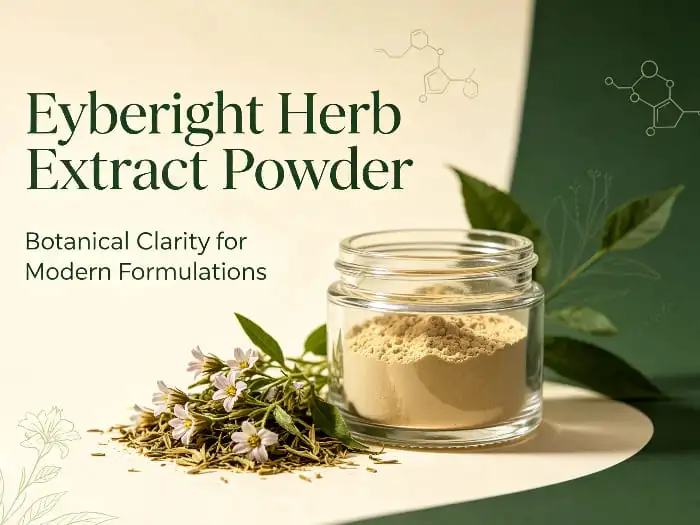
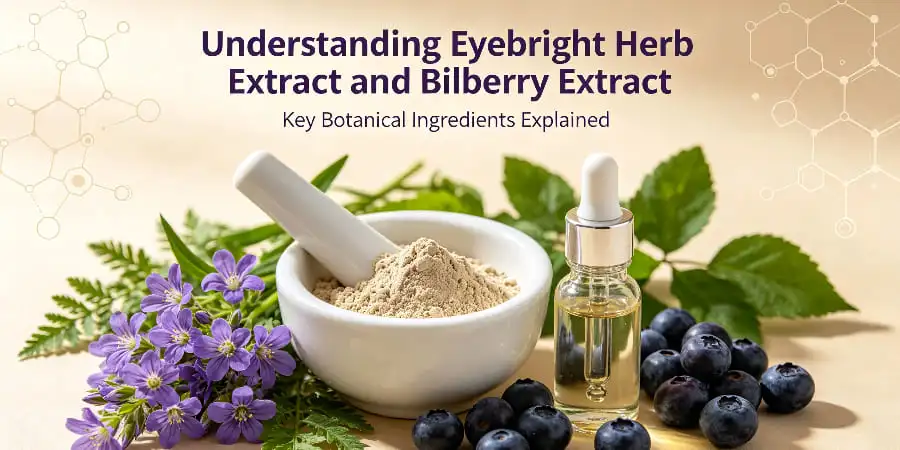
Eyebright Herb Extract and bilberry are both good choices for eyes that want to stay healthy. The two extracts are both useful, but they're useful in different ways. Flavonoids, polyphenols, tannins, and iridoid glycosides like aucubin can be found in Eyebright Herb Extract, which is made from the entire Euphrasia officinalis herb. This plant has been known for a long time to help dry, red, itching eyes feel better and keep the eyelids healthy. But bilberry is known for having a lot of anthocyanins, which makes vessels stronger and helps people see better at night. What you want to use the extract for, how you want to make the product, and the eye health results you want your product to achieve will all affect your choice.
Understanding Eyebright Herb Extract and Bilberry Extract
Botanical Origins and Extraction Processes
These plants, called Eyebright Herb Extract, live in fields in Europe and get food from other plants. When the tops are fully bloomed, they are picked, and then low-temperature vacuum extraction is used to protect chemicals that break down in heat, like aucubin. The standard ratios for extraction are 4:1 to 10:1, and ethanol-water blends are often used as solvents. This way makes sure that the amount of bioactive substances stays the same and meets safety standards for food-grade liquids that are still present.
It is called Vaccinium myrtillus, and it comes from the Ericaceae family. It is grown in northern Europe and North America. The separation is mostly done on the ripe berries because that's where the most anthocyanins are. These days, spray drying and membrane filtration are used to make sure that extracts always have 25% anthocyanins. HPLC can be used to check this. This uniformity is very important for supplements and uses that need to give the same amount every time, like food and medicine.
Bioactive Constituents and Mechanisms of Action
In Eyebright Herb Extract, there is a group of flavonoids that work together to stop COX-2 processes from starting up. This keeps inflammation down. The tannins are astringent, which means they make the mucous tissues tighter and reduce the amount of discharge that comes from conjunctivitis. A chemical called aucubin is an iridoid glycoside that has been shown in controlled studies to reduce inflammation and kill germs. Because of this, it is a great ingredient for eye care products that you put on your eyes and vitamins that you take by mouth to help with itching from pollen or too much time in front of a screen.
Anthocyanins, like delphinidin, cyanidin, and malvidin glycosides, help collagen cross-link in capillary membranes, which makes the walls of blood vessels stronger. This process makes the retina's microcirculation better and helps rhodopsin grow back. This improves night vision and speeds up the recovery time after photo stress. For people who get tired of looking at screens after using computers for long periods of time, bilberry extract has been shown to help. This is becoming a bigger problem in modern workplaces.
Scientific Evidence Supporting Eye Health Applications
A review of the literature on phytotherapy found that Eyebright Herb Extract made the tears less frequent and brighter in adults with seasonal allergic conjunctivitis. Since then, many randomized controlled studies have looked into how bilberry affects the function of the retina. Eyes became more sensitive to contrast and recovered from glare after taking 160–320 mg of a standardized extract every day for six weeks.
Eyebright Herb Extract vs Bilberry Extract: Functional Comparison
Targeted Eye Conditions and Symptom Relief
In particular, Eyebright Herb Extract is great for clearing up red, itchy, and watery eyes caused by conjunctivitis or hay fever. Because it reduces swelling and closes up pores, it works well in recipes that are meant to help with severe pain. People who make allergic or eye wash treatments often choose Eyebright Herb Extract because it works quickly to ease symptoms.
Bilberry, on the other hand, deals with form and function problems that are more basic. This is because it improves the health of the retina's small blood vessels. This means that it can be used in goods that help with night vision, stop vision loss that comes with getting older, and ease digital eye strain. An important part of many brands that make "blue light defense" vitamins or goods for older people is bilberry.
Dosage Forms and Bioavailability Considerations
Eyebright Herb Extract comes in a lot of different forms, like pills, dry powder, and even types that dissolve in water and can be used in clear drinks. Most extracts don't mix all the way in water, which can cause drinks to sink to the bottom. The teams that buy functional drinks or eye drops should ask for grades that are clear, soluble, and have been ultrafiltered to get rid of turbidity and make sure the finished goods are easy to see.
Because bilberry extract is a powder that is easy to work with, it is often put into capsules or tablets. It's not easy for the body to absorb anthocyanins on its own, but they work better when mixed with fat-soluble nutrients like vitamin E or omega-3 fatty acids. Nutraceutical companies can get ahead in the market with the help of new technologies like phospholipid complexes and liposome delivery systems, which make nutrients easier for the body to use.
Safety Profiles and Regulatory Considerations
The products are both safe as long as they come from sources that are allowed and follow GMP rules. Tiny bits of eyebright extract, called tannins, can separate proteins or alkaloids from mixed-up liquids. This means that tests of stability must be done on the object while it is being made. EU and US laws say that heavy metal pollution, especially lead and cadmium, must stay well below certain levels. This is especially important for goods that are meant for people who are easily hurt.
Bilberry doesn't bother most people, and tests have only found a few mild side effects. But a lot of it might not work well with blood thinners since they might change how platelets stick together. Claims about eye health are regulated in different ways in different places. For instance, the FDA oversees claims about how dietary supplements work and what they are made of, while the European Food Safety Authority needs proof of health claims before they can be sold. Buyers need to make sure that the products they choose are in line with the legal path and claim strategy of the markets they want to reach.
Market Insights for Procurement: Brands, Pricing, and Supply Chains
Leading Manufacturers and Quality Benchmarks
Eyebright Herb Extract's global supply chain is based in Central Europe, which makes it easy to find raw materials that are both organic and collected in the wild. Certificates of Analysis that show HPLC chromatograms, microbial tests, and pesticide residue analysis are given with extracts that come from reliable sources. Flavonoids or aucubins make up the majority of the products. It is possible to track the extract from the field to the finished product in GMP-certified facilities. This is very important for pharmaceutical and high-end supplement brands.
Most of the bilberries that people buy come from places in Scandinavia and Eastern Europe. There are also some made in North America. Scientists have proven that premium products contain 25% anthocyanins, which is why they are more in demand. Brands that want to attract people who care about clean labels are more and more likely to get organic and non-GMO certifications. There is still a chance that cheaper berry extracts will be mixed in at commodity markets, so buying managers should look at tests done by a third party to make sure the products are real.
Procurement Strategies and Supplier Evaluation
To buy in bulk successfully, you need to carefully consider the supplier's capacity, lead times, and technical support. Production that can be scaled up is important for brands that want to grow. Brands can make sure they don't run out of stock during annual demand spikes by working with suppliers that can produce multiple tonnes per month and have good inventory management systems. Dependable partners are different from transactional sellers because they listen to you and are ready to meet your specific needs, such as making custom extraction ratios or particle size distributions.
To get good terms, you need to see if the price and quality guarantee are equal. Some cheaper extracts might look good, but they might contain impurities or have bioactive amounts that change over time. This could hurt the brand's reputation and the quality of the product. Building long-term relationships with sellers who offer clear prices, savings for buying in bulk, and flexible MOQs makes the supply chain stronger, and it is easier to follow the rules.
Choosing the Right Extract for Your Product Line: Decision Support
Aligning Extracts with Product Portfolio Goals
Eyebright Herb Extract works especially well when it is put on the skin or in formulas that are meant to relieve symptoms right away. It has been used for a long time and is safe for people to use in herbal eye drops, seasonal allergy supplements, and natural remedies for digital eye fatigue. Because it can be taken by mouth or put on the skin, more products can be added to the line.
Bilberry is the clear winner when it comes to science-based supplements that focus on long-term eye health, help the blood flow, and improve vision. Bilberry goods for older people, gamers, or people who spend a lot of time in front of a screen are more likely to work because there is a lot of strong scientific evidence for them. It works well with lutein, zeaxanthin, and omega-3s, which are all known to work well together. In this way, it is possible to mix ingredients in complicated ways.
Formulation Synergy and Combination Strategies
There are a lot of good eye health products that use both Eyebright Herb Extract and bilberry to help with pain and structure in the long term. Eyebright Herb Extract helps with pain on the skin's surface, and bilberry helps with pain in the small blood vessels, so the two together work well. Formulators should do stability studies to make sure that the anthocyanins and tannins in the Eyebright Herb Extract don't separate from the other actives in the food.
Case Examples of Successful B2B Integrations
A well-known European supplement company came out with a digital eye strain relief capsule that mixed Eyebright Herb Extract (standardized to 10% flavonoids) with bilberry extract (standardized to 25% anthocyanins). It sold really well because it was promoted as a two-in-one mixture that helped with both short-term pain and long-term retinal stress. This company worked with a GMP-approved provider to get mixed extracts that would always work the same way. Getting the goods to market faster and with less trouble was made possible by this.
Another example is a North American cosmetics company that made an eye serum that made the eyes look less puffy. Eyebright Herb Extract in a water-soluble form was used to get rid of under-eye bags and make the skin around the eyes tighter. The company that sent them sent filtered, clear-soluble grades that worked great with the emulsion method and didn't make the mixture less stable or cloudy.
Conclusion
When used in eye health products, Eyebright Herb Extract and bilberry both do good things for the eyes. Eyebright Herb Extract is great for reducing swelling and making skin tighter, and bilberry is great for vitamins and strengthening blood vessels. If someone in procurement has to choose between these plants, they need to think about the legal routes, dosage forms, and uses that are planned. Standardized extracts, third-party testing, and GMP-certified sources are all ways to make sure the quality of a product stays high and builds trust with customers. It is possible for brands to make eye health products that work, follow the rules, and compete in the market by building smart partnerships that balance cost, quality, and the reliability of the supply chain.
FAQ
What is the recommended dosage for Eyebright Herb Extract in vision supplements?
Based on what doctors have seen, 2 to 4 grams of dried herb every day seems to be the right amount. For a 10:1 extraction ratio, this means taking between 200 mg and 400 mg per day. These are usually split into two doses so that the bioactive chemicals stay steady in the bloodstream all day.
Can Eyebright Herb Extract be used in functional beverages?
Standard extracts don't dissolve all the way in water, which can cause clear drinks to sink to the bottom. If you need something to be clear, like in ready-to-drink eye health shots or clear liquid vitamins, your buying team should ask for clear-soluble grades that have been membrane-filtered to get rid of any impurities and make sure customers are happy.
How do you ensure aucubin content is preserved during extraction?
Air and heat can easily break down aucubin. Suppliers you can trust use low-temperature vacuum extraction and quick spray drying to keep things from coming into contact with high temperatures as little as possible. HPLC testing of every production run shows that the aucubin stays in the extract, which means that it keeps working as a medicine.
Does Eyebright Herb Extract interact with other ingredients?
Tannins, which are found in Eyebright Herb Extract, can separate proteins or alkaloids from heavy liquids. When making goods with more than one ingredient, stability testing is important to make sure that Eyebright Herb Extract doesn't cause other active chemicals to precipitate or become less bioavailable.
Partner with Wellgreen for Premium Eyebright Herb Extract Supply
It is safe to buy Eyebright Herb Extract from Wellgreen Technology. They sell regulated plant powders that can be used in cosmetics, nutraceuticals, and medicines. Our GMP-certified facility makes sure that every batch meets strict quality standards. These include testing for heavy metals, pesticide residues, and validated microbial limits that meet EU and US food-grade standards. As an OEM, ODM, or private label company, we can work with you. We offer a range of standards, from water-extracted powders to concentrated grades whose flavonoid or aucubin content has been checked by HPLC. Our large inventory allows for quick delivery for product launches that need to happen on time, and our technical team helps with formulation for difficult uses like eye drops, functional drinks, and capsules with multiple ingredients. Contact us at wgt@allwellcn.com to get COA documentation, samples, or customized quotes designed to meet your procurement requirements and product development goals.
References
1. Stoss, M., Michels, C., Peter, E., Beutke, R., & Gorter, R. W. (2000). Prospective cohort trial of Euphrasia single-dose eye drops in conjunctivitis. Journal of Alternative and Complementary Medicine, 6(6), 499-508.
2. Kalt, W., Hanneken, A., Milbury, P., & Tremblay, F. (2010). Recent research on polyphenolics in vision and eye health. Journal of Agricultural and Food Chemistry, 58(7), 4001-4007.
3. Oszmiański, J., & Wojdylo, A. (2005). Comparative study of phenolic content and antioxidant activity of strawberry and bilberry extracts. Journal of Fruit and Ornamental Plant Research, 13, 239-248.
4. Canter, P. H., & Ernst, E. (2004). Anthocyanosides of Vaccinium myrtillus (bilberry) for night vision—a systematic review of placebo-controlled trials. Survey of Ophthalmology, 49(1), 38-50.
5. Bruynzeel, D. P. (2007). Contact dermatitis to Euphrasia officinalis. Contact Dermatitis, 56(3), 175-176.
6. Fraisse, D., Carnat, A., & Lamaison, J. L. (2000). Polyphenolic composition of the leaf of Euphrasia officinalis. Annales Pharmaceutiques Françaises, 58(1), 38-41.