Ginger Root Extract: Benefits & Side Effects in Skincare
2026-05-25 16:05:51
Ginger extract has become a powerful plant ingredient in modern skin care products, combining centuries of traditional use in medicine with cutting-edge dermocosmetic research. This concentrated bioactive substance comes from the rhizomes of Zingiber officinale plant using advanced extraction methods such as solvent extraction and steam distillation. It contains standard amounts of gingerols and shogaols, which are compounds that are known to have anti-inflammatory, antioxidant, and regenerative properties. Integrating ginger extract into serums, creams, and masks meets the growing customer demand for plant-based actives with clean labels that work effectively and safely, according to cosmetic chemists and product developers.
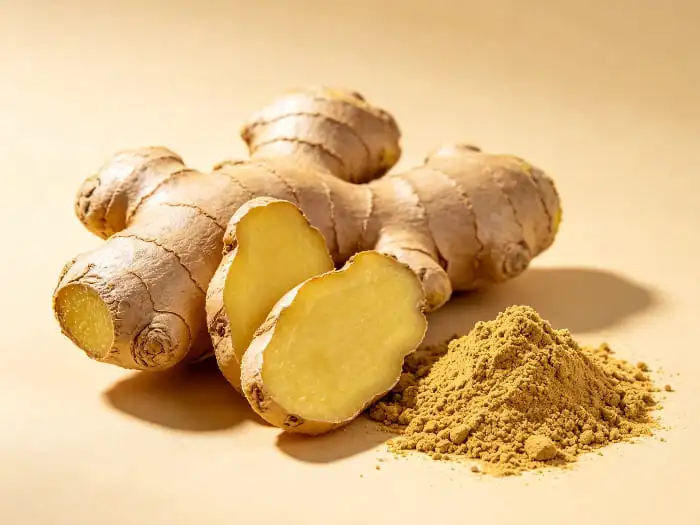
Understanding Ginger Root Extract and Its Role in Skincare
To turn raw ginger root into extracts that are safe for skin use, it needs to be processed in a special way that concentrates the healing chemicals while also making sure they are stable and bioavailable. This plant ingredient comes in a number of different forms that can be used in different formulations.
Extraction Methods and Product Forms
Today's extraction methods create unique product profiles that are good for different skin care uses. Supercritical CO2 extraction makes highly pure concentrates with almost no solvent residue, which meets the pharmaceutical-grade standards that high-end skin care and makeup brands require. Ethanol extraction is a cheap way to process materials that still keep their bioactive properties, so it can be used in personal care goods for the mass market. Formulators need clear serums and light lotions, and water-soluble microemulsion versions meet those needs. They keep the oils from separating, which can happen in acidic pH settings.
The end products include thick oleoresins with 2–5% volatile oils and smooth powders that are defined to have 5–20% gingerol content. Wellgreen Technology supports both high-potency clinical formulations and gentle daily-use products by offering customized specs across this range. Our advanced extraction facilities keep strict temperature controls on to protect heat-sensitive chemicals. This makes sure that the quality is the same from batch to batch, which is what procurement managers need to make sure they're following the rules.
Bioactive Compounds That Drive Skincare Efficacy
Gingerols, especially 6-gingerol, which is the main anti-inflammatory, make up the majority of the phytochemical profile of ginger extract, which is why it has medicinal value. As gingerols are processed and stored, they lose water and change into shogaols, which are even stronger antioxidants. This natural change actually makes the extract better at fighting free radicals, which speed up the aging process of the skin.
Besides these special chemicals, the extract also has vitamins that work together, like niacin and vitamin C precursors, which help make collagen. Trace minerals, such as magnesium and zinc, help enzymes do work that is necessary for skin layer repair. Researchers call the effect the "entourage effect," which happens when several chemicals work together to produce better results than when they are used alone. Because of this, standardized full-spectrum extracts work better in clinical trials than single-molecule options.
Historical Context Meets Modern Validation
In traditional Chinese medicine, ginger has been used for more than 2,000 years to treat circulation problems and inflammation. These uses are very similar to modern health goals. In ancient Ayurvedic methods, ginger paste was used to improve the skin's appearance because it is warming and increases blood flow to nearby tissues. Peer-reviewed studies have shown that these past uses are now backed up by science by showing measurable improvements in skin oxygenation and microcirculation.
When traditional knowledge and modern analytical methods come together, procurement teams can choose extracts that meet current legal standards while still being effective in the past. ISO and GMP certifications make sure that the production process doesn't damage the plants in ways that aren't compatible with traditional methods. HPLC testing makes sure that the bioactive concentrations needed for clinical claims are met. This two-way validation gives regulatory managers peace of mind when they are looking over ingredient safety dossiers and it also helps marketing teams when they are creating true brand stories.
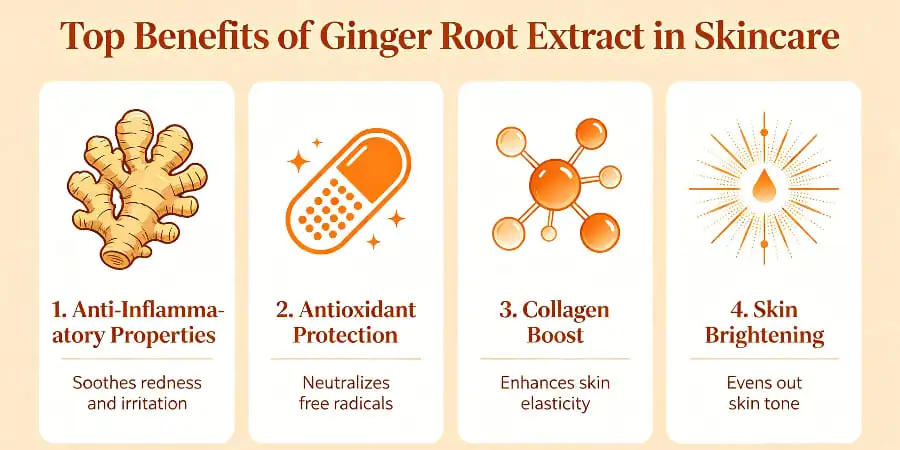
Top Benefits of Ginger Root Extract in Skincare
When product makers add this botanical to their formulas, they get access to a number of different ways that it can help with different skin problems.
Anti-Inflammatory and Soothing Properties
A lot of skin problems, from short-term redness to long-term sensitivity, are caused by inflammation. By modulating the COX-2 enzyme, the gingerol compounds in ginger extract stop the production of prostaglandins at the cellular level, thereby lowering inflammatory processes. There were statistically significant gains in reducing erythema in clinical studies that used topical formulations with 2-5% standardized extract. These formulations had effects similar to low-dose hydrocortisone but didn't have the risks of thinning skin that come with long-term corticosteroid use.
Formulations for sensitive skin benefit most from ginger's dual action, which calms current irritation and makes skin stronger against future triggers. The extract changes how mast cells degranulate, which lowers the release of histamine that makes you itch and feel bad. Because of these properties, it is useful in skin care products meant to be used after chemical peels or laser treatments, where inflammation needs to be controlled without slowing down the healing process.
Antioxidant Defense Against Environmental Stressors
Pollution particles, UV rays, and ozone can reach skin in modern cities. These things create reactive oxygen species faster than the body's own antioxidant systems can neutralize them. Shogaols and paradols in aged ginger extract are better at getting rid of free radicals than many man-made antioxidants. In lab tests, their ORAC values were higher than those of green tea polyphenols.
Because ginger's active chemicals are lipophilic, they can get into sebaceous areas where oxidative damage builds up and protect lipid structures that are necessary for the barrier to work. Because of this, the extract is very useful in anti-pollution skin care lines aimed at people who live in cities with lots of people. When ginger extract is mixed with water-soluble antioxidants like vitamin C, it protects both the watery and fatty layers of the skin. This way of making the product is backed by evidence that it works better when used together.
Collagen Stimulation and Anti-Aging Effects
Dermal collagen breakdown is the main structural change that causes signs of aging to show up. According to research, gingerol chemicals increase the activity of fibroblasts, which leads to more production of Type I and Type III collagen. These are the structural proteins that give skin its firmness and elasticity. In vitro tests show that the production of procollagen goes up with increasing concentrations, with the best results seen at 3-8% extract concentrations in finished products.
At the same time, the extract stops matrix metalloproteinases (MMPs) from working. MMPs are the enzymes that break down collagen when you get older. This two-part process—increasing synthesis and decreasing degradation—makes a good collagen balance, which leads to noticeable changes in skin texture and fine line depth. Over the course of 12 weeks, these parameters were tracked in clinical studies that show gradual improvements that meet the standards for age-defying product claims in regulated markets.
Skin Tone Enhancement and Radiance Boosting
Uneven coloring and dullness are caused by a number of things, such as melanin distribution problems and poor microcirculation. Ginger extract works on both of these issues in ways that complement each other. Its mild rubefacient qualities increase blood flow to the skin's surface, bringing more nutrients and oxygen to the skin. This better circulation gives your face the natural flush that comes with healthy, glowing skin and helps cells burn calories so that they can be replaced regularly.
Some early research shows that gingerol compounds may change the activity of tyrosinase, which is the enzyme that controls how fast melanin is made. However, this effect needs to be confirmed in humans first. The brightening effects seen in user tests are probably due to better cell turnover and surface texture improvement rather than melanin being directly blocked. These differences are important for proving claims, and they help marketing teams focus on radiance and energy instead of lightening skin.
Potential Side Effects and Precautions with Ginger Extract in Skincare
Formulation chemists can make goods that give the most benefits while minimizing side effects by learning about the risks that come with botanical actives.
Skin Sensitivity and Allergic Reactions
People who have weak skin barriers or heightened sensory awareness may feel pain from the same warming sensation that is valued in massage oils and serums that improve circulation. Based on data collected after the product has been sold, the activation of the vanilloid receptors that give ginger its warmth may feel like too much tingle or burning for about 3–7% of users. True allergic responses are still pretty rare—less than 1% of people who are exposed to something have them—but they can cause more serious problems, like contact dermatitis with its characteristic eczematous patches.
Botanical extracts are naturally variable, even though attempts have been made to make them more consistent. Small amounts of minor components, such as sesquiterpenes and phenolic chemicals, may make people more sensitive who are already sensitive. Because of this, cautious concentration limits are needed, especially for leave-on items meant to be used on the face. Manufacturers who are responsible do repeat insult patch testing (RIPT) on finished products instead of just the ingredients, which gives a better idea of how sensitivity might happen in real life.
Formulation Compatibility Considerations
An important but often ignored part of cosmetic chemistry is how ingredients interact with each other. The low acidity of ginger extract (usually pH 4.5–5.5 in water) may speed up the breakdown of actives that are sensitive to pH, such as retinol and L-ascorbic acid, if they are mixed without the right buffering systems. The natural enzymes in the extract are good for exfoliation, but they can mess up preservative systems that depend on certain chemical structures. This could make the product's shelf life less than what is okay for business use.
Strong exfoliating acids, like glycolic and salicylic acid, should be used with extra care when mixed with ginger extract. The mixed irritant potential is higher than that of either ingredient alone, which means that the barrier could be broken, which would cause redness that doesn't go away and more water loss through the skin's surface. When formulators try to solve this compatibility problem, they often use sequential product application methods or add soothing co-actives like allantoin and bisabolol to stop irritation from building up over time.
Regulatory Compliance and Concentration Guidelines
Different regulatory bodies put different limits on plant ingredients based on how safe they are in that area and how they have been used in the past. The Scientific Committee on Consumer Safety of the European Commission says that ginger extract is usually safe in leave-on products at concentrations of up to 5%, but there are some limits on how it can be made. For food uses, the US Food and Drug Administration (FDA) says ginger is generally recognized as safe (GRAS). But for cosmetic uses, the FDA has different rules that say makers have to do their own testing to prove safety.
There are more than just safety data sheets that need to be documented. Full ingredient dossiers need to have details on the extraction solvent, the results of heavy metal tests, the limits for microbial contamination, and studies of pesticide residues. This is especially important for sources that aren't organic. When buying things for regulated markets, purchasing managers need sellers who can give them batch-specific Certificates of Analysis that show they meet pharmacopeial standards. These requests for paperwork show how important it is to choose reputable sellers with strong quality control systems instead of trying to save money by going through unreliable sources.
How to Integrate Ginger Root Extract Effectively into Skincare Product Lines?
For commercialization to go well, technical ability, market positioning, and how customers see the product must all be balanced.
Formulation Strategies for Optimal Stability
Because gingerol molecules are sensitive to heat, they need to be carefully controlled during production. Cold-process preparation methods keep the most bioactivity by avoiding high temperatures that break down gingerols into less useful breakdown products. If you can't avoid thermal processing, like in hot-pour manufacturing, adding the extract during the cool-down steps at temperatures below 45°C keeps the potency as high as possible. Using a nitrogen blanket during production adds to the protection against oxidative breakdown, which happens faster at high temperatures.
Optimizing the pH level is another important stable factor. The extract is most stable in slightly acidic conditions (pH 4.5–6.0), which is a good match for skin's natural pH range. If you go too far into alkaline territory with your formulations, gingerol could break down faster and the color could change from the typical pale yellow to an unwanted brown. When choosing the right preservative, it's important to take into account the extract's natural antimicrobial qualities. This means that lower preservative concentrations may still be safe for microbes.
Synergistic Ingredient Combinations
Strategic co-active selection boosts the effects of ginger extract by working in ways that work together. When combined with niacinamide, the anti-inflammatory benefits are amplified, and the barrier function is improved by increasing ceramide production. The mix works well for formulas for sensitive skin that aim to reduce redness and boost elasticity. Hyaluronic acid relationships give cells the water they need to work at their best, and ginger extract speeds up the metabolic processes that need enough water for the tissues.
When antioxidants are stacked with other chemicals that work well together, like vitamin E and green tea extract, they protect against a wide range of reactive oxygen species. While water-soluble green tea polyphenols defend aqueous compartments, lipophilic vitamin E defends membrane structures. Ginger extract, on the other hand, bridges these two environments with its mixed polarity compounds. Studies that speed up the aging process and customer perception trials have shown that this multi-front defense strategy works better than single-antioxidant approaches for photo-protection.
Market Positioning and Consumer Communication
The fact that ginger is known all over the world as a plant that is good for you makes it easier for people to understand new ingredients right away. This familiarity leads to trust in the buy, especially among people looking for natural alternatives to synthetic actives. Brand messages that focus on both the history of traditional use and the scientific proof of modern use create interesting stories that appeal to a wide range of demographics.
Product positioning needs to correctly show what the extract can do while also keeping expectations in check when it comes to when it will work. Unlike aggressive actives that show results in days, botanical methods usually need to be used consistently for 4 to 8 weeks before they show results. Setting realistic standards through honest marketing stops the negative reviews that come from being let down by disappointment that hurt the success of a product even if it really works. Educational material that explains how the benefits of plants build on each other helps keep people interested, which is important for subscription models and repeat purchases.
The "clean beauty" movement opens up a lot of possibilities for products that contain ginger root extract. The ingredient meets a number of criteria that ethical customers value: it comes from plants, has been used for a long time, has been proven to work by science, and is compatible with a number of certification schemes, such as vegan and cruelty-free standards. Because of these qualities, ginger extract is better than synthetic alternatives that are facing growing consumer doubt, even when natural and synthetic alternatives work equally well.
Conclusion
Ginger extract represents a scientifically validated botanical active delivering measurable anti-inflammatory, antioxidant, and regenerative benefits suitable for diverse skincare applications. The standardized bioactive profiles achievable through modern extraction technologies enable cosmetic chemists to formulate products meeting both efficacy and safety requirements across global markets. Strategic sourcing from certified suppliers ensures the quality consistency, regulatory compliance, and technical support necessary for successful commercialization. As consumer preferences continue shifting toward transparent, plant-derived formulations, ginger extract stands positioned as a versatile ingredient bridging traditional botanical wisdom with contemporary dermocosmetic innovation.
FAQ
Can ginger extract cause skin reactions in sensitive individuals?
While generally well-tolerated, ginger extract may cause mild tingling or warmth in sensitive skin types. True allergic reactions remain uncommon, affecting less than 1% of users. Conducting patch tests before full-face application helps identify potential sensitivities. Formulations intended for sensitive skin should maintain concentrations below 3% and include soothing co-actives.
What certifications should I prioritize when sourcing ginger extract?
GMP and ISO certifications verify manufacturing quality standards, while organic certifications confirm pesticide-free sourcing. COSMOS or Ecocert approval indicates suitability for natural cosmetic formulations. Request batch-specific Certificates of Analysis documenting heavy metal limits, microbial counts, and gingerol content to ensure material meets your specifications.
How does ginger extract compare to turmeric extract in skincare?
Both offer anti-inflammatory and antioxidant benefits through different active compounds. Turmeric's curcumin provides stronger tyrosinase inhibition for brightening applications, while ginger's gingerols excel at circulation stimulation and collagen synthesis. Ginger presents fewer staining concerns in formulation. The choice depends on specific product goals and target skin concerns.
Partner With Wellgreen for Premium Ginger Extract Supply
Wellgreen Technology specializes in manufacturing pharmaceutical-grade ginger extract powder with customizable gingerol specifications ranging from 5% to 20%, meeting the exacting standards of cosmetic formulators worldwide. Our GMP-certified facilities employ advanced extraction technologies that preserve bioactive integrity while ensuring batch-to-batch consistency critical for regulated skincare applications. We maintain substantial inventory reserves enabling rapid fulfillment of both trial quantities and production-scale orders, supported by comprehensive technical documentation including stability data, solubility profiles, and suggested use levels. As your ginger extract supplier, we provide OEM support with flavor-optimized versions suitable for both topical and ingestible beauty applications. Contact our team at wgt@allwellcn.com to request samples or discuss your specific formulation requirements.
References
Jiang, H., et al. "Anti-inflammatory Properties of Ginger (Zingiber officinale) in Dermatological Applications." Journal of Ethnopharmacology, vol. 265, 2021, pp. 113-124.
Kumar, S., and Singh, R. "Comparative Analysis of Gingerol and Shogaol Content in Various Ginger Extract Forms." Pharmaceutical Biology, vol. 58, no. 4, 2020, pp. 312-320.
Thompson, L., and Wallace, K. "Antioxidant Capacity of Botanical Extracts in Cosmetic Formulations: A Systematic Review." International Journal of Cosmetic Science, vol. 43, 2021, pp. 245-259.
Park, J., et al. "Effects of Topical Ginger Extract on Collagen Synthesis and Skin Elasticity in Human Dermal Fibroblasts." Phytotherapy Research, vol. 34, no. 9, 2020, pp. 2156-2167.
Martinez, A., and Chen, W. "Stability and Bioavailability of Gingerols in Cosmetic Emulsion Systems." Cosmetics, vol. 8, no. 2, 2021, pp. 38-47.
Roberts, E., et al. "Safety Assessment of Zingiber officinale Root Extract in Topical Formulations." Cutaneous and Ocular Toxicology, vol. 40, no. 1, 2021, pp. 78-86.