How Can Organic Goji Berry Powder Enhance Natural Color and Flavor in Food Products?
2026-08-28 14:00:01
Organic Goji Berry Powder delivers exceptional natural color and flavor enhancement for food products through its rich concentration of carotenoids—particularly zeaxanthin and beta-carotene—which produce vibrant orange-red hues that remain stable during processing. The powder's unique flavor profile blends natural sweetness with subtle tangy notes, masking off-flavors while adding nutritional value. Its clean-label appeal, combined with standardized polysaccharide content and low moisture levels, makes it ideal for functional beverages, snacks, and nutritional products where both visual appeal and taste integrity matter to discerning consumers.
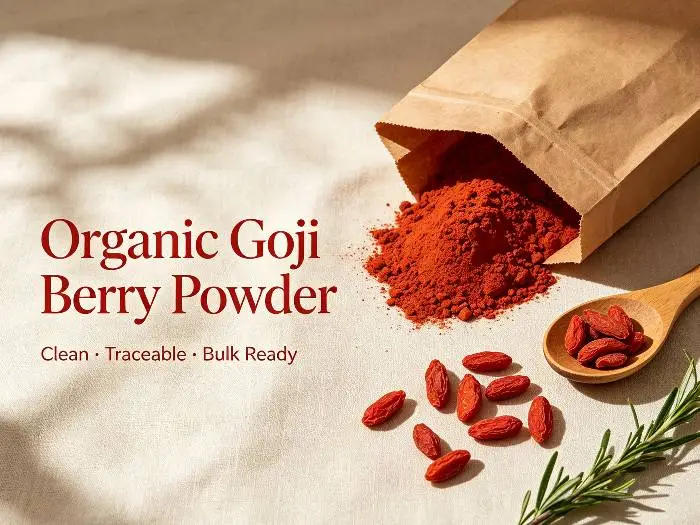
Understanding Organic Goji Berry Powder and Its Unique Properties
Goji nuts can be found all over the world in health food shops. They are a mix of Western diet science and Eastern plant healing. This is how people treat the fruit because it is very healthy and can be used in many ways in recipes. Some people make a powder from these berries, which keeps their health benefits and can also be used for business.
Nutritional Composition and Bioactive Compounds
Goji berry powder that was grown organically has a lot of chemicals that are good for your health. Lycium barbarum polysaccharides (LBPs) make up the polysaccharide fraction. Based on how the raw materials were gathered and how good they were, the amount it makes ranges from 20% to 50%.These complex carbohydrates have been the subject of numerous studies demonstrating their functional properties in supporting overall wellness.
There are a lot of xanthophyll carotenoids in the food, including beta-carotene and zeaxanthin, which are known to protect the eyes from damage and keep them healthy. The specific carotenoid profile found in goji powder distinguishes it from other fruit-based ingredients, making it suitable for applications targeting vision wellness and healthy ageing support. Because the powder has antioxidants and phenolics, it fights free radicals even better. It always has one of the best ORAC scores for fruit powders, which shows that it is healthy.
Processing Methods and Quality Preservation
What something tastes like and what nutrients it has depend a lot on how it was made. More of the natural color is kept when freeze-drying instead of hot air drying. Also, heat doesn't hurt the vitamins. The colors and flavors are stronger when the powder is made this way, but it takes longer to make and needs more skilled tools.
The particle size range, which stays between 80 and 120 mesh, affects how well things work in factories and how well they mix with liquids. More color can spread out when materials are broken up into smaller pieces that work better with drinking systems. Powder naturally soaks up water, so the amount of wetness needs to be kept well below 5% to keep it from sticking and to stop germs from growing.
You have to follow strict test rules if you want to get good grades. As per USP and European Pharmacopeia rules, the overall plate count should stay below 10,000 cfu/g, and heavy metal levels, such as lead below 2.0 ppm and arsenic below 1.0 ppm, must be very low. These quality standards are even more important when you're selling to food and drug companies that won't stand for contamination.
Organic Certification and Clean-Label Advantages
Certified organic farming addresses many of the quality and traceability requirements that B2B buyers consider when sourcing Organic Goji Berry Powder. Farmers producing Organic Goji Berry Powder under USDA or EU organic certification must follow applicable organic standards, which generally restrict the use of prohibited synthetic fertilizers, pesticides, and genetically modified organisms. These certification systems also support traceability across the supply chain, covering cultivation, harvesting, processing, and packaging of Organic Goji Berry Powder. This documented production process helps demonstrate that Organic Goji Berry Powder meets applicable regulatory requirements and the expectations of customers seeking certified organic ingredients.
Extra goji powder is something that more people want now that there is a trend toward clean labels. Plant-based foods are becoming more popular because they are allergen-free, don't contain GMOs, and are good for vegans. If the people who make the products want to get rid of artificial colors or flavors, organic goji powder is a simple option that looks good on the label and is good for you.
How Organic Goji Berry Powder Enhances Natural Color in Food Products
A great thing about the business powder is that it stays the same color. The amount and type of carotenoids and anthocyanins in food can make it any color from bright orange to deep red. The formulators can trust these pigments to give solid color performance without the regulatory issues that come with using fake dyes, since they behave the same way no matter what processing conditions are used.
Pigment Stability and Processing Tolerance
When it gets hot, anthocyanins in berries like blueberries and strawberries break down quickly. But carotenoids in goji powder stay stable for a long time. Between 85°C and 95°C, the orange-red color doesn't change much when the food is cooked, baked, or drawn out. Protein bars, baked snacks, and drinks that come in a bottle can all be made with this powder. To do this, just heat it up.
Anthocyanins give plants their colors, which change a lot when the pH level changes from acidic to alkaline, while carotenoids give plants colors that change less when the pH level changes. When added to food, goji powder doesn't change color no matter what pH level it is in. Fruit drinks have a pH range of 3.5 to 4.5, while dairy alternatives have a pH range of 6.5 to 7.0, which is almost neutral. Since it is flexible, it is easier to make products with different kinds of ingredients.
If natural colors are left out in the light for too long, they may fade. But this risk isn't as high if the food is well packed. Colors can stay the same by putting things in amber glass cases, opaque bags with oxygen barriers, or nitrogen flushing while they are being packed. Several groups of researchers have found that the color doesn't change much over 24 months if the product is kept in a controlled setting that stays below 25°C and has less than 60% relative humidity.
Comparison with Synthetic and Alternative Natural Colorants
More and more often, people are taking fake colors like Red 40, Yellow 5, and Yellow 6 off of lists of ingredients. When people are asked to think about food, they always pick items whose names are well known. This means there is a chance for natural options to sell. When used at rates of 0.5% to 2.0% in dry ingredients and 0.2% to 0.8% in drinks, it gives the same level of color strength as man-made dyes.
Each type of natural colorant, like annatto, beet powder, and paprika extract, has its own pros and cons. Because it tastes earthy and doesn't work well in hot food, beet powder isn't very useful for many things. Paprika extract is very stable, but it doesn't have enough nutrients to be a great buy. It turns food a bright yellow-orange color, but that's all it does.
Goji powder is one of a kind because it gives you both a nice color and healthy nutrients. It's in the healthy food group because it's two things in one. This means that marketing can say more about it than just how it looks. People buy wellness drinks because they look good and are good for them. This is something that drink designers love about their drinks.
Practical Application Examples and Dosage Recommendations
About 2% to 3% of the total weight of energy bars may consist of Organic Goji Berry Powder, depending on the formulation and desired flavor, color, and nutritional profile. Adding Organic Goji Berry Powder can contribute a naturally orange-red color and provide naturally occurring nutrients such as vitamins, minerals, and dietary fiber. For production, Organic Goji Berry Powder can be added to the dry ingredients and mixed thoroughly to promote even distribution throughout the bar. Properly processed Organic Goji Berry Powder can help maintain its characteristic color and flavor during manufacturing, although stability may vary depending on processing conditions, moisture, and storage. For products marketed as organic, the Organic Goji Berry Powder should also meet the applicable organic certification requirements.
When particles are mixed with drinks, they need to be spread out carefully. Before adding water to protein shake recipes, goji powder should be mixed with other dry ingredients. This makes sure that the color is spread out evenly and that the shake doesn't settle. To get nice pink to peach tones, about 0.3% to 0.6% of the dairy product is used. In plant-based systems that have light base colors on their own, a little more works better.
Goji powder is both an active ingredient and a natural colorant that is added to pills and tablets that are meant to help you lose weight. When making tablets, adding 5–10% of the final dose is enough to give them the color depth they need and also add a lot of bioactive items. With this method, you don't need to add any other colors. This helps people understand recipes better and saves money on food.
Flavor Enhancement Capabilities of Organic Goji Berry Powder
Goji powder not only makes food look better, but it also adds a unique flavor that makes everything taste better. It's kind of like a mix of cranberries and raisins: sweet and sour. It also has savory notes that make it more interesting without taking away from the taste. The powder has the right amount of heat and sweetness, so it can be used in a lot of different types of foods.
Sensory Profile and Masking Properties
Taste groups that have been taught say that goji powder tastes like clean fruit. It's a little sweet and doesn't have any fake or sticky notes. A Brix number of 12 to 15 is common for powdered goji. In other words, it's sweet enough to taste without getting a lot of sugar out of other parts of the mix. The natural sweetness helps cut down on the amount of added sugar because of health and government rules.
The powder can hide bad tastes, which is very helpful for making useful foods. Some people don't like the way that pea and rice protein isolates smell like grass or beans. Adding 1% to 3% goji powder to these supplements softens the strong notes and gives them the natural look that more and more people who take supplements want.
Not getting enough vitamins is another problem that many people have. This can be made better with goji powder. Sometimes food tastes sharp or bitter when it has too much iron, zinc, or magnesium in it. This makes it less fun to eat. There are many tastes in goji powder, such as sweet, sour, and umami. Being able to block out these bad tastes makes it harder to notice them, so people are more likely to stick with therapeutic nutrition products.
Integration Across Food Matrices
When you use goji powder in dry mix recipes like quick oatmeal, protein shakes, and meal replacement packs, nothing goes wrong. It's easy for customers to spread out powder that doesn't stick when it's being stored if the right flow agents are added to it. You don't get a quick high that goes off quickly because the smells come out slowly as you eat.
You need to think about how things break down when you're making drinks. It's not possible for goji powder to dissolve in water, but if you add the right amount of water and stir it around, it can form stable solutions in thick drinks like yogurt and smoothies. Sometimes, water-soluble goji extracts are used to make clear drinks. However, the color and taste aren't as strong as with whole fruit powders.
Organic Goji Berry Powder can add a distinctive flavor and may help baked goods retain moisture, making it a useful ingredient for certain formulations. The polysaccharides naturally present in Organic Goji Berry Powder can contribute to water retention and may help maintain a softer texture during storage. When incorporated at appropriate levels, Organic Goji Berry Powder may be used in muffins, cookies, and energy balls to support moisture retention and improve overall texture. The performance of Organic Goji Berry Powder depends on factors such as formulation, baking conditions, packaging, and storage environment, so manufacturers should conduct shelf-life testing to determine the actual effect on freshness and product quality. By selecting suitable levels of Organic Goji Berry Powder, food manufacturers can develop products with appealing flavor, texture, and organic positioning.
Instead, things made from plants and cheese are being used more and more. Fruit-on-bottom yogurt mixes can have extra flavors with goji powder added to them. These flavors are said to be good for your eyes or high in antioxidants. Foods can look and taste better with the powder, but they can't quite beat dairy. This is very helpful for making plant-based yogurt alternatives.
Synergistic Ingredient Combinations
Goji powder is mixed with other things that work well together to make things work better. Putting it together with acai, blueberry, or pomegranate powder changes the way it tastes. That's why it costs more and is better for you. The taste enhancers keep things interesting, and the high ORAC values are needed for business reasons because they show how strong the antioxidants are all together.
It's already delicious, but adding spices like ginger, cinnamon, and turmeric makes it taste even better. These two things are often put together in drinks that are meant to help with inflammation or gut health. It tastes warmer and looks strange because of the spice notes. The goji gives it a new look and a fruity taste.
Inulin, psyllium, and resistant starch are fibers that can make foods taste and feel dry. This makes people less likely to buy those foods. Goji powder tastes sweet and sour on its own, so it makes high-fiber foods more enjoyable without adding a lot of extra sugars or fake sweeteners. In digestive health products, this is very important because the fiber level needs to stay high for them to work.
Procurement Insights: Selecting the Right Organic Goji Berry Powder Supplier
To follow the rules and make money in the long run, you need to make sure you get your materials from the right place. There are several ways that people who work in buying have to check out sellers to make sure they are trustworthy partners who can help companies grow and keep their brands' good names.
Certification Verification and Traceability Systems
For real biological approval, you need to keep a lot of papers. A respectable seller will give you a full set of certifications, which will include organic certificates from reputable groups, scope certificates that list the goods that are covered, and transaction certificates for each shipment. Most certifications need to be renewed every year, so all of these papers should be up to date. That licensing group should also be on the USDA or EU's public lists of groups that they accept.
Not only do you have to keep track of paperwork, but you also have to keep track of the supply line. Batch codes are used by smarter suppliers to connect groups of finished powder to specific farms and harvest dates. When there are problems with the quality of the goods or during audits, this level of tracking is very helpful because it lets you find the broken items quickly without having to restock the whole store.
Since now, DNA tests are a good way to catch people who are stealing money. Some sellers try the plants themselves to make sure they are what they say they are and to see if they have any fillers like maltodextrin or cheaper fruit powders that aren't on the list. People who sell expensive items are better than people who sell commodities, but these tests cost more.
Quality Control Protocols and Testing Capabilities
When you want to be sure of quality, the first thing you should do is check the raw materials before you use them. Big companies still check the berries for pesticides even if they say they are organic. This is because chemicals from nearby conventional farms can get on the berries and make them sick. These extra tests will make people less likely to break the rules, which will protect their image and customer relationships.
During the drying and grinding steps, in-process controls for Organic Goji Berry Powder monitor important parameters such as temperature exposure, particle size distribution, and moisture content. Statistical process control charts can be used to track these characteristics during the production of Organic Goji Berry Powder and identify trends that may indicate equipment drift before the finished material falls outside established specifications. Careful monitoring of Organic Goji Berry Powder production can help reduce waste, maintain consistent particle characteristics, and improve batch-to-batch uniformity. By applying appropriate process controls throughout drying and grinding, manufacturers can produce Organic Goji Berry Powder with more consistent quality and reliable performance in finished products.
Microbiological screening, heavy metal analysis, and active chemical measurement are some of the tests that should be done on a produced product. The product is safe because it is tested for yeast, pathogens, and total plate count. HPLC tests for polysaccharides and pigments make sure the product works. That they work with independent testing sites or have labs that are ISO 17025-certified shows that they care about quality assurance that is based on facts.
Bulk Purchasing Models and Supply Chain Logistics
A lot of what a company needs can be bought at once and saved money. Prices stay the same when you agree to deliveries every three or four months for a year. This also makes budgeting easier and makes sure there are supplies when demand is high. When it comes to well-known things that always sell a certain number of units, these deals work great.
These partnerships help businesses that make their own recipes or want to stand out in the market. Different particle sizes, standardized polysaccharides, or special packaging from suppliers can make products stand out, which is a good reason to charge more. At first, the lowest amount that can be ordered for unique needs is usually more than for normal grades. For now, though, the minimum order number stays the same.
You need to think about costs, wait times, and the chance of political unrest in different parts of the world. A lot of the goji in the world comes from China, where the bulk prices are usually very good. It takes longer for buyers to get their goods, and the rules for international trade are sometimes hard to understand. It costs more to do business with suppliers in the US and Europe, but their lead times are shorter, it's easier to follow the rules, and trade problems are less likely to affect them.
For 24 months, the powder should be good if it is treated the right way. Plans for managing supplies need to take this into account. Firms that use just-in-time methods don't have to worry about their working capital getting stuck in stores, but their supply chains are more likely to break down. It is best to store goods in a smart way that keeps them usable for three to six months, depending on how many sales you expect. This will keep your business safe and your capital working efficiently.
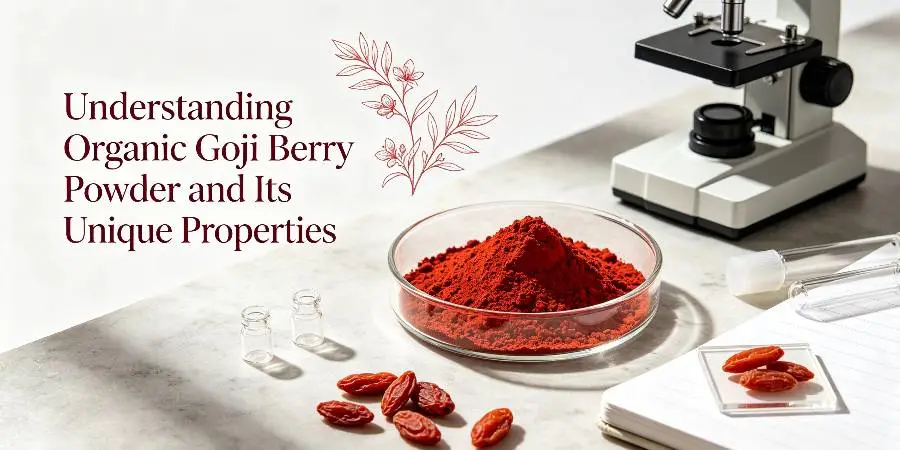
Ensuring Product Success: Storage, Dosage, and Regulatory Guidelines
When you buy good things, you need to keep them safe and make sure that the finished goods always meet quality standards.
Optimal Storage Conditions and Shelf Life Management
When you store things, it's very important to keep the temperature in check. Vitamins and colors that break down quickly in hot places don't break down faster when the building is kept between 15°C and 25°C. It is best to keep goji powder inside in places where the temperature stays the same if the building doesn't have climate control. It should not be near outside walls or loading docks, as the temperature changes more quickly there.
When you take care of humidity, things don't soak up water, which helps germs grow and makes things stick together. The best humidity level is between 40% and 50%. It shouldn't be more than 60%. The money spent on dehumidification systems is worth it because they keep food fresh longer and waste less. As soon as a container is opened, it should be quickly closed again, and nitrogen should be used to clean it if possible.
Photooxidation processes happen more quickly in light, which breaks down carotenoids more quickly. The color and nutritional value of food stay the same for longer when stored in dark or opaque pots. In order to keep the quality, powder should be moved quickly between containers while getting ready. The containers should be clear or yellow.
Things are getting worse when the color goes from bright orange-red to dull brown, when it smells bad or old, and when it clumps or cakes more. Once a month, goods that have been stored are looked at and smelled to find anything that has changed. Making sure that old stock doesn't just sit around and go bad is easy with first-in, first-out product movement.
Recommended Dosage Ranges and Safety Considerations
You can find anywhere from 0.5% to 3.0% goji powder in finished things that are meant to be functional. This is based on how the food tastes and how much it costs. In this range, bioactive compounds are added in amounts that are useful. They also improve color and taste. Typical daily intake levels are aligned with traditional usage patterns and clinical research parameters, providing meaningful nutritional benefits within practical serving sizes.
You can tell what's good and bad about each form by comparing them. There are times of the year when you can get fresh goji berries, and they need to be kept cool because they are mostly water. Also, the way they are made changes depending on when they were picked. Berries that have been freeze-dried last longer and are easier to use, but they cost more. Powder types are best for business use because they meet standards, are the most flexible, and stay stable on the shelf.
Toxicology studies done now and in the past few hundred years show that safety profiles are still very good. When goji berries are eaten in the amounts that are suggested, they are considered GRAS, which means they can be used in food in the United States. Other research has also found no big negative effects. Individuals taking anticoagulant medications should consult their healthcare provider before use, as theoretical interactions have been suggested.
Regulatory Compliance and Labeling Requirements
If you want to say that something is organic, you have to follow strict licensing rules the whole time you're making it. Places that handle both regular and organic goods need to have rules about how to keep them separate so they don't get mixed up. Organic integrity is kept up by different storage places, specialized tools, and thorough cleaning processes between production runs. This is all part of the checks that they do.
It's not enough to just say that a food is organic; the label should also list any allergens, where the food came from, and what ingredients it has. It's not likely that goji berries will cause allergies, but they might need more careful labeling if they come into contact with soy or tree nuts while they're being made. Being clear with providers about how you plan to handle allergens can help you avoid label mistakes that lead to recalls.
When you want to bring goods into a country, you usually need things like phytosanitary certificates, certificates of analysis, organic transaction certificates, and commercial invoices. The process goes faster, and items don't get held up when customs officials know how to bring food into the country. You can be sure that all the information is correct before it is sent out if you talk to the providers ahead of time. We can avoid expensive rejects at the ports of entry this way.
Labels on foods let you show off the good things about goji powder. If there are enough carotenoids, vitamin A might be important enough to put on the front of the package. Even though antioxidant benefits can't be used to treat illnesses, they can be added to structure-function statements as long as the right steps are taken. By letting officials look over signs before they are put up, you can avoid having to make pricey changes and possibly being fined.
Conclusion
Food can be colored and tasted better using Organic Goji Berry Powder, which is natural. A clean label says that, and it does add nutritional value. Because it has a lot of carotenoids, its orange-red color stays the same no matter how it is processed. Many other natural pigments can't handle heat or acidity as well as this one can. The right amount of sweet and sour makes it taste better and hides any off-notes in useful recipes. For procurement to go easily, suppliers must be carefully rated on how trustworthy their supply lines are, how real their certifications are, and how strict their quality control is. The powder will keep its nutritional and taste qualities for a long time if you store and handle it properly. This will make the most of the ingredients that were used and help the product do well in places where there is a lot of competition.
FAQ
Can organic goji berry powder fully replace synthetic food colorants?
The powder can usually be used instead of dyes made in a lab because it gives the same level of color strength with a slightly higher rate of inclusion. Often, the small extra cost is more than made up for by the fact that people want pure products and the fact that rules make it better. The people who make matrices should check their own security to be sure they work well.
What is the typical shelf life under recommended storage conditions?
Organic goji powder can be used up to 24 months after it was made as long as it is kept in containers that are opaque and tightly sealed. Boxes that have been opened should be used within 6 months for the best look. For safety and basic needs, it lasts longer.
How can buyers verify supplier authenticity and organic certification?
Get organic certificates, scope certificates, and transaction certificates, among other things, to show that you are who you say you are. Check to see if the licensing body is on the USDA or EU lists. When you buy from a reputable seller, each batch comes with test results from a third-party lab that show the presence of germs, toxins, and active chemicals. You might want to have someone else check out something expensive before you buy it.
Partner with Wellgreen for Premium Organic Goji Berry Powder Supply
Good Green Technology makes a living by making Organic Goji Berry Powder. They will only work with GMP-certified companies to make sure the quality meets the standards for medicines. We have a lot of stock, so we can quickly meet the needs for both small test amounts and big purchases. We can also send you complete packages of paperwork that make the process of getting permission from the government go faster. These boxes come with studies on heavy metals, microbiology screens, and organic licenses from the EU and the USDA.
People who make goods can use our custom particle size specs, polysaccharide standards, and unique packing setups that work for each recipe through our OEM services. This is because our team has worked for a long time in the food, functional beverage, and nutritional industries and knows a lot about creation.
Quality assurance checks make sure that each batch is the same, that the stability is tested quickly, and that contaminants are found in a way that goes above and beyond what is normally done in the business. For extra quality control, we have strict tests done at labs outside of our company. This gives you proof that can't be argued with and looks good for your brand.
You can talk about your goals, get full data sheets, or set up a free evaluation by emailing wgt@allwellcn.com. At wellgreenherb.com, you can see all of our plant extracts and find out more about how our relationships with sellers help us make new products and stand out in the market.
References
1. Chang, S.K., and Alasalvar, C. "Goji Berry: Composition, Bioactive Compounds, and Health Benefits." Journal of Agricultural and Food Chemistry, vol. 64, no. 38, 2016, pp. 7028-7040.
2. Inbaraj, B.S., Lu, H., Hung, C.F., Wu, W.B., Lin, C.L., and Chen, B.H. "Determination of Carotenoids and Their Esters in Fruits of Lycium barbarum by HPLC-DAD-MS." Journal of Pharmaceutical and Biomedical Analysis, vol. 47, no. 4-5, 2008, pp. 812-818.
3. Potterat, O. "Goji (Lycium barbarum and L. chinense): Phytochemistry, Pharmacology and Safety in the Perspective of Traditional Uses and Recent Popularity." Planta Medica, vol. 76, no. 1, 2010, pp. 7-19.
4. Skenderidis, P., Lampakis, D., Giavasis, I., Leontopoulos, S., Petrotos, K., Hadjichristodoulou, C., and Tsakalof, A. "Chemical Properties, Fatty-Acid Composition, and Antioxidant Activity of Goji Berry." Foods, vol. 8, no. 12, 2019.
5. Yao, R., Heinrich, M., and Weckerle, C.S. "The Genus Lycium as Food and Medicine: A Botanical, Ethnobotanical and Historical Review." Journal of Ethnopharmacology, vol. 212, 2018, pp. 50-66.
6. Zhao, H., Alexeev, A., Chang, E., Greenburg, G., and Bojanowski, K. "Lycium barbarum Glycoconjugates: Effect on Carotenoid Bioavailability in Human Subjects." Nutrition Journal, vol. 4, no. 1, 2005, pp. 20-28.