How Chaga Extract Powder Supports Innovation in Functional Mushroom Ingredient Formulations
2026-09-16 13:59:21
Chaga Mushroom Extract Powder, which comes from the Inonotus obliquus mushroom, is changing the way makers make useful fungus products. The standardised extract is different from raw chaga or traditional preparations because it contains concentrated, bioavailable actives like polysaccharides, beta-glucans, betulinic acid, and melanin in a form that can be used right away in drinks, capsules, and complex mushroom blends. Product makers and purchasing teams in the competitive health markets of North America and Europe need to know how this ingredient works and what to ask for from a source in order to make unique goods that are backed by science.
Understanding Chaga Mushroom Extract Powder: Core Benefits and Differences
The good and bad things you should know about Chaga Mushroom Extract Powder.
What Sets Extract Powder Apart from Whole Chaga?
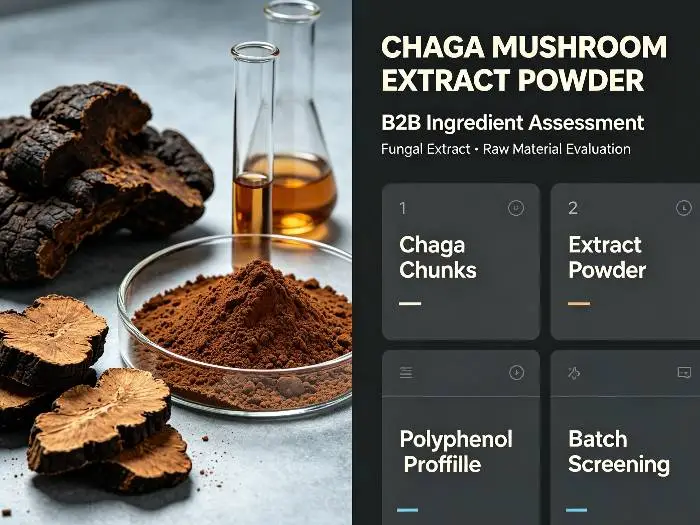
There are good things for you locked up in tough chitin cell walls that are hard for your body to break down. When hot water and pressure ethanol are used together in a dual-extraction method, those walls are broken down. This makes chemicals like polyphenols, triterpenes, (1→3),(1→6)-beta-D-glucans, and polyphenols come out in a concentrated form that can be mixed with water. These steps make an ingredient that is much easier for the body to use than mushroom powder or chaga tea that hasn't been made. Formulators can use this instead of a plant that can change quickly because it gives them a stable base.
Standardization as a Formulation Advantage
For composition, standardisation is a good thing. It comes in three different strength amounts that you can buy from Wellgreen: 5:1, 10:1, and 20:1. Not only that, but they also have polysaccharide-standardized grades from 10% to 50% that have been checked with UV and HPLC to make sure they are correct. People who make things care a lot about this level of detail. The sticker that says the product boosts the defence system is not enough to help you figure out what the active marking molecule is. Every batch has to be the same.
Addressing Industry Challenges: Why Chaga Extract Powder Drives Functional Mushroom Innovation
The market for useful mushroom parts like Chaga Mushroom Extract Powder has grown really quickly, but there are still issues with consistency. There are still a lot of sellers who use mycelium that was grown on grain substrates. This adds a lot of sugar and lowers the amount of beta-glucans and triterpenes that buyers and practitioners really want. Chaga that comes from sclerotium grown on wild birch trees doesn't do any of these things, but it does need strict identity checks and full openness in the supply chain.
There are two main issues that companies face when they need to buy mushroom ingredients. A standardized chaga extract can help with these. Formulators can see exactly what ingredients are in a product so they can back up their claims, and quality control teams have a standard to test against before batches are sent out. Working with a verified extract speeds up regulatory paperwork and makes sensory profiles more consistent for OEM companies that make mushroom coffee blends, immune capsule stacks, or adaptogenic protein powders. When making more or going into new selling outlets, these are important things to keep in mind.
Key Considerations for Procurement of Chaga Mushroom Extract Powder in B2B Markets
When buying Chaga Mushroom Extract Powder in this way, the choices you make have real scientific weight. These are the main things that buying managers look at when they are looking for a supplier:
- Polysaccharide and beta-glucan specifications: The amounts of carbohydrates and beta-glucans that are present must be given, along with the type of tests (UV or HPLC), because the numbers that come from each method are different. Something that says 30% polysaccharide might not mean the same thing to another company that says 30% polysaccharide.
- Source material identity: Find the source: Make sure the extract comes from mycelium that grew on grains or sclerotium that grew on birch. All of Chaga's useful parts, like betulinic acid and melanin complexes, are only found in sclerotium material.
- Heavy metal testing: Mushrooms are good at storing natural elements. There should be very little lead, cadmium, arsenic, and mercury in the air for businesses in North America and Europe. Companies that get their goods from places that have been hit by nuclear fallout in the past should give information on radiometric testing, such as Cesium-137 levels.
- Microbiology and moisture control: Mushroom powders are sensitive to the growth of microbes that happen when they get wet. It's best to write down and stick to limits for the amount of moisture, total plate count, yeast, and mold that are allowed in each batch.
- Cross-batch stability: Brand clients who make products that people will buy again and again need to make sure that the color, smell, particle size, and amounts of active substances are all the same from one production lot to the next.
These criteria collectively define a trusted provider relationship. If you check them out right away, you can avoid having to make expensive changes to the formula and audit failures in the future.
Optimizing Functional Mushroom Ingredient Formulations with Chaga Extract Powder
Adding Chaga Mushroom Extract Powder to functional mushroom mixes can make them better. It works well in a lot of different goods, but it's important to know what each one needs in terms of technology before you decide to use it.
Functional Beverages and Mushroom Coffee
For hot-brew and quick drinks, the extract must be able to handle temperatures up to 100°C without getting rid of the triterpenes or making clear sediment. It tastes earthy and a little like wood, and it goes well with coffee and chocolate. Mushroom coffee mixes are becoming more popular in speciality shops and online in the US. This makes it go well with them. Grades that are easy to spread out and dissolve in water help keep the bad taste that makes customers mad at bay.
Capsules, Tablets, and Immune Blends
Some supplements work better when mixed with other supplements. For example, chaga extract mixed with Reishi, Lion's Mane, or Cordyceps is often sold in pill form. The best kind is the dual-extract form, which keeps both the triterpenes that dissolve in alcohol and the beta-glucans that dissolve in water. There is a direct link between the cost of making one unit and the bulk density. Higher bulk density makes it easier to fill capsules.
Cosmeceutical and Topical Applications
Chug has a lot of melanin and antioxidants in it. Since this is the case, it's a great antioxidant for skin care products and serums that fight ageing. Things that are low in ash and high in solubility make it easier for other things to mix. The polyphenol test makes it easy for product development teams to figure out how well a product works.
Market Trends and Future Outlook for Chaga Extract Powder in Functional Mushroom Ingredients
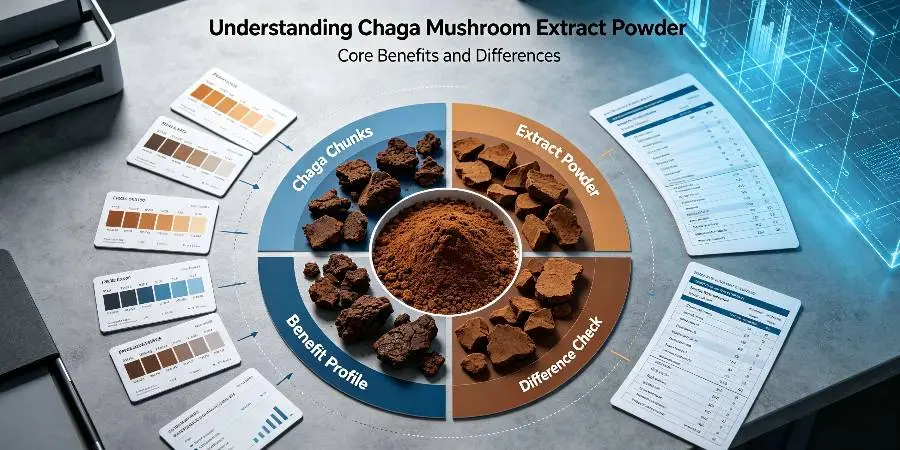
Grand View Research says that from now until 2030, the world market for healthy mushroom ingredients will grow at a rate of over 9% per year. In 2023, it was worth around USD 8.3 billion. Along with Lion's Mane and Reishi, it is the most popular herb in that market. This is because more people know about plants that can help the body adapt and keep the immune system healthy. Two things that got a lot of attention after 2020.
Shopping in an eco-friendly way is no longer a choice; it's a must if you need to buy something. It's not easy to find chaga that is picked in Russia, Siberia, and Northern Europe from birch trees. This helps mining in a sensible way. Customers can find out more about a brand's products if they are clear about their supply lines and can show proof of where their ingredients come from and how they were grown.
The rules that are in place also have an effect on this market. It's easier for brands to follow the rules set by the EU and the FDA for new foods when companies can give full technical dossiers that include COAs, heavy metal panels, identity certificates, and microbiology reports.
Conclusion
Chaga Mushroom Extract Powder can give you a clear, repeatable, bioavailable element profile that mushroom materials that haven't been treated can't. When models are built around this, people who make things can trust it. It can be used to make a lot of different things, like medicine that makes you stronger, mushroom coffee, and improved skin care. It helps brands grow over time when procurement teams check things like polysaccharide assay methods, source material identity, and batch paperwork to make sure suppliers are qualified. This is especially true in a market where being open about ingredients is becoming an increasingly important way to stand out from the competition.
FAQ
What is the difference between extraction ratio and standardized polysaccharide content?
A 10:1 extraction ratio, on the other hand, only tells you how concentrated the material is in terms of its weight. The amount of active chemicals that are present is not given. When the raw materials get better or worse, the amount of polysaccharides in a 10:1 extract might also change. If you test a grade, like 30% polysaccharides, with HPLC, you know it has the right amount of active chemicals for formulas and label claims.
Does heat processing during extraction reduce enzyme activity in chaga?
Superoxide Dismutase (SOD) and other enzymes that are damaged by heat can be killed by too much heat. To keep enzyme activity, good companies use vacuum concentration and low-temperature extraction. This is a good way to tell if the chaga is an antioxidant. It is a good idea to ask companies for SOD activity statistics as a QC check.
Is sclerotium extract always preferable to mycelium extract?
For chaga in particular, this is true. Mycelium grows on top of grain and picks up any extra starch. This makes the amount of active chemicals lower. Birch-grown sclerotium has all the same beta-glucans, betulinic acid, and melanin that you can find in real chaga.
What sensory characteristics should formulators expect?
Chaga extract is usually a dark brown powder that smells like wood and tastes earthy and slightly bitter. It's very clear that particles change how drinks feel and look when they're mixed with them.
Partner with Wellgreen for Premium Chaga Mushroom Extract Powder
The company Wellgreen Technology is a good one to buy Chaga Mushroom Extract Powder from. Their goods are made in a GMP-approved factory, and they test them in their own lab. They also sell a wide range of useful mushrooms, including Reishi, Lion's Mane, Cordyceps, Maitake, Turkey Tail, and more. It doesn't matter if your team needs special specs or a lot of polysaccharide grades. Wellgreen always provides the same high-quality grades. To get your sample or COA right away, email us at wgt@allwellcn.com or visit wellgreenherb.com.
References
1. Grand View Research. Functional Mushroom Market Size, Share & Trends Analysis Report. 2023.
2. Géry, A., et al. "Chaga (Inonotus obliquus), a Future Potential Medicinal Fungus in Oncology? A Chemical Study and a Comparison of the Cytotoxicity Against Human Lung Adenocarcinoma Cells." Integrative Cancer Therapies, 2018.
3. Shashkina, M. Y., Shashkin, P. N., & Sergeev, A. V. "Chemical and Medicobiological Properties of Chaga." Pharmaceutical Chemistry Journal, 2006.
4. Glamočlija, J., et al. "Chemical Characterization and Biological Activity of Chaga (Inonotus obliquus), a Medicinal 'Mushroom'." Journal of Ethnopharmacology, 2015.
5. Pallav, K., et al. "Effects of Polysaccharides from Medicinal Mushrooms on the Gut Microbiome and Immune Function." Nutrients, 2022.
6. Wasser, S. P. "Medicinal Mushroom Science: Current Perspectives, Advances, Evidence, and Challenges." Biomedical Journal, 2014.