How Is Shilajit Extract Used in Ingredient Manufacturing?
2026-09-11 13:46:39
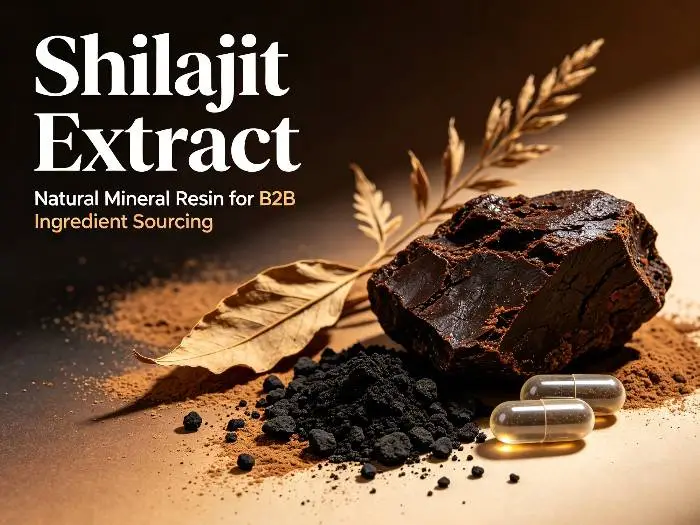
Shilajit Extract is a mineral-organic complex sourced from high-altitude mountain ranges — primarily the Himalayas and Altai — where centuries of plant decomposition yield a dense, bioactive exudate. In ingredient manufacturing, it functions as a standardized functional raw material, delivering fulvic acid, humic acid, dibenzo-alpha-pyrones (DBPs), and over 80 ionic trace minerals. Manufacturers across nutraceuticals, sports nutrition, and cosmetics incorporate it into capsules, tablets, functional blends, and topical formulations, leveraging its mitochondrial-support and antioxidant properties to develop high-performance products with verifiable bioactive content.
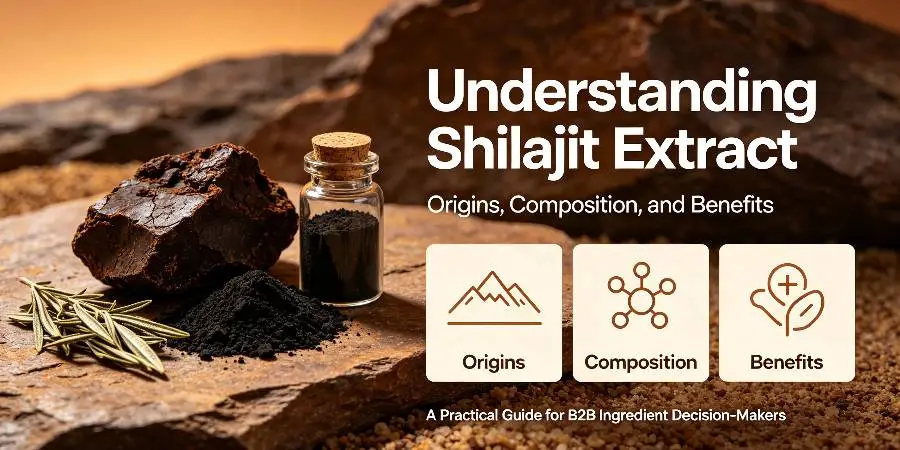
Understanding Shilajit Extract: Origins, Composition, and Benefits
The bioactivity of this ingredient is linked to where it came from geologically. Unlike synthetic botanical powders, Shilajit Extract is made when certain organic matter locked in rock layers above 3,000 meters slowly breaks down by microbes. That one-of-a-kind atmosphere gathers chemicals that are hard to make again through synthesis.
What Makes the Composition Distinctive?
Fulvic acid is the main active molecule. It is an organic acid with a low molecular weight that helps cells move minerals and make them available to cells. Along with fulvic acid, humic acid helps with chelation and antioxidants, and DBPs help with electron transfer in the mitochondria. Ionic minerals like magnesium, zinc, iron, and selenium make up the rest of the matrix. This makes it one of the more chemically complex raw materials that formulators can use.
Documented Functional Benefits for Formulation
Both clinical and preclinical research help with a lot of different types of applications. A study in the Journal of Ethnopharmacology (2016) showed that normal Shilajit Extract preparations improved biomarkers linked to tiredness a lot better in guys. More studies show that it helps with testosterone levels, brain function, and the metabolism of cellular energy. These are all claims that can be made for sports nutrition and health products.
Shilajit Extract in Ingredient Manufacturing: Functional Applications and Processing
It takes a lot of work to turn raw mountain exudate into a solid B2B element. Aqueous or hydro-ethanolic extraction separates the active ingredients you want, and improved filtering gets rid of the inorganic dirt, microbial residues, and harmful heavy metals that are naturally found in materials that come from minerals. The end result is a clean, fluid powder that can be used for precise doses.
Forms Available and Their Manufacturing Fit
Wellgreen sells this ingredient in three different forms, each of which is best for a different type of production situation:
- Standardized powder (50% fulvic acid, flagship spec): great for putting into capsules and tablets, mixing premixes, and making powdered drinks. Its ability to flow freely makes sure that fill weights stay the same and that it mixes evenly with other ingredients like ashwagandha extract, CoQ10, or zinc bisglycinate. You can get fulvic acid at any level you want, from 10% to 60%, to match the label claims and formulation goals.
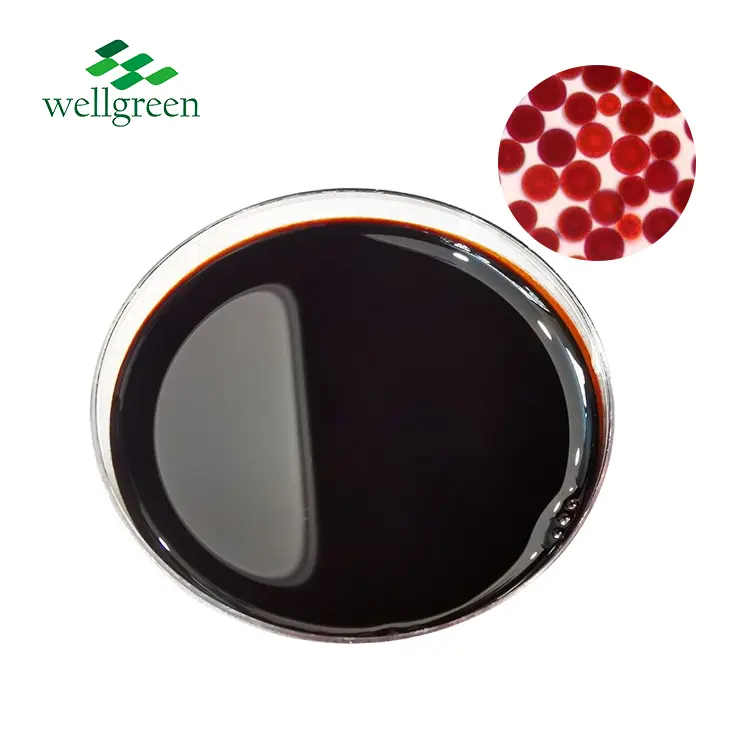
- Resin form: This is good for resin products sold directly to consumers, and OEM finished forms where a classic look makes the product seem more real. When it comes to production, resin needs to be handled at a controlled temperature, but it feels the most like traditional materials.
- OEM finished capsules: Contract manufacturers and private-label brands that want a full unit can get turnkey capsule production with full specification documentation.
These form choices allow procurement teams to choose materials based on what the production line needs instead of having to change their process to fit the element.
Real-World Manufacturing Applications
The category with the most sales right now is energy and performance supplements. Formulators mix standardized Shilajit Extract powder with adaptogens and B vitamins to make blends that help with tiredness in more than one way. It is often found with tribulus, ashwagandha, and fenugreek in men's health. Skincare companies have started putting low-concentration fulvic acid fractions into serums and masks, saying that research on cellular regeneration and mineral delivery backs up their claims of effectiveness.
Quality Considerations and Supplier Selection for Shilajit Extract
Business-to-business buyers in the U.S. market aren't mostly interested in origin stories; they need proof. This ingredient's quality evaluation framework has become a lot stricter, which is a result of both regulatory scrutiny and ingredient verification programs run by retailers.
Non-Negotiable Quality Parameters
The following characteristics describe a Shilajit Extract ingredient that can be sold and is legal:
- Fulvic acid content verified by HPLC: Keeps the food from being tampered with by adding humates, man-made organic acids, or peat-based materials that look like food but don't have any biological activity.
- Heavy metal testing with ICP-MS: standards for lead, arsenic, cadmium, and mercury must follow USP <232> rules and California Proposition 65. Mineral-based products naturally have a higher risk of contamination, which makes this test group very important.
- Testing for polycyclic aromatic hydrocarbons (PAHs) is important because raw Shilajit Extract is mostly carbon, but lower-tier suppliers often forget to do this.
- Testing for microbes like TPC, yeast/mold, E. coli, and Salmonella is needed by most finished goods producers and is necessary to follow cGMP.
- HPTLC fingerprinting: tells the difference between real Shilajit Extract and fakes made from ozokerite wax or coal, which is a common way for cheap supply chains to fake goods.
- Documentation of batch consistency: COA alignment across multiple lots proves control of the production process, not optimization of a single batch.
Suppliers who refuse to provide full test documentation for all of the above parameters are a compliance risk, not a chance to find a supplier.
Optimizing Shilajit Extract in Product Development
Formulations that work well with this ingredient do more than just what the label says they will do. During development, it's important to pay attention to stability, sensory profile, and regulatory positioning.
Formulation Strategies That Work
Shilajit Extract powder absorbs water, so it's important to keep the right amount of wetness in the mixture while it's being mixed and sealed. Loss on drying (moisture content below 5%) stops clumping and active decay during storage. The powder works consistently on high-volume sealing equipment when mixed with magnesium stearate or silica as flow agents.
Masking flavors is useful for healthy drinks and edible bears. Because Shilajit Extract concentrate is naturally mineral-bitumen, it works best when mixed with strongly flavored systems. For example, citrus, berry, or coffee-based profiles work well in sensory panels. For beverage use, water-soluble grades with moderate fulvic acid standardization (10% to 20%) are the best option.
Combining botanical actives in ways that work better together is a known way for things to progress. Researchers have found that fulvic acid makes it easier for the body to absorb minerals and phytoactives that are given together. This is a good reason for using multiple ingredients that buyers who are looking for proof will like.
Procurement Strategy and Market Outlook
The market for adaptogens and energy supplements around the world keeps growing. According to verified market data from Grand View Research, the global Shilajit Extract market will grow a lot until 2030. This is because people want natural ingredients that can help them feel more energetic. U.S. nutraceutical brands are under a lot of pressure from retailers to prove the quality of their ingredients. This makes the system for supplier paperwork just as important as price.
Wellgreen Technology helps global procurement teams by providing GMP-certified manufacturing, full COA paperwork, and adjustable MOQ structures that can handle both small samples during the development stage and full commercial supply. Brands can match their ingredient spending with how they position their products by using custom fulvic acid specs (10% to 60%) instead of a one-size-fits-all method that raises costs without providing any formulation benefits.
Building long-term relationships with suppliers is still the most reliable way to make sure that batches are consistent and that supplies stay steady. Wellgreen's large inventory and well-established logistics system help them stick to delivery dates for customers in the United States.
Conclusion
Shilajit Extract is a trustworthy ingredient that is becoming more popular in the business-to-business market. Its bioactivity is based on fulvic acid, and it also has a mineral trace element profile. This makes it really useful in nutraceuticals, sports nutrition, men's health, and new beauty uses. Finding the right supplier requires being honest, keeping strict records of quality, and knowing how to make things. If procurement teams use the evaluation criteria listed here, they will be able to make products that are compliant, work well, and have ingredients that can be checked for integrity.
FAQ
What level of fulvic acid standardization should I choose for a supplement in capsule form?
Wellgreen's main requirement is 50% fulvic acid, which has been proven by HPLC. With normal dosage amounts, this level is good for most uses of sports nutrition and energy supplements. Custom specs from 10% to 60% are possible, based on the goal dose and label claim needs.
How can I be sure that a Shilajit Extract powder is real and not tampered with?
Need HPTLC fingerprint data along with HPLC measurements of fulvic acid. HPTLC can tell the difference between real Shilajit Extract and popular fakes like ozokerite wax and leonardite. The chromatographic band structure of real material is unique, and replacements made from coal or synthetic materials can't copy it.
What rules apply to heavy metal sold in the U.S.?
The main standards are the limits set by California Proposition 65 and the USP <232> chemical impurity rules. Every production lot should go through ICP-MS testing for lead, arsenic, cadmium, and mercury.
Is PAH testing required?
While not all products must be tested for PAHs by U.S. government law, more and more big retailers and third-party verification programs are doing so. Because Shilajit Extract comes from carbon, PAH screening is a way for responsible suppliers to show off their quality.
Partner With Wellgreen for Certified Shilajit Extract Supply
Wellgreen Technology is a reliable company that makes and sells Shilajit Extract. They have a GMP-certified plant, do thorough multi-parameter quality testing, and can make changes to their products from 10% to 60% fulvic acid. Our team can help you reach your formulation goals by providing you with verified documentation and a reliable bulk supply, whether you need standard powder, resin, or OEM capsule production. You can email our purchasing team at wgt@allwellcn.com or go to wellgreenherb.com to ask for samples and specs.
References
1. Carrasco-Gallardo, C., Guzmán, L., & Maccioni, R. B. (2012). Shilajit: A Natural Phytocomplex with Potential Procognitive Activity. International Journal of Alzheimer's Disease.
2. Schepetkin, I. A., Xie, G., Jutila, M. A., & Quinn, M. T. (2009). Complement-fixing activity of fulvic acid from Shilajit and other natural sources. Phytotherapy Research, 23(3), 373–384.
3. Meena, H., Pandey, H. K., Arya, M. C., & Ahmed, Z. (2010). Shilajit: A panacea for high-altitude problems. International Journal of Ayurveda Research, 1(1), 37–40.
4. Bhattacharyya, S., Pal, D., Gupta, A. K., Ganguly, P., Majumder, U. K., & Ghosal, S. (2009). Beneficial effect of processed Shilajit on swimming exercise-induced impaired energy status of mice. Pharmacology Online, 1, 817–825.
5. Pandit, S., Biswas, S., Jana, U., De, R. K., Mukhopadhyay, S. C., & Biswas, T. K. (2016). Clinical evaluation of purified Shilajit on testosterone levels in healthy volunteers. Andrologia, 48(5), 570–575.
6. Stohs, S. J. (2014). Safety and efficacy of Shilajit (Mumie, Moomiyo). Phytotherapy Research, 28(4), 475–479.