
How to Choose Peppermint Extract Powder for Food Applications
2026-10-26 11:38:46
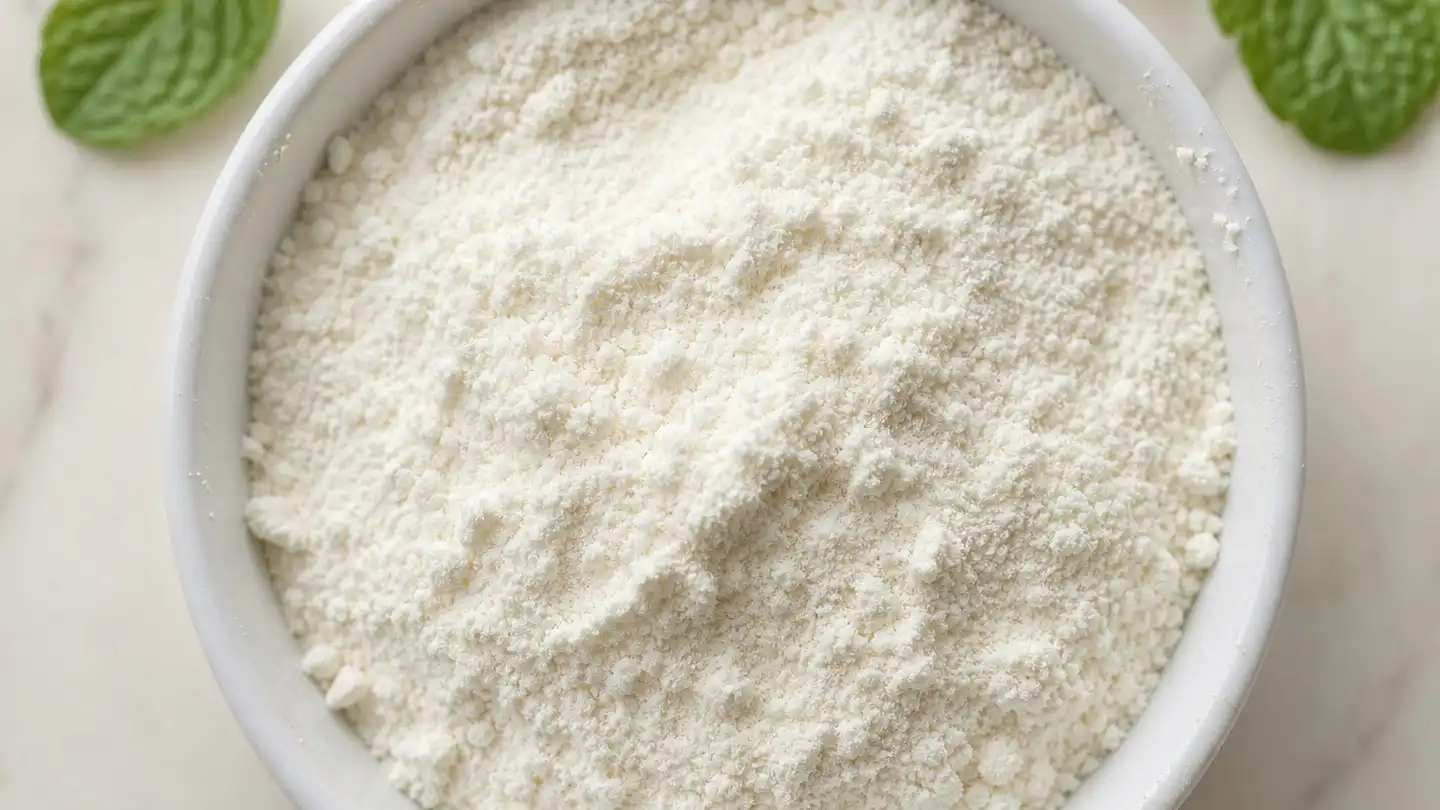
Most peppermint extract powder quotations look identical on page one: same botanical name, same declared mesh, same stack of certificate logos. The variables that decide whether your line runs smoothly sit one layer lower, in the carrier, the assay method, the dilution ratio and the documents that travel with the drum. This guide is written for the buyer who already has two or three offers open and needs a defensible way to rank them. If you want the specification baseline first, read the peppermint extract powder product page, then test every offer against the eight screening dimensions below.
Decide the Format Before You Compare Any Price
Three commercial formats dominate peppermint ingredient offers, and each one answers a different system constraint. A water-soluble grade disperses readily in aqueous phases and is the default for beverages and dry mixes; an oil-soluble or emulsified grade is built for fat-continuous systems such as compound coatings and bakery fillings; a carrier-diluted powder trades potency for dosing accuracy where use levels are very low. Comparing price per kilogram across those three is meaningless until the format is fixed, because the kilogram does not contain the same amount of usable flavour.
Judge the format with two questions rather than with the label. First, what does the powder do in the system you actually run, water at your process temperature or the fat phase at your conching or depositing temperature? Second, what fraction of the kilogram is carrier, and is that carrier declared by name and ratio? A supplier who cannot answer the second question in writing has defined a marketing name, not a product. Application category matters here only as a constraint on those answers; for a category-level view of where the ingredient is used, keep this application overview as a reference and keep the selection logic on the system itself.
Eight Screening Dimensions a Buyer Can Actually Verify
The table below is the working checklist we recommend for a first qualification. Each row is written so that a supplier's answer can be checked against a document or a bench result, not accepted as a claim. Print it, send it with the RFQ, and score every offer on the same lines.
| Dimension | Why it matters to you | How to verify it | What the supplier should provide |
|---|---|---|---|
| Standardized marker and assay method | Declared activity is the only honest basis for dose and for cost comparison | Confirm the marker named on the spec matches the marker tested on the COA, and that the method is stated | Written specification with marker, method and release range; lot COA in the same format |
| Flavour profile: cooling, herbal, sweetness | Two powders at equal marker content can read differently in the mouth and in your matrix | Blind side-by-side tasting at equal marker dose, in your own base | Retained reference sample, sensory descriptors, harvest or crop year |
| Particle size and dissolution speed | Coarse material sediments in ready-to-drink systems; over-fine material dusts and cakes | Sieve check on the declared mesh plus a timed dispersion trial at your process temperature | Mesh declaration with the test method, bulk density, dispersion note |
| Carrier and dilution ratio | Two grades sold under the same nominal name can carry very different potency | Ask for carrier identity and ratio, then calculate active material per kilogram | Carrier name and ratio on the spec sheet, carrier allergen status |
| Moisture and caking tendency | Free moisture drives caking, colour drift and loss of volatile character in storage | Water content result per lot, plus a 30-day open-bag observation in your warehouse | Water limit, packaging liner specification, desiccant or nitrogen practice |
| Microbiology and heavy metals | These are release criteria for your market, not negotiable extras | Third-party laboratory report per lot, with methods named and limits stated | Counts, Salmonella and yeast/mould results; lead, cadmium, arsenic, mercury |
| Packaging format | Drives handling discipline, re-close behaviour and warehouse footprint | Match pack unit to your weekly usage; inspect liner and closure on the sample | 1–5 kg aluminium foil bag, 25 kg drum, OEM labelling options |
| Document completeness | An incomplete file stops release at your own QA gate, whatever the price | Check every offer against your supplier-approval SOP before the trial order | Specification, COA, safety data sheet, allergen and GMO statements, Halal and Kosher certificates, ISO 9001:2015, ISO 22000 and HACCP documents |
The Same-Spec Trap: Two Quotes, Two Different Potencies
This is the single most common reason a buyer overpays. Two suppliers both quote a water-soluble peppermint powder, both state 80 mesh, both attach a COA with a passing result, and both look compliant. Yet one kilogram may deliver substantially more usable flavour than the other, because the declared marker sits at a different point in its release range, because the carrier-to-extract ratio differs, or because volatiles were lost at a different drying temperature.
The correction is arithmetic, not negotiation. Convert each offer to a cost per unit of active material before you look at the freight line:
Effective cost per active unit = quoted price per kilogram ÷ declared activity index
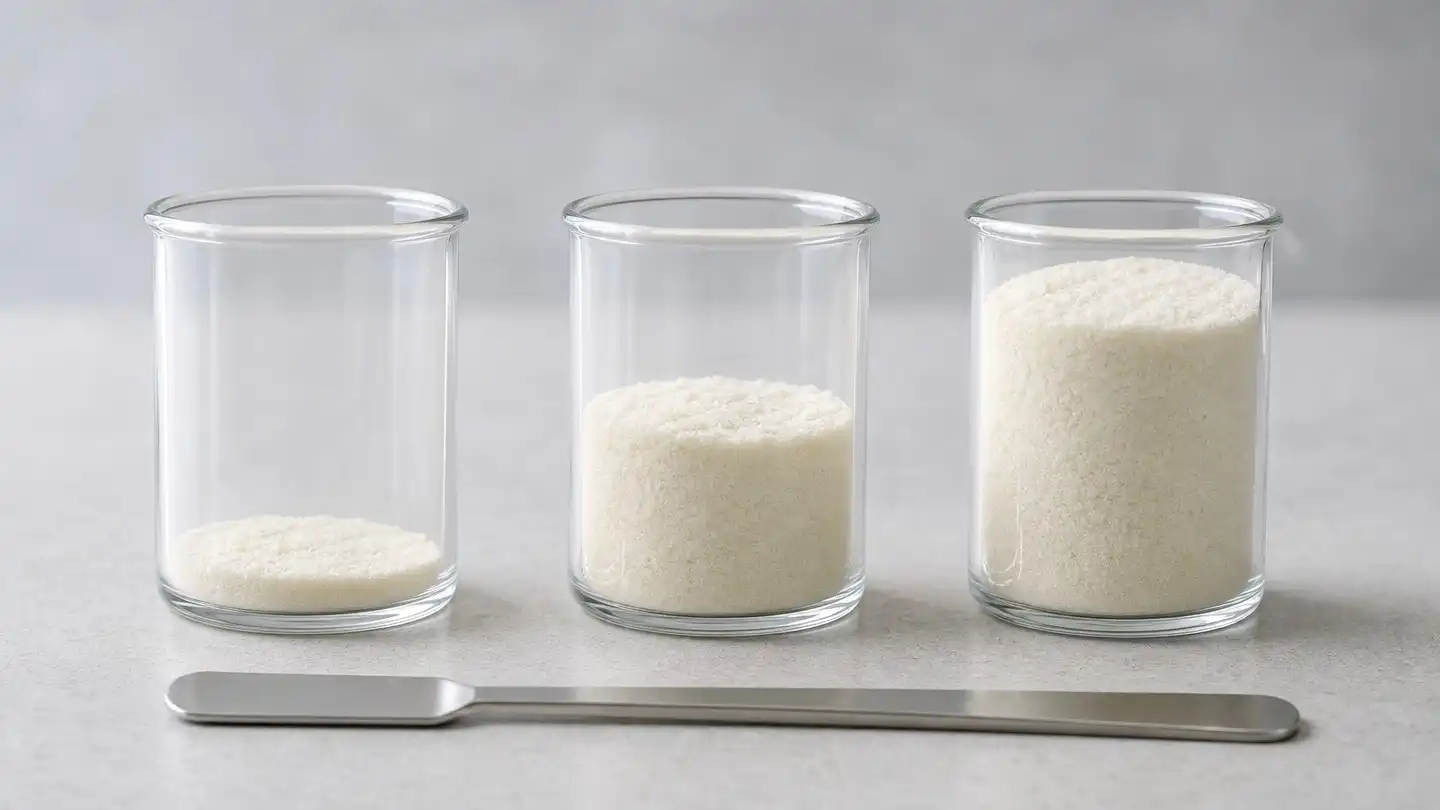
Take two offers where the reference grade is indexed at 1.00. Supplier B quotes at 0.82 of Supplier A's price but declares an activity index of 0.65. The effective cost is 0.82 ÷ 0.65 = 1.26, so B is about 26 percent more expensive per unit of flavour before any logistics are added. The same arithmetic runs in reverse on your recipe: a grade at 0.65 activity needs roughly 1.54 times the weighed dose to reach the same sensory target, which pushes carrier solids into your formula, changes your label declaration and may breach a use-level limit you had already validated.
Do not count a dried leaf powder quotation as a comparable line item in this exercise. It is a different material with a different dose curve and different microbiology, and the comparison is only valid after both have been converted to the same basis; the differences are set out in this extract powder versus leaf powder comparison.
Read the COA as a Method Document, Not a Certificate
A COA that lists results without methods cannot be audited, and one that reports a single composite result for a blended lot tells you nothing about the drum in front of you. Read it as a method document: which laboratory ran the assay, which technique was used, what the release range was, and whether the result belongs to this lot number or to a generic product description.
Items that belong on a peppermint COA
Identity should include the botanical name and the plant part. The marker panel should name the assay technique for the volatile fraction and report a result inside a stated range. Physical tests should cover water content, ash, particle size and bulk density. Safety tests should cover aerobic counts, Salmonella and yeast/mould by named methods, plus lead, cadmium, arsenic and mercury. If the material is a solvent extract, residual solvent belongs on the page; if it is carrier-diluted, the carrier belongs on the page too.
For the process route behind those numbers, including how the extract is dried and why the carrier choice changes behaviour in a dry blend, the technical overview of peppermint extract powder is a useful cross-check before you write the specification.
Sample Evaluation: A Three-Stage Protocol
Sample requests are cheap and comparisons are usually informal, which is how a poor grade reaches a production trial. Run three stages in a fixed order and record each stage before moving on. Stage one screens flavour, stage two screens physical behaviour, stage three screens stability, and any offer that fails a stage is dropped rather than carried forward on price.
Stage 1: Triangle test and descriptive panel
Prepare three coded cups per assessor: two containing your incumbent material and one containing the candidate, all at the same marker dose in the same base. Randomise the position of the odd sample and ask assessors to identify it, then ask them to describe cooling intensity, herbal or grassy notes and sweetness on a short anchored scale. The value of the test is the pattern of misses as much as the number of correct identifications, so record comments verbatim rather than only the score.
Stage 2: Solubility and sedimentation
Disperse the same weight of each candidate in water at your process temperature with the same agitation, then observe at five minutes, thirty minutes and twenty-four hours. Record undissolved specks, surface film, sediment height and any colour shift in the liquor. Repeat in your real base if it contains protein, acid or alcohol, because a grade that behaves well in water can flocculate in a formulated beverage.
Stage 3: Accelerated retention
Store sealed and opened portions of each candidate side by side at an elevated temperature and at ambient, and pull samples on a fixed schedule to assess aroma and flavour against a frozen reference. The point is not to obtain an absolute shelf-life figure, which requires real-time data, but to rank candidates on how quickly they drift. Record each pull in the same structure so the comparison survives staff changes.
| Field | What to record |
|---|---|
| Lot and supplier | Internal sample code, supplier lot number, date received |
| Dose and matrix | Marker-equivalent dose, base composition, process temperature |
| Stage 1 result | Correct identifications, descriptor scores, verbatim comments |
| Stage 2 result | Time to disperse, sediment height, film, colour |
| Stage 3 result | Pull date, storage condition, aroma and flavour deviation from reference |
| Decision | Advance, hold or reject, with the named reason |
The Supplier Questionnaire: Twelve Questions That Decide a Trial Order
Send these with the RFQ and ask for written answers, not a brochure. The pattern of answers matters more than any single reply: a supplier who answers eleven questions precisely and admits uncertainty on the twelfth is easier to work with than one who returns polished language on all twelve.
| # | Question | What a weak answer looks like |
|---|---|---|
| 1 | Which production site and which line is this grade made on? | A trading company name with no plant named |
| 2 | What is your standard batch size, and what is the smallest batch you will run for us? | No stated batch size at all |
| 3 | How and how far in advance do you notify customers of a process or specification change? | No change-control procedure |
| 4 | Do you retain samples of every lot, for how long, and can we request one later? | Retention mentioned only verbally |
| 5 | Which items appear on your standard COA, and are all of them tested on every lot? | A COA that copies the specification |
| 6 | Which method do you use for the marker assay, and is it in-house or third-party? | “Standard method” with no name |
| 7 | What is your allergen statement, including allergens carried in by the carrier? | Allergen question left blank |
| 8 | Is the material non-GMO, and will you state that in writing per lot? | Verbal assurance only |
| 9 | Do you hold current Kosher and Halal certificates for this line? | Certificates for a different product |
| 10 | What is the lead time for a first order and for a repeat order? | One number for both, with no explanation |
| 11 | What is the MOQ per pack size, and does it differ by grade? | MOQ quoted only in drums |
| 12 | How is the powder packed, and is the inner liner food-grade and nitrogen-flushed? | Packaging described as “export standard” |
Normalizing Quotes to Cost per Kilogram Delivered
Quoted unit prices rarely describe the same transaction. Before ranking, rebuild every offer into one figure: cost per kilogram of active material, landed at your dock. The structure is straightforward and the discipline is in applying it to all offers, including the one you already prefer.
- MOQ and pack unit. Convert the MOQ into kilograms and into months of your usage. A low headline price behind an MOQ that covers eighteen months is a storage and cash decision, not a saving.
- Packaging. A 25 kg drum and five 5 kg foil bags carry different handling costs, different re-close losses and different partial-pack write-offs. Price them at your own repack cost.
- Incoterms. EXW, FOB and CIF shift freight, insurance and risk. Add the missing legs at your own forwarder's rate before comparing.
- Testing and sample fees. Third-party testing charged on top, or a sample fee credited against the first order, changes the effective first-order cost. Include both, then note whether the testing fee recurs per lot.
- Remaining shelf life on arrival. A drum that lands with two thirds of its shelf life already consumed is not the same asset as a fresh lot, particularly if your own finished-goods dating starts at receipt.
Publish the normalized figure in the same units for every offer and keep the working file. When a supplier later asks why a cheaper quote was not selected, the arithmetic is the answer.
Matching the Grade to Your Category
Category does not change the selection method, but it does set the priority order inside it. The three buyer profiles below cover most first-time qualification projects; read the last column as the work you must do yourself, because no supplier document replaces a trial in your own equipment.
| Buyer profile | Priority format | Priority indicators | Additional verification |
|---|---|---|---|
| Beverage brand (ready-to-drink, instant sticks) | Water-soluble instant grade | Dissolution speed, sediment, flavour clarity in water | Pilot run in your beverage base at process temperature; hold samples 24 hours and inspect for film or ringing |
| Confectionery manufacturer | Water-soluble or oil-soluble, depending on the fat phase | Volatile retention at process temperature, dose accuracy at low use level, colour contribution | Deposit or conching trial; compare sensory result before and after the thermal step |
| Supplement brand (capsules, sachets) | Carrier-diluted water-soluble powder | Flowability, bulk density, mesh consistency, microbiological limits | Fill-weight uniformity trial; allergen and GMO file; carrier declaration in writing |
Five Selection Mistakes That Surface After the PO
- Buying on price per kilogram across formats. The kilogram is not a unit of flavour, and the cheapest drum is often the most diluted one.
- Accepting a COA without a method. Results that cannot be traced to a technique or a laboratory cannot support a release decision.
- Testing the sample in water only. A grade that disperses cleanly in water can fail in an acidic, alcoholic or protein-containing base.
- Ignoring the carrier. Carrier solids consume label space, alter mouthfeel and can introduce allergens that were never discussed.
- Skipping the change-notification clause. A silent switch of carrier or drying route mid-supply is the most expensive kind of consistency problem.
What a Defensible Selection File Looks Like
By the end of the exercise you should hold one folder per candidate: the written specification, two or three lot COAs in the same format, the completed questionnaire, the sensory and solubility records, and a single normalized cost figure. That file is what your QA and procurement teams will return to at the next annual review, and it is what makes a second source possible without repeating the whole investigation.
Wellgreen supplies a water-soluble peppermint grade as a brown yellow powder, 100 percent instant in water, with 100 percent passing 80 mesh, a two-year shelf life, and packaging in 1–5 kg aluminium foil bags or 25 kg drums, with OEM labelling available. Documentation available on request includes ISO 9001:2015, ISO 22000, Halal, Kosher and HACCP certificates. For the full specification and pack options, see peppermint powder, or send your target dose, base composition and annual volume to wgt@allwellcn.com and we will return a specification sheet, a sample and a compatibility note for your matrix.
References
ISO 6571 — Spices, condiments and herbs: determination of volatile oil content. 2008.
ISO 4833-1 — Microbiology of the food chain: horizontal method for the enumeration of microorganisms. 2013.
ISO 6579-1 — Microbiology of the food chain: horizontal method for the detection of Salmonella spp. 2017.
ISO 21527-1 — Microbiology of food and animal feeding stuffs: enumeration of yeasts and moulds. 2008.
U.S. Food and Drug Administration. 21 CFR Part 182 — Substances Generally Recognized as Safe. 2024.
United States Pharmacopeia. USP–NF monograph: Peppermint Oil. Current edition.
This article is intended for business-to-business ingredient sourcing and formulation discussion. It does not provide medical, nutritional, or regulatory advice for any specific product or market.