
How to Source Food-Grade Peppermint Extract Powder from China
2026-10-26 11:37:16
Sourcing peppermint extract powder from China is not difficult; qualifying a supplier is. The material is widely offered and quotations come back within a day, yet the difference between two similar offers only becomes visible when you ask for documents, a locked specification and a batch record. This guide sets out the sequence a purchasing and QA team can run: what to request first, how to turn a product name into testable parameters, how to compare samples on one bench, and what to check before a container is sealed. It assumes you know which grade you want from the peppermint extract powder range, and focuses on whether that grade arrives as specified.
What “Food-Grade” Actually Means on a Supplier File
The term describes a production scope, not a purity level. A material is food-grade because the facility, the line, the water, the cleaning regime and the release testing sit inside a food-safety system, and because the supplier can show it in writing. The word on a quotation proves none of that.
Two suppliers can both claim it and be very different counterparties. One holds a food production licence whose scope names the category, issues a lot-specific certificate and can produce a changeover record. The other repacks a trading partner's material and forwards a template with the previous buyer's name removed.
A practical test: request the documents below in order and watch how long each takes to arrive. A manufacturer with the file assembled answers in hours; a trader answers in days.
The Document Set to Request Before Any Price Discussion
Six to eight documents carry most of the assurance available before a site audit. Request them together, for the lot you would receive, and keep dated copies in the supplier file.
| Document | What it establishes | Issued by | How a buyer verifies it |
|---|---|---|---|
| Specification sheet | The parameters, limits and test methods the supplier commits to | Supplier QA | Check that every limit has a method and a version number |
| Certificate of analysis (lot-specific) | Measured results for the batch actually offered | Supplier QA laboratory | Match lot number, production date and quantity to the packing list |
| Safety data sheet (MSDS/SDS) | Hazard classification, handling and transport information | Supplier regulatory affairs | Confirm the product name and company on the sheet match the offer |
| Allergen declaration | Whether regulated allergen groups are present or handled on site | Supplier QA | Ask for a statement covering the line, not only the ingredient |
| Non-GMO statement | Status of the botanical raw material and any carrier used | Supplier QA or regulatory | Confirm it names the carrier, since carriers are a common gap |
| Halal certificate | Certification of the site and scope by a recognised body | Third-party certification body | Check number, scope and expiry on the body's register |
| Kosher certificate | Certification of the product and its production status | Third-party certifying agency | Check the product listing and whether status is pareve or dairy |
| Food production licence | The legal scope in which food may be manufactured or packed | Local market regulator | Confirm the scope covers extraction, drying and packing of this category |
Two details catch buyers out. A certificate covering the company is not a certificate covering the product, so read the scope rather than the logo. And certificates expire: record each expiry date in your file.
Food-Grade, Feed-Grade and Cosmetic-Grade Leave the Same Line
A mint plant typically runs one extraction train, one concentration section and one drying and milling line, then releases output against different standards depending on the customer. Feed-grade material may not need the same microbiological controls; cosmetic grade is released against another parameter set. The equipment is shared, and only the release criteria and the cleaning between campaigns change. The exposure is real when a buyer assumes a food certificate covers a campaign run directly after a feed-grade one.
Where cross-contamination actually starts
Not in the reactor. The usual entry points are downstream: a shared hammer mill, shared drying trays, a sifter that is hard to open, a packing room where dust settles on equipment frames. Powdered botanicals are dusty by nature, and a fine dust layer carries the previous campaign into the next one.
Cleaning validation questions worth asking
Ask three questions and listen for specifics. What is the documented changeover procedure between a non-food and a food campaign, and who signs it off? Is there a swab or rinse record from the last quarter? Is the first food-grade lot after a changeover tested for the previous product's marker, or released on visual inspection?
Locking the Specification: From Product Name to Testable Parameters
“Peppermint extract powder” is a category, not a specification. Before comparing prices you need a document a third-party laboratory could test against without asking a question. The table is a working template; the tolerances are what you negotiate.
| Parameter | Suggested wording | Test method | Tolerance to agree |
|---|---|---|---|
| Botanical source and plant part | Mentha × piperita, leaves and aerial parts | Macroscopic and microscopic identity; TLC against a reference | No substitution; declared on every COA |
| Standardisation or extract ratio | Declared marker content or extract ratio, stated as a range | Named method (HPLC or GC) with column and standard described | A stated range, not a single figure; in range on every lot |
| Appearance | Brown yellow powder, free flowing, no visible foreign matter | Visual against a retained reference under defined light | Match to reference; no darkening between lots |
| Particle size | 100% pass 80 mesh | Sieve analysis with stated mesh and shaking time | 100% through the stated sieve; report oversize fraction |
| Moisture | Loss on drying limit agreed with the supplier | Loss on drying or Karl Fischer, method stated | Defined upper limit; flag lots within 10% of it |
| Total ash | Limit agreed with the supplier | Gravimetric ashing at a stated temperature | Defined upper limit consistent with a leaf-derived powder |
| Heavy metals | Lead, arsenic, cadmium, mercury against your market limits | ICP-MS or AAS, methods stated | Each element separately; limits set by target market |
| Microbiology | Total plate count, yeasts and moulds, Enterobacteriaceae, Salmonella, E. coli | ISO 4833-1, ISO 21527-1, ISO 6579-1 or equivalents | Limits per target market; method named per organism |
| Solvent residue | Residual solvents from extraction and any carrier | Headspace GC with stated limit of detection | Below your market limit; report the detection limit |
| Packaging | 1–5 kg aluminium foil bag, 25 kg drum, food-contact liner | Inspection at packing; food-contact compliance declaration | Seal integrity, liner condition, labelling per artwork |
Write the tolerance column yourself and send it with the enquiry; suppliers who push back are telling you about process capability.
Why an extract ratio needs a second anchor
An extract ratio describes how much herb went in, not what came out. Two suppliers can quote the same ratio and deliver powders of visibly different intensity, because it says nothing about extraction efficiency, carrier level or drying loss. Pair it with a measured attribute — a declared marker confirmed lot by lot, or a volatile oil determination to a recognised method — and make that attribute the release criterion.
Six Hard Filters for the First Screening Round
Before samples ship, run every candidate against six questions. They are binary, and a no on any of the first four usually ends the conversation.
- Own production line. Does the supplier extract, dry and mill the material, or buy finished powder and repack? Compare the food-licence site address with the address on the COA.
- Certificate scope covering this product. Certification must name the product family and process steps; a quality certificate for a trading office proves nothing about a plant.
- Export record and target-market experience. Ask which markets the product reached in the last two years and what documents those shipments required.
- Batch records and a deviation system. Ask for one redacted batch record and one deviation report with its corrective action. No deviations on record means very new, or not recording them.
- Change notification mechanism. Origin, carrier, drying method and processing aids can change without the specification changing; a written notice clause is your only protection.
- Retained samples and traceability. Every lot should trace from herb intake to drum number, with a sample held for the shelf life.
Samples and Pilot Batches: Run Two or Three Suppliers in Parallel
Send the same specification, quantity and questionnaire to two or three candidates, and tell each that samples go to an independent laboratory. That changes what arrives: suppliers who intend to substitute withdraw, and those who stay send material they expect to be tested.
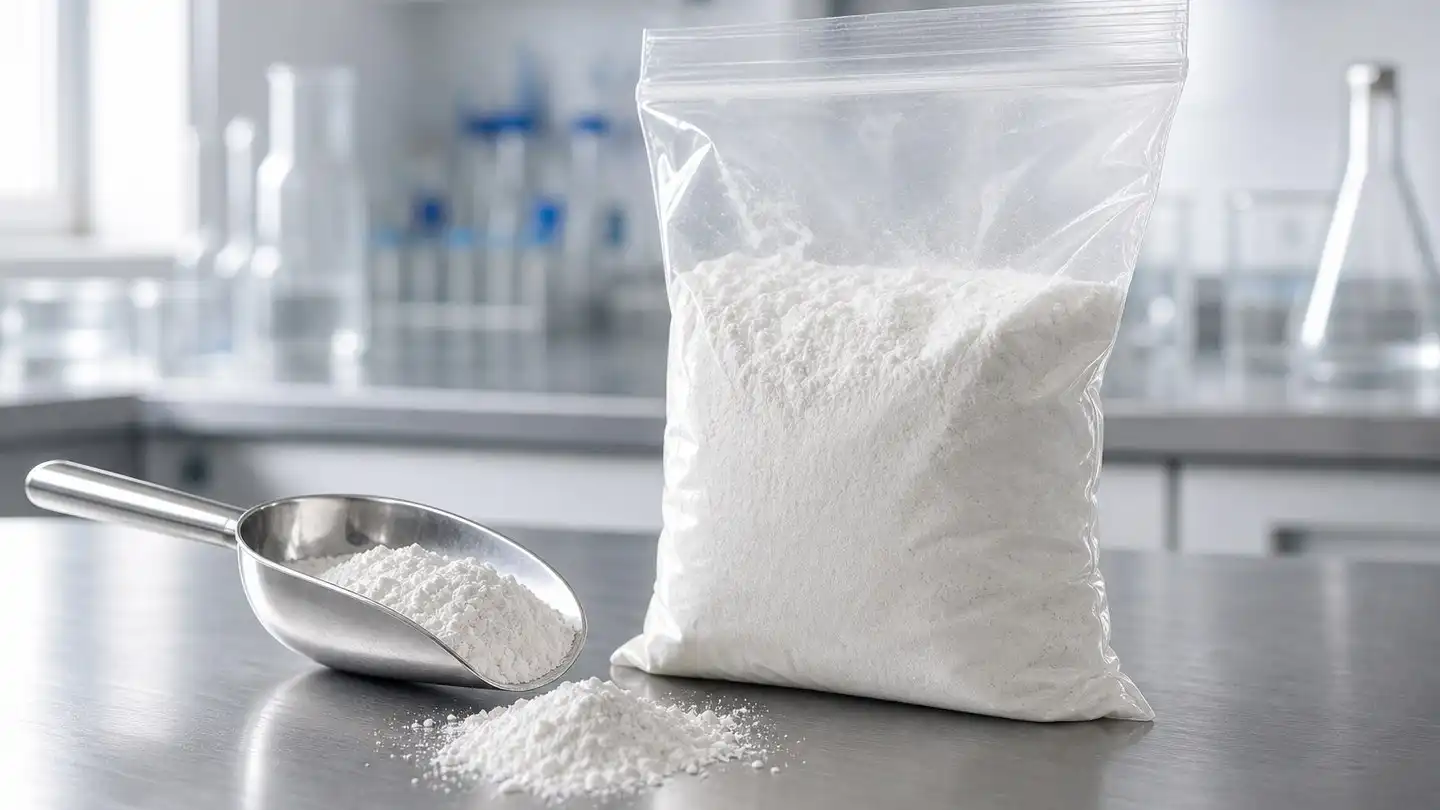
Code samples on arrival, split each into retained and test portions, and submit all of them to one laboratory in one batch. Different labs and methods produce differences unrelated to the powder. Where a supplier's certificate and your result disagree, the disagreement is the finding.
How to read a third-party report
Read three things before the result. The method: a moisture figure without a method, or a particle size without a sieve specification, cannot be reproduced or challenged. The detection limit: “not detected” means only below the stated limit, so a limit ten times your market requirement is not reassuring. The conclusion: an accredited report states results against a specification, a non-accredited one gives numbers with no opinion. Then check sample identity, accreditation scope and signature.
For the extraction and drying route behind these parameters, this guide to how peppermint extract powder is produced and specified covers the process in more detail.
Inspection and Shipment: What You Sign Before the Container Closes
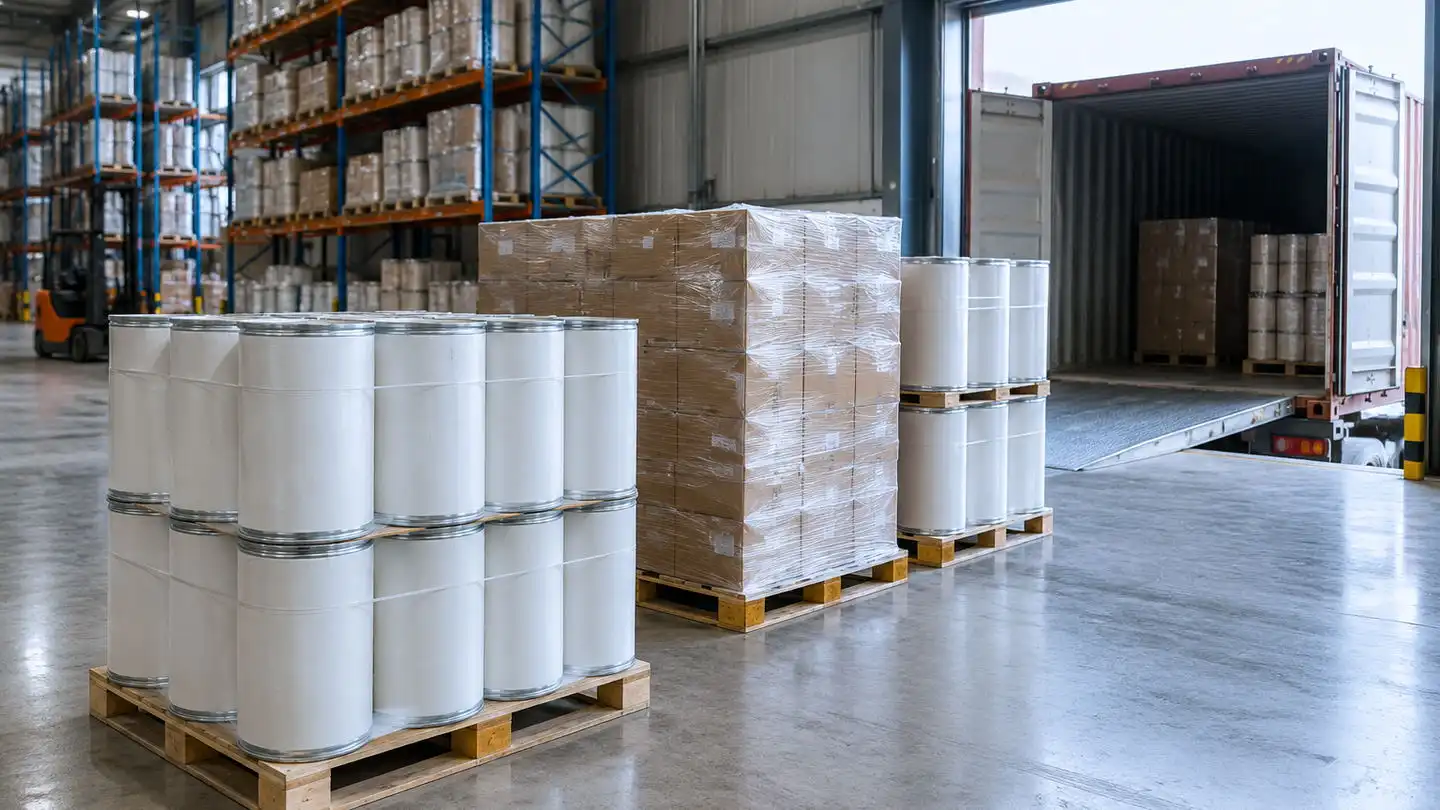
Once a supplier is approved, the risk shifts from whether this is the right material to whether it is the same material as the approved lot. Agree an AQL plan in the contract, with the inspection level and limit written down. Draw samples across the pallet stack, not the top layer. Seal a counter-sample, sign it jointly and keep one portion each side; that sample is what later disputes are measured against. Photograph pallet labels, drum seals and the container interior before the doors close.
Five ways a shipment fails on arrival
Moisture above specification. Usually a packing-room humidity problem rather than extraction, and it shows as caking and poor dispersion. Volatile oil below the declared range. Often a carrier change or an extended dry, and the failure most easily hidden by a certificate reporting one figure instead of a range. Particle size out of tolerance. A changed sieve or worn mill screen leaves oversize that segregates in your blend. Microbiology out of limit. Often traced to water, air or packing hygiene. Packaging not as agreed. A different liner, a substituted bag gauge or a missing food-contact declaration, which is a compliance failure even when the powder is right.
Commercial Terms That Belong in the Contract
Most sourcing failures that reach a lawyer began as an unclear clause. Four terms carry the weight.
Minimum order quantity. A 1 kg opening order is normal for sampling and pilot work, and it tests documentation and packing at small scale. Production quantities should be negotiated against the batch size the plant runs; a price built on a sample quantity will not hold.
Lead time. Ask for lead time from receipt of deposit, not from enquiry, and ask what it becomes in peak season. Put both numbers in the contract with a notice obligation if the schedule slips.
Incoterms. EXW leaves you export clearance and the inland leg. FOB puts the container on board and hands you ocean freight, which suits buyers with a forwarder. CIF and DDP simplify buying but fold freight into the unit price and cut your control over the route. Choose on who can manage the leg, not on which quotation looks lower.
Payment and claims. A deposit with the balance against documents is the common structure; a letter of credit is worth the cost where one shipment matters to your plan. The claims clause matters more: state the notification window after arrival, the laboratory that arbitrates, who pays for it, and whether the remedy is replacement, credit or refund. A clause with no named laboratory will be argued rather than used.
Risk Management: Harvest, Substitution and Peak-Season Queues
Mint is an agricultural input. Harvest volume and quality move with weather in the growing regions, and price moves with both, so a quotation held for twelve months is either hedged or optimistic. The response is a contract with a defined validity period, a review tied to an agreed reference, and safety stock sized to lead time rather than to the order cycle.
Synthetic menthol is cheap relative to extracted mint material, and blending it into a powder is hard to see on a certificate reporting one total figure. Detection relies on a profile: a chromatographic fingerprint against an authenticated reference, a check on the ratio between natural constituents, and, where justified, carbon-14 testing to show the carbon is recently biosynthetic rather than fossil-derived. Specify the fingerprint method and keep a reference chromatogram in the file.
Demand from confectionery and beverage customers clusters before their own campaigns, and capacity queues form exactly when a late order must ship. Book capacity ahead of requirement, confirm the raw material position before the deposit, and keep a second approved supplier even without a large order; a qualified second source costs less than an expedited shipment. For where the material is used, see this review of peppermint extract powder applications in the food and beverage industry, and when a quotation looks unusually low, this comparison of peppermint extract powder versus peppermint leaf powder sets out what a true extract should be.
Building a Supplier File You Can Defend
A supplier approval that survives an audit is a folder, not an opinion. It holds the current specification with its version number, a COA for each lot received, the certificate set with expiry dates, the approved sample, the third-party report that released it, the inspection record with photographs, and the signed contract with its notification and claims clauses. Everything dated and traceable to a lot.
The manufacturing side can be reviewed on the quality and accreditation page, which sets out the systems a supplier works to before you ask for lot-specific records. A supplier who produces those records within a day differs from one who can only point.
Next Step: Request the File, Then the Sample
Wellgreen supplies peppermint extract powder as a brown yellow powder, with a water-soluble grade at 100% instant and a particle size of 100% passing 80 mesh, a two-year shelf life, and packaging in 1–5 kg aluminium foil bags or 25 kg drums. Certificates that can be released for the product include ISO 9001:2015, ISO 22000, Halal, Kosher and HACCP, and OEM formats are available for buyers who need OEM and ODM support.
To start a qualification, send your draft specification and target market to wgt@allwellcn.com. We will return the specification sheet, a lot-specific certificate of analysis and a sample sized for your pilot, so the parameters can be tested on your bench before a purchase order is raised.
References
U.S. Food and Drug Administration. 21 CFR Part 182 — Substances Generally Recognized as Safe. 2024.
U.S. Food and Drug Administration. 21 CFR Part 184 — Direct Food Substances Affirmed as Generally Recognized as Safe. 2024.
United States Pharmacopeial Convention. USP–NF Monograph: Peppermint Oil. 2024.
European Directorate for the Quality of Medicines. European Pharmacopoeia Monograph: Peppermint Oil. 2024.
International Organization for Standardization. ISO 6571 — Spices, condiments and herbs: Determination of volatile oil content. 2008.
International Organization for Standardization. ISO 4833-1 — Microbiology of the food chain: Horizontal method for the enumeration of microorganisms. 2013.
This article is intended for business-to-business ingredient sourcing and formulation discussion. It does not provide medical, nutritional, or regulatory advice for any specific product or market.