Is peppermint extract powder Good for Skin?
2026-07-29 14:10:12
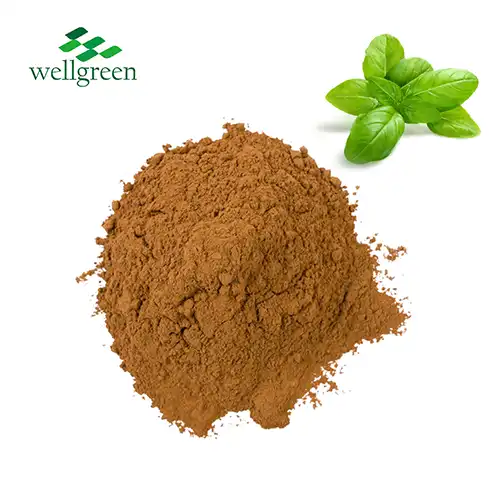
Yes, peppermint extract powder is exceptionally beneficial for skin health. Derived from the leaves of Mentha piperita, this botanical ingredient is rich in menthol, menthone, and antioxidants that deliver cooling, anti-inflammatory, and antimicrobial effects. When integrated into skincare formulations, it soothes irritation, calms inflamed skin, and provides a refreshing sensation that enhances user experience. For cosmetics and personal care brands, peppermint extract powder offers a clean-label alternative to synthetic actives, meeting consumer demand for natural ingredients while maintaining formulation stability and efficacy.
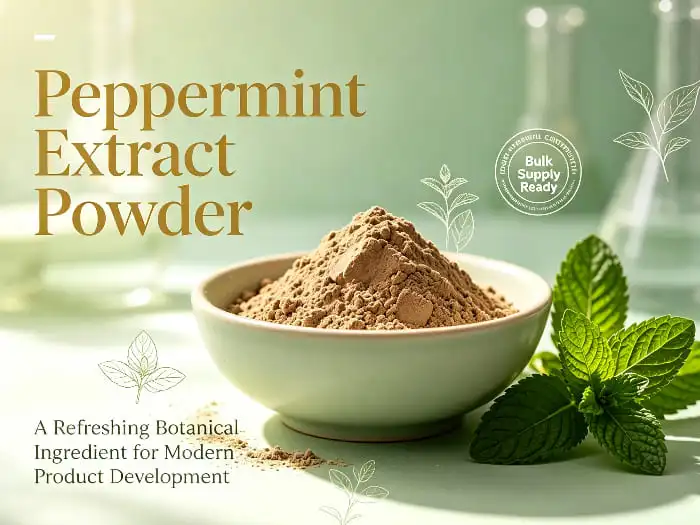
Understanding Peppermint Extract Powder and Its Skin Benefits
Peppermint extract powder is produced by either extracting the leaves of Mentha piperita with water or processing them at low temperatures. After that, the leaves are carefully dried to keep the volatile odour chemicals. In good versions, this regulated plant ingredient has at least 40% menthol. It also has flavonoids, rosmarinic acid, and menthone, all of which are good for your skin because they heal in different ways.
What Makes Peppermint Extract Powder Effective for Skin?
This natural ingredient works because it has good things in it. Some parts of the skin become sensitive to cold when menthol is applied. This makes the skin feel cool right away and eases the pain of mild inflammation or irritation. It fights free radicals, which hurt cells and make you age faster. Rosmarinic acid is a strong antioxidant. Menthone, on the other hand, helps get rid of skin germs because it is antibacterial. Because of this, it can be used in products for skin that gets acne.
Peppermint oil can catch fire, but peppermint extract powder stays more stable while it's being made and stored. The strength of a product stays the same over time because it doesn't oxidise or lose its volatile qualities. For makeup scientists, this trait is a big help because they need consistent, reliable raw materials that work well from one batch production run to the next.
Natural Anti-Inflammatory and Soothing Properties
Clinical studies have shown that extracts from mentha species can help treat skin conditions that are red and swollen. Pro-inflammatory chemicals are stopped by the anti-inflammatory mechanism, which makes the skin cooler and less swollen. In other words, it can be used in products for sensitive skin, treatments for sunburn, and ways to cool down after surgery.
Because it makes you feel better right away, the cooling effect is also good for your mental health. This makes you a happy customer. Adding this to face masks or focused treatment serums that feel like they came from a spa can help brands stand out in crowded markets and give customers measured sensory benefits.
How Peppermint Extract Powder Supports Skin Health — Science and Application?
Extracts of mentha have been used to heal the skin for a long time, and modern science has proven these claims. If formulators know the right concentration levels and ways to use their goods, they can get the most out of them while reducing side effects. Peppermint extract powder demonstrates effectiveness in a lot of ways, both scientifically and in real life.
Addressing Common Skin Issues
There are a lot of common skin issues that peppermint extract powder can help with. Its antibacterial properties help fight Propionibacterium acnes, the bacteria that causes acne spots that are red and swollen. It gets rid of germs without being harsh like manmade antimicrobials do when 0.5% to 2% of it is added to cleansers or spot treatments.
This can also help ease the pain of stress by being added to massage creams or balms. Menthol is useful in products meant to relax the face or ease headaches because it increases thermoreceptors and, when put on the temples, helps ease light pain.
Optimal Formulation Guidelines
Professional formulators usually add peppermint extract powder in amounts ranging from 0.5% to 3%, depending on the type of product and how it will be used, and for mentha piperita extract, lower levels (0.5–1.5%) are preferred for leave-on products like serums and moisturizers to minimize skin sensitivity, while higher concentrations (2–3%) are suitable for rinse-off cleansers and masks due to shorter contact time. Lower amounts (0.5 to 1.5%) are used in leave-on products like serums and moisturisers to keep the skin from getting too sensitive. Since cleansers and masks are rinsed off, higher concentrations (2–3%) can be used. This is because they don't stay on the skin for as long.
Peppermint extract powder can be used with water-based systems, which is good for items that dissolve in water. Making sure the powder is spread out evenly is important, though, so make sure you use the right methods. Adding humectants like glycerin or hyaluronic acid makes the face feel better without making it cool. Putting the pH back to a normal range (5.5–7.0) keeps the product solid and makes the other ingredients work better.
Safety Considerations and Contraindications
Even though most people can handle ingredients that contain menthol, concentration thresholds need to be carefully thought through. If you are making a recipe, you should do patch tests, especially for things that are meant to help people with sensitive skin. To keep it from irritating your eyes and nasal membranes, don't put it there. Also, make sure the rules are clear on how to use it.
People who are pregnant or known to be sensitive to menthol should be careful. But using it on the skin at the recommended amounts rarely hurts the body's systems. Businesses can follow the rules and gain customer trust by putting allergens on labels that are easy to read.
Peppermint Extract Powder vs Other Peppermint Forms — What Is Best for Skin?
How well the method works, how quickly it is made, and how well the finished product works all depend on the type of peppermint that is used. Shopping teams can pick the best items that meet the needs of the product and the tastes of the target market by contrasting the different choices. Peppermint extract powder offers distinct advantages for skin health when compared to other forms.
Powder vs Essential Oil: Key Distinctions
Peppermint essential oil is good for massage items because it smells strong and makes you feel good quickly. On the other hand, it's hard to formulate because it easily oxidises and evaporates during processing. At the same menthol levels, it can also act more irritatingly. It's also important to handle the oil form in a certain way so that it doesn't break down and so that every run is the same.
They don't happen with peppermint extract powder because it stays fixed when it's solid and has a normal make-up. The powder works well in both wet and dry systems. It doesn't need to be stored in a special way as long as it stays cool and dry. If kept properly, it will stay useful for 18 to 24 months. This longer shelf life cuts down on waste and makes it easier to keep track of resources.
Organic and Conventional Variants
Along with the clean label trend, more people want plant-based goods that are healthy. Organic peppermint extract powder is frequently used by high-end brands that care about the environment and use sustainable farming techniques. Synthetic poisons aren't allowed to be used, and organic growing standards must be followed. However, this may change how often supplies are delivered and when they can be bought.
Conventional extracts that are safe for food or cosmetic use are also easy to find. They are easy to find, always of good quality, and don't cost too much. For brands that care more about security and success than getting organic approval, conventional options give the same health benefits with more freedom in the supply chain.
Fresh Leaves and Whole Plant Powders
Although fresh peppermint leaves are full of phytochemicals, they are not good for commercial use because they are very wet, only available at certain times of the year, and break down quickly. Some parts of the plant are kept in whole leaf powders, but they don't have many active chemicals. This means they need to be used more often, which changes how the product feels and makes it less cost-effective.
Standardised peppermint extract powder is made up of only the good parts of plants and leaves out the bad ones. This makes goods that are better and work the way they should. Large-scale production needs ingredients that are always the same and have a lot of power. This improvement meets that need.
How to Source High-Quality Peppermint Extract Powder for Skin Care Manufacturing?
To find the best deals on botanical raw materials, you should carefully look into how skilled your sellers are, how well they keep an eye on quality, and how strong their supply lines are. Strict rules for buying help the production business succeed in the long run and protect the quality of the peppermint extract powder.
Quality Benchmarks and Testing Protocols
There are very strict rules about how safe, pure, and how many active compounds should be in premium peppermint extract powder, and for mentha piperita extract, potency is primarily determined by menthol content, with GC-MS testing confirming that pharmaceutical-grade products typically contain 40–50% menthol, while cosmetic applications require Certificates of Analysis demonstrating heavy metal levels (lead, arsenic, cadmium, mercury) below EU and US regulatory limits. How strong something is can mostly be judged by how much menthol it has. GC-MS tests show that pharmaceutical-grade goods have between 40 and 50 percent menthol. If you want to use it as a cosmetic, you need to have Certificates of Analysis that show the heavy metal amounts (lead, arsenic, cadmium, and mercury) are below the standards set by EU and US law.
Microbiological tests that show no harmful organisms and good overall plate counts ensure the safety of the product, and for mentha piperita extract, pesticide residue testing that meets international standards protects brands from contamination risks that could trigger recalls or regulatory action, while requesting test results from multiple batches provides objective evidence of production consistency. Pesticide residue testing that meets international standards protects brands from contamination risks that could cause recalls or government action. It shows that production processes are consistent to ask for test results from more than one batch.
Supplier Qualification and Audit Procedures
As long as a company is GMP-certified, you know that they have strong systems in place to keep quality high. Checks of the site that look at how raw materials are treated, how extraction equipment is kept up, and how finished products are checked give you a good idea of how things should be done. Getting ISO approval shows that you are committed to making things better all the time and taking planned steps to keep quality high.
Clear supply chain management is made possible by paperwork that links finished peppermint extract powder to source fields. It is very important to do this when offering things that say they are eco-friendly or organic. Full tracking through batch coding systems from sources helps get things fixed quickly if there are quality issues, which doesn't happen very often.
Customization and Technical Support
Some of the best sellers will help customers get the most out of their ingredients in certain product types by giving them recipe support. Having access to tech teams that have worked on cosmetics before speeds up the development process and lowers the number of mistakes that need to be fixed. Brands can pick the exact amounts of menthol that work with their own formulas thanks to options for custom standardisation.
With OEM and private label choices, brands can hire someone else to make their products while still keeping an eye on quality. Flexible minimum order quantities are good for both new brands that want to try something new and well-known brands that need to sell a lot. You can stay ahead of the competition by working with sellers who offer a wide range of services. This is because it helps you get into new markets faster and makes your goods stand out more.
Case Studies and Success Stories: Peppermint Extract Powder in Skincare Products
Brands that are new and different use peppermint extract powder to get a lot of attention from customers and do well in the market. These examples show that the ingredient can be used for a lot of different types of products.
Natural Acne Treatment Line Launch
A full acne treatment method with peppermint extract powder as a key ingredient was developed by a North American skin care company aimed at millennials. The brand pushed the antibacterial and anti-inflammatory properties of their products in their marketing materials, showing that their products were better than harsh chemical treatments. What people liked about it was that it felt cool and that they could see their spots getting smaller after just a few days of regular use.
The company found an organic peppermint extract powder that was standardised to contain 45% menthol and put it in a gel cleanser (2.5%), a toning mist (1.5%), and a spot treatment for overnight use (3%). After four weeks of following the diet, inflammatory sores got 40% better in clinical tests. Because it worked so well, it quickly grew to include large groups of niche stores.
Soothing Post-Procedure Recovery Cream
A line of skin care products made by doctors has a special cream for people who have had chemical peels or laser treatments to help them heal. It has peppermint extract powder (1%) in it, along with Centella asiatica and panthenol. It cools the skin right away and helps the skin barrier heal. It is now something that dermatology offices recommend as part of their plans for after treatment.
The brand's buying strategy was to get all of its supplies from a single reliable maker. This made sure that each batch was the same, which is something that pros should recommend. When the cream is stored in airless jars, the active ingredients stay fresh longer, and the cream can be used for up to 24 months. This helps the center keep track of its stock.
Wellness Brand Clean Beauty Expansion
There is a well-known wellness brand that focuses on natural ingredients. They made a face mask with kaolin clay, peppermint extract powder (2%), and green tea extract. Marketing focused on the physical experience—tingling coolness as a sign of active purification—which really spoke to people who already bought the brand.
During the launch quarter, sales were 150% higher than expected, and social media had a lot of material made by users. Part of the brand's success comes from being able to tell clear stories about where its products come from, like going on farm tours and building connections that support sustainability. They keep adding to the line by making more skin care products with peppermint that work on different issues.
Conclusion
Peppermint extract powder comes from a plant and has been shown to work by science. It can be sold to meet a variety of needs in modern skin care. Because it is an antibiotic, an anti-inflammatory, an antioxidant, and a sensory enhancer, it can be used for many things, from healing acne to making goods that feel better. When making things, powdered forms are better than flammable oils because they are more stable, keep their strength over time, and can be used in more formulas. Strategic buying from qualified sources supports the "clean label" image that more and more health-conscious customers want. As the market for plant skin care grows, this ingredient is being used by more and more companies that want to use natural ingredients that work well.
FAQ
Can peppermint extract powder cause skin irritation?
A good peppermint extract powder is safe for most skin types as long as it is used in the recommended strength range of 0.5 to 3%. You should expect menthol to make you feel cool or tingly for a short time. Before putting on the whole amount, people who know they are sensitive to menthol or have very sensitive skin should do a patch test. You will not feel pain if you keep your eyes and nose away from it. People can handle it better if they use the right mix of soothing herbs, like aloe vera or chamomile.
How should peppermint extract powder be stored to maintain potency?
Keep peppermint extract powder in containers that don't let air in and out of direct sunlight and heat. It's best when it's cool (below 25°C), dry, and not very muggy. If you store them right, premium extracts will work for 18 to 24 months. Because volatile parts can stick together and break down when they get wet, desiccant packets are the best way to store things for a long time. If you want to know if something is good, always smell it for mint. If you lose your scent, it means that the parts have evaporated.
What advantages does powder form offer over peppermint oil in formulations?
Peppermint extract powder is more solid than pure essential oils. They don't change form as often and are less likely to irritate the skin. When used with water-based systems, the solid form works better and doesn't need any extra help to mix. When menthol content is standardised, all amounts work the same. This helps with quality control and following the law. The fact that it's non-volatile means that aromas don't get lost during heated production processes. A longer shelf life also means less waste. Together, these features make formulation freedom very helpful in places where a lot of work needs to be done.
Partner with Wellgreen for Premium Peppermint Extract Powder Supply
If you need peppermint extract powder, you can trust Wellgreen Technology to meet your needs. They sell plant ingredients that are safe for use in medicines. They also have strict quality control systems and ship quickly all over the world. Our GMP-certified production makes sure that every batch meets high quality standards and has the right amount of menthol for your needs. We give you all the paperwork you need to follow the law, like a COA, GC-MS analysis, and results from microbial testing.
You can get help from our team of experts on how to make your products so that the ingredients work best in them. No matter what size order you have, we can handle it with the same high level of quality. It doesn't matter if you need a lot of supplies for an established production line or just a few for a new idea. Products can be made quickly and in a number of different ways with OEM and private label services.
If you need peppermint extract powder, email our buyers at wgt@allwellcn.com. Makeup artists from all over the world can get samples to try, fair prices, and supply chain solutions that are made to fit their needs. Go to wellgreenherb.com to see all of our plant extracts and start working with a source who wants your manufacturing business to do well.
References
1. McKay, D.L., & Blumberg, J.B. (2006). A review of the bioactivity and potential health benefits of peppermint tea (Mentha piperita L.). Phytotherapy Research, 20(8), 619-633.
2. Kamatou, G.P., Vermaak, I., Viljoen, A.M., & Lawrence, B.M. (2013). Menthol: a simple monoterpene with remarkable biological properties. Phytochemistry, 96, 15-25.
3. Schuhmacher, A., Reichling, J., & Schnitzler, P. (2003). Virucidal effect of peppermint oil on the enveloped viruses herpes simplex virus type 1 and type 2 in vitro. Phytomedicine, 10(6-7), 504-510.
4. Patel, T., Ishiuji, Y., & Yosipovitch, G. (2007). Menthol: a refreshing look at this ancient compound. Journal of the American Academy of Dermatology, 57(5), 873-878.
5. Mahboubi, M. (2017). Mentha spicata as natural analgesia for treatment of pain in osteoarthritis patients. Complementary Therapies in Clinical Practice, 26, 1-4.
6. Eccles, R. (1994). Menthol and related cooling compounds. Journal of Pharmacy and Pharmacology, 46(8), 618-630.