Schisandra Chinensis Extract: A Natural Botanical Ingredient for Modern Formulations
2026-08-03 15:11:13
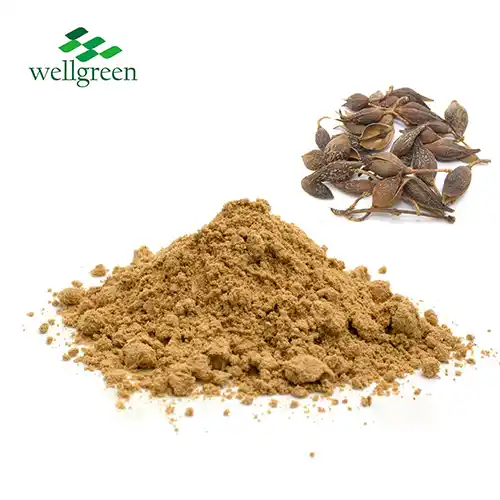
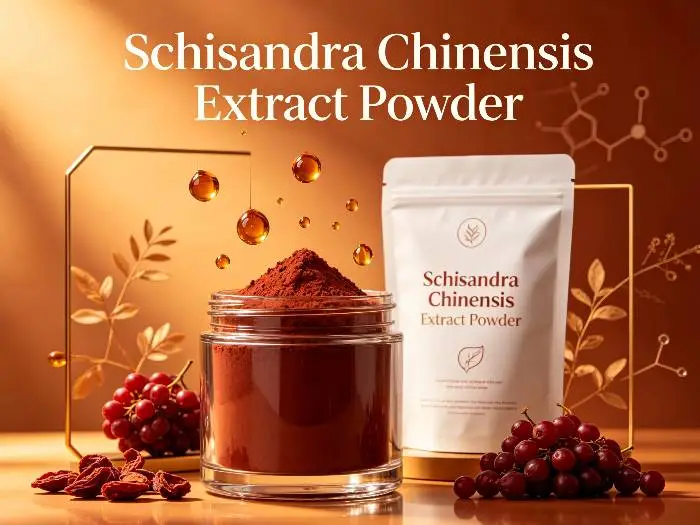
Schisandra chinensis extract represents a sophisticated botanical solution for manufacturers seeking standardized adaptogenic ingredients backed by both traditional wisdom and contemporary science. Derived from the ripened fruit of Schisandra chinensis, commonly known as Wu Wei Zi, this plant extract contains dibenzocyclooctadiene lignans—including Schisandrin, Schisandrin B, and Deoxyschisandrin—that address critical formulation needs across nutraceutical, pharmaceutical, and cosmetic applications. As global consumer demand intensifies for stress management, liver health support, and natural energy solutions, this ingredient offers formulation teams a reliable pathway to develop products that meet market expectations while maintaining rigorous quality standards.
Understanding Schisandra Chinensis Extract: Composition and Benefits
Active Constituents and Phytochemical Profile
Find out what schisandra chinensis extract is made of and how it can help you. Because it has many ingredients, schisandra extract powder can be used as a drug. There are a lot of good substances called lignans. Schisandrin A, Schisandrin B, and γ-Schisandrin are the ones that have been studied the most. These lipophilic molecules don't change shape much when heated, which makes them useful for making many things, like capsules, tablets, and drinks with added vitamins. It has organic acids, essential oils, and carbohydrates, along with lignans, which help it do more than one thing.
Lab tests that use HPLC usually show that the total amount of lignan is between 1% and 9%. The amount of moisture must be less than 5%, there must be less than 3% ash, and 95% of the particles must be able to pass through 80 mesh screens. These technical factors directly affect how well a product works, how bioavailable it is, and how long it lasts on the shelf. When workers in buying pick out raw materials for new products, they need to keep all of these things in mind.
Liver Protection and Metabolic Health Support
Lignan compounds help liver cells work better in a number of different ways, as shown by many studies on people. These molecules help the body get rid of toxins and protect cells from damage caused by oxidative stress. Teams that make liver health products are adding standardized schisandra chinensis extract to complex mixtures that already have milk thistle, ginger, and N-acetylcysteine in them.
The properties that make it adaptable do more than just keep the liver safe. Studies show that using this ingredient regularly may help keep the metabolism in check. This makes it useful for formulas that aim to improve metabolic health. People who make health products like how this plant works with other helpful ingredients without getting in the way. This lets them make complicated medicines that treat many health problems at the same time.
Adaptogenic Properties for Stress Management
Adaptogens help living things keep their balance when they are stressed in their minds, bodies, or surroundings. Schisandra chinensis extract helps the body deal with long-term stress in the same way that other adaptogens do. More and more, people are looking for natural alternatives to drugs that change your mood or make you feel energised. This trait is very helpful in this case.
Formulation scientists who make goods to help people deal with stress often mix schisandra with adaptogens like Ashwagandha, Rhodiola rosea, or Panax ginseng. These are all herbs that work well together. These mixes help people with busy lives in many different ways because they work on more than one route at the same time. Many years can pass before the plant is no longer useful because it is usually safe. The customer wants long-term health plans instead of quick fixes, so this makes sense.
Anti-Fatigue and Physical Performance Enhancement
Another important area of use is energy support. Schisandra chinensis extract helps you feel more energetic for a longer time by speeding up your metabolism. This is different from caffeine-based stimulants, which only give you a short energy boost before making you feel tired again. Athletes, busy professionals, and older people who want to stay healthy are all interested in products with this ingredient.
Studies that look at endurance show that lignan-rich products may make people stronger and help them heal faster after working out. This has led sports nutrition companies to look into schisandra as a natural ingredient that might help athletes do better. Plant matter can help make full energy mixes that help with many parts of dealing with tiredness when mixed with B-vitamins, CoQ10, or branched-chain amino acids.
Schisandra Chinensis Extract in Modern Formulations: From Traditional to Innovative Uses
Evolution from Traditional Medicine to Standardized Ingredient
Traditional Chinese medicine has used schisandra berries for hundreds of years, but modern uses need exact standardization that the old doctors could never have thought of, and for schisandra extract powder, modern extraction methods such as ethanol extraction, water extraction, and supercritical CO2 processes enable manufacturers to isolate and concentrate specific phytochemical fractions while removing unwanted compounds, ensuring consistent potency and safety for contemporary supplement applications. Modern extraction methods, like ethanol extraction, water extraction, and supercritical CO2 methods, let companies separate and concentrate certain phytochemical fractions while getting rid of others that aren't needed.
One big problem with making botanical products is that they need to be consistent. This new technology solves that problem. Different growth conditions, harvest times, and genetic diversity can naturally cause differences in the amount of secondary metabolites found in wild-harvested materials. Advanced extraction methods and HPLC fingerprinting make sure that each batch of output fits certain standards. Formulation teams can now be sure that their products will be good enough to sell.
Available Formats and Formulation Compatibility
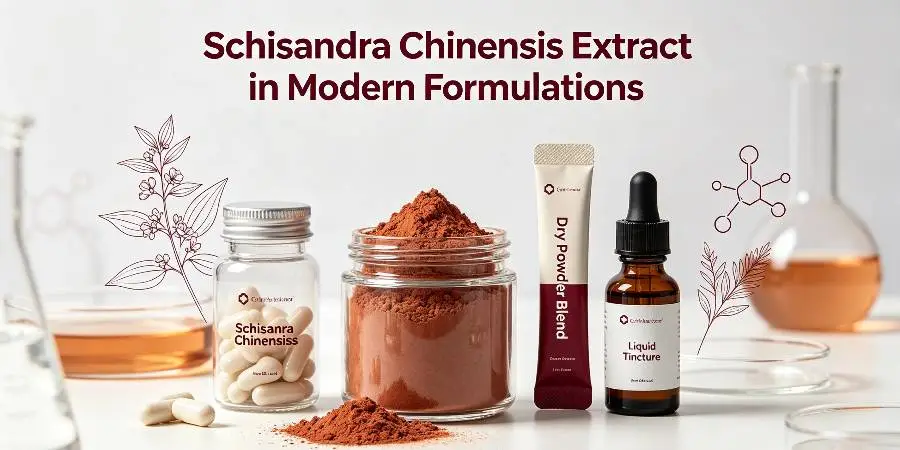
Product designers can pick from different forms based on what they need to do. Either capsules or tablets can use fine powder extracts that have been standardized to a certain Schisandrin ratio. The different sizes give you more ways to dose them, and they mix well with other powdered ingredients in complicated mixes.
Adding liquid medicines and extracts to drinks and taking them as liquid supplements can be helpful. But because some lignans are lipophilic, it's hard for them to mix with water. New methods of packaging, such as microencapsulation, liposomal delivery, and self-emulsifying drug delivery systems, can help solve these issues. With these changes, schisandra chinensis extract can be used in functional drinks, pills that are ready to drink, and powder mixes that dissolve in water better.
Quality Parameters Critical for B2B Procurement
Teams that are trying to find people to sell things to have to look closely at more than just the lignan content. Heavy metal profiles, like those for cadmium, lead, arsenic, and mercury, need to follow USP, EP, or CP rules. Heavy metal levels should usually be less than 10 parts per million (ppm). International guidelines say that microbiological tests should confirm the total number of plates, the amount of yeast and mould, and the absence of pathogenic organisms.
Because of how farming is usually done, checking for pesticide residue is even more important. People who buy from organic stores or people in Europe need to make sure that the raw materials they use don't break any EU rules that limit hundreds of different pesticide chemicals. They should have multi-residue screening results written on certificates of analysis to show that they follow the strictest international rules.
GMP Compliance and Regulatory Considerations
Good Manufacturing Practice (GMP) rules make sure that the quality of the goods used in the food and medicine businesses is maintained. GMP-certified facilities must follow strict rules about how they handle raw materials, use processing tools, take care of the surroundings, and teach their employees. With these steps, there is less chance of contamination, and each batch of the product will have the same high standard.
The rules that apply to different target markets are very different. Companies that want to sell their goods in the US must follow the FDA's rules for dietary supplements. There are limits on structure-function claims and, if needed, New Dietary Ingredient notices in these rules. Novel Food laws and EFSA rules in European markets make things even more limited. If procurement teams work with sellers who know how hard it can be to follow these rules, they can avoid costly compliance mistakes.
How to Choose the Best Schisandra Chinensis Extract Supplier for B2B Procurement?
Essential Supplier Evaluation Criteria
As a business owner, you need to think about how your choice of plant extract provider will affect the quality of your product, the reliability of your supply chain, and the way people see your company. First, when judging, it's important to look at the main certifications. For example, ISO 9001 is for quality management systems, GMP compliance is for manufacturing methods, and organic certifications are for high-end goods.
A lot of attention needs to be paid to being clear about where raw products come from. Schisandra berries grown in northeast China are known for being very good because the conditions are just right for growing them. But supply chain traceability is still not the same across all industries. Suppliers you can trust keep a close relationship with the places where the plants are grown, regularly check on farming methods, and can show proof of a clear chain of custody from harvesting to final extraction.
By testing their skills, you can tell which companies you can trust and which ones you shouldn't, and for schisandra extract powder, reliable suppliers operate in-house analytical laboratories equipped with HPLC, GC-MS, and spectrophotometric instrumentation to conduct comprehensive quality testing, providing a full certificate of analysis with each shipment that verifies active compound levels, contaminants, and stability factors, while offering custom testing options such as additional pesticide screens or bioavailability studies adds significant value. Companies need to have their own analysis labs with HPLC, GC-MS, and spectrophotometric tools in order to fully control the quality of their products. When suppliers send goods, they should always check the amounts of stable factors, contaminants, and active ingredients. Each package should also include a full proof of analysis. Being able to make tests to fit the needs of each customer, like extra pesticide screens or bioavailability studies, adds a lot of value.
Production Capacity and Supply Chain Stability
Depending on how much bulk you have, you may or may not be able to successfully increase your sales. When suppliers keep a lot of goods on hand, they don't have to stop sending goods when new products come out or when their business grows. To figure out production capacity, you should look at how much is made each year, how much is stored, and how well the suppliers get along with the raw material sources.
When the seasons change, farmers may not be able to keep up with the demand for their goods. In late summer and early autumn, when the berries are in season, is the best time to buy them. Smart providers keep track of their stock in a way that ensures they have enough raw materials during harvest time to keep making things all year. This way of running a business keeps customers safe from breaks in supply and price changes.
Customization Capabilities for OEM and Private Label
Private label developers and people who make contracts need sources that are easy to change. You can make different kinds of products by changing the amounts of extract concentrations, particle sizes, and mixing methods. Suppliers who want to work with OEMs should show they can change standard specs, make special blends, and pack things in a certain way.
When making new goods, it's very helpful to have expert help with formulating them. Suppliers with a lot of knowledge can help you figure out the best dose, how to combine ingredients, and how to deal with problems with longevity. This way of working together lowers the risks of creation and speeds up the process of making new products, especially when they are used in new ways, like in useful drinks or makeup that you put on your skin.
Case Studies and Applications: Success Stories of Schisandra Chinensis in Industry
Nutraceutical Applications Delivering Market Success
A well-known company that makes supplements to help with stress changed their main product so that it now has Rhodiola, L-theanine, and standardized Schisandra chinensis extract. Customers responded better than expected, and the number of happy customers went up a lot. People want scientifically backed plant-based solutions that can help with everyday stress without drugs, as shown by the product's success.
Schisandra chinensis extract, milk thistle, and artichoke extract are all in a supplement made by a different company that is good for your liver. The product was promoted as proactive wellness support instead of reactive care. It was made for people who were concerned about their metabolic health and drinking alcohol sometimes. A lot of people bought the brand again because clinical studies showed that each ingredient worked. This made the health benefits sound real, which is why so many people bought it again.
Cosmetic Formulations Leveraging Antioxidant Properties
For face care, botanical ingredients that protect against external stresses are being used more and more. Schisandra chinensis extract is one of the main ingredients in a serum made by a high-end Asian beauty brand. They made it clear that the extract has been used to improve health for hundreds of years and that current science has shown that it has antioxidant qualities. People who want natural skin care products liked how the marketing focused on both the ingredient's cultural history and its more recent research.
Lipophilic lignans are hard to turn into emulsion systems, so the makeup company and the extract source had to work together to figure out how to do it. Modern transportation methods made sure that the active ingredient was spread out evenly and stayed whole while the product was on the shelf. This partnership worked out well and showed that sellers with technology know-how can help with more than just giving you ingredients.
Functional Beverage Innovation
Companies that make energy drinks looked into adaptogenic plants, like schisandra, as natural alternatives to caffeine and taurine that are added in a lab. There is a line of drinks in Europe called "natural energy" that contain schisandra chinensis extract, green tea extract, and B-vitamins. To get rid of the bitter taste that schisandra gives, the recipe called for specifics on a water-soluble powder and taste improvement.
Smell tests showed that adding citrus notes and natural sugar to the mix well covered up the plant's taste while keeping its health benefits. It stood out in a crowded market and was liked by people who care about their health and are willing to pay more for clean-label energy options. Sales success showed that there is a market for complicated botanical beverage formulations.
Conclusion
Schisandra chinensis extract used to be used in traditional medicine, but now it has been scientifically proven to be useful and can be used in modern formulas. The fact that the ingredient is used in so many nutraceuticals, drugs, cosmetics, and functional foods shows how useful it is and how important it is to the market. There will likely be a greater need for high-quality, standardized extracts as more people look for natural, scientifically proven ways to stay healthy.
Procurement professionals have to deal with a lot of difficult issues when they are looking for this botanical ingredient. For example, they have to meet quality standards, follow rules, make sure the supply chain is reliable, and negotiate business terms. The long-term success of a recipe and the ability of a product to stay on the market in a competitive market depend on partnerships with reliable providers who offer full testing, technical support, and a range of production options.
FAQ
What makes Schisandra chinensis extract effective for liver health?
Lignan molecules, especially Schisandrin and Schisandrin B, help the liver cells do their job and clean the body. Products that help the liver can use these bioactive chemicals because they help keep cells healthy during oxidative stress.
How should procurement teams be sure that the extract is good?
To get a full certificate of analysis, you should ask for heavy metal profiles, pesticide residue screening, bacterial testing, and HPLC profiles that show how much lignan is in the sample. Make sure the supplier has the right credentials, like GMP, ISO, and, if needed, organic credentials. See how honest the seller is about where they get their products and how they test them.
What dosage ranges are typical in supplement formulations?
Every day dose of most food supplements has 500 mg to 2000 mg of standardized extract. But the exact amount depends on how strong the product is and what health claims are being made. Teams that are making new medicines should look at existing clinical studies and the laws in the places they want to sell their medicines.
Contact Wellgreen: Your Trusted Schisandra Chinensis Extract Supplier
As an example, Wellgreen Technology makes standardized schisandra chinensis extract, which is used in the nutraceutical, medicinal, and skincare industries. Our factory is GMP-certified, and the extracts we make meet strict international standards. Each batch is fully checked for contaminants, and the amount of Schisandrin is confirmed using HPLC. We're happy to work with OEMs and private labels, and our minimum order quantity (MOQ) is open. We also offer custom specs that include both water extraction and ethanol extraction methods, as well as quick technical help for formulating. Our team knows a lot about how hard it is to get plant-based products and follow the rules in different countries. Write to us at wgt@allwellcn.com to get analysis certificates, talk about your specific needs, or set up a free review for your next new formula.
References
1. Panossian, A., & Wikman, G. (2008). Pharmacology of Schisandra chinensis Bail.: An overview of Russian research and uses in medicine. Journal of Ethnopharmacology, 118(2), 183-212.
2. Chen, M., Kilgore, N., Lee, K. H., & Xiao, Z. (2006). Rubescensins: Novel compounds with therapeutic potential from Salvia and Schisandra species. Pure and Applied Chemistry, 78(4), 905-912.
3. Lu, Y., & Chen, D. F. (2009). Analysis of Schisandra chinensis and Schisandra sphenanthera. Journal of Chromatography A, 1216(11), 1980-1990.
4. Opletal, L., Sovová, H., & Bártlová, M. (2004). Dibenzo[a,c]cyclooctadiene lignans of the genus Schisandra: importance, isolation and determination. Journal of Chromatography B, 812(1-2), 357-371.
5. Zhao, T., Mao, G., Mao, R., Zou, Y., Zheng, D., Feng, W., & Wu, X. (2013). Antitumor and immunomodulatory activity of a water-soluble low molecular weight polysaccharide from Schisandra chinensis. Food and Chemical Toxicology, 55, 609-616.
6. Szopa, A., Ekiert, R., & Ekiert, H. (2017). Current knowledge of Schisandra chinensis chemical composition, traditional use, and biological activities. Phytochemistry Reviews, 16(2), 195-218.