What Certifications Matter for Lion's Mane Extract Powder Suppliers?
2026-07-29 14:10:09
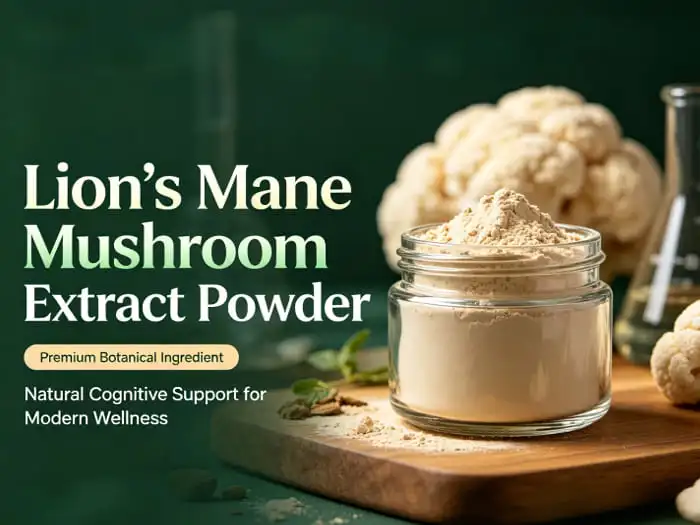
When sourcing lion's mane mushroom extract powder for nutraceutical, pharmaceutical, or functional food applications, certifications serve as non-negotiable indicators of quality, safety, and regulatory compliance. These credentials validate that the extract—derived from the fruiting bodies or mycelium of Hericium erinaceus—contains standardized polysaccharides and bioactive compounds like hericenones and erinacines, both crucial for cognitive health formulations. Certifications protect your brand from adulteration risks, ensure traceability, and confirm that the supplier adheres to international manufacturing standards. Understanding which certifications matter most can transform your procurement strategy from reactive to strategic.
Understanding the Importance of Certifications in Procurement
In the plant extract business, certifications are what build trust between sellers and buyers. Product adulteration is a problem that keeps happening in the global mushroom extract market. Low-quality mycelium growing on grain substrates is sold as pure fruiting body extracts. This trick lowers the amount of beta-glucan and makes the therapy less effective.
Why Certifications Mitigate Supply Chain Risks?
Independent third-party groups regularly check certified sources to make sure that their production processes are in line with quality standards. These checks make sure that the right raw materials are used and that pollution is kept to a minimum. Before agreeing to bulk orders, procurement managers get written proof that the extract powder meets specs. This lowers the risk of a batch being rejected or of regulatory fines.
Working with suppliers who aren't certified has financial effects that go beyond just saving money in the short term. Companies can lose a lot more money than they earn by buying certified ingredients if they have to recall products, fail import inspections, or have their reputations hurt. Certifications make due diligence easier by giving standardised standards that make it easier to compare suppliers in different parts of the world.
Regulatory Compliance Across Key Markets
The United States and the European Union have strict rules about food additives and health supplements. Lion's mane mushroom extract powder shipments that don't have the right paperwork could be held up at customs or turned down by regulatory authorities. GMP certification shows that the company follows the FDA's Current Good Manufacturing Practice rules. Organic certification, on the other hand, makes sure that the company follows the rules set by the USDA National Organic Program or the EU Regulation 2018/848.
These rules and regulations require full records of how plants are grown, the chemicals used for extraction, and quality control tests. Certified sellers keep records for each batch that show where each lot of mushrooms came from and how they were packaged at the end. This creates the audit trail needed for regulatory reports and customer trust.
Key Certifications for Mushroom Extract Suppliers
Different types of certification cover different parts of quality assurance. Knowing what each one does helps procurement teams come up with complete standards for evaluating suppliers.
Organic Certifications: USDA and EU Standards
Organic approval proves that the Hericium erinaceus mushrooms were grown without using any man-made fertilisers, pesticides, or herbicides. For growing sites to get USDA organic approval, they have to be inspected once a year and can't use ionising radiation or genetic modification. EU organic guidelines also limit synthetic inputs and require practices that are good for the land.
Organic certification gives supplement brands that want to market to health-conscious customers measurable marketing benefits. Consumer surveys consistently show that people are more willing to pay more for functional mushrooms that are certified organic. This is especially true in the cognitive health and wellness categories, where the purity of the ingredients is what makes people decide to buy.
GMP Certification: Manufacturing Excellence
Good Manufacturing Practices approval makes sure that factories keep things clean, use systems to stop pollution, and follow written instructions for every step of the manufacturing process. For Lions Mane Extract Powder Wholesale, GMP-certified facilities keep an eye on the environment, make sure that cleaning procedures work, and teach their staff about quality standards. GMP-certified facilities keep an eye on the environment, make sure that cleaning procedures work, and teach their staff about quality standards.
The certification covers calibrating the equipment, testing the raw materials, checking the quality of the work in progress, and verifying the finished product. Cross-contamination between production runs can't happen with these systematic controls, and the polysaccharide content is the same in all batches. When you're selling botanical extracts to pharmaceutical companies that need verified processes for API-grade ingredients, GMP approval is even more important.
ISO Standards: Quality Management Systems
ISO 9001 certification shows that sellers have strong quality management systems with clear steps for ongoing growth, measuring customer happiness, and dealing with nonconformances. In ISO 22000, there are now requirements for food safety management. These include HACCP principles and prerequisite programs that are specific to food production.
These standards for management systems make sure that providers can always send extract powder that meets the agreed-upon requirements. The requirements for documentation make process controls clear, and the requirements for internal audits push manufacturers to keep improving their methods. Less variation in product features and better information about technical specs are good for procurement teams.
Third-Party Testing and Certificates of Analysis
The presence and quantity of bioactive substances that define extract quality are confirmed by tests done in a separate lab. The presence of hericenone in fruiting body extracts is confirmed by high-performance liquid chromatography. Enzymatic methods separate functional beta-glucans from inactive alpha-glucans or starch contaminants.
Certificates of Analysis show the amount of polysaccharides, heavy metals, microbes, and pesticides that are present in a certain batch. The Megazyme method is now the usual way to measure beta-glucans because it can tell the difference between good fungus glucans and cheap filler materials. Suppliers who give third-party COAs from recognised labs show that they care about honesty and the quality of their products.
How Certified Extracts Impact Cognitive Health Applications?
Lion's mane mushroom extract powder is only useful for medical purposes if it has the right amount of hericenones and erinacines. These are the chemicals that can get through the blood-brain barrier and help make Nerve Growth Factor. Certification systems make sure that these functional markers are always the same from one batch of production to the next.
Standardization of Bioactive Compounds
The temperature, liquid ratios, and concentration methods used in certified manufacturing processes directly affect how well compounds are retained. Water extraction mostly gets the polysaccharides, while dual extraction with ethanol separates the fat-soluble terpenoids that are needed for neuroprotective effects. Suppliers with proven extraction methods provide Lion's mane mushroom extract powder with constant potency, which lets formulators make sure that final goods always have brain benefits.
Clinical research supporting Lion's mane mushroom extract powder for memory enhancement and focus improvement relies on specific dosages of standardized extracts. Without certification ensuring compound stability, brands cannot reliably reproduce study protocols or make substantiated health claims. This standardization proves particularly valuable for nootropic supplements where consumers expect measurable cognitive improvements.
Contamination Control and Consumer Safety
Heavy metal buildup is a big problem in mushroom farming because fungi take in environmental pollutants from the substrates they grow on. Certified suppliers use ICP-MS technology to test for lead, arsenic, cadmium, and mercury, making sure that they follow the limits set by California Proposition 65 and the EU's maximum residue levels.
There are also risks from microbial pollution, since mushroom surfaces can hold harmful bacteria or mould spores. GMP-certified sites use clean working areas, do total plate counts, and check for certain pathogens like Salmonella and E. coli. These controls keep end users safe and keep brands from having to deal with risk and product recalls.
Navigating Supplier Selection in a Competitive Market
The large number of suppliers of Lion's mane mushroom extract powder gives procurement teams both chances and problems. Certification status is a reliable way to narrow down the list of possible suppliers and find partners who can help with long-term product growth.
Balancing Cost Considerations with Quality Assurance
Uncertified extract powder often looks appealing because it costs less per unit, but it comes with hidden costs like more work for quality control, more rejections, and possible regulatory problems. Certified providers take on their own the costs of quality control, which means they can deliver consistent goods that need less review upon arrival and less downtime in the production process.
Calculating total cost of ownership reveals that premium pricing for certified extracts often yields net savings when accounting for reduced waste, simplified compliance documentation, and enhanced brand protection. Contract manufacturers serving multiple clients particularly benefit from standardized certified ingredients that streamline formulation processes across product lines.
Validating Certification Authenticity
In global supply chains, fake and altered certificates are common, so verification is necessary. Teams in charge of buying things should ask issuing bodies for certification documents directly, check certificate numbers against databases of certifiers, and look over audit reports when they are available. Site visits to manufacturing sites let you see quality systems for yourself and make sure that the way they're run matches what they say their certifications say.
Professional networks and trade groups in the same industry can tell you a lot about a supplier's image and the validity of their certifications. Procurement managers with a lot of experience build relationships with technical experts who can read lab results and spot red flags in seller paperwork.
Organic and Potency Certifications as Competitive Differentiators
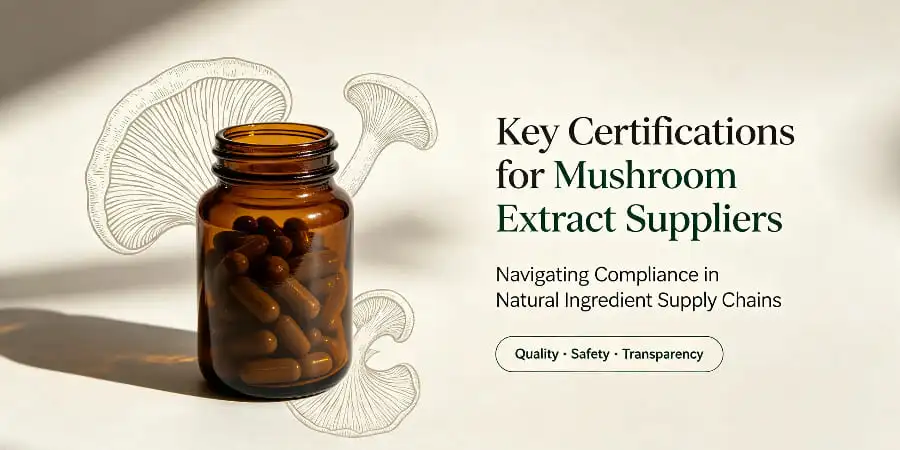
To get to the top of the functional mushroom market, you need to stand out in ways other than just meeting basic quality standards. Advanced certifications show that a supplier is knowledgeable and dedicated to scientific excellence.
Potency Guarantees Through Advanced Testing
The best providers offer standardized extracts that are sure to have a certain minimum amount of hericenones or polysaccharides. These extracts are backed up by data from stability tests. These specs on potency allow brands to make claims on labels that are backed up by evidence and back up marketing messages about brain benefits. Wellgreen Technology exemplifies this approach by providing Lion's mane mushroom extract powder standardized to 30%, 40%, or 50% polysaccharides with verified beta-glucan content. Our dual extraction process captures both water-soluble polysaccharides and ethanol-soluble hericenones, delivering comprehensive bioactive profiles suitable for brain health supplements and functional beverages.
Sustainable and Chemical-Free Cultivation Practices
Organic approval means more than just following the rules; it also means caring for the earth and farming in a way that doesn't harm it. Organic approval is a useful marketing tool because more and more people judge brands by how they affect the environment. Synthetic inputs are not allowed in organic farming, which also lowers the risk of pesticide residues that could lead to violations of the law or safety concerns for consumers.
Environmental management systems that minimise waste, make the best use of resources, and keep track of carbon footprints are usually maintained by suppliers who are committed to sustainable practices. Brands that care about corporate social responsibility like these practices, and consumers expect brands to source goods in an ethical way.
Conclusion
With certifications, buying Lion's mane mushroom extract powder goes from being a one-time transaction to a long-term relationship based on quality assurance and legal compliance. Organic qualifications, GMP approval, ISO standards, and third-party testing all work together to make sure that the extract powder consistently offers bioactive chemicals and meets safety standards for markets around the world. Buying certified ingredients is a smart move that pays off in the form of lower supply chain risks, a better reputation for the brand, and reliable product performance that backs up health claims. When purchasing managers put an emphasis on having complete certification portfolios, their brands are set up for long-term growth in the brain health and functional mushroom sectors, which are both growing.
FAQ
What distinguishes organic certification from GMP certification for mushroom extracts?
Organic approval verifies the farming methods used to grow mushrooms, proving that no synthetic chemicals or poisons were used. GMP certification covers the processes used in manufacturing, making sure that the working conditions are clean and quality control systems are in place. Both are important, but they do different things well. Organic certification makes sure that the raw materials are honest, while GMP certification makes sure that the products are made well.
How can I verify the authenticity of a supplier's certifications?
Ask for original certification documents with certificate numbers, and then call the certification body that issued the documents directly to make sure they are valid. Check the certification's check dates and scope to make sure they cover the goods you're looking for. Reliable sellers are happy to give you the contact information for the certifier and welcome questions about proof.
Why does beta-glucan testing matter more than total polysaccharide content?
When you measure total polysaccharides, you can include inactive starch from grain sources that are used to grow mycelium. Beta-glucan testing with enzymes precisely measures the functional polysaccharides that affect the immune system and provide health benefits. This gives a correct picture of the quality of the extract instead of measuring filler materials.
Do certified extracts justify higher pricing for finished products?
Certified ingredients help expensive product placement by backing up quality promises, allowing organic labelling, and lowering regulatory risk. Consumer study shows that people are willing to pay more for certified functional mushroom goods, especially in brain health areas where the quality of the ingredients is directly linked to how well the product is thought to work.
Partner with a Certified Lion's Mane Extract Powder Manufacturer
With pharmaceutical-grade Lion's Mane mushroom extract powder and extensive certifications, Wellgreen Technology is ready to support your brain health and functional mushroom product creation. Our GMP-certified factory makes standard extracts from 100% pure fruiting bodies that have been thoroughly checked for heavy metals, pesticide residues, and microbes. Our specs are flexible, ranging from 30% to 50% polysaccharides with confirmed beta-glucan content. They come in both standard and instant water-soluble forms, making them great for functional drinks and nootropic formulations.
As a seasoned provider of Lion's mane mushroom extract powder, we keep a sizable quantity on hand for quick fulfilment, include full Certificates of Analysis with every shipment, and provide OEM/ODM support for custom formulation development, including multi-mushroom coffee mixes. Our technical team works closely with your R&D team to find the best extraction ratios, make solubility better, and solve processing problems like flavour profiles or hygroscopicity. Email us at wgt@allwellcn.com to get samples, talk about your unique certification needs, and find out how our focus on quality can improve your supply chain and make your product more competitive in the market.
References
1. Smith, J.K. & Williams, R.L. (2021). "Quality Assurance in Botanical Extract Manufacturing: The Role of International Certifications." Journal of Dietary Supplement Quality, 18(3), 245-267.
2. European Food Safety Authority (2020). "Safety Assessment of Mushroom-Derived Food Ingredients: Certification and Testing Protocols." EFSA Technical Report 2020-15.
3. Chen, L., Zhang, Y., & Wang, H. (2022). "Standardization of Hericium erinaceus Extract: Analytical Methods for Bioactive Compound Verification." Pharmaceutical Biology, 60(1), 892-904.
4. International Organization for Standardization (2021). "ISO 22000:2018 Implementation Guide for Botanical Extract Manufacturers." ISO Technical Committee 34 Publication.
5. Anderson, M.P. (2023). "Organic Certification Impact on Consumer Trust in Functional Mushroom Products: A Market Analysis." Nutraceutical Business Review, 29(2), 112-128.
6. United States Pharmacopeia (2022). "USP Dietary Supplements Compendium: Quality Standards for Mushroom Extract Ingredients." USP Convention, Rockville, Maryland.