What Makes Prickly Pear Fruit Extract Suitable for Natural Ingredient Applications?
2026-08-07 14:13:45
Pure Prickly Pear Fruit Extract Bulk is unique among natural ingredients because of its high bioactive profile and wide range of production options. This extract comes from fully ripe Opuntia ficus-indica fruits that were gently extracted with water-ethanol and then dried with a spray dryer. It has normal amounts of rare betalain colors, carbohydrates, vitamin C, and antioxidants. Unlike many plant ingredients, it has higher antioxidant activity than standard anthocyanins, dissolves completely in water, and is clean-label compliant. The extract's special ability to support hydration balance, liver protection, and anti-inflammatory responses makes it perfect for use in nutraceutical, functional beverage, cosmetic, and pharmaceutical products that need to be effective, stable, and follow all regulations.
Understanding the Core Qualities of Prickly Pear Fruit Extract for Natural Applications
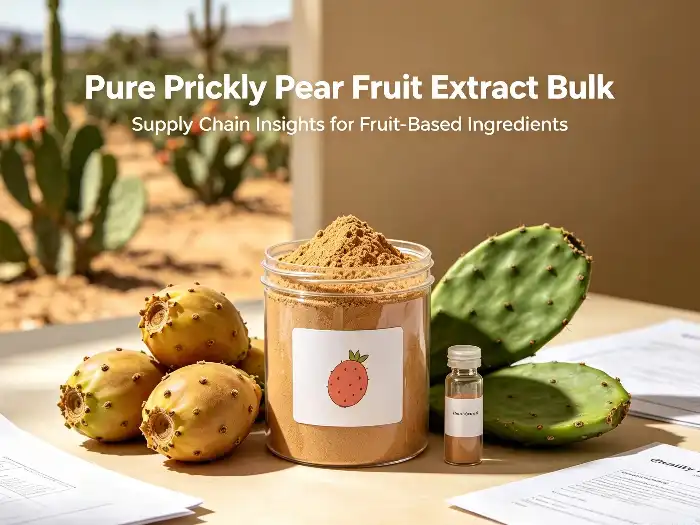
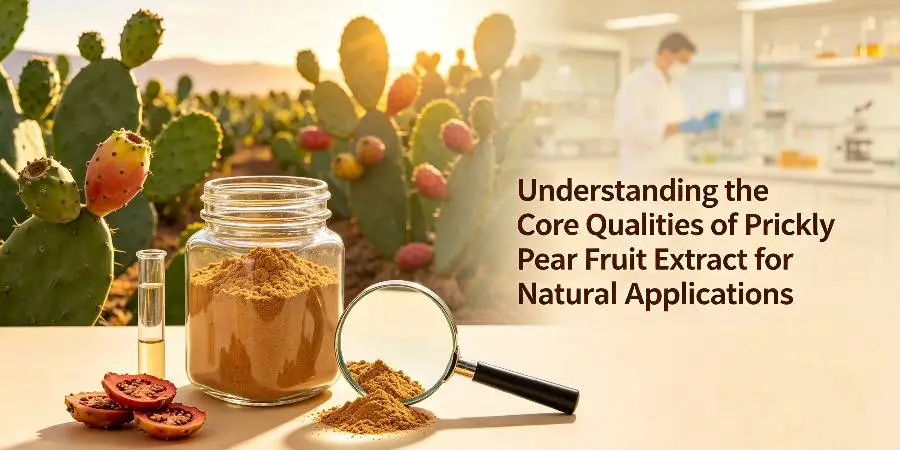
The advanced botanical ingredient Pure Prickly Pear Fruit Extract Bulk comes only from the fully grown, red fruit of the Opuntia ficus-indica plant, not from the stems or paddles that are often mixed in with lower-quality products. This difference is very important for B2B buying workers who want stability and accountability.
Rich Betalain Content: Nature's Rare Antioxidant Powerhouse
The most interesting thing about the extract is that it has a lot of betalains, especially betanin and indicaxanthin. These nitrogen-containing pigments are very uncommon in land plants and are mostly found in plants in the order Caryophyllales. Researchers have discovered that betalains are better at removing free radicals than other anthocyanins. They work at the molecular level to stop oxidative stress processes. This makes the ingredient the best choice for anti-aging supplements, photoprotection products, and nutricosmetic innovations aimed at people living in cities who are subject to environmental stresses.
Betalains are unique because they are both strong antioxidants and natural colorants. This means that formulators can use them to make colors ranging from deep magenta to ruby red without using synthetic dyes. Standardized betalain content makes sure that colors stay the same from batch to batch, which is very important for brands that want to keep their visual personality across production runs.
Gentle Extraction Methods Preserving Bioactivity
The steps used to make an item have a direct effect on how well it works. Advanced producers use low-temperature physical pressing along with freeze-drying or spray-drying methods to keep the flavor compounds and delicate betalain structure. This is different from hard liquid extraction methods that could destroy heat-sensitive phytonutrients or leave behind solvents that need to be cleaned up in a lot of steps.
The chromatographic separation and filtration steps get rid of pectins, fruit waxes, and dietary fibers that don't dissolve in liquids and can make them cloudy or precipitate. The result is a powder that dissolves instantly and stays clear in cold water. This is a game-changing quality for ready-to-drink drinks, effervescent tablets, and beauty-from-within collagen drinks, where clarity shows quality to customers.
Compliance with International Quality Standards
It's simple to find things if you follow the rules. To make sure they meet FDA rules, USP article guidelines, and European Pharmacopoeia standards, high-quality prickly pear fruit products go through a lot of tests. Heavy metal screening for lead, arsenic, cadmium, and mercury is done along with comprehensive pesticide residue panels that look for hundreds of agrochemicals. This guarantees safety ratings that can be used for food supplements, over-the-counter medicines, and formulas that are approved as organic.
GMP and ISO certifications show that factories follow the rules for keeping things clean, keeping records, and using quality management systems that big brands expect. Organic approvals like USDA Organic or EU Organic make clean-label labeling even more marketable, meeting the growing demand from customers for plants that are clearly sourced.
Benefits of Using Pure Prickly Pear Fruit Extract in Natural Ingredient Formulations
This Pure Prickly Pear Fruit Extract Bulk can be used for a lot of different health and beauty issues at the same time. This lets formulators make products that meet a lot of different needs, which is in line with current wellness trends.
Anti-Inflammatory and Antioxidant Properties
Studies have shown that chemicals in prickly pear fruit lower inflammation biomarkers like C-reactive protein and interleukin-6 by a large amount, and for Bulk Prickly Pear Fruit Extract, this chain of anti-inflammatory effects works especially well in recovery supplements for athletes, since they need to reduce the oxidative stress caused by intense exercise, and it is the polyphenolic fraction and betalains that work together to stop reactive oxygen species before they damage DNA, proteins, and cell walls. This chain of anti-inflammatory effects works especially well in recovery supplements for athletes, since they need to reduce the oxidative stress caused by intense exercise. It is the polyphenolic fraction and betalains that work together to stop reactive oxygen species before they damage DNA, proteins, and cell walls.
For beauty scientists, these qualities mean that the active ingredients can effectively fight aging by shielding skin cells from UV damage and stopping the matrix metalloproteinases that break down collagen. When applied directly or taken by mouth in appropriate doses, clinical studies have shown changes in skin suppleness and water signs that can be seen.
Natural Fluid Balance and De-Bloating Effects
The extract's gentle diuretic action is one of its best clinical benefits. It helps the body get rid of extra water without taking away important electrolytes like magnesium and potassium. This mechanism addresses a common complaint among professional women in cities: morning facial puffiness and swelling in the lower limbs that are caused by a lack of exercise and eating a lot of salt.
The naturally occurring chemicals in prickly pear fruit support kidney function while maintaining stability. This is different from manmade diuretics, which can lead to mineral abnormalities. This means that the ingredient is great for "debloat" vitamins, recipes for healing after travel, and monthly comfort items for women who want non-drug solutions.
Hepatoprotective and Hangover Relief Applications
The breakdown of alcohol creates acetaldehyde and inflammatory cytokines, which are what give people hangovers their headaches, nausea, and thirst. The active polyphenols in prickly pear extract protect in two ways: they create a barrier on the stomach lining that slows the absorption of ethanol, and they speed up the clearance of acetaldehyde by making enzymes work better.
Taking prickly pear extract before drinking has been shown in several human studies to reduce the severity of hangovers by up to 50%. It also makes symptoms like nausea and dry mouth much better. This body of evidence has helped the "alcohol defense" supplement category grow. These supplements are especially popular with millennials and Gen Zers who want to be healthy at social events.
Seamless Integration Across Industry Segments
The clean taste profile of the extract—lightly sweet and pleasantly fruity without any bitterness—removes the formulation problems that come with many plant extracts that need heavy coloring or covering agents. This naturally tasty taste lowers the cost of research and speeds up the time it takes to get functional candies, powdered drink mixes, and ready-to-drink forms on the market.
After processing, temperature stability lets it be added to baked goods and nutrition bars without losing a lot of its activity. Water-soluble grades easily mix into emulsion systems for beauty serums and creams. The bright natural coloring works as both a functional ingredient and an aesthetic enhancer, so you don't have to use as many fake colorants, which are getting more and more attention from regulators.
How to Source and Evaluate Pure Prickly Pear Fruit Extract Bulk for B2B Procurement?
Navigating the global botanical supply chain requires systematic evaluation criteria to identify partners capable of delivering pharmaceutical-grade consistency and reliability in Pure Prickly Pear Fruit Extract Bulk.
Certification Verification and Supplier Vetting
To start evaluating a provider, ask for up-to-date certificates of analysis (CoAs) that show they are following the rules of the target market. Look for HPTLC chromatographic fingerprints that prove the botanical identity and rule out fillers like maltodextrin or apple powder that are used to save money. Testing for microbes should show that the Total Plate Count is less than 10,000 CFU/g and that Salmonella and E. coli are not present. coli, meeting rules for goods that don't need to be sterilized at the end.
Ask for proof of the extraction solvent used by the supplier. For clean-label positioning, food-grade ethanol and purified water are the best options. If your products are going to be sold in Europe, you should ask about polycyclic aromatic hydrocarbon (PAH) testing. These contaminants can be made when products are dried incorrectly. Established suppliers keep relationships with third-party labs for independent testing. This gives information that builds trust in the integrity of the supply chain.
Minimum Order Quantities and Pricing Structures
The costs of buying in bulk depend a lot on how complicated the process is and how standardized the beads are. Higher purity grades are more expensive, but they work better and are easier to dose accurately. Look at the overall cost of ownership, which includes more than just the purchase price. Things to think about are how to ship the item, any customs fees that might apply if you buy it from another country, and how to store powders that are sensitive to humidity.
When you build long-term relationships with suppliers, you can often get big savings, priority placement during harvest seasons when raw material supply changes, and personalized technical help for formulation problems. Negotiate MOQs that are open during the early stages of product development. As business production grows, you can move on to bigger agreements.
Storage Conditions and Shelf Life Management
Betalain stability is a very important issue for keeping product performance high throughout all of its marketing routes. Cool temperatures (below 25°C), low humidity (below 60% relative humidity), and shelter from direct light are the best conditions for keeping. Advanced sellers offer packing with a changed atmosphere or nitrogen washing to keep reactive damage to a minimum while the goods are stored in warehouses.
Ask for accelerated stability data that shows how betalain stays in place at different temperatures and levels of humidity. This information helps figure out when something should go bad and lets you guess how it will work in different temperature zones. Suppliers who offer scientific help for improving stability, like packaging technologies or suggestions for co-ingredients (like ascorbic acid and citric acid), are worth a lot more than just providing common powder.
Market Overview: How to Differentiate and Select the Best Prickly Pear Fruit Extract Bulk Supplier?
Understanding market dynamics empowers procurement teams to make strategic sourcing decisions for Pure Prickly Pear Fruit Extract Bulk aligned with corporate quality standards and budget parameters.
Organic versus Conventional Sourcing Considerations
Organic designation is more than just a business tool. Synthetic pesticides and fertilizers are not allowed in organic farming, which could lower the number of failed residue tests and appeal to brands that care about the environment. On the other hand, the steps for getting organic approval take longer and usually cost more.
Conventional farming may provide a more stable supply and lower costs, while still achieving safety standards through thorough testing after harvest. Look at the types of customers you want to reach to see if they are willing to pay higher prices for organic ingredients. Hybrid approaches, like using organic extracts for high-end products and regular extracts for lower-end ones, are the best way to position a portfolio.
Extraction Method Impact on Value Proposition
Compare suppliers based on how advanced their technology is. Spray-drying makes small, uniform bits that are great for use in beverages because they can be reconstituted easily. Freeze-drying keeps the most bioactivity, but it costs more to make, which is reflected in the prices of the ingredients. Clarification and filtration skills set quality makers apart from basic providers. For example, being able to offer solutions that are completely clear without any sedimentation directly allows for the creation of useful drinks that look good.
Find out how possible sources handle heat sensitivity by asking them about it, and for Bulk Prickly Pear Fruit Extract, advanced makers use special packaging materials or co-crystallization with protective chemicals to keep betalains safe during heat treatment like pasteurization or UHT, and this technical ability is necessary for shelf-stable beverage forms that need to be stored at room temperature for a long time. Advanced makers use special packaging materials or co-crystallization with protective chemicals to keep betalains safe during heat treatment like pasteurization or UHT. This technical ability is necessary for shelf-stable beverage forms that need to be stored at room temperature for a long time.
Access to Samples and Technical Documentation
Reliable suppliers are happy to send samples for formulation trials because they know that hands-on testing is what buyers do to make decisions. Check how the powder flows during the capsule filling tests—formulas that don't clump keep the production line running smoothly and make sure that everyone gets the same dose. You should test the solubility in the specific matrix of your application because performance can change depending on pH, ionic strength, and how the ingredients interact with each other.
Check the technical data sheets from suppliers to see the recommended usage levels for each application category, as well as compatibility guidelines with common excipients and troubleshooting steps for formulation issues. When suppliers hire food scientists or beauty chemists and put money into application labs, it shows that they care about their customers' success in more ways than just a business sense.
Practical Guidelines for Using Prickly Pear Fruit Extract in Product Development
To turn the promise of Pure Prickly Pear Fruit Extract Bulk into goods that are ready for the market, you need to know about dose strategies, formulation science, and the rules that guide cosmetics and herbal supplements.
Dosage Optimization by Application Category
In clinical tests showing that an extract can help with hangovers, 1,600 mg of it is usually taken several hours before drinking alcohol. When taken every day for weeks, smaller amounts of 300–500 mg show antioxidant and anti-inflammatory effects. Cosmetics use extracts at ratios of 2 to 5 percent in serums and creams to make the skin look more hydrated and radiant.
Because gummy vitamins are small, they need concentrated ingredients to give beneficial amounts in serving sizes of 2 to 4 grams. Beverage formulators have to weigh how well a drink works against how it tastes and how much it costs per serve. They often market functional drinks with 200 to 400 mg of caffeine per bottle as good options that are also cheap. Instead of depending only on the weight of the crude extract, work with providers who offer uniform betalain tests that allow for accurate bioactive doses.
Formulation Strategies Addressing Stability Challenges
Betalain breaks down faster in alkaline environments and after being exposed to heat for a long time. Use citric acid or malic acid buffers to keep the pH of the end product between 3.5 and 6.0. These acids also improve the taste of beverages. Ascorbic acid or tocopherols are antioxidant synergists that protect betalains during processing and storage. This keeps the color and bioactivity of the betalains for a longer time after they've been stored.
Because of their hygroscopic nature, powder blends that are going to be used to fill capsules need to have strategic moisture barriers. Suppliers that offer agglomerated or powdered forms with better flow qualities can solve common production problems. Powders that don't clump together keep doses regular and keep equipment from getting stuck during high-speed sealing. Adding silica flow agents or microcrystalline cellulose diluents improves processing even more without affecting claims of clean labels.
Regulatory Compliance and Labeling Requirements
In the US, DSHEA says that prickly pear fruit extract is a dietary ingredient, which means that structure-function claims can be made as long as they are backed up by enough evidence. Do not make disease claims that would lead to a drug classification that needs FDA approval. European markets accept the ingredient for traditional uses, but health claims need to be approved by the EFSA and backed up by strong clinical proof.
When used in cosmetics, the rules are different, and the ingredients have to be listed on INCI lists using standard names like Opuntia Ficus-Indica Fruit Extract. Do stability and patch testing to back up claims about safety and effectiveness in marketing materials. Keep records of where the raw materials came from and how the end product was tested so that you can show that you did your research during any possible regulatory checks.
Conclusion
Prickly pear fruit extract has become a top plant ingredient that meets modern health needs like being real, having multiple uses, and being scientifically proven. Its special betalain content makes it a stronger antioxidant than most plant dyes. It also gives products a natural color that formulators in the health, functional food, and cosmetics industries like. The extract's clinically proven effects on fluid balance, hepatoprotection, and inflammatory modulation allow for targeted product positioning for anti-aging, debloating, and hangover relief that appeals to health-conscious consumers. For buying to go well, sellers must show that they are skilled at making things by using instant-solubility grades, technologies that make things more stable, and detailed quality paperwork that meets international standards. As the need for natural ingredients that work better and are backed by strong science grows, Pure Prickly Pear Fruit Extract Bulk is set to continue growing in a wide range of business settings.
FAQ
What distinguishes high-quality prickly pear extract from inferior alternatives?
Premium extracts only come from ripe red fruit, not stems or paddles mixed in. This was proven by HPTLC plant identity tests. Look for uniform betalain content standards that come with tests that prove their antioxidant effects. Better manufacturing gets rid of insoluble parts, leaving behind crystal-clear solutions that don't settle, which is a sign of advanced filtration technology. Full lab reports should include tests for heavy metals, pesticide residues, microbial contaminants, and PAH levels that meet FDA and EP standards. Suppliers who offer stability data and formulation support show that their commitment to quality goes beyond just selling goods.
How should manufacturers address betalain color stability in finished products?
Use food-grade acidulants to keep the pH of the product between 3.5 and 6.0. Protective antioxidants like ascorbic acid should be added at amounts between 0.1% and 0.5%. Use packing materials that don't let light through, and store the items away from direct sunlight. New encapsulation technologies make protective matrices that keep betalains safe from oxygen and heat during processing. Do rapid stability studies that mimic the worst possible storage conditions to find the best expiration dates and protection methods for different formulation matrices.
Partner with Wellgreen for Premium Prickly Pear Fruit Extract Bulk Supply
Wellgreen Technology is a certified GMP manufacturer that makes pharmaceutical-grade plant extracts for the nutraceutical, pharmaceutical, and cosmetics industries around the world. Our Pure Prickly Pear Fruit Extract Bulk supplier can provide 100% fruit-sourced material that has been processed using a special technology that makes it instantly soluble in cold water without any astringency or sedimentation. We keep detailed quality records that meet the needs of FDA, USP, and EP. These records show the full chain of custody, from organically certified orchards to final packaging.
Our technical team gives formulation advice that includes how to make things more resistant to humidity for operations like filling capsules and making things more stable at high temperatures for pasteurization of drinks. Flexible minimum order quantities can be used for both small-scale R&D projects and large-scale commercial production. This is made possible by reliable inventory availability and quick international shipping. Feel the difference with Wellgreen's high manufacturing standards, application knowledge, and helpful customer service that is committed to the success of your product. Contact our team at wgt@allwellcn.com to request samples, discuss custom specifications, or explore how our prickly pear extract solutions can elevate your next natural product innovation. Visit wellgreenherb.com to discover our complete botanical extract portfolio.
References
1. Tesoriere, L., Allegra, M., Butera, D., & Livrea, M. A. (2004). Absorption, excretion, and distribution of dietary antioxidant betalains in LDLs: potential health effects of betalains in humans. American Journal of Clinical Nutrition, 80(4), 941-945.
2. Wiese, J., McPherson, S., Odden, M. C., & Shlipak, M. G. (2004). Effect of Opuntia ficus indica on symptoms of the alcohol hangover. Archives of Internal Medicine, 164(12), 1334-1340.
3. Chahdoura, H., Barreira, J. C., Barros, L., Santos-Buelga, C., Ferreira, I. C., & Achour, L. (2014). Phytochemical characterization and antioxidant activity of Opuntia microdasys (Lehm.) Pfeiff flowers in different stages of flowering. Industrial Crops and Products, 54, 380-386.
4. Galati, E. M., Mondello, M. R., Giuffrida, D., Dugo, G., Miceli, N., Pergolizzi, S., & Taviano, M. F. (2003). Chemical characterization and biological effects of Sicilian Opuntia ficus indica (L.) Mill. fruit juice: antioxidant and antiulcerogenic activity. Journal of Agricultural and Food Chemistry, 51(17), 4903-4908.
5. Yahia, E. M., & Sáenz, C. (2010). Cactus pear fruit and cladodes. In E. M. Yahia (Ed.), Postharvest Biology and Technology of Tropical and Subtropical Fruits (pp. 358- 383). Cambridge: Woodhead Publishing.
6. Sumaya-Martínez, M. T., Cruz-Jaime, S., Madrigal-Santillán, E., García-Paredes, J. D., Cariño-Cortés, R., Cruz-Cansino, N., Valadez-Vega, C., Martínez-Cárdenas, L., & Alanís-García, E. (2011). Betalain, ascorbic acid, phenolic contents and antioxidant properties of purple, red, yellow and white cactus pears. International Journal of Molecular Sciences, 12(10), 6452-6468.
_1783672554649.webp)