
What Should Buyers Check When Sourcing Natural Astaxanthin Powder in Bulk?
2026-09-24 14:17:54
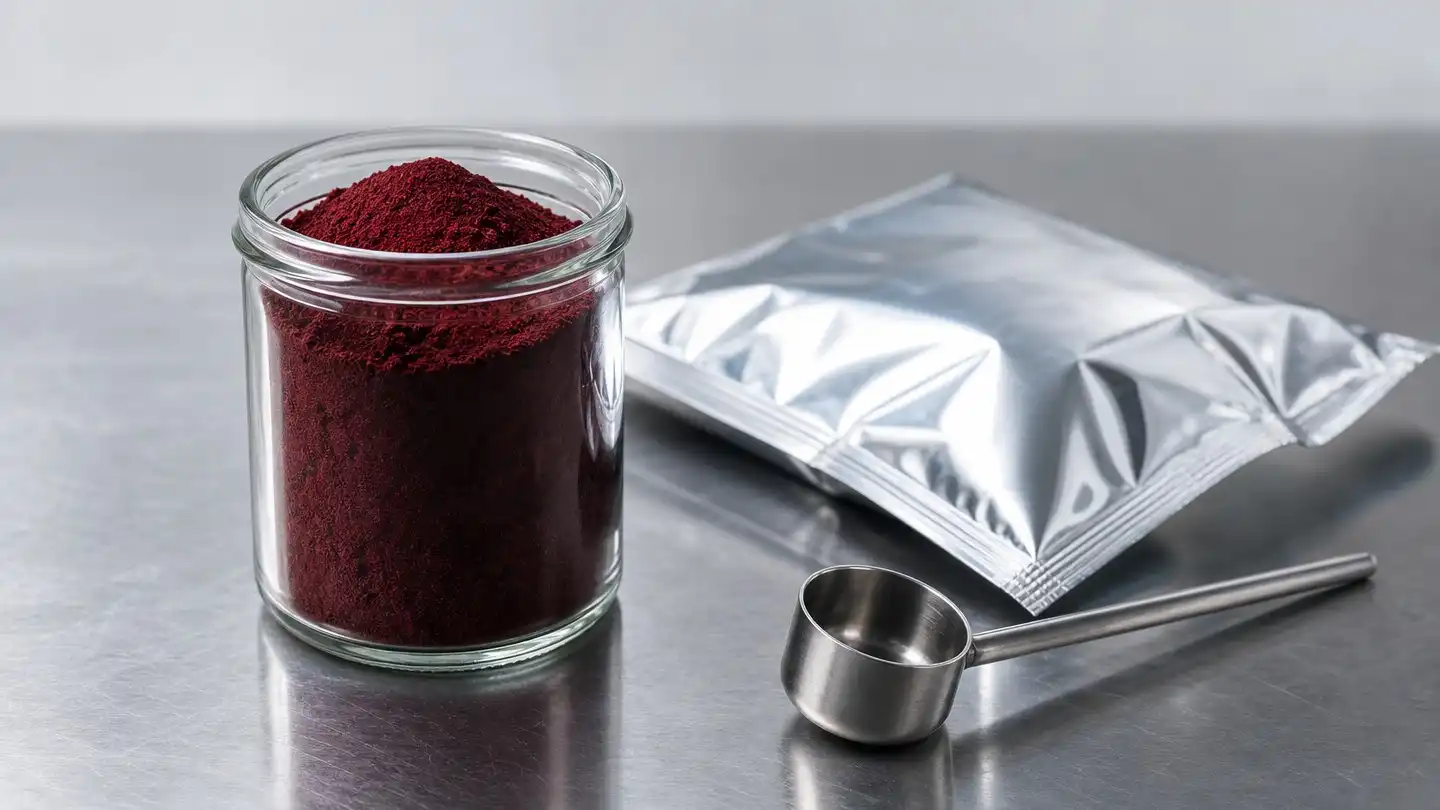
When a bulk purchase order for natural astaxanthin powder is issued, most of the commercial risk has already been decided — inside the specification attached to it. Astaxanthin reaches the market as a 1%–10% powder, a 5%–10% oleoresin, a cold-water-soluble (CWS) microencapsulated grade or a beadlet, and it can be produced by algal cultivation, yeast fermentation or petrochemical synthesis. Two quotations for nominally identical material can describe products that share a name and very little else. Wellgreen publishes its own astaxanthin powder specification openly — dark red powder, Haematococcus pluvialis source, 1%–10%, 100% through 80 mesh, UV/HPLC, aluminium foil bag or 25 kg drum. This article is a sourcing and QA checklist: what the purchase order should pin down, what a certificate of analysis should state, and which documents to request before a first order.
What the Purchase Order Should Pin Down First
Ingredient names are not specifications. "Natural astaxanthin powder 5%" leaves at least eight attributes open, and each one can decide whether a lot is releasable. A useful test before the PO is signed: can every line below be measured by a third-party laboratory, and would a supplier sign it as a specification limit rather than a "typical value"?
| Parameter | What to write in the purchase order | Why it matters |
|---|---|---|
| Source organism | Haematococcus pluvialis; state cultivation system (closed photobioreactor or open pond) | Drives the stereoisomer profile, the allergen position and the regulatory route |
| Production route | Algal-derived material; racemic/synthetic material excluded in writing | Synthetic and algal astaxanthin are the same molecule with a different isomer distribution |
| Delivered form | Powder, CWS, oleoresin or beadlet; carrier or diluent named | Dispersion, blend homogeneity and downstream processing all follow the form |
| Assay and method | Target percentage, analytical method, and the basis (as-is or dried) | UV and HPLC figures are not interchangeable; the basis changes the number |
| Isomer profile | Predominantly all-trans 3S,3′S; report meso, 3R,3′R and cis isomers | Separates algal material from synthetic material on paper, not on trust |
| Packaging | Vacuum-sealed aluminium foil inner bag; drum size; headspace or inert-gas fill | The molecule is light-, heat- and oxygen-sensitive in every delivered form |
| Shelf life and re-test | Shelf life from date of manufacture, plus the storage condition it assumes | Your label dating and stock rotation depend on it |
| Documentation | Batch COA, specification sheet, SDS, stability data, certificate copies | Determines whether your own QA can release the lot on receipt |
| Site and capacity | Manufacturing site, annual capacity, quoted lead time | Traceability and continuity of supply are part of the deal, not an afterthought |
Two habits separate a workable specification from a decorative one: fix the analytical method at the same time as the limit, and define what happens when a lot fails — including a change-control clause that requires written notice before cultivation, extraction or packaging changes are made.
Source Organism: Haematococcus pluvialis and the Stereochemistry Question
Why this microalga remains the benchmark
A 2025 review in Marine Drugs frames the trade-off clearly: H. pluvialis can accumulate astaxanthin up to roughly 3–5% of dry biomass, still the highest cellular content reported among natural producers, but it reaches biomass densities of only about 5–10 g/L under phototrophic cultivation and its thick cell wall complicates extraction. Chromochloris zofingiensis, by comparison, can be grown to 100–220 g/L by heterotrophic fed-batch fermentation while accumulating only around 0.1–0.5% of dry weight as astaxanthin.
The practical consequence for buyers is straightforward. Concentrated algal material is expensive to cultivate and the release of the pigment from the cell is a real process step, not a marketing phrase. Ask which disruption route is used — bead milling, high-pressure homogenisation or supercritical CO2 extraction — whether the process is solvent-free, and what the temperature exposure is, because extraction conditions are one of the variables that published work on astaxanthin repeatedly asks suppliers and researchers to declare.
The ester profile belongs in the same conversation. Snell and Carberry, writing in Nutrients (2022), describe most of the astaxanthin in encysted H. pluvialis cells as deposited fatty acid mono- and diesters, typically of palmitic (16:0), oleic (18:1) and linoleic (18:2) acids. A specification written for free astaxanthin can therefore look "wrong" against a certificate for an esterified algal product; the assay, standard and sample preparation have to match the material.
Why the stereoisomer question gets asked
Astaxanthin has two identical asymmetric carbons, so three optical isomers exist: 3S,3′S; 3R,3′S (meso); and 3R,3′R. Algal material is characteristically dominated by 3S,3′S, whereas the synthetic product is a racemic mixture with a typical ratio of about 1:2:1. Snell and Carberry argue that stereoisomer composition and extraction method should always be reported, because studies that omit them are hard to compare. The commercial reason to ask is simpler: the isomer fingerprint is the cheapest available evidence that the material in the drum is the material in the quotation. The two routes are compared in the site's natural vs synthetic astaxanthin powder article.
European regulation shows how wide an authorised specification can be. Commission Implementing Regulation (EU) 2024/1026 amends the Union list entry for the novel food "astaxanthin-rich oleoresin from Haematococcus pluvialis algae" and sets ranges that include astaxanthin monoesters at 66.7–91.5% w/w of total carotenoids, diesters at 0.16–32.5%, the 9-cis stereoisomer at 0.3–30.0% and protein at 0–4.4%. Ranges that wide are a reminder that "authorised" describes a compliant envelope, not a uniform product. If one attribute matters to your formulation, name it and set a limit for it.
Delivered Forms: Oleoresin, Powder, Beadlet or Microencapsulated
Astaxanthin is lipophilic, so the form is a formulation decision made at the supplier, not a presentation detail. The same batch of algal extract can leave the plant as an oleoresin, a spray-dried powder, a water-dispersible microencapsulated powder or a beadlet, and the choice follows the finished application rather than the reverse. The supplier's second astaxanthin page, for natural astaxanthin powder, lists the formats and concentrations for that range — 1%, 2%, 3% and 5%, in Powder, CWS and Oil.
| Delivered form | Typical presentation | Where the form is normally driven by the process |
|---|---|---|
| Oil-soluble powder | Dark red fine powder, oil-dispersible | Oil-based fills, softgels and matrices that already contain a fat phase |
| CWS microencapsulated powder | Spray-dried or matrix-encapsulated, disperses in water | Dry mixes and water-based liquids, where a lipophilic powder would separate |
| Oleoresin | Dark red oily liquid, typically ~10% astaxanthin | Oil-phase systems and processes that can handle a viscous liquid |
| Beadlet / free-flowing granule | Spherical, low-dust particles | Dry blending, tabletting and any line with dust or flow constraints |
Buys that fail on form fail predictably: phase separation in a liquid, speckle in a powder blend, caking in a hopper, or an assay that reads correctly in the drum but not in the finished unit. Test the delivered form in your own matrix at sample stage, and ask for the carrier, the encapsulant and the particle-size distribution — the 100% through 80 mesh figure on the Wellgreen powder page is a line worth mirroring in your own PO.
Assay: What an HPLC Number Must Actually State
"Test method: UV/HPLC" appears on most astaxanthin specification sheets, and it is the line buyers read least carefully. A UV assay measures absorption by the carotenoid mixture and cannot cleanly separate astaxanthin from its esters, isomers or co-extracted pigments. HPLC quantifies the individual compound, and with an appropriate column and standard it can also resolve stereoisomers and cis/trans forms. Neither method is inherently wrong — but the number only means something when the method, the standard and the sample preparation are named. Esterified algal material normally needs saponification or an ester-corrected calculation to be comparable with a free-astaxanthin standard.
For orientation, the published figures are worth knowing. The Wellgreen powder page lists a 1%–10% specification tested by UV/HPLC, and its sample certificate of analysis reports astaxanthin content by UV of "≥5%" with a 5.42% result; the companion oil page lists astaxanthin by HPLC at "≥10.0%" against a 10.3% result. Those are the figures the pages themselves publish, and they show how two products in the same range can be reported on different analytical footing.
Regulatory specifications exist for purified, free astaxanthin, and they are a useful yardstick. In the United States, 21 CFR 73.35 defines the colour additive astaxanthin as 3,3′-dihydroxy-β,β-carotene-4,4′-dione and requires an assay of not less than 96%, an absorption maximum of 484–493 nm in chloroform, no more than 4% total carotenoids other than astaxanthin, and limits of lead ≤5 ppm, arsenic ≤2 ppm, mercury ≤1 ppm and total heavy metals ≤10 ppm. That entry authorises astaxanthin only as a colour additive in the feed of salmonid fish, capped at 80 mg per kg of finished feed; it is not a food or supplement authorisation. It is still the clearest published example of a fixed specification for the free compound.
Heavy metals and microbiology belong in the same PO line item, with limits set against the pharmacopoeia or the standard that applies in your target market rather than against a supplier's generic statement. As an example of the format, the sample COA on the Wellgreen powder page reports lead ≤1.0 ppm, arsenic ≤1.0 ppm, mercury ≤0.1 ppm and cadmium ≤1.0 ppm, with total plate count ≤1,000 cfu/g, moulds and yeast ≤50 cfu/g, and negative results for E. coli, Salmonella and Staphylococcus aureus.
Oxidative Stability, Protection and Packaging
Astaxanthin has a long conjugated polyene chain, which is exactly what makes it a useful pigment and exactly what makes it vulnerable. Light, heat and oxygen degrade it, and degradation shows up as potency loss, a colour shift and eventually an off-odour — none of which is visible at the receiving dock unless you look for it. Esterification and encapsulation both improve the position, which is another reason to ask what form you are buying rather than only what percentage.
Four questions cover most of the exposure. Is the primary package vacuum-sealed or gas-flushed — the Wellgreen powder page specifies a 1–5 kg aluminium foil bag or a 25 kg drum, with OEM options? What storage condition does the shelf-life claim assume — the powder page says a cool, dry place away from strong light and heat, with a two-year shelf life when properly stored, while the oil page advises room temperature out of sunlight and re-packing under vacuum once the pack is opened? And does stability data generated in that exact package support that shelf life, rather than a figure carried over from a different form?
| Item | Astaxanthin Powder page | Astaxanthin Oil page | Natural Astaxanthin Powder page |
|---|---|---|---|
| Appearance | Dark red powder | Dark red oil | Dark red fine powder |
| Source stated | Haematococcus pluvialis | Haematococcus pluvialis powder | Haematococcus pluvialis |
| Specification | 1%–10% | Astaxanthin oil 10% | 1%, 2%, 3%, 5% (Powder / CWS / Oil) |
| Test method | UV/HPLC | UV/HPLC | Assay by HPLC, carotenoid profile |
| Particle size | 100% through 80 mesh | 100% pass 80 mesh | Not stated on the page |
| Packaging | 1–5 kg aluminium foil bag; 25 kg drum or OEM | Not stated on the page | Vacuum-sealed packaging referred to in the FAQ |
| Shelf life | 2 years when properly stored | 2 years | 24 months under optimal storage |
| Certificates listed | ISO9001:2015 / ISO22000 / Halal / Kosher / HACCP | ISO9001:2015 / ISO22000 / Halal / Kosher / HACCP | ISO22000, Halal, Kosher, GMP compliant |
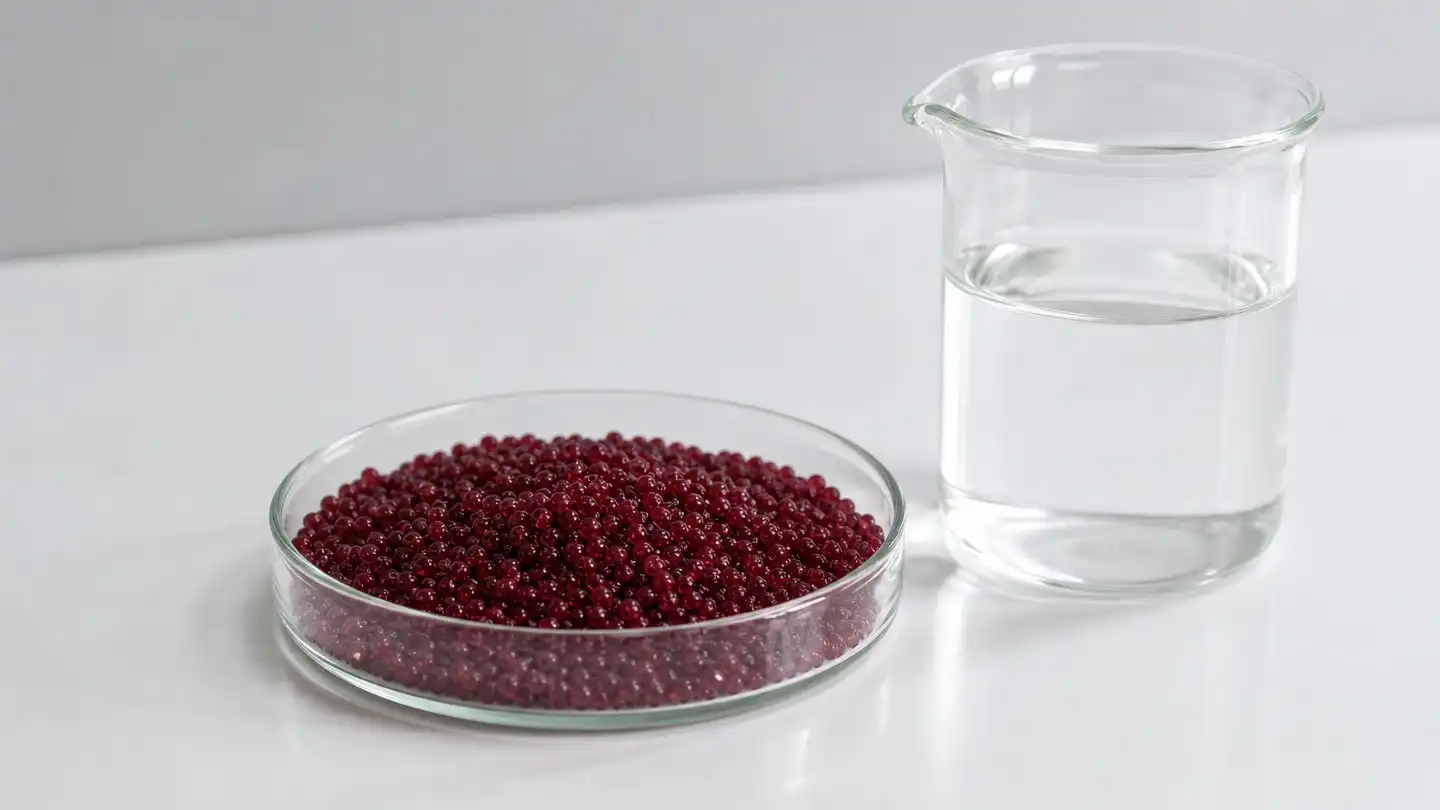
Stability is also where the delivered form and the finished pack meet: a beadlet protects the pigment through blending but adds a carrier that must be declared, and a CWS grade survives a beverage process only if the encapsulation matches the pH and the heat treatment. Request the stability protocol, not only the result, and reproduce the accelerated condition most relevant to your own process.
The Document Set to Ask For Before a First Order
Documents are the cheapest part of the transaction and the most expensive thing to be missing later. Before a first bulk order, ask for: a batch-specific certificate of analysis for the lot you will actually receive, not a representative one; the full specification sheet with method references; a safety data sheet; stability and shelf-life data; an allergen and dietary statement, which for algal material should address the shellfish allergen question directly and note that the source is cultivated rather than harvested; origin and traceability information from cultivation through packaging; and copies of the certificates you intend to rely on.
On certificates, precision pays. The Wellgreen powder page lists ISO9001:2015, ISO22000, Halal, Kosher and HACCP; the natural astaxanthin page lists ISO22000, Halal, Kosher and GMP compliance. Those are the certificates the pages state, and the correct next step is to confirm that the scope of each document covers the manufacturing site and the product you are buying — a certificate for another site or another ingredient proves nothing about your lot. For a first order, have the lot verified by an independent laboratory against your own specification.
Finally, separate the technical file from the regulatory question. Under EU novel-food rules, oleoresin from H. pluvialis containing astaxanthin is authorised as an ingredient of food supplements, with the Union list recording maximum levels of 8.0 mg astaxanthin per day for adults and adolescents above 14, 5.7 mg/day for ages 10 to under 14 and 2.3 mg/day for children aged 3 to under 10; the EFSA opinion of 2025 that assessed an extension of use to dairy analogues and juices compared combined intake against an acceptable daily intake of 0.2 mg/kg body weight per day. Those are regulatory ceilings and intake assessments, not usage recommendations — and they decide whether an ingredient is permitted in your market at all. The site's overview of astaxanthin powder in foods and beverages is a useful starting point for that review, which should end with your own regulatory team's conclusion for your own label.
Wellgreen supplies natural astaxanthin powder from Haematococcus pluvialis, with a published specification of 1%–10%, dark red powder appearance, 100% through 80 mesh, UV/HPLC testing and a stated certificate list, alongside an astaxanthin oil grade at 10%. Technical teams can request a specification sheet, a batch certificate of analysis and a trial sample by emailing wgt@allwellcn.com, with the target form, concentration and intended application stated in the enquiry so the correct grade can be identified on the first pass.
This article provides technical and commercial sourcing information for industry professionals. It is not medical, nutritional or regulatory advice; use levels, regulatory status and permitted label claims must be confirmed against the rules of your target market and against your own product data before commercialisation.
References
- U.S. Food and Drug Administration. 21 CFR 73.35 — Astaxanthin (Listing of Color Additives Exempt from Certification). eCFR, current edition. https://www.ecfr.gov/current/title-21/chapter-I/subchapter-A/part-73/subpart-A/section-73.35
- European Commission. Commission Implementing Regulation (EU) 2024/1026 of 8 April 2024 amending Implementing Regulation (EU) 2017/2470 as regards the specifications of the novel food astaxanthin-rich oleoresin from Haematococcus pluvialis algae. OJ L, 2024/1026, 9.4.2024. https://eur-lex.europa.eu/eli/reg_impl/2024/1026/oj/eng
- EFSA Panel on Nutrition, Novel Foods and Food Allergens (NDA). Safety of the extension of use of oleoresin from Haematococcus pluvialis containing astaxanthin as a novel food pursuant to Regulation (EU) 2015/2283. EFSA Journal 2025;23(12):e9737. https://doi.org/10.2903/j.efsa.2025.9737
- Snell, T. W., & Carberry, J. Astaxanthin Bioactivity Is Determined by Stereoisomer Composition and Extraction Method. Nutrients 2022, 14(7), 1522. https://doi.org/10.3390/nu14071522
- Yang, S., Lu, X., Wang, J., Liu, Y., Nie, M., Liu, J., & Sun, H. Astaxanthin from Haematococcus pluvialis and Chromochloris zofingiensis: Biosynthetic Pathways, Engineering Strategies, and Industrial Prospects. Marine Drugs 2025, 23(12), 485. https://doi.org/10.3390/md23120485
- Ambati, R. R., Phang, S. M., Ravi, S., & Aswathanarayana, R. G. Astaxanthin: Sources, Extraction, Stability, Biological Activities and Its Commercial Applications — A Review. Marine Drugs 2014, 12(1), 128–152. https://doi.org/10.3390/md12010128
- Wellgreen. Astaxanthin Powder — product page, specification, sample certificate of analysis and certificate list as published. https://www.wellgreenherb.com/pure-extracts/astaxanthin-powder
- Wellgreen. Natural Astaxanthin Powder — product page, form and certification details as published. https://www.wellgreenherb.com/beauty-anti-aging/natural-astaxanthin-powder