A B2B Guide to Sourcing Bulk Organic Matcha Powder
2026-07-24 14:28:22
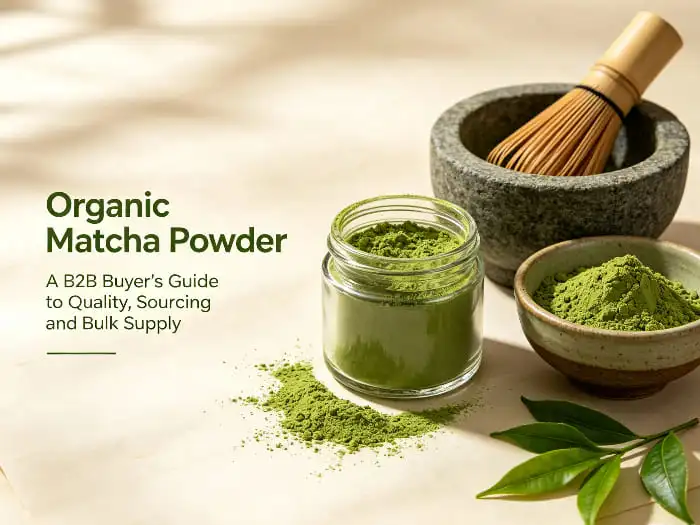
Sourcing Bulk Organic Matcha Powder for industrial applications requires understanding its unique production process, quality benchmarks, and supplier reliability. This premium ingredient—derived from shade-grown Camellia sinensis leaves through steam fixation, ultra-fine milling, and strict organic cultivation—offers exceptional nutritional density including EGCG catechins, L-theanine, and chlorophyll. Whether you're formulating nutraceutical blends, crafting ready-to-drink beverages, or developing clean-label functional foods, selecting the right organic matcha supplier ensures product consistency, regulatory compliance, and competitive advantage in health-conscious markets across North America and Europe.
Understanding Bulk Organic Matcha Powder: Quality, Benefits, and Uses
What Defines Premium Organic Matcha Green Tea Powder?
Matcha that is truly organic is grown in a special way. Twenty to thirty days before they are picked, the tea plants are covered. This shading is done on purpose to make it taste better while also increasing the amount of chlorophyll and L-theanine. The fresh leaves are cooked right away so they don't go bad. After being dried, the stems are cut off and the leaves are stone-ground or air-milled into a very fine powder that is usually between 800 and 1500 mesh, which is about 10 to 15 microns. Because the pieces are small, they mix easily with hot and cold liquids and don't leave behind any gritty or sticky residue. This is very important for companies that make pills and drinks.
In contrast to normal green tea extracts, Bulk Organic Matcha Powder keeps the full nutritional matrix of the whole leaf. It has a clean label because it doesn't have any chemical fertilisers, herbicides, or irradiation treatments that were made by humans. To make sure these claims are true, certification groups like the USDA, the EU, and JAS (Japanese Agricultural Standards) carefully check how the land is farmed, how the foods are gathered, and how they are processed.
Key Nutritional Components Driving Product Innovation
Matcha's main functional profile is made up of three bioactive groups. Oxygen Radical Absorbance Capacity (ORAC) tests show that polyphenols, especially EGCG, are very good at fighting free radicals. L-theanine is an amino acid that can only be found in tea that was grown in the shade. It keeps you calm and active without making you feel jittery like synthetic caffeine does. Because it has natural caffeine, matcha is great for nootropic formulations and sports nutrition products because it gives you energy that lasts.
The bright green colour of plants comes from chlorophyll, which is also used to colour food naturally. Formulators like this group of three chemicals because they support a number of health benefits, such as antioxidants, better brain function, and digestive health. Journals and regulatory dossiers from the European Food Safety Authority (EFSA) back up these bioactivities. This makes marketing stories stronger for B2B clients who want to reach people who care about their health.
Industrial Applications Across Multiple Sectors
Culinary grade matcha is used in many different types of baked goods and useful foods, like protein bars, breakfast cereals, stacked cakes, and cookies. If you heat the powder up to 180°C, it doesn't break down like liquid extracts do. Even after being baked, it keeps its colour and taste. People who make ice cream like its natural green colour because it doesn't need added colours like FD&C Yellow 5 or Blue 1.
Companies that sell ready-to-drink drinks and coffee chains use Barista grade matcha to make lattes, cold brews, and tea drinks in bottles. The tiny bits keep the food from falling apart while it's being stored, and the umami flavour balances out the sweetness in low-sugar recipes. Nutraceutical brands mix Culinary or Ceremonial grades to make detox blends, superfood powders, and pills that help you focus. The high EGCG content of matcha is used in anti-aging serums, clay masks, and scrubbing scrubs because it backs up claims that these skin care products are good for you.
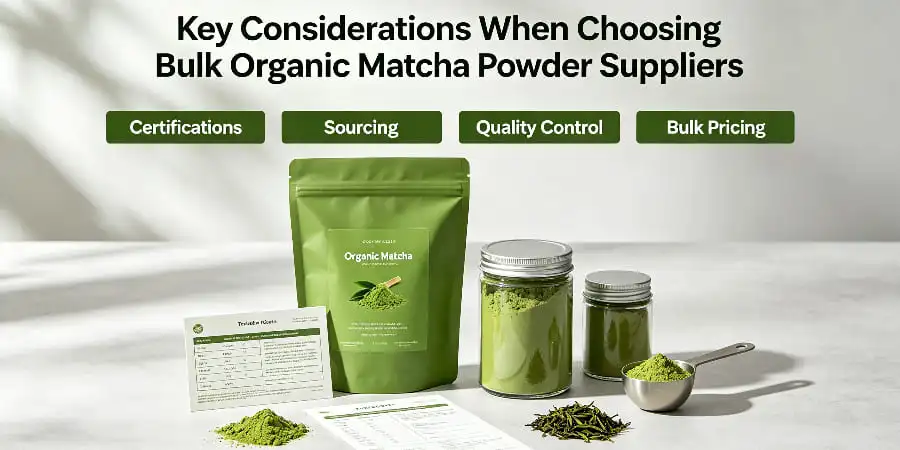
Key Considerations When Choosing Bulk Organic Matcha Powder Suppliers
Certification Standards and Compliance Requirements
A lot of different types of certification have to be checked when buying teams look at sources. Following the USDA NOP (National Organic Program) or EU Regulation 2018/848 is the only way to show that something is organic, and new certificates should cover the production year. Certification in Good Manufacturing Practice (GMP) makes sure that work areas are clean and that batches can be tracked. Risks are managed in a planned way all along the supply chain, as shown by ISO 22000 food safety management systems.
GC-MS/MS and LC-MS/MS tests done by a third party should show non-detectable (ND) results for more than 500 substances that are not approved. This is needed to make sure that amounts of heavy metals like lead, arsenic, cadmium, and mercury stay below the standards set by the FDA and California Proposition 65. ICP-MS stands for Inductively Coupled Plasma Mass Spectrometry. For microbial tests, there are panels for yeast and mould, E. coli, and Total Plate Count to protect against the risk of poisoning in raw materials caused by Salmonella.
Grade Differentiation and Application Matching
There are three main types used in the matcha business: Ceremonial, Barista, and Culinary, and for Organic Matcha Powder Bulk, Ceremonial grade from the first harvest offers the best jade-green colour and sweetest taste, ideal for premium supplements and direct consumption where flavour is paramount, while Barista grade balances price and quality with stable colour and umami for smoothies and milk-based beverages. It has the best jade-green colour, sweetest taste, and cleanest texture. Ceremonial grade comes from the first crop. This grade is good for high-end vitamin pills and ways of direct consumption where taste is very important. When it comes to price and quality, Barista grade is a good choice. It doesn't change colour much and has the right amount of umami for smoothies and drinks with milk.
Even though Culinary grade is less expensive, it still has the same level of usefulness and pure purity. This means that it can be used for baking, making energy bars, and making a lot of food. Buyers can make sure that the money they spend on ingredients fits with the positioning of the finished product when they know this range. A high-end skin care brand might only use Ceremonial grade for its best face mask, but a mass-market protein powder brand might use Culinary grade to save money without giving up the antioxidant benefits.
Evaluating Supplier Transparency and Traceability
Every shipment of Bulk Organic Matcha Powder from a reliable supplier comes with a full Certificate of Analysis (COA). Some of these are test results, production dates, and batch numbers. Some partners offer farm-to-factory tracking systems that show where the food came from, when it was grown, and when it was made. Being honest is very important when working with law issues or problems with products.
Buyers who are willing to be audited let clients look around their buildings and keep digital records that clients can get to through client portals. They can show you how to store matcha in a controlled environment, deal with humidity, and use nitrogen-flushed packing to keep the chlorophyll safe and stop it from turning yellow due to oxidation. When there are changes in the harvest season, weather that affects yields, and possible supply gaps, sellers should talk about them ahead of time.
Navigating the Procurement Process for Bulk Organic Matcha Powder
Minimum Order Quantities and Lead Time Planning
If you want to buy industrial matcha, the minimum order quantity (MOQ) can be anywhere from 25 kilograms to several metric tonnes, depending on the grade and how you want it to be customised. MOQs for standard Culinary grades are usually lower. On the other hand, MOQs for Ceremonial grades or custom mesh specifications might need to be higher in order for specialised processing runs to be worth the time and money. From season to season, lead times change. Most people want to buy Bulk Organic Matcha Powder from April to May, when crops are blooming. It takes 8 to 12 weeks to deliver. Orders may be finished in 4 to 6 weeks during the off-season.
People who work in procurement should make deals with sellers that cover the next few months to make sure they have enough supplies during busy times and can still adjust to changes in demand. Payment terms commonly span 30% deposit with balance against Bill of Lading, though established relationships may negotiate extended net terms. The price per kilogram changes a lot depending on whether it is shipped in 20-foot or 40-foot barrels. To save money, it is best to combine packages with other botanical items.
Packaging Solutions and Shelf Life Preservation
Because light, air, and water can quickly oxidise and damage Bulk Organic Matcha Powder, it needs to be packed very carefully. To keep goods oxygen-free, industrial sellers use nitrogen-flushed two-layer aluminium foil bags or fibre drums with foil covers inside. If the bags or drums are not opened, the goods stay fresh for up to 24 months. Choices that are vacuum-sealed are safer, but they cost more per unit.
Multi-layer films that break down naturally and meet the standards set by European Standard EN 13432 can now be used for recyclable packing. Companies can use these films to meet their social responsibility goals without having to lower the quality of the goods they sell. Suppliers can give customers who do intermediate repackaging big tubs with lids that can be sealed again and tags that show when the humidity level needs to be changed for storing. Temperature-controlled storage is needed all along the transport chain. The temperature must stay between 15 and 20°C, and the relative humidity must stay below 50%.
Pricing Benchmarks and Negotiation Strategies
Some of the things that affect the price of organic matcha are the amount of work that goes into growing it in the shade, how finely it is processed, and the grade classification. Ceremonial grades are very valuable because they are carefully sorted and only come from small crops in the first harvest. For Culinary grades, the price range is bigger, but they still meet the standards for being organic and being useful.
Tiered prices can be used when there are promises to buy a certain amount. When yearly contracts call for quarterly shipments instead of spot purchases, costs often drop by 12 to 18%. People who buy things in bulk can save money, but it costs money to store goods, and things only last a certain amount of time. By sending samples before placing a big order, the lab can check the claims and see if the products will work together with certain formulas. Some sellers let qualified B2B buyers put the cost of samples toward their first order.
Trusted Bulk Organic Matcha Powder Brands and Supplier Profiles
Characteristics of Reliable Manufacturing Partners
The best makers of Bulk Organic Matcha Powder stand out because their supply lines are linked from top to bottom and go straight to tea farms. With this link, you can follow data from certain field plots all the way through processing groups. This makes it possible to check the quality accurately and respond quickly to changes in the requirements. GMP-certified facilities with climate-controlled milling rooms and clean-air processing zones keep flavour compounds from getting into the food.
Suppliers can stand out by making sure that each batch is the same, and for Organic Matcha Powder Bulk, standardized blending methods ensure consistent taste, colour, and particle size across production lots, eliminating reformulation challenges when scaling from test batches to mass production, while strategic inventory buffers of three to six months for common grades protect customers from shortages and price volatility caused by weather-related crop yield fluctuations. Companies today use standard mixing methods to make sure that all of their production lots have the same taste, colour, and particle size. The problems that come up when you have to change the recipe from small test runs to mass production are gone because of this stability. Strategic inventory backups, which are usually three to six months' worth of common grade stocks, protect customers from shortages and price changes that happen every year when bad weather lowers crop yields.
Building Strategic Long-Term Relationships
When people work together to buy Bulk Organic Matcha Powder, they do more than just make purchases; they also work together to make new things. Preferred providers give each customer a dedicated account manager who knows how to solve problems that are unique to that application. For example, they can help customers with problems like clumping or finding the best matcha concentration for RTD beverage formulas. The expert support teams come up with the best grades for goal price points and performance needs to help with formulation.
There should be quality consistency terms in contracts that spell out the accepted ranges for particle size distribution, bioactive chemical concentrations, and colour measures (using Hunter Lab or CIE scales). There are rules called service level agreements (SLAs) that tell people how long it will take to answer questions, send samples, and handle complaints. As the businesses of both companies grow, they do business reviews every year that look at supply performance, market trends, and new product ideas. This helps everyone stay on the same page.
Best Practices and Tips for Bulk Organic Matcha Powder Procurement Success
Pre-Purchase Validation and Risk Mitigation
The people who buy things should ask for samples and Certificates of Analysis (COAs) that show they've been tested for microbes, heavy metals, and pesticides before placing large orders of Bulk Organic Matcha Powder. Third-party labs with the right credentials, such as Eurofins, SGS, or Bureau Veritas, check what providers say on their own to make sure it's true and to set standards for quality. Formulation experts and quality assurance workers who know what the product will be used for should be on review groups that look at how it looks, smells, tastes, and feels.
Before you go big, do test runs with your chosen matcha to see if there are any issues with the way it's being processed. If someone is making drinks, they might test how stable the suspension is after being in the fridge for 72 hours. If someone is making baked goods, they might test how the colour stays the same after normal baking. Supplement makers check how well their products slip through capsule machines and how quickly they break down in conditions that are like the stomach. These trials are recorded so that objective selection criteria can be made.
Monitoring Regulatory Evolution and Market Trends
The world of Bulk Organic Matcha Powder is always changing because the government is always adding new substances to the lists of things that are okay and making testing more strict. Because the U.S. FDA is now focusing on heavy metal pollution in plants, more attention is being paid to tea products, especially the amount of aluminium and fluoride that builds up in leaves as they age. Teams that buy things should sign up for regulatory intelligence services that keep track of EFSA views, FDA import reports, and Health Canada Natural Health Product updates.
The ways that suppliers are chosen are changing as markets move toward carbon-neutral supply lines and farmland that grows back. Brands that are on the cutting edge now ask food sources for Scope 3 emissions data and pay more attention to partners that use soil carbon storing practices. Tracking systems based on blockchain are making their way into the luxury tea business. Customers can scan a QR code to see if organic claims are real, which is a level of openness that has never been seen before. This is something that more and more high-end supplement and functional food brands want.
Leveraging Digital Tools for Supply Chain Optimization
Dashboards on modern platforms for buying let you manage suppliers, keep an eye on quality papers, and keep an eye on shipping all at the same time. It is less likely that these systems will run out of stock because they automatically rearrange based on stock levels and wait times. Digital COA repositories let people get to them right away during customer checks or regulatory inspections, which shows that the right amount of care was taken. Supplier performance scorecards for Bulk Organic Matcha Powder that keep track of answer rates, on-time delivery rates, and rejection rates can help you choose what resources to use.
When sellers use collaborative forecasting tools to share anonymous signs of demand, it helps with more accurate production planning, especially during harvest times when processing capacity is low. Managers can plan ahead for delays caused by things like traffic at ports or customs stops when goods platforms are built in and show packages in real time. With these technological additions, buying changes from being reactive to being proactive, which helps keep the supply chain running smoothly.
Conclusion
If you want to find organic matcha powder for business use, you should pay close attention to how real the certification is, what type is best for the job, and how reliable the seller is, and for Bulk Organic Matcha Powder, selecting a supplier is a critical business decision that affects product quality, regulatory compliance, and market standing, requiring careful evaluation of production methods, certification validity, and batch-to-batch consistency to meet consumer demand for clean-label functional ingredients across food, beverage, cosmetic, and supplement applications. Selecting a supplier is an important business decision that impacts the quality of the product, compliance with regulations, and standing in the market. This is because of how the ingredient needs to be grown and handled. It is easier for companies to meet customer needs for useful ingredients with clean labels when procurement professionals carefully evaluate suppliers, set up strong quality control procedures, and build relationships with other professionals. People can choose where to get ingredients for new food, drink, cosmetic, and supplement ideas if they know the differences between Ceremonial, Barista, and Culinary grades, as well as the rules for packing and what is expected of group accuracy.
FAQ
How can I verify authentic organic certification for bulk matcha suppliers?
Get up-to-date certificates directly from certifying bodies like USDA, ECOCERT, or JAS instead of relying on the documents that the supplier gives you. To compare certificate numbers, use official government databases such as the USDA Organic INTEGRITY Database. Real sellers can easily give out organic certificates that link each batch of their goods to a certified farm.
What are typical lead times for large bulk organic matcha orders?
It takes about 6 to 8 weeks for standard grades to get to the port after you accept the order. This is because of production plans, quality checks, and shipping from other countries. Custom specs or Ceremonial grades may take 10 to 12 weeks, which is longer if the harvest is in the spring and processing plants are full. Framework deals that let providers see your needs ahead of time help them put your needs in order of importance.
Can suppliers customize matcha specifications for specific applications?
To stay organic, manufacturers with a good reputation let you change the mesh size, the blend ratios between harvest seasons, and the moisture content in ways that don't break the rules. When you order custom specs, the minimum order amount is usually bigger than when you order standard things. It starts at 500 kilograms. As the product is being made, technical collaboration makes sure that it meets performance goals without breaking any rules or hurting the original product.
Partner with Wellgreen for Premium Bulk Organic Matcha Powder Supply
Wellgreen Technology is a niche business that makes plant extracts for the useful food, nutraceutical, and medicinal industries. The Bulk Organic Matcha Powder they sell has been approved and comes with a full quality guarantee. It is important for our GMP-certified plant to keep a lot of Ceremonial, Barista, and Culinary grades on hand. A third party has checked each one for microbes, heavy metals, and pesticide residues. For example, we can help you find the best particle size, use nitrogen-flushed packing, and set batch consistency standards so you don't have to re-formulate when you scale up.
Our expert team sends sample kits with full analysis paperwork, such as HPLC strength proof and stability data, to help with making new products. Our supply chain is clear, from controlled processing to certified organic farms. This protects brand identity and regulatory trust, whether you're making antioxidant supplement blends, ready-to-drink matcha drinks, or clean-label baked goods. Email our buying experts at wgt@allwellcn.com to get technical specs, COA paperwork, and quotes from other companies. We're willing to have facility checks done and have variable MOQs for working with skilled Bulk Organic Matcha Powder providers. We can then give you a steady supply that changes as your brand does.
References
1. Weiss, D. J., & Anderton, C. R. (2021). "Quality Assessment of Commercial Green Tea and Matcha Products: Polyphenol Content, Antioxidant Capacity, and Heavy Metal Contamination." Journal of Food Science and Technology, 58(4), 1453-1462.
2. Jakubczyk, K., Drużga, A., Katarzyna, J., & Skonieczna-Żydecka, K. (2020). "Antioxidant Properties and Nutritional Composition of Matcha Green Tea: A Review." Molecules, 25(12), 2891.
3. United States Department of Agriculture. (2022). "National Organic Program: Organic Certification and Accreditation Standards for Plant-Based Ingredients." Agricultural Marketing Service Handbook.
4. European Food Safety Authority. (2020). "Scientific Opinion on the Safety of Green Tea Catechins in Food Supplements." EFSA Journal, 18(4), e06022.
5. Horie, H., Mukai, T., & Goto, T. (2019). "Chemical Components of Matcha and Powdered Green Tea: Analysis of Shade Cultivation Effects on Theanine and Catechin Content." Journal of Agricultural and Food Chemistry, 67(21), 5857-5863.
6. International Trade Centre. (2023). "Global Market Analysis: Organic Tea and Matcha Supply Chain Dynamics in North American and European Markets." Market Intelligence Report Series.