Finding the Right Beetroot Powder Wholesaler
2026-07-24 14:28:23
When sourcing high-quality ingredients for your production line, finding the right partner makes all the difference. The search for beetroot powder bulk wholesalers has become increasingly critical as demand surges across nutraceutical, food processing, and functional beverage sectors. The right wholesaler delivers more than competitive pricing—they provide consistent quality, regulatory compliance, and supply chain reliability that directly impacts your product's market success. This guide walks you through the essential considerations that transform supplier selection from a procurement task into a strategic business advantage.
Understanding Beetroot Powder Bulk: What B2B Buyers Need to Know?
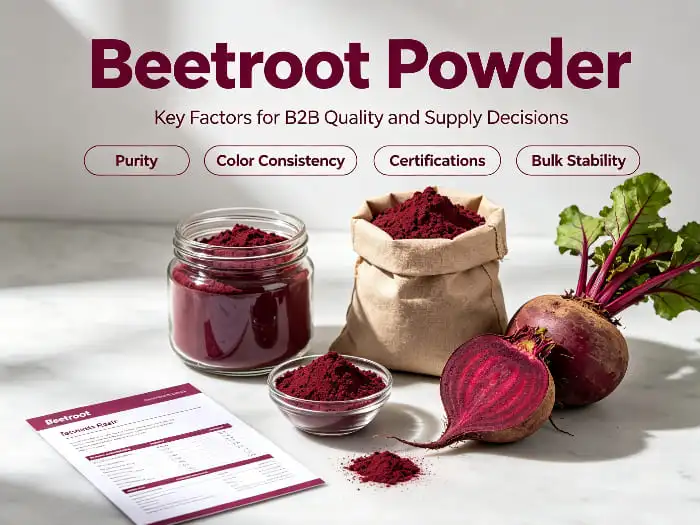
Beetroot Powder Bulk is a high-tech plant ingredient made from red beets (Beta vulgaris) that were grown according to strict organic guidelines. Careful washing, drying, and modern low-temperature airflow pulverisation technology are used in the production process to keep the full nutritional profile. This includes inorganic nitrates, dietary fibre, and essential minerals, as well as betalains, which are the natural pigments that give it its bright red-purple colour.
Production Methods and Quality Standards
The process of making a thing decides its quality. To protect heat-sensitive betalain colours, high-end producers use controlled drying temperatures below 60°C. Mesh size is usually between 80 and 120, which makes a fine powder that mixes very easily with water. High-grade powder has a smooth, even colour distribution and doesn't get gritty when mixed with cold or warm water. This is an important property for ready-to-drink recipes and solid beverage uses. GMP-certified facilities keep strict environmental controls in place during processing, which lowers the risk of microbial contamination that comes with root vegetables.
Core Nutritional Profile and Health Benefits
The element is unique in the B2B market because it can be used for two different things. The powder is full of naturally occurring nitrates that the body can turn into nitric oxide. This helps blood vessels open up and improves oxygen flow to muscles. Clinical studies have shown that exercise stamina can get better and signs of tiredness can go down. At the same time, betalain content is a clean-label option to manufactured colourants such as Erythrosine (Red 3) and Allura Red (Red 40). It keeps the colour stable at pH levels between 4.0 and 7.0.
Industrial Applications Across Sectors
Beetroot Powder Bulk can be used in a lot of different fields. In sports nutrition, it is the main ingredient in pre-workout and endurance products, and it is often mixed with L-arginine, citrulline, or pomegranate extract. It is used to add a natural blood-red colour to baked goods, ice cream, candy, and plant-based meat replacements by food makers. Because it dissolves in water, functional beverage developers use it to make energy drinks, detox blends, and superfood powder mixes. Even cosmetics companies use it because it is safe and natural and can be used to colour lipsticks and blushes.
How to Choose the Best Beetroot Powder Wholesaler: Key Criteria for B2B Purchasers?
To choose the right supplier, you need to carefully look at a number of important factors. In addition to short-term cost concerns, the choice also takes into account quality assurance, regulatory alignment, and operational skills that support your long-term business goals.
Certifications and Compliance Requirements
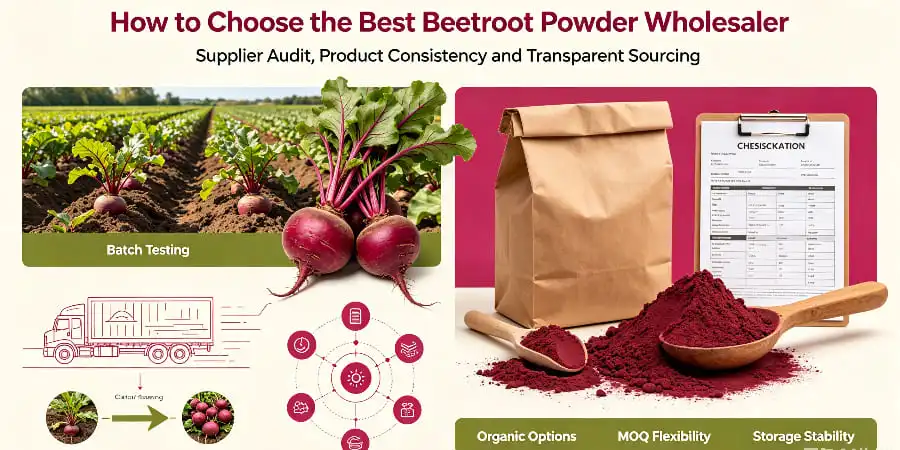
Real Beetroot Powder Bulk has two certifications: one from the USDA and one from the EU. These certifications show that the crops were grown without using pesticides or chemical fertilisers, and they also show that the whole supply chain can be tracked from the farm to the finished powder. In addition to organic credentials, you should look at ISO 22000, HACCP, and GMP credentials that show you manage quality in a structured way. For pharmaceutical use, suppliers should give Certificates of Analysis that list the heavy metal content (lead below 3 ppm and arsenic below 2 ppm), the microbial limits (total plate count usually under 10,000 CFU/g), and the moisture content (loss on drying at or below 5 percent).
Pricing Structures and Order Flexibility
The way wholesale prices are set depends a lot on the amount of food ordered, whether it is organic, and how complex the processing is, and for Wholesale Organic Beet Powder, understanding the minimum order quantity helps balance inventory investment against unit cost reduction, while reputable suppliers offer transparent pricing without hidden fees for quality testing or documentation, and sourcing geography affects cost—European powders typically command premium pricing due to stricter farming regulations, while properly certified Indian sources offer competitive pricing with comparable quality. Knowing the minimum order number helps you find the right mix between investing in inventory and lowering the cost per unit. Suppliers with a good reputation don't hide fees for things like quality testing or paperwork; their prices are clear. Cost profiles are affected by where the powder comes from. Powders from Europe usually cost more because of stricter farming rules, but powders from India can be had for less money and be of the same quality if they are properly certified.
Supplier Reliability and Service Capabilities
Long-term relationships rely on consistent performance that goes beyond just delivering goods. You can test possible wholesalers' policies on giving samples before committing to large orders by looking at these policies. Respondent technical support is very helpful when making new medicines because it helps you find the best dose levels and solve problems with how well they work with other ingredients. In crowded markets, private label services and unique packaging choices help brands stand out. After-sales support, such as ways to handle complaints and protocols for recalling batches, shows that the supplier cares about the success of your business.
Navigating Procurement Transactions: How to Buy Beetroot Powder Bulk Efficiently?
When procurement is done well, ties with suppliers can become economic benefits. By understanding the whole buying process, you can cut down on wait times, avoid quality disputes, and make the best use of your working capital.
Sample Request to Bulk Order Placement
Sample evaluation is the first step in the procurement process. Ask for 100- to 500-gram samples that come from real production batches instead of samples that were specially made. You should test the colour, smell, and taste of the substance, see how well it dissolves in the formulation you want to use, and have a third-party lab confirm the specifications. Once the sample validation goes well, place pilot-scale orders before committing to yearly supply agreements. This step-by-step process lowers the risk and builds trust with the provider in your promise.
Managing MOQs and Payment Terms
Depending on the supplier's size and the difficulty of the approval, the minimum order quantity for Beetroot Powder Bulk is usually between 25 and 500 kilograms. Talk to your supplier about payment plans that meet both your security needs and your cash flow needs. Terms that are often used include a 30% deposit when the order is confirmed and the rest of the payment against a copy of the bill of goods or a letter of credit for big deals. Set clear limits on the accepted ranges of deviation for important factors such as colour value and moisture content to avoid getting complaints.
Logistics and Storage Considerations
International packages have a lot of complicated rules that must be followed. Make sure that your wholesaler takes care of export paperwork like phytosanitary certificates, organic transaction certificates, and import permits that are specific to each country. Shipping methods affect both price and quality. For example, air freight speeds up delivery but costs more, while sea freight is cheaper but takes longer to get to its destination, leaving goods open to changes in humidity. As soon as you get the powder, keep it somewhere cool, dry, and below 25°C with a relative humidity of less than 60%. By keeping betalain pigments from breaking down too quickly, nitrogen-flushed packaging increases the shelf life of food.
Comparing Top Beetroot Powder Bulk Suppliers: Finding Your Ideal Partner
There are many suppliers to choose from, and each one has its own benefits that buyers can use to meet their needs. Comparative research shows how various wholesalers deal with common problems that affect the quality of goods and the efficiency of their operations.
Regional Supply Chain Characteristics
Indian companies have strong positions in exporting Beetroot Powder Bulk because they have a lot of agricultural equipment and can hire cheap labour. Many of them keep certified organic farms in controlled areas and follow strict testing protocols that meet international standards. European suppliers, mostly from the Netherlands and Germany, take advantage of being close to North American markets and the strict rules that apply to them in the EU. Distributors in the United States often bring together goods from different countries, which provides a wider range of sources and makes domestic logistics easier.
Organic Versus Conventional Options
The choice between organic and conventional farming involves strategic trade-offs that go beyond differences in price. Organic approval allows marketers to make clean-label claims that health-conscious customers are increasingly asking for, which supports premium branding. Because synthetic pesticides and fertilisers are not allowed in organic farming, crop yields may go down, which could lead to higher wholesale prices. When organic approval doesn't make a big difference in the market, like when it comes to colouring food or adding to animal feed, conventional Beetroot Powder Bulk is cheaper.
Quality Assurance Processes
Reputable providers use thorough quality control measures that take into account the unique difficulties of Beetroot Powder Bulk, and for Wholesale Organic Beet Powder, advanced processing includes careful peeling and mild heat treatment to reduce earthy geosmin flavours while preserving bioactives; standardized spectrophotometric colorimetric testing ensures consistent optical density across batches, and steam sterilization technology achieves low microbial counts without compromising natural pigments or nitrate content. Geosmin chemicals can give off earthy flavours, which can be a problem when trying to make new recipes. Advanced processors use careful peeling and gentle heat processes to get rid of a lot of the earthiness while keeping the bioactive parts. Standardised colorimetric testing with spectrophotometry is needed to make sure that diluted liquids keep results of the same optical density from batch to batch. Root veggies that are subject to soil-borne pathogens need to be microbially controlled even more. Premium providers use steam sterilisation technology to get low microbial counts without affecting natural pigments or nitrate content.
Wellgreen Technology is a great example of how to make things because it has both USDA and EU organic approval, which covers everything from controlled farming to final processing. Our low-temperature drying method locks in the activity of the betalain molecules, which stops the colour loss that usually happens during storage and processing later on. We know that the natural sugar in Beetroot Powder Bulk makes it absorb water and clump together, so we've come up with physical microencapsulation and humidity-controlled packaging systems that get rid of the need for silicon dioxide anti-caking agents while keeping the clean label integrity at 100%.
Best Practices and Tips for Maximizing Value When Buying Beetroot Powder Bulk
Strategic procurement includes more than just choosing a supplier at the beginning. It also includes ongoing quality checks, formula optimisation, and relationship management techniques that add value over time.
Implementing Incoming Quality Verification
Before letting new inventory into your warehouse after each shipment arrives, you should do a set of quality checks. Visual inspection should prove that the powder is the same colour all over and doesn't have any foreign materials mixed in. Solubility characteristics and colour intensity can be found by reconstitution testing in water at the concentration you normally use. A third-party lab test for important factors like betalain levels, nitrate levels, heavy metals, and bacteria numbers gives objective confirmation against specification sheets. Write down all of the test results to make a quality trend database that can spot small changes in specifications before they affect the consistency of the final product.
Formulation Integration Strategies
Because Beetroot Powder Bulk is naturally different, it needs to be made with care. Its natural sweetness and earthy undertone interact with other ingredients. Flavours that go well with it, like berry, citrus, and ginger, help hide any earthiness while making the whole thing taste better. If you use a natural colourant, think about how the pH level will affect the final colour. If the pH level is too high, the colour will shift toward brown tones that you don't want. The nitrate substance that improves performance stays steady under most processing conditions. However, being exposed to high temperatures for a long time during production may cause some degradation. The powder form of Beetroot Powder Bulk is better at staying stable on the shelf, being easier to handle, and giving more accurate dose control in solid dosage forms.
Building Strategic Supplier Relationships
Supply chains that last depend on partnerships that work together instead of exchanges that happen one way or another. Set up regular times to talk to your wholesaler and share your forecasts so that they can plan their crop numbers and processing capacity. Give each batch helpful feedback that points out both what went well and what could be done better. When quality problems happen, resolution should be seen as a joint effort to solve the problem instead of a fight. Suppliers who see you as a valuable partner will take the time to learn about your unique needs and may even offer process changes or different specifications that will help your product stand out.
Conclusion
Finding the right Beetroot Powder Bulk supplier has a big impact on the standard of your products, how well your business runs, and how competitive you are in the market. Certifications and compliance paperwork need to be weighed against pricing structures and order flexibility in order to make the decision. Successful buyers use staged procurement methods, starting with validating samples, then moving on to pilot orders, and finally securing long-term supply agreements based on performance history. Quality control methods, recipe optimisation strategies, and working together with suppliers all add value from one order to the next. As clean-label demands and performance nutrition trends come together, the market for Beetroot Powder Bulk keeps growing. Choosing a smart provider is an investment in the future success of your brand.
FAQ
Is beetroot powder bulk always organic, or are conventional options available?
In the Beetroot Powder Bulk market, you can find both organic and regular beetroot powder. Organic versions have to be certified by the USDA or the EU as being grown without pesticides and must have full supply chain documentation. Regular powder is cheaper, but it can't back up claims that it is organic. Your choice will rely on how you want to place your product in the market and whether the extra cost of organic certification is worth it for your product.
What shelf life should I expect from bulk beetroot powder?
Beetroot Powder Bulk usually stays good for 12 to 24 months after it was made as long as it is kept properly. The quality of the packaging (vacuum-sealed or nitrogen-flushed bags work best), the temperature (below 25°C is best), and the humidity control (under 60% relative humidity). Higher levels of wetness speed up the breakdown and clumping of betalain, and light contact weakens the colour over time.
Can I request samples before placing a bulk order?
Reliable sellers usually offer samples so that you can check the quality before making a big purchase. Different suppliers have different sample policies. Some offer free samples as long as the buyer pays for the shipping, while others charge small fees that can be used to lower the price of future bulk orders. Asking for samples from several possible sellers lets you do direct comparison testing with your specific formulation conditions, which greatly lowers the risk of buying.
Partner with Wellgreen for Premium Beetroot Powder Bulk Supply
Wellgreen Technology can help you find Beetroot Powder Bulk because they use GMP-certified manufacturing, provide full quality paperwork, and let you choose the amount of powder you need based on your production size. Our organic certification from both the USDA and the EU lets you make clean-label marketing claims, and our optimised low-temperature processing keeps the highest levels of betalain and nitrate for better product performance. As an experienced Beetroot Powder Bulk maker, we keep a large collection to make sure that orders are filled quickly and that the supply chain is always reliable.
Contact our technical team at wgt@allwellcn.com to discuss your specific formulation needs, request certificates of analysis, or arrange sample shipments. We offer OEM support for custom specs, private label packaging solutions, and dedicated quality assurance assistance throughout your product development journey. Let us help you source the premium organic beetroot powder that differentiates your brand in today's competitive wellness market.
References
1. Clifford, T., Howatson, G., West, D. J., & Stevenson, E. J. (2015). The potential benefits of red beetroot supplementation in health and disease. Nutrients, 7(4), 2801-2822.
2. Delgado-Vargas, F., Jiménez, A. R., & Paredes-López, O. (2000). Natural pigments: carotenoids, anthocyanins, and betalains—characteristics, biosynthesis, processing, and stability. Critical Reviews in Food Science and Nutrition, 40(3), 173-289.
3. Kapadia, G. J., Tokuda, H., Konoshima, T., & Nishino, H. (1996). Chemoprevention of lung and skin cancer by Beta vulgaris (beet) root extract. Cancer Letters, 100(1-2), 211-214.
4. Stintzing, F. C., & Carle, R. (2004). Functional properties of anthocyanins and betalains in plants, food, and in human nutrition. Trends in Food Science & Technology, 15(1), 19-38.
5. Wruss, J., Waldenberger, G., Huemer, S., Uygun, P., Lanzerstorfer, P., Müller, U., ... & Weghuber, J. (2015). Compositional characteristics of commercial beetroot products and beetroot juice prepared from seven beetroot varieties grown in Upper Austria. Journal of Food Composition and Analysis, 42, 46-55.
6. Wootton-Beard, P. C., & Ryan, L. (2011). A beetroot juice shot is a significant and convenient source of bioaccessible antioxidants. Journal of Functional Foods, 3(4), 329-334.