
Bacopa Monniera Extract Supplier for Standardized Botanical Ingredient Procurement
2026-10-16 17:29:44
Bacopa Monniera Extract is a standardized botanical ingredient, and standardized botanical ingredients are bought on evidence rather than on price. A brand or procurement team choosing a Bacopa Monniera Extract supplier is not simply buying powder in drums; it is selecting a quality-management system, a traceability chain and a production calendar that it will have to live with for years. This article sets out what a supplier of a standardized botanical must be able to evidence before a first purchase order is raised, in what order to request it, and how to weight the answers in a scorecard. None of it requires a factory visit to begin; it requires knowing which questions produce a document and which produce an adjective.
What a Standardized Botanical Supplier Has to Evidence
The quality-management backbone
Every credible claim a supplier makes rests on written procedure. The clearest public articulation of that backbone for dietary ingredients in the United States is the FDA's current good manufacturing practice rule for dietary supplements, 21 CFR Part 111, which sets expectations for specifications, quality-control operations, master manufacturing records, batch production records, laboratory operations and reserve samples. A supplier whose site is organized to that structure can be audited and can answer questions with records. A supplier that only holds a certificate cannot.
Ask for the procedural layer before the commercial layer: which procedures exist, who owns each one, how often it is reviewed, and how a deviation is recorded and closed. A supplier that can produce a deviation log with real entries and closed corrective actions is describing a living system; one that can only produce a procedure cover page is describing an intention.
The scope statement behind the certificate
The logo on a certificate tells you which standard was applied. The scope statement tells you where and to what it applies, and it is the part that is rarely read. Check whether the scope names the site that will actually produce your material, whether it covers extraction and drying or only blending and packing, and whether it is written for manufacturing or for trade. A certificate issued to a different address, or limited to distribution, does not qualify the production you are buying. Ask also for the list of sites covered and the products covered at each site; a multi-site certificate is not evidence that your material will be made at the site you audited.
Then check currency: issue date, expiry date, the certification body, and whether the standard version cited is the one currently in force. The ISO 9000 family has been revised, so a certificate citing a superseded edition should prompt a transition question rather than an automatic rejection.
In-house analytical capability versus outsourcing
Ask which tests are performed on site and which are sent out, on which instruments, and by whom. Outsourcing is not disqualifying; failing to own the result is. The supplier should control sampling, the chain of custody, the interpretation of the report and the decision that follows it. Where work is outsourced, ask for the laboratory's accreditation and for the procedure the supplier uses to verify a report it did not produce.
Where testing is in-house, the questions move to control: are methods validated for the matrix, are instruments calibrated on a defined schedule, how are reference standards sourced and stored, how are analysts trained and requalified, and what happens when a control sample fails. A practical check is to request one raw chromatogram and one certificate from the same lot and confirm that the numbers reconcile.
How the standardization parameter is held, batch after batch
Standardization is not a label claim; it is a control loop. A specification is written as a percentage by HPLC, so the useful question is what the supplier does when an incoming extraction lot assays outside the target window. Is the material re-blended to target against a validated calculation, rejected, or downgraded to a lower grade? A single certificate proves one lot. Ask instead for the assay results of the last several lots, plotted against the specification window, and read the spread.
Supplier-selection practice in other standardized botanicals follows the same logic: buyers who ask for distributions rather than single documents separate consistent producers from traders.

Traceability and Change Control
Raw-material identity and lot-to-finished-lot linkage
Traceability is a test, not a policy. Ask the supplier to take one finished lot and walk it backwards: which raw-material lot, which harvest or collection period, which supplier of the herb, which receipt record, which production run. If the walk stops at a purchasing invoice, the chain is commercial rather than technical.
Botanical identity should be documented by method, not by declaration. Depending on the material, that means macroscopic and organoleptic examination, a chromatographic fingerprint, or microscopy, cross-referenced to a pharmacopoeial monograph where one exists. The European Pharmacopoeia publishes identification and testing texts for herbal drugs and herbal extracts, and a supplier that can map its internal method to a published text is easier to audit.
What a change notification must cover
Change control is where most supply surprises originate. The notification clause should list the changes that trigger notice: raw-material source, geographic origin or plant part; extraction solvent or ratio; standardization target or calculation; drying, milling or blending method; production equipment; manufacturing site; subcontracted steps; and packaging material. It should also state the notice period and the qualification data that accompanies the change, so that a customer can decide whether to re-test, re-label or re-approve.
Retained samples and reference standards
Retained samples are what allow a dispute to be settled months later. Ask how long samples are kept, in what quantity and at what storage conditions, how a retained sample is linked to a batch record, and who authorizes its release. Reference standards deserve the same treatment: where they come from, how they are stored, how they are requalified, and what happens when a standard is exhausted. The World Health Organization's guidelines on good agricultural and collection practices for medicinal plants are a useful reference point for the upstream half of this chain. Ask whether the retention clock is tied to the batch date or to the last shipment date, because the two give a buyer who takes delivery in stages very different protection.
Capacity, Lead Time and Scale-Up
Pilot-to-commercial consistency
Pilot batches are made under friendly conditions. Ask which parameters change when the batch size grows and how the supplier compensates: extractor geometry, solvent-to-herb ratio, residence time, temperature profile, drying method and mill settings. Then ask for certificate data from a pilot batch and a commercial batch of the same specification, side by side.
Campaign scheduling for a seasonal feedstock
This material begins as an agricultural crop, so production runs in campaigns built around a harvest window. Ask when the campaign runs, how much material the supplier buys forward, how long it is held and how inventory is rotated. A supplier holding qualified stock can respond between campaigns; a supplier that buys against orders cannot. Neither answer is wrong, but the two imply very different planning horizons for the brand.
Packaging and OEM options
Ask about the inner liner and drum, whether headspace is flushed, whether desiccant is used, what pack sizes are available, and whether the supplier will pack into a customer's own inner packaging or hold a customer-specific grade. Expectations for packaging, carriers and storage conditions in adjacent ingredient categories are set out in the bulk ingredient quality standards used across this product range.
How to test whether a quoted lead time is real
Do not test the number; test the process behind it. Ask for a dated campaign schedule and a stock position, for the cover sheets of two recent production records, and for the name of the person who signs the shipping schedule. Then place a small trial order and record promised date against actual date. A supplier whose dates hold on a trial order is likely to hold them on a commercial one. If the answer arrives without dates, treat the quotation as an estimate and say so in the order confirmation.
Documents You Can Obtain Before a First Order
Almost everything below can be requested before money changes hands, and each item should be traceable to the site that will supply you. Ask for documents rather than assurances, and ask for them in this order.
| Item | What to ask for | Why it matters |
|---|---|---|
| Specification sheet | Full parameter list with units, specification limits and the method behind each parameter | The only document you can hold a supplier to; a sheet without methods is a marketing sheet |
| Certificate of analysis | Lot-level results, each line matched to a specification line, with the test method named | Shows whether the material, not the brochure, met the specification |
| Method of analysis | The written method for the assay and for identity, with validation or verification status | Determines whether two laboratories can reproduce each other's numbers |
| Allergen statement | Declared allergens, cross-contact controls, and the cleaning procedure between products | Required for finished-product labeling and for most customer questionnaires |
| Stability data | Real-time and accelerated data on the parameter you buy on, with storage conditions and pack format | Supports your own shelf-life claim and your retest interval |
| Regulatory support letters | Statements on non-GMO status, irradiation, BSE/TSE, residual solvents and country of origin | Feeds directly into market-specific submissions and customer audits |
| Certification scope statements | The scope page of each certificate, not the certificate cover | Confirms the standard covers the site and the process you are buying |
| Traceability statement | A worked example of one lot traced back to raw material | Demonstrates the linkage exists outside a policy document |
| Change notification clause | The list of notifiable changes and the notice period | Turns an informal courtesy into a contractual obligation |
| Retained-sample policy | Retention time, quantity, conditions and release authority | Determines what evidence survives if a question arises later |
Read the checklist as a pair of questions: do the specification sheet and the certificate of analysis describe the same parameter, in the same unit, by the same method? A mismatch between the two is the most common documentary defect in a first submission.
Audit Readiness: What a Site Visit Actually Reveals
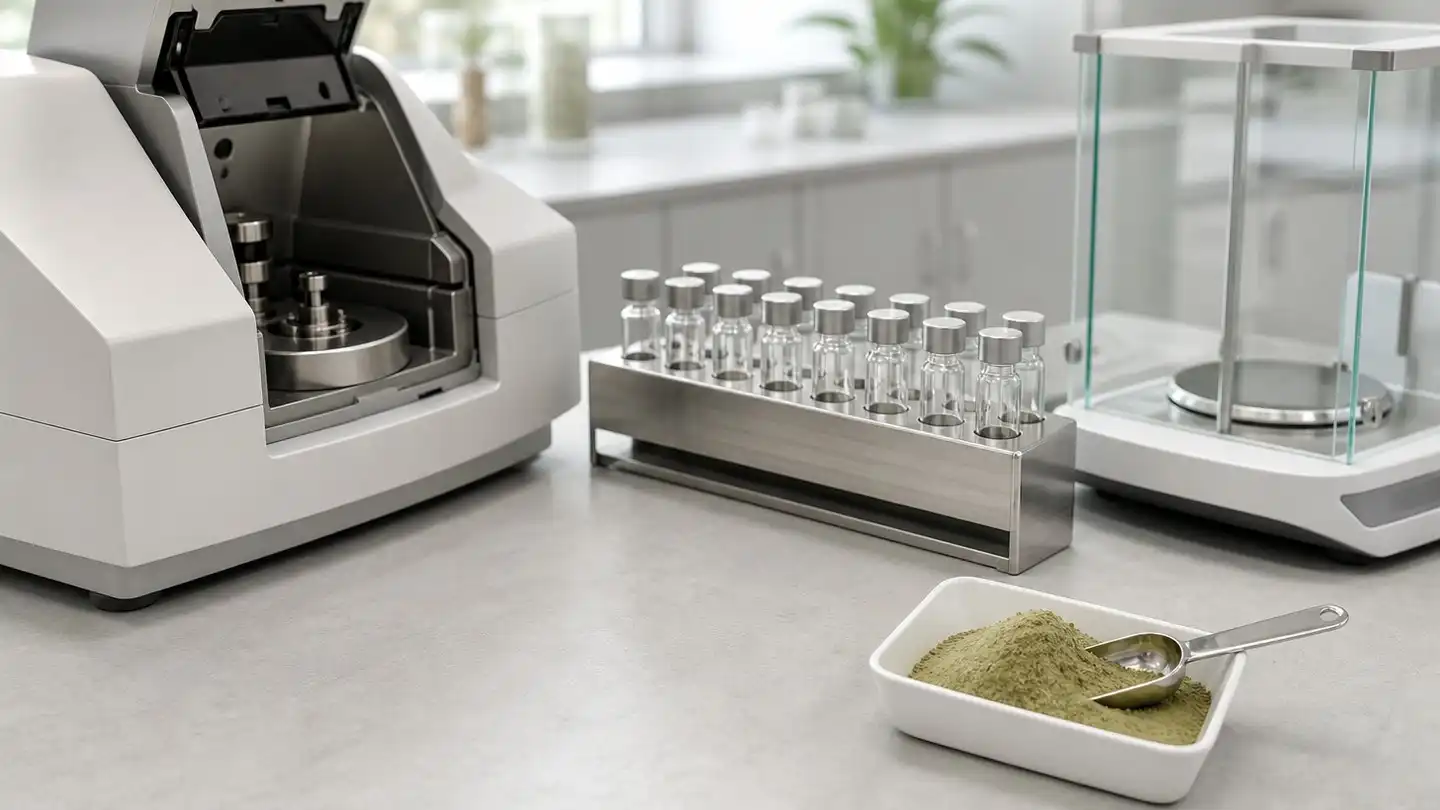
A site visit is the only way to see whether procedures exist in practice. Walk the raw-material store and confirm quarantine separation and status labeling; check pest control and first-expired-first-out rotation; look at weigh and dispense controls; and follow the extraction, solvent recovery, drying, milling, blending and packing sequence while checking cleaning validation records for changeover.
In the laboratory, look at instrument logbooks, calibration certificates, method validation reports and analyst training files. In the quality office, ask for the deviation log, the corrective and preventive action register, the change control log and the complaint file. In the retained-sample room, pick a lot and ask to see its sample, its batch record and its certificate together.
Then sort the findings by consequence. Non-conformities that break linkage or the control loop matter most: a lot that cannot be traced to its raw material, an unvalidated analytical method, a lapsed calibration, an uncontrolled change, or quarantine that is not physically separated. Findings that are cosmetic or administrative are usually fixable on a schedule. The frameworks applied when auditing botanical extract manufacturers translate directly to this product.
A Supplier-Qualification Scorecard
Weighting forces a procurement team to agree in advance what will decide the award, rather than discovering its priorities after quotations arrive. The weightings below are a starting position, and they should be fixed before supplier responses are opened.
| Criterion | Weight | What earns a high score |
|---|---|---|
| Quality-management system and documentation | 25% | Procedures, specifications, batch records, deviation and corrective-action logs, all current and retrievable |
| Analytical capability and method control | 20% | Validated methods, calibrated instruments, controlled reference standards, defined verification of outsourced results |
| Traceability and change control | 15% | A lot walked back to raw material on request; a written notifiable-change list with a notice period |
| Capacity, lead time and scale-up | 15% | Dated campaign schedule, qualified stock position, pilot and commercial data on the same specification |
| Audit outcome | 10% | No systemic findings on traceability, calibration, quarantine or change control |
| Regulatory and customer documentation | 10% | Complete document set supplied without escalation, plus a named regulatory contact |
| Commercial terms and communication | 5% | Clear response times, named account and technical owners, documented order confirmation |
Score each criterion out of five, multiply by the weighting, and record the evidence behind every score. A criterion that cannot be evidenced should score zero rather than the middle of the range, because an unevidenced capability is an unfunded risk.
Conclusion
Supplier qualification for a standardized botanical ingredient is a documentary and procedural exercise long before it is a commercial one. Certification scope, analytical control, traceability, change control, campaign capacity and audit readiness can all be tested before the first order, and each of them predicts how the relationship will behave once volumes rise. Build the document request list first, place a trial order against it, and let the evidence set the commercial conversation rather than the other way round.
To begin, review the specification on the Bacopa Monniera Extract product page and send your document-request list to Wellgreen at wgt@allwellcn.com.
This article covers procurement and supplier-qualification practice for a standardized botanical ingredient and is written for business-to-business readers; it does not describe any application, use or effect of the ingredient.
References
- U.S. Food and Drug Administration. Dietary Supplements. https://www.fda.gov/food/dietary-supplements
- Electronic Code of Federal Regulations. 21 CFR Part 111 — Current Good Manufacturing Practice in Manufacturing, Packaging, Labeling, or Holding Operations for Dietary Supplements. https://www.ecfr.gov/current/title-21/chapter-I/subchapter-B/part-111
- European Directorate for the Quality of Medicines & HealthCare (EDQM). European Pharmacopoeia (Ph. Eur.). https://www.edqm.eu/en/european-pharmacopoeia
- World Health Organization. WHO guidelines on good agricultural and collection practices (GACP) for medicinal plants. https://www.who.int/publications/i/item/9241546271
- International Organization for Standardization. ISO 22000 — Food safety management. https://www.iso.org/iso-22000-food-safety-management.html
- International Organization for Standardization. ISO 9000 family — Quality management. https://www.iso.org/iso-9001-quality-management.html
- American Botanical Council / ABC-AHP-NCNPR Botanical Adulterants Prevention Program. Botanical Adulterants Prevention Program. https://www.botanicaladulterants.org/