Beetroot Powder Bulk Supply Globally
2026-08-04 14:55:07
Procurement managers must strike a balance between cost, quality, and regulatory compliance in international supply chains when purchasing beetroot powder bulk for large-scale production. Organic beetroot powder, which is made from Beta vulgaris by controlled drying and grinding at low temperatures, has become a versatile raw material in markets around the world. As a clean-label colourant, it provides both bright natural pigmentation and functional actives like inorganic nitrates for use in cardiovascular and athletic performance. Understanding how to secure a reliable beetroot powder bulk supply has become essential for nutraceutical brands, food manufacturers, and contract producers due to the growing demand for synthetic dye alternatives and sports nutrition innovation in North America and Europe.
Understanding Bulk Beetroot Powder – Quality and Benefits
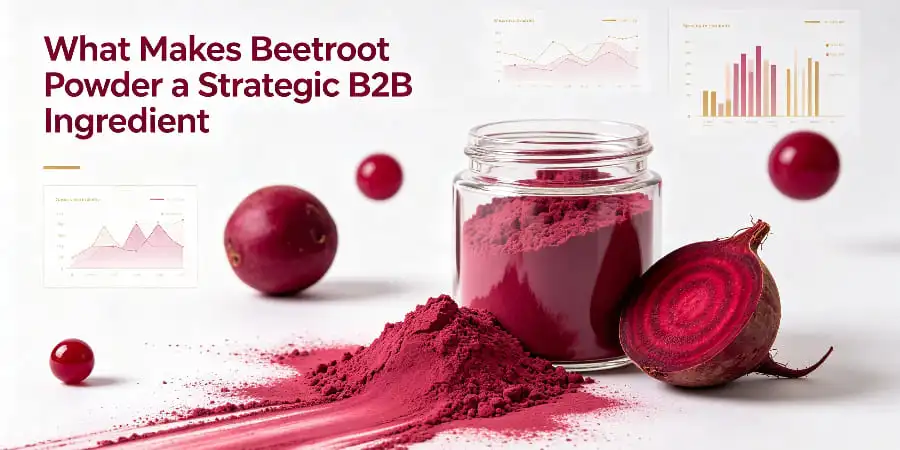
What Makes Beetroot Powder a Strategic B2B Ingredient?
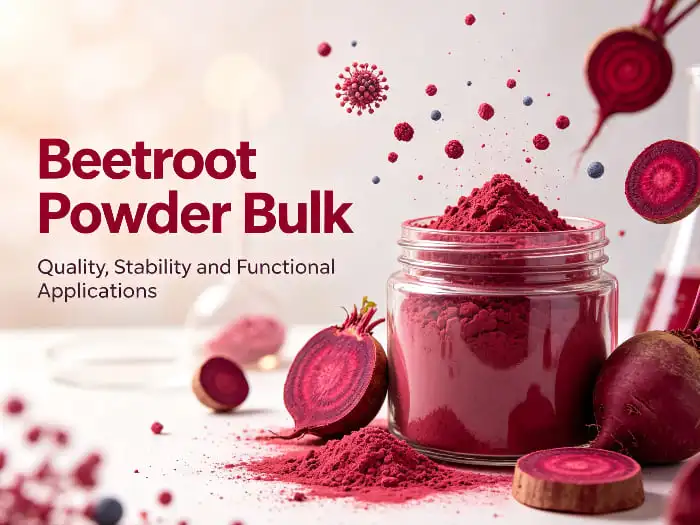
Organic beetroot powder is made from organic red beets. The powder is then washed, dried, dehydrated, and ground up using modern airflow pulverisation. With this method, all the good stuff is kept, like the naturally occurring red-purple colours called betalains, the dietary fibre, and nutrients like potassium and magnesium. You have to keep beetroot juice extracts cold while they're being shipped, and they only last a short time. On the other hand, the powder form is stable, simple to ship, and lets you precisely control the dose, all of which are very important in large-scale production.
The high nutrient density of this ingredient responds to two trends in the industry at the same time. You can use betalains instead of man-made colours like Allura Red (Red 40) and Erythrosine (Red 3) because they are natural. Clean label laws are becoming more popular in the EU and North America, and this fits in with them. As a functional active, the nitrate helps the body make nitric oxide, which makes muscles get more oxygen and blood flow. Studies on sports nutrition have shown this to be true, and it is used a lot in pre-workout and endurance supplements.
Organic vs. Non-Organic: What Procurement Teams Should Know
Picking between organic and regular Beetroot Powder Bulk isn't just a matter of where you put it. Organic certification (USDA Organic, EU Organic) makes sure that crops are grown without using pesticides or GMOs. It lets brands charge more in stores and meet customer expectations in high-end wellness categories. In order to be organic, though, the food must be able to be tracked from the farm to the building. A third party can check the papers and make sure it's done for each batch.
Even though non-organic powder is less expensive, it still needs to be thoroughly checked for microbes, heavy metals (such as lead, cadmium, and arsenic), and chemical residues. People who want to make functional drinks for a big market or use them in restaurants may be able to use non-organic options as long as the sellers give clear Certificates of Analysis and follow GMP production standards. It will be easier to make this choice if you know what the laws are in the place where your product will be sold and how important organic labels are to people there.
How Bulk Beetroot Powder is Produced and Tested for Quality?
Manufacturing Process That Protects Bioactivity
To make powder from fresh beets, you have to follow a series of carefully planned steps. After being picked, roots are washed very well to get rid of dirt and any germs that might be on them. Geosmin is a chemical that gives foods and drinks an earthy taste and can make formulation harder. Peeling and pre-treatment steps are used to get rid of it. During managed dehydration at temperatures below 60°C, betalains and nitrates that are sensitive to heat stay intact. This stops degradation that would make colours less bright and stop working.
When low-temperature airflow milling is done, particles are usually made that are between 80 and 120 mesh, and for Wholesale Organic Beet Powder, these particles mix well with water, and for ready-to-drink (RTD) drinks and quick powder mixes, this particle size works well because it doesn't clump or have a rough feel, which would be bad for the customer. These particles mix well with water. For ready-to-drink (RTD) drinks and quick powder mixes, this particle size works well because it doesn't clump or have a rough feel, which would be bad for the customer. The amount of moisture is carefully controlled (loss on drying ≤5%) to keep bacteria from growing and the smooth texture without using silicon dioxide anti-caking agents. Brands that want to say their materials are 100% clean need to do this.
Quality Control and Certifications That Matter
Buyers from other businesses should give sellers with ISO 22000 (food safety management), HACCP, and, if needed, organic certifications more weight. Along with licenses, full lab tests need to be done. Some important things to consider are microbial screening (total plate count, yeast/mold, coliforms, pathogens), heavy metal analysis (making sure limits set by USP or EU are met), and measuring betalain content to make sure that the colour stays the same from batch to batch.
Steam sterilisation technology kills microbes without breaking down active ingredients when it is used correctly. This delicate balance is what makes skilled makers different from sources you shouldn't trust. To lower the risk of taking on big sales, you can get lab results from a third party and try a trial batch.
Procurement Considerations for Bulk Beetroot Powder Buyers
Evaluating Supplier Reliability and Sourcing Geography
Before you pick a Beetroot Powder Bulk provider, you should think about a lot of things. Security in the supply chain is affected by things like how much experience you have with gathering plants, making things, and moving goods abroad in the past. Geographic sourcing hubs like the U.S., Europe, and India are all useful in their own ways. India, for instance, has low costs for making things and a strong infrastructure for exporting. Organic approval and tracking are important to European sellers. It's also easier to deal with customs when goods are made in the U.S. because they are close to buyers in North America.
You can find out about the provider's skills by doing facility checks (online or in person), calling past customers for references, and reading quality paperwork very carefully. Suppliers who spend money on research and development (R&D), special recipe help, and low minimum order numbers (MOQs) show that they want to work with you for a long time, not just do business.
Pricing Strategy and Negotiation Tactics
The price of Beetroot Powder Bulk per kilogram depends on how much you order, whether it is organic, and what kind of packaging you need. Most of the time, volume discounts start to work around 500 kg, and they get bigger as promises get bigger. Letters of credit, net terms of 30 to 60 days, and deposit-balance plans are all types of payment terms that can change how cash flows and how risks are spread.
Talk about steady yearly numbers when you're bargaining to get better prices and first picks when demand is high. Before you get a price, make sure you know how much shipping, testing, and approval costs are included. Making deals that last longer than a quarter can protect you from changes in the cost of raw materials, especially when harvest time comes around.
Practical Applications and Usage Tips for Bulk Beetroot Powder
Formulation Best Practices Across Product Categories
To help the body make more nitric oxide, 3 to 6 grams of beetroot powder is mixed with L-arginine or citrulline in pre-workout blends. It gives vitamin powders and red mixes colour and a lot of nutrients, as acai, pomegranate, and spirulina do. Since it doesn't change when the pH level changes from 4.0 to 7.0, it's great for making energy drinks, healing shakes, and clean soups.
To make plant-based meat substitutes look like blood, beetroot powder is used in baked goods like muffins and pancakes. It also adds a natural red-purple colour to ice cream and sweets. The amount for colouring can be between 0.5 and 2% by weight, based on how strong a colour you want and how it will combine with other things in the mix.
Storage and Shelf Life Management
Powder stays potent for longer and doesn't lose its quality if it's stored correctly, and for Wholesale Organic Beet Powder, keep it somewhere cool (below 25°C), dry, and with a relative humidity of less than 60%, and to keep food from going bad and soaking moisture, use airtight, food-grade packaging, like multi-layer layered bags with moisture shields. Keep it somewhere cool (below 25°C), dry, and with a relative humidity of less than 60%. To keep food from going bad and absorbing moisture, use airtight, food-grade packaging, like multi-layer bags with moisture shields. The shelf life is 18 to 24 months in ideal conditions, but the betalain colours fade over time when they are exposed to light and heat.
Manufacturers should rotate their stock first-in, first-out (FIFO) and test their goods often for colour and bacteria stability, especially in places that don't have temperature control or a lot of humidity.
Top Bulk Beetroot Powder Brands and Suppliers in the Global Market
Selecting Quality-Driven Manufacturing Partners
Leading global providers set themselves apart by getting certifications, being open about where their goods come from, and coming up with new ways to adjust orders. The best companies make sure that their suppliers are organically approved and that they use the most up-to-date drying and milling technologies. They also offer a lot of paperwork, such as allergen statements, proof that the food isn't made with GMOs, and certificates that show the food comes from a certain country. A lot of them let you make your own blends with beetroot and other plants that go well with it under your own brand name.
Ask for samples to test in a pilot project before you buy something big. You can then check how well they melt, how they taste, how stable their colour is under the conditions you use for processing, and how well they mix with other ingredients in your recipe. Before sending several tonnes, you can place small practice orders (100–500 kg) to check the quality and figure out how to communicate.
Navigating International Shipping and Customs
When you buy beetroot powder in bulk from other countries, you have to plan your operations based on arrival times (usually 4 to 8 weeks), freight options (sea vs. air), and customs paperwork. For items being sold in the U.S., make sure the buyers give you the right Harmonized System (HS) codes, phytosanitary certificates if needed, and an FDA prior notice file. When you work with skilled goods forwarders, you can avoid delays and issues with following the rules.
If you know about the import taxes, fees, and paperwork that are needed in the country where you want to send your goods, you can avoid problems with supplies and costly shocks. Based on how much danger you are ready to take and how well your operations can handle it, a good provider will let you choose which Incoterms to use.
Conclusion
You need to pay attention to quality standards, strict manufacturing, and the strength of your seller ties to make sure that your Beetroot Powder Bulk supply chain works well. To protect your brand's image and product success, you need to make smart decisions. This means knowing about the bioactive benefits and how they are made, as well as how to negotiate deals and deal with processes that are done in other countries. In a world market that is very competitive, your business will be able to keep growing if you work with manufacturers who care about clean label standards, batch stability, and quick technical support. This is true whether you're making functional drinks, vitamins, or natural food dyes.
FAQ
What is the typical minimum order quantity (MOQ) for bulk beetroot powder?
The smallest amount that you can buy from most well-known providers is 100 to 500 kilograms. But some manufacturers will let new customers place smaller orders as a test run. When you commit to more than one tonne, you can save a lot of money and get better timing for when the work gets done.
How does organic certification impact beetroot powder quality and cost?
Organic certification means that farming doesn't use chemicals and that the food isn't genetically modified. Organic powder costs more because farms have to follow tighter rules and the process of testing costs more. However, this helps companies market their goods as high-end and reach people who care about their health.
Can beetroot powder replace synthetic food dyes in all applications?
Betalains work well at low temperatures and pH levels between 4.0 and 7.0. This means they can be used in drinks, cheese, and sweets. But working with colours at high temperatures or in acidic environments can make them less stable. To fix this, either the formulation needs to be changed, or protective encapsulation technologies need to be used.
Partner with Wellgreen for Reliable Beetroot Powder Bulk Supply
There is a GMP-certified plant run by Wellgreen Technology that makes organic beetroot powder that meets the strict needs of food and supplement brands all over the world, as well as OEM partners. You can be sure that the foods we get are free of chemicals because our supply line is approved by both the USDA and the EU. Also, our improved low-temperature handling keeps the bioactivity and strength of the betalain. We always have a lot of goods in stock, so we can quickly fill your orders in any amount that works for your production plan. Wellgreen makes it easy to buy by helping you come up with unique recipes, giving you full COA paperwork, and finding the best Beetroot Powder Bulk sellers at the best prices. Email our team at wgt@allwellcn.com to get samples, talk about technical details, or look into private-label options that can help you get into the market faster.
References
1. Clifford, T., Howatson, G., West, D. J., & Stevenson, E. J. (2015). The potential benefits of red beetroot supplementation in health and disease. Nutrients, 7(4), 2801-2822.
2. Lidder, S., & Webb, A. J. (2013). Vascular effects of dietary nitrate (as found in green leafy vegetables and beetroot) via the nitrate-nitrite-nitric oxide pathway. British Journal of Clinical Pharmacology, 75(3), 677-696.
3. Wootton-Beard, P. C., & Ryan, L. (2011). A beetroot juice shot is a significant and convenient source of bioaccessible antioxidants. Journal of Functional Foods, 3(4), 329-334.
4. Chhikara, N., Kushwaha, K., Sharma, P., Gat, Y., & Panghal, A. (2019). Bioactive compounds of beetroot and utilization in food processing industry: A critical review. Food Chemistry, 272, 192-200.
5. Azeredo, H. M. C. (2009). Betalains: properties, sources, applications, and stability—a review. International Journal of Food Science & Technology, 44(12), 2365-2376.
6. Delgado-Vargas, F., Jiménez, A. R., & Paredes-López, O. (2000). Natural pigments: carotenoids, anthocyanins, and betalains—characteristics, biosynthesis, processing, and stability. Critical Reviews in Food Science and Nutrition, 40(3), 173-289.