Peppermint Extract Powder Applications in Food and Beverage Industry
2026-08-04 14:55:09
Peppermint extract powder is rapidly transforming the food and beverage sector by offering manufacturers a concentrated, shelf-stable, and standardized alternative to traditional flavoring agents. Derived from Mentha piperita leaves through water extraction or low-temperature processing followed by spray-drying, this botanical ingredient delivers consistent menthol and menthone content alongside aromatic volatile compounds. Its versatility spans functional beverages, confectionery, digestive health products, and clean-label formulations, addressing the industry's shift toward natural cooling flavors and digestive support. As B2B buyers seek reliable, food-grade botanical solutions, understanding the multifaceted applications of this menthol-rich powder becomes essential to product innovation and market competitiveness.
Understanding Peppermint Extract Powder and Its Role in Food & Beverage
What Makes Peppermint Extract Powder Unique?
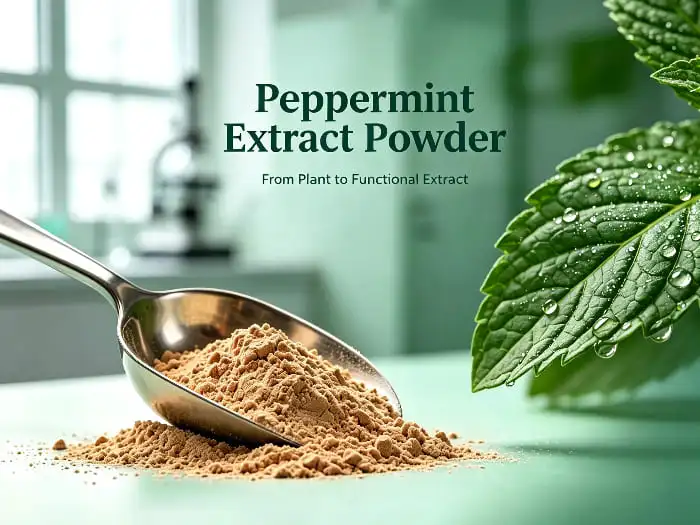
Peppermint extract powder combines the benefits of both. Since it's not as flammable as peppermint oil, it needs to be treated with care, and it's not uniform like dried peppermint leaves. During the extraction process, bioactive ingredients such as menthol (usually 40% or more in quality grades), menthone, and menthyl acetate are concentrated into a solid powder that can be easily mixed with water. This makes sure that the sensory results don't change from one batch to the next, which can happen a lot with raw botanicals. The powder form also makes it easy to add to dry-mix recipes and doesn't cause oil to separate in water-based systems.
Beyond Flavor: Functional Properties That Matter
Menthol isn't just used to make things taste better; it also makes them feel cool and refreshing. Researchers have found that it helps with stomach pain by making the smooth muscles in the digestive system less tight. For this reason, peppermint extract powder is useful in drinks that make you feel better after a meal and in plant teas that are meant to help your digestive system. Also, menthol and other terpenes naturally kill bacteria, which helps keep things fresh, so they don't need as many added stabilisers. Manufacturers who want to get clean-label approval will like this feature because it can be used for two different things and meets customer desire for clear ingredient lists.
Extraction Methods and Their Impact on Quality
The industrial methods used for extraction have a big impact on the shape of the end powder. Water-based extracts keep hydrophilic compounds and soften flavours, which makes them good for baked goods and drinks. More menthol can be found when methods based on ethanol are used. These methods are best for things that need to be very cooling, like mint sweets and mouthwash. Processing at low temperatures saves volatile aromatics that are easily destroyed by heat. This way, the powder keeps its fresh scent that makes high-end goods stand out. Source teams can better figure out what kind of extract they need to meet their formulation goals when they know about these changes in processing.
Applications of Peppermint Extract Powder in the Food and Beverage Industry
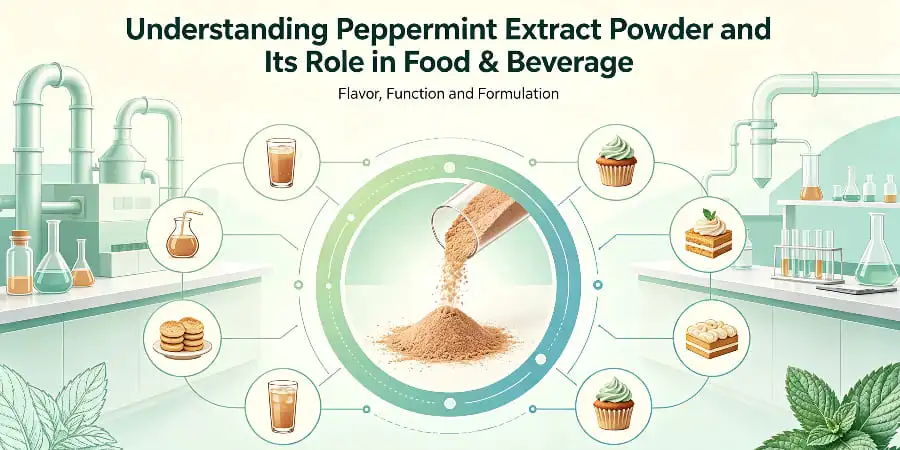
The food and beverage industry employs peppermint extract powder. It has become very famous because this plant-based nutrient can be used in many different things. Below, we'll look at how its unique qualities are used in different fields to solve recipe issues and meet customer needs.
Natural Flavoring in Confectionery and Baked Goods
Sweets have been made with peppermint for a long time, but the powder form gives them more choices. When you make chocolate, the powder mixes well with the other ingredients and doesn't cause fat bloom like liquid extracts often do. The people who make hard sweets like that say it doesn't melt when it gets hot like volatile oils do. People who bake use it to make cookies, brownies, and holiday treats. Because the powder has a strong taste, only a small amount (0.1 to 0.5 percent by weight) is needed to get the right level of strength. It saves money and makes nutrition labels look better at the same time.
Functional Beverages and Digestive Wellness Drinks
These drinks are becoming more popular because people want drinks that are good for them in more than one way, and for mentha piperita extract, peppermint extract powder meets this demand by providing both flavour and functionality—it is added to energy drinks with caffeine and B vitamins to improve taste and digestive comfort while reducing acidity, enhances kombucha and probiotic beverages with a clean, refreshing note that complements fruit flavours without overpowering them, and disperses readily in water with typical dosages of 50–200 mg per serving for a balanced cooling sensation. Peppermint extract powder fills this need because it tastes good and serves a purpose. It is added to energy drinks along with caffeine and B vitamins to make them taste better and be better for your stomach. In order to make fizzy bases less acidic, this is done. It makes probiotic drinks like kombucha taste better and helps keep your gut healthy. The powder is easy to mix with water, so it spreads out evenly when mixed with drinks. Its clean taste goes well with fruit flavours without making them taste too strong. As for how cool you want to feel, 50 to 200 mg per serve is a good amount.
Oral Care and Breath Freshening Products
In a scientific sense, mouth care is linked to food and drinks. It also has to meet the same quality standards and often uses products that are safe for food. Toothpaste companies like the powder because it cools you down and keeps your breath smelling fresh without making you feel burnt like essential oils can. People who make chewing gum mix it with other kinds of mint to make complicated flavours that change as you chew the gum. People associate it with being clean and taking care of their teeth, which is why breath sprays and lozenges use it. This is why these uses need very clean goods that are free of germs and heavy metals. This shows how important it is to have strict quality control.
Natural Preservative and Shelf-Life Extender
People have known for a long time that menthol is a good way to keep food fresh: it kills common organisms that make food go bad and some diseases of food. Companies that want to use fewer preservatives in their drinks use peppermint extract powder along with other technologies like pH change and modified atmosphere packing to naturally make their products last longer. It's best for stopping yeast and mould growth in cold drinks, which is what the extract does. This use needs to be carefully taste-tested to make sure that the benefits of preserving don't hurt the taste. Most of the time, this is done by keeping the inclusion rates (about 0.05 to 0.1%) below the levels that sensors can pick up.
How to Choose and Procure Quality Peppermint Extract Powder for Industrial Use?
There are a lot of things besides price that you need to think about when picking the right source and product specs for peppermint extract powder. To keep production going, procurement teams need to find a balance between checking for quality, following the rules, and making sure the supply chain is reliable.
Critical Quality Specifications to Verify
Make sure that every batch of the goods you buy from a seller comes with a full Certificate of Analysis (COA). The amount of menthol is the most important factor; batches that are all the same or within +/-5% of each other show that the processing was done well. You should ask for GC-MS (Gas Chromatography-Mass Spectrometry) results that show the full picture of volatile chemicals. This lets you know if the product has been messed with by adding fake menthol or other types of mint. The amounts of heavy metals like lead, cadmium, arsenic, and mercury should be below the standards set by the EU and the FDA. There must be microbiological standards that meet food safety standards. For example, the total plate count must be less than 10,000 CFU/g, yeasts and moulds must be less than 1,000 CFU/g, and diseases like Salmonella and E. coli. It is very important to check non-organic grades for chemical leftovers and make sure they follow the rules in both the country where they are grown and the country where they will be sold.
Supplier Reliability and Manufacturing Credentials
In the botanical extract business, it's hard to be sure that goods are real and that sources are always steady. Providers whose facilities are GMP-certified and who can show audit reports from outside groups like NSF International or SGS should be given more weight. Find out where they get their goods. Most of the time, suppliers who control the whole growing process and are vertically integrated offer more consistent quality than suppliers who buy on the spot market. Check out how they remove things and what tools they use. Most of the time, vacuum-assisted extraction or supercritical CO2 methods are better than standard steam distillation these days. Get examples from well-known names in the same line of work as yours. This will help you figure out how well the seller can meet your business's wants. Wellgreen Technology is a professional company that makes plant extracts. They have all the necessary licenses and follow strict quality standards that were made just for food and drink companies that buy from other businesses.
Balancing Minimum Order Quantities with Supply Chain Needs
The lowest amount you can buy from different companies is very different. For speciality grades, the MOQ can be as low as 25 kg, while for market standards, it can be 500 kg or more. This will help you not buy too much powder. Just think about how much you use each year and how long the powder will last. It will usually work for 24 months if you store it properly. Talk to buyers about terms that are easy to work with and can handle both large packages and one-time sales. This will keep you safe if the recipe changes or if demand changes with the seasons. You might want to buy more plant ingredients from the same seller to meet the MOQ and get a range of ingredient sources. Keep the powder somewhere cool and dry, away from strong smells and direct light. It should also be kept in cases that are tightly closed so that smells and water don't get in.
Best Practices for Using Peppermint Extract Powder in Food & Beverage Manufacturing
If you want to add peppermint extract powder successfully, you need to pay attention to chemistry, rules, and regulations for processing. These rules help companies avoid making common mistakes and get the most out of the things they use.
Dosage Optimization and Formulation Strategy
There is a graph that shows how cooling menthol is in relation to its amount. However, too much of it can irritate the skin instead of cooling it down. To find the best inclusion rate for your product matrix, you should use sensory testing. This is because acidity, carbonation, and sugar level all affect how the product is felt. It's best to use between 0.01 and 0.05% (100 to 500 ppm) of powder in drinks and up to 0.5% in sweets. When you switch from peppermint oil to powder, you need to remember that the two have different concentrations. One gram of 40% menthol powder is about the same as 0.4 to 0.5 grams of peppermint oil, but you need to do a pilot test to be sure because the volatile compound profiles are different.
Avoiding Common Formulation Challenges
There are a lot of technical issues that can happen when working with mint goods. If there is a lot of water in the air, the powder may stick together. Before adding liquids, mix it well with sugar or other dry add-ins. If you use heat, add the powder while it is cooling so that the volatiles don't escape. A lot of aromatic molecules break down very quickly at temperatures above 70°C (158°F). Mix the powder with a small amount of ethanol (if allowed) or propylene glycol before adding it to the main liquid for the drinks. This will make sure the powder doesn't get cloudy and is spread out evenly. Keep an eye on the pH when you mix acids, because too much acidity can change how things taste. Some proteins and tannins may react with menthol, making it smell bad. During development, make sure that all of the formula's parts are compatible.
Storage and Handling to Preserve Quality
It doesn't matter how well the food is prepared; bad storage can ruin its quality. That powder should be kept in containers that are safe for food and have lids that fit tightly. To keep light out, the lids should be opaque or amber in colour. Store things in places that are between 15°C and 25°C (59°F and 77°F) and where the relative humidity is less than 60%. Powder can take on smells from other things, so don't keep it near things that smell strong, like coffee or spices. To keep food fresh longer, put opened desiccant packs in large containers and eat them within six months. Turning over goods first-in, first-out will keep new batches from being hurt by old stock.
Regulatory Compliance and Safety Considerations
Peppermint extract powder is generally thought to be safe (GRAS) in the US and can be used as a flavouring in the EU. But there are limits on how much can be used in certain goods. It's clear from FDA Title 21 CFR Part 182.20 and EU Regulation 1334/2008 what the rules are. Some people can't handle peppermint, but it does happen. It might make these people's allergies worse or cause gastro-oesophageal reflux. Label your things with the right information and keep records that show how much they can be used safely. Talk to regulatory experts about a product's health claims that it helps the digestive system. This is to make sure that the claim fits structure/function claim standards or new food laws in foreign markets.
Market Trends and Future Opportunities for Peppermint Extract Powder in Food & Beverage
When teams that buy things and make new goods learn about bigger trends in the industry, they can set their brands up for future success, and for mentha piperita extract, staying informed about evolving consumer preferences, emerging technologies, and sustainability demands helps procurement and innovation teams anticipate market shifts and maintain competitive advantage in the botanical ingredients sector. There are always changes in the market for plant products because people's tastes change, new technologies come out, and people want to be more eco-friendly, creating higher demand for peppermint extract powder.
Clean Label and Natural Ingredient Movement
Consumer research shows over and over that people really like products that have few artificial ingredients and ingredient names that are easy to remember. This big trend is great for plant-based products like peppermint extract powder, which can be used instead of numbing agents made in a lab, such as WS-23 and menthol crystals. People who care about their health are more likely to buy changes that are made to old products with "natural peppermint extract" on the package. It's hard to keep the same sensory patterns during the change because natural ingredients don't stay stable as well as man-made materials do. On this road to reformulation, suppliers who offer standardised extracts that can be tracked and come with full paperwork are very helpful.
Advancements in Extraction and Standardization Technology
New ways of making botanical extracts keep making them better and more useful. Using enzymes to help with extraction raises the yield while working at lower temperatures, which keeps the aromatics that are more delicate safe. Volatile compounds don't break down while they are being processed and stored thanks to microencapsulation technology. This makes them last longer and lets you use them in controlled-release ways. It's now possible to get powder forms that dissolve in water and work best in cold drinks. This gets rid of the problems that come with regular extracts. It costs a lot for technology to change like this, but it works better in tough scenarios.
Sustainability and Ethical Sourcing Priorities
When people decide what to buy, corporate social responsibility is more important, especially for bigger brands that say they will be better for the environment. Due to this, there is a need for plant-based extracts from certified organic farms, Fair Trade suppliers, or farmers who use methods that help the land grow again. It's also important to come up with new ways to package things. People who work for companies that keep track of Scope 3 emissions, like sellers who switch from plastic drums to materials that can be composted or recovered. And don't forget to think about the carbon footprint of getting the ingredients to you. Getting them from close sources does more than just save you money on shipping costs. In competitive RFP processes, suppliers who show a clear map of their supply chain and proof of how they affect the environment stand out.
Emerging Applications in Plant-Based and Functional Foods
This is because there are more plant-based meat substitutes, dairy-free foods, and healthy snacks. Peppermint extract powder can be used in these new ways. The fragrant qualities of mint make elegant solutions to formulation problems that are unique to these products, such as hiding off-notes from pea protein or making non-dairy drinks look fresher. More and more, plant-based ingredients are being added to protein shakes and energy bars to make them taste better and be better for you. Formulators learn how to get the most out of the plants they use as these categories get bigger. This could lead to growth in areas other than mint-flavored goods.
Conclusion
In modern times, peppermint extract powder is used for much more than just flavouring food and beverages. Its natural cooling properties, ability to help with gut health, antimicrobial properties, and clean label credentials all help the business reach a number of goals at the same time. To make a good purchase, you should make sure that the menthol is standardised, that you keep good quality records, that you find a reliable supplier, and that you have processing options that make sure that every batch works the same. More and more people want products that are clear, useful, and come from natural sources. Companies need to work together with approved suppliers to stay ahead of the competition and encourage new ideas in areas like sweets, drinks with added health benefits, and wellness products.
FAQ
What is the typical menthol content in commercial peppermint extract powder?
The amount of menthol in food-grade peppermint extract powder is generally between 40 and 60% by weight, but this can change based on the use. It works best in sweets and mouthwashes that need to cool down quickly when the content is higher. On the other hand, grades in the middle (30–40%) are often used in drinks because they balance taste and coolness. Always look at the COA from the supplier to see how much menthol it has and test it with your senses to make sure it meets your needs.
Can peppermint extract powder replace peppermint oil in existing formulations?
You can use something else, but the method needs to be changed carefully. When used in dry-mix, the powder form is more stable and easier to work with. Spices may come out in a different way than in oils, though. When replacing peppermint oil, the amount of powder to oil should be about 1:2 to 1:2.50, based on how much menthol is in the oil. Once you're happy with the taste, you should change the amount. Some of the volatile top notes that are strong in oils might not be as strong in powders. To get the same taste profiles, the recipe might need to be tweaked a bit.
How should peppermint extract powder be stored to maximize shelf life?
The best conditions for keeping are cool (15–25°C), low relative humidity (below 60%), and a place that is out of direct light and strong smells. For large amounts, use food-grade containers that can be sealed and are preferably clear or orange. There should also be desiccant packs. If you store good powder in these ways, it will work for 24 months. Before six months have passed since it was opened, it should be eaten. To keep things fresh, use first-in, first-out inventory management.
Partner With Wellgreen for Premium Peppermint Extract Powder Supply
Wellgreen Technology can help you with your food and drink preparation needs by giving you pharmaceutical-grade peppermint extract powder that is made to your exact specs. Our factories are GMP-certified and make regulated extracts with a certain amount of menthol. They also test for poisons and heavy metals and keep full records from the time the plants are grown to the time they are packed. We are a peppermint extract powder supplier with a lot of experience. We can help you with unique formulas and offer OEM/ODM services that are right for your brand. Our skilled staff can give you full COA paperwork and GC-MS analysis, whether you need food-grade powder for drinks, higher-concentration grades for candy, or special water-soluble versions. You can email us at wgt@allwellcn.com to get samples, talk about what you need to buy, or get full quotes for large amounts that meet your quality standards and production timeline.
References
1. McKay, D.L. and Blumberg, J.B. (2006). "A Review of the Bioactivity and Potential Health Benefits of Peppermint Tea (Mentha piperita L.)." Phytotherapy Research, 20(8), 619-633.
2. A., Reichling, J., and Schnitzler, P. (2003). "Virucidal Effect of Peppermint Oil on the Enveloped Viruses Herpes Simplex Virus Type 1 and Type 2 in Vitro." Phytomedicine, 10(6-7), 504-510.
3. Eccles, R. (1994). "Menthol and Related Cooling Compounds." Journal of Pharmacy and Pharmacology, 46(8), 618-630.
4. Inoue, T., Sugimoto, Y., Masuda, H., and Kamei, C. (2001). "Effects of Peppermint (Mentha piperita L.) Extracts on Experimental Allergic Rhinitis in Rats." Biological and Pharmaceutical Bulletin, 24(1), 92-95.
5. Geuenich, S., Göke, C., Lambrecht, S., and Hensel, A. (2008). "Aqueous Extracts from Peppermint, Sage and Lemon Balm Leaves Display Potent Anti-HIV-1 Activity." Planta Medica, 74(15), 1672-1677.
6. Spirling, L.I. and Daniels, I.R. (2001). "Botanical Perspectives on Health: Peppermint: More Than Just an After-Dinner Mint." Journal of the Royal Society of Health, 121(1), 62-63.