Bulk Bergamot Extract for Natural Flavor and Ingredient Applications
2026-08-12 13:49:46
Bulk Bergamot Extract is a high-value botanical ingredient derived from the fruit and peel of Citrus bergamia Risso, primarily cultivated in the Calabria region of Italy. This standardized extract contains a unique Bergamot Polyphenolic Fraction (BPF) rich in flavonoids such as neohesperidin, naringin, and neoeriocitrin. It serves dual roles in international ingredient markets: as a natural statin alternative in cardiovascular supplements and as a premium active component in functional foods, beverages, and cosmetics. The growing demand for clean-label ingredients has positioned this citrus extract as one of the fastest-expanding botanical materials in North American and European procurement channels.
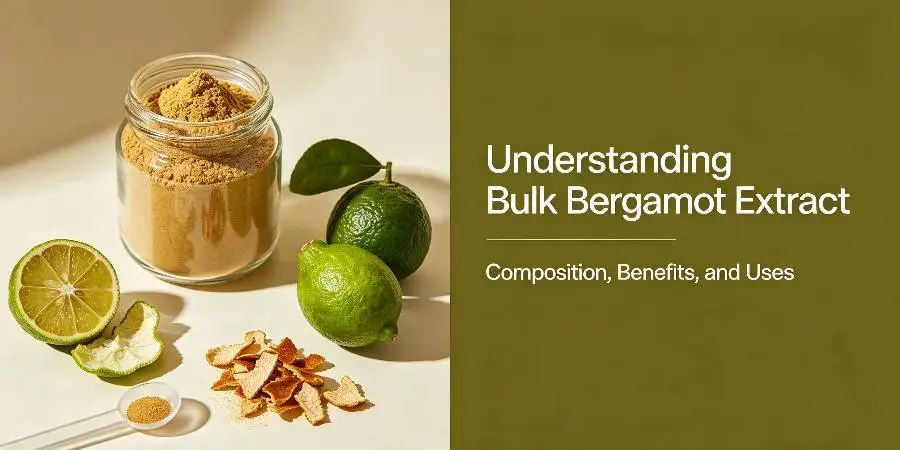
Understanding Bulk Bergamot Extract: Composition, Benefits, and Uses
Botanical Origins and Extraction Methods
Bulk Bergamot Extract (Citrus bergamia Risso) grows best in certain microclimates where volcanic soil and Mediterranean weather come together to make fruits with very high flavonoid levels. The method of extraction has a big effect on the quality of the end ingredient. Cold pressing keeps the volatile aromatic compounds but gives you less polyphenol, which makes it perfect for flavoring. By using HPLC to measure, water-ethanol extraction and chromatographic separation give standard BPF levels between 25% and 40%. This gentle processing keeps the structure of bioactive flavonoids while getting rid of phototoxic furanocoumarins. This solves a major safety issue for people who make cosmetics and drinks.
Key Nutritional Components and Health Benefits
The regulated extract has three marker molecules that show what kind of medicine it is. Neutralizing reactive oxygen species that cause cells to age is one of the most powerful antioxidant functions of neohesperidin. Naringin lowers cholesterol by blocking HMG-CoA reductase, which is similar to how pharmaceutical statins work but doesn't cause muscle pain. Neoeriocitrin helps arteries stay flexible by making nitric oxide more available to the body. In clinical tests, people who took bergamot polyphenol parts (500–1000 mg daily) saw their LDL levels drop by 20–30%, and their triglyceride levels go up. In addition to helping the heart, the extract keeps the natural vitamin C and soluble fiber, which makes the nutrients more bioavailable by working together.
Applications Across Industries
Standardized Bulk Bergamot Extract powder is added to pills, tablets, and useful gummies that are made for people who want to improve their heart health. Because the extract dissolves in water, it can be easily added to energy drinks, protein mixes, and health teas without separating the phases or losing its clarity. Cosmetic chemists like that it can do two things: the flavonoid complex protects against free radicals in anti-aging serums, and the gentle citrus profile works well in formulations for sensitive skin when bergapten-free grades are needed. Bergamot essential oil has a lot of volatile terpenes that make it unsafe to eat. The extract, on the other hand, has stable, non-volatile bioactives that can be processed at temperatures up to moderate levels.
Comparing Bulk Bergamot Extract Options for Procurement Decisions
Quality Differentiation: Organic vs. Non-Organic and Processing Methods
Organic certification makes it easier to track and is appealing to clean-label product lines, and for Pure Bergamot Powder Supplier, non-organic sources from well-known orchards in Calabria often have higher polyphenol density because they harvest at the best time and take good care of the soil, and there are synthetic bergamot flavonoids, but they don't have the smaller chemicals that work together like those in whole-fruit extracts, which makes them less useful for cardiovascular uses, and purchasing teams should ask for fingerprint analysis using HPTLC to make sure that melitidin and brutieridin are present. Non-organic sources from well-known orchards in Calabria often have higher polyphenol density because they harvest at the best time and take good care of the soil. There are synthetic bergamot flavonoids, but they don't have the smaller chemicals that work together like those in whole-fruit extracts, which makes them less useful for cardiovascular uses. Purchasing teams should ask for fingerprint analysis using HPTLC to make sure that melitidin and brutieridin are present. These are molecules that are missing from batches that were tampered with by using cheaper grapefruit or pomelo juices. The appearance of these traits confirms that the Citrus bergamia comes from a real source.
Market Pricing Influences and Supplier Landscape
In Calabria, where weather patterns have a direct effect on fruit quality and volume, the annual harvest yields change the amount of raw materials that are available. Complexity in processing also affects prices; higher BPF amounts need more steps of chromatographic purification. Certifications like ISO 22000, GMP, and FSSC 22000 show that quality systems are strong, but they may make the price per kilogram go up. The best sellers keep clear COAs that cover microbial safety, heavy metals (ICP-MS proof for lead < 3.0 ppm and arsenic <2.0ppm), and pesticide residues (screening 500+ compounds). Real-life case studies show that formulation delays are 40% shorter for contract manufacturers who put supplier audits and batch consistency first compared to those who only look at price.
How to Source and Buy Bulk Bergamot Extract Wholesale?
Logistics Considerations for Procurement Teams
Standardized botanical extracts are very specific, so the minimum order quantities are usually between 25 kg and 100 kg. Triple-layer metal foil bags with nitrogen flushing are one type of packaging that keeps things from breaking down due to oxygen during storage and shipping. When sending goods internationally, you need to be careful with the customs paperwork, especially when you're listing the amount of active polyphenols. This is because high-concentration plant extracts are sometimes regulated as dietary supplements. For furanocoumarin-free grades, which are more stable but need to be protected from long-term heat exposure above 30°C, temperature-controlled freight is needed.
Sampling and Pilot Testing Protocols
By asking for samples before committing to a large order, formulation teams can check how well the powder flows through capsule-filling equipment, how quickly it dissolves in beverage matrices, and how well it tastes and smells. In pilot runs, the extract should be tested under all of the conditions it will be used in, such as heat in baking, acidic drinks, and topical products that use emulsions. Recording measures of mesh size (80–120 mesh is normal) and bulk density helps guess how things will behave in later steps of the processes. Before signing contracts, QA managers use third-party testing of samples to make sure that what suppliers say about the BPF content and contaminant levels is true.
Pricing Structures and Negotiation Strategies
The price of Bulk Bergamot Extract is based on how standardized it is. 25% BPF grades are considered entry-level, while 40% concentrations fetch higher prices because they are more bioactive and require less dose. Volume savings usually kick in when the yearly volume goes over 500 kg, and multi-year supply deals usually get you better prices and first pick during harvest times when supplies are limited. Negotiating payment terms that balance cash flow with seller security, like paying 50% up front and the rest when delivery is confirmed and quality checked, is good for both sides. Including clauses for specification tolerance ranges stops disagreements over small changes in polyphenols that happen from batch to batch that are normal in natural products.
Enhancing Product Formulations with Bulk Bergamot Extract
Flavor and Aroma Enhancement in Food and Beverage
Thanks to special processes that keep the flavonoid content while getting rid of the tannins that make the plant bitter, the extract has a light citrus note without the bitterness that is often associated with high-polyphenol plants. This means it can be used in functional drinks, meal replacement shakes, and snack bars with added nutrients that are aimed at health-conscious people who don't like artificial flavors. The powder dissolves easily in water, which keeps ready-to-drink beverages clear. This keeps the powder from becoming cloudy, which can happen with poorly processed citrus ingredients. Thermal stability during pasteurization and UHT processing protects the purity of polyphenols. This lets makers prove that finished goods really do have "high flavonoid" promises.
Cosmetic Applications and Dosage Guidelines
When used in skin care products, Bulk Bergamot Extract amounts of 1% to 5% provide measurable antioxidant benefits without causing pain. This is especially true for formulas that target protecting against urban pollution and photoaging. The furanocoumarin-free specification gets rid of the risk of phototoxicity, which is a must for day creams and serums that you leave on. Cosmetic scientists like that the extract works well with emulsion systems, but stabilizers might be needed to keep the fluid stable when there are high levels of polyphenol. Safety tests should follow HRIPT guidelines, and adding SPF to finished products makes the antioxidant protection work better together.
Regulatory Compliance and Labeling Best Practices
In the US, Bulk Bergamot Extract is GRAS (Generally Recognized as Safe) for use in food as long as it meets quality standards, and for Pure Bergamot Powder Supplier, dietary supplements must follow FDA structure-function claim rules, and Novel Food law in the European Union needs proof that the food has been eaten in the past, and bergamot meets this requirement because it has proof of its traditional use. However, dietary supplements must follow FDA structure-function claim rules. Novel Food law in the European Union requires proof that the food has been eaten in the past. Bergamot meets this requirement because it has proof of its traditional use. Labels should list the amount of polyphenols and how they were measured, which would make things clearer for consumers. Third-party certifications like NSF and Informed Choice give sports nutrition goods more authority, which helps with anti-doping issues.
Choosing the Right Bulk Bergamot Extract Supplier for Your Business
Essential Supplier Evaluation Criteria
Reliable sellers show full chain-of-custody paperwork from Calabrian trees to extraction facilities, which proves the products' real geographic origin. Third-party qualifications like ISO 9001, GMP, and organic badges show that the business is operationally mature, and how quickly it responds to technical questions shows how well it can help customers. Supply continuity depends on having a variety of sourcing partners and managing your supplies in a way that protects you from changes in the harvest. QA/QC plans should include tests for each batch's identity (HPTLC fingerprinting), purity (pesticide and heavy metal screening), and effectiveness (HPLC assay verification).
Private Label and Customization Options
A lot of well-known suppliers offer private label manufacturing, which lets brands make their own formulas without having to spend a lot of money on extraction equipment. It's possible to change the particle size to work best with certain delivery systems, mix it with botanicals that work well together to make formulas that work better, and make sure that the BPF concentrations match the target dosage profiles. As an example of a success story, functional beverage companies cut their formulation costs by 30% by working together with their suppliers on debited grades, and supplement brands became more unique by using 38% BPF standards that were not available through commodity channels.
Building Strategic Long-Term Partnerships
Because farm goods are often in short supply, having long-term relationships with suppliers is helpful for keeping prices stable and distributing goods evenly when supply is limited. Joint product creation is a common part of strategic partnerships. Suppliers bring their knowledge of formulation and market information about new uses. Clear information about how accurate forecasts are helps suppliers plan production runs more efficiently, and customers get special service during times of high demand. Regular business reviews that focus on quality metrics, delivery performance, and new idea opportunities make these partnerships stronger and give companies an edge in the natural ingredient markets, which change quickly.
Conclusion
Bulk Bergamot Extract is a mix of traditional Mediterranean farming methods and modern standards of technology. It has been shown to be good for your heart and also has natural flavoring and beauty uses. Purchasing managers who put a high value on clear communication with suppliers, thorough quality checks, and long-term partnerships with suppliers can help their companies take advantage of the growing trend toward clean labels. Because of its versatility and growing scientific support, the extract is becoming an increasingly important part of natural ingredient portfolios. It can be used to make heart health supplements, functional beverages, or high-end skin care products.
FAQ
What makes bergamot extract different from bergamot essential oil?
Bergamot essential oil is mostly used in perfumes and aromatherapy. It is made up of volatile aromatic chemicals that are extracted by cold pressing the fruit. The extract, on the other hand, is extracted with water and ethanol to concentrate the flavonoid polyphenols that are stable and good for the heart. There are chemicals in the oil called furanocoumarins that are phototoxic. Pharmaceutical-grade products get rid of these chemicals so that the oil can be safely used topically or orally. Essential oils don't have the standard amount of BPF that is needed for therapeutic doses in food products.
How should I store Bulk Bergamot Extract powder so that it stays fresh?
Keep the powder in cases that can't be opened and are out of reach of light, water, and heat. Conditions that are best are below 25°C temperatures and below 60% relative humidity. Using our special polysaccharide microencapsulation technology stops hygroscopic caking even in damp places, so the capsules can be made automatically. To keep the polyphenols' potency, reseal bags right away after opening them and use within six months.
Can bergamot extract be used in high-temperature food processing?
The extract demonstrates thermal stability during baking and pasteurization processes up to 200°C, with minimal polyphenol degradation. This allows manufacturers to maintain flavonoid content claims on finished goods. However, bioactivity may decrease after long-term exposure above this level or after repeated heating processes. Stability for certain uses is confirmed by pilot tests in real production settings.
Partner with Wellgreen for Premium Bergamot Extract Supply
With GMP-certified production facilities that ensure pharmaceutical-grade quality control, Wellgreen Technology operates as a leading Bulk Bergamot Extract manufacturer. Our material comes from Calabria and goes through special processes to get rid of furanocoumarin and debitter it. This gives us 25–40% uniform BPF with great powder flowability and water solubility. We keep detailed records of the goods' whereabouts and issue batch-specific COAs that check for more than 500 herbicide residues, heavy metals, and microbes that could be harmful. We help formulators in the nutraceutical, functional food, and cosmetics industries make unique products that meet clean-label consumer expectations by offering flexible MOQs, OEM/ODM customization, fast sampling support, and direct factory pricing. Email our buying team at wgt@allwellcn.com to talk about your needs and ask for samples that come with full analytical paperwork. You can see all of our botanical extracts and certifications at wellgreenherb.com.
References
1. Mollace, V., Sacco, I., Janda, E., Malara, C., Ventrice, D., Colica, C., Visalli, V., Muscoli, S., Ragusa, S., Muscoli, C., Rotiroti, D., & Palma, E. (2011). Hypolipemic and hypoglycaemic activity of bergamot polyphenols: From animal models to human studies. Fitoterapia, 82(3), 309-316.
2. Toth, P. P., Patti, A. M., Nikolic, D., Giglio, R. V., Castellino, G., Biancucci, T., Geraci, F., David, S., Montalto, G., Rizvi, A., & Rizzo, M. (2016). Bergamot reduces plasma lipids, atherogenic small dense LDL, and subclinical atherosclerosis in subjects with moderate hypercholesterolemia. Frontiers in Pharmacology, 6, 299.
3. Gliozzi, M., Walker, R., Muscoli, S., Vitale, C., Gratteri, S., Carresi, C., Musolino, V., Russo, V., Janda, E., Ragusa, S., Aloe, A., Palma, E., Muscoli, C., Romeo, F., & Mollace, V. (2013). Bergamot polyphenolic fraction enhances rosuvastatin-induced effect on LDL-cholesterol, LOX-1 expression and protein kinase B phosphorylation in patients with hyperlipidemia. International Journal of Cardiology, 170(2), 140-145.
4. Navarra, M., Mannucci, C., Delbò, M., & Calapai, G. (2015). Citrus bergamia essential oil: from basic research to clinical application. Frontiers in Pharmacology, 6, 36.
5. Di Donna, L., De Luca, G., Mazzotti, F., Napoli, A., Salerno, R., Taverna, D., & Sindona, G. (2009). Statin-like principles of bergamot fruit (Citrus bergamia): isolation of 3-hydroxymethylglutaryl flavonoid glycosides. Journal of Natural Products, 72(7), 1352-1354.
6. Risitano, R., Currò, M., Cirmi, S., Ferlazzo, N., Campiglia, P., Caccamo, D., Ientile, R., & Navarra, M. (2014). Flavonoid fraction of bergamot juice reduces LPS-induced inflammatory response through SIRT1-mediated NF-κB inhibition in THP-1 monocytes. PLOS ONE, 9(9), e107431.
_1783672554649.webp)