How Do Buyers Evaluate Berberine Hydrochloride Powder Suppliers?
2026-08-12 13:49:43
Buyers evaluate Berberine Hydrochloride Powder suppliers through a comprehensive assessment framework that balances quality assurance, regulatory compliance, and operational reliability. The evaluation process centers on verifying purity levels (typically ≥97% via HPLC testing), examining manufacturing certifications such as GMP and ISO standards, and confirming traceability through complete Certificates of Analysis. Beyond technical specifications, procurement teams assess supplier stability through supply chain resilience, minimum order flexibility, and value-added services like custom formulation support, ensuring alignment with metabolic health product formulations and clean-label market demands.
Understanding the Decision Scenarios in Berberine Hydrochloride Powder Procurement
Figuring out how to buy botanical extracts comes with its own set of problems that are very different from one industry to the next. Different types of buyers, from nutraceutical brands to drug companies, are under different kinds of operational pressures that affect how they choose suppliers.
When buying plant preparations for dietary supplements, buyers often run into quality problems because the different batches can affect how well the product works and its compliance with regulations. Nutraceutical businesses' product makers look for providers that offer standardized Berberine Hydrochloride Powder at set amounts of potency. This lets them precisely control the formulation of capsules, tablets, and functional mixes. Regulatory managers carefully look over paperwork from suppliers, looking for thorough testing results that meet FDA rules for food supplements and third-party approval needs.
Supply problems are another major source of pain. Pharmaceutical buyers put high-purity alkaloid extracts into over-the-counter metabolic health products. They need sellers with a history of having a lot of stock and planning for what to do if something goes wrong with the logistics. To make sure that the molecular structure and purity profile of Berberine Hydrochloride Powder stay the same from shipment to shipment, research and development experts want tested methods that have been proven to work. This includes HPLC processes that meet USP or EP pharmacopoeial standards.
Defining Buyer Profiles and Core Pain Points
Different parts of the market have different needs when it comes to their relationships with suppliers. Functional food and drink companies are looking for approved food-grade powders that dissolve better in water and can be used in fitness drinks and protein blends. These buyers put a high value on clean-label ingredients that meet the demands of consumers for transparency. They often ask sellers to provide detailed sourcing paperwork that can be used to trace raw materials back to specific Berberis species farms.
Cosmetic formulators judge suppliers by how well they can deliver customized extract concentrations that are gentle enough to be used on the skin. Beauty brand innovation managers need partners who know how to test the effectiveness of dermal formulations and can change the particle size distributions to make cream and serum textures work better.
Establishing Foundational Evaluation Metrics
Setting measurable benchmarks is the first step to effective procurement. Consistency in lead times is very important. Delays in getting in high-demand botanical ingredients can throw off production schedules, making it harder to launch products and keep market promises. The smallest order amounts must match the size of the business. New brands need suppliers that can handle smaller first orders, while established brands need suppliers that can handle large orders and offer big discounts.
It's not just the unit price that matters when it comes to cost-effectiveness; it's also the total landed costs, which include things like international shipping, import duties, and quality control testing. Pricing models that are clear and take changes in the market for raw materials into account help build trust, which helps procurement heads make accurate budget predictions. When purchasing teams make long-term promises to a supplier, they look for partners who are willing to talk about possible supply problems or harvest season effects. Suppliers who do this show that they value partnerships.
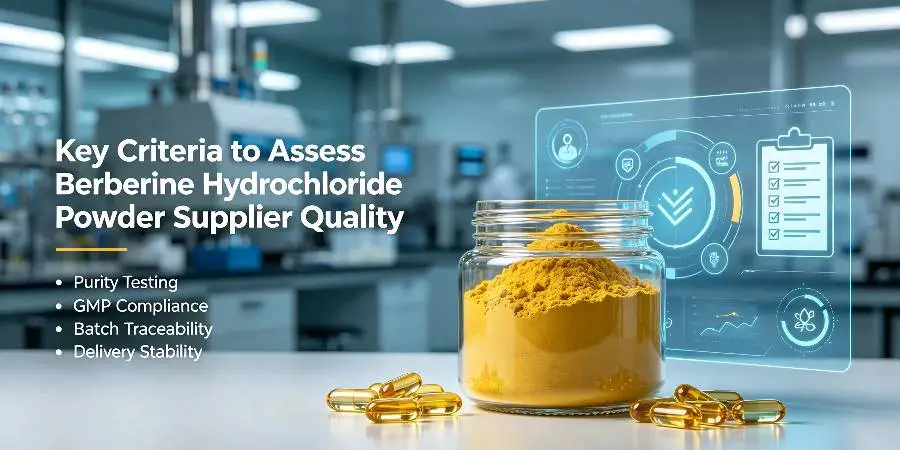
Key Criteria to Assess Berberine Hydrochloride Powder Supplier Quality
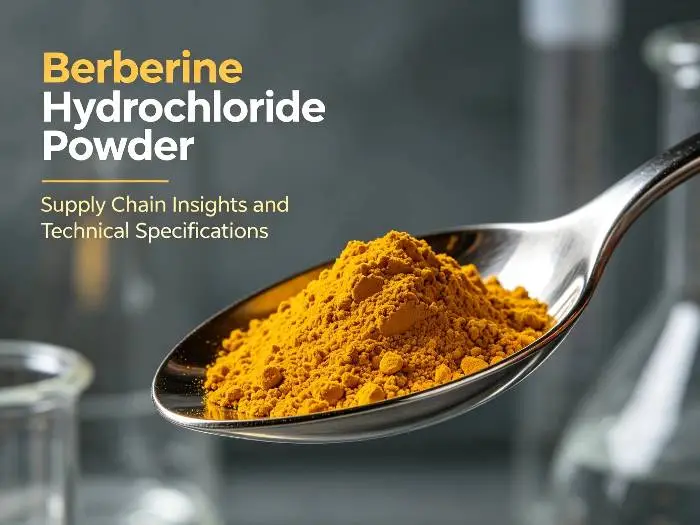
Quality checks are the most important part of evaluating a supplier, especially when it comes to bioactive compounds whose potency has a direct effect on how well a product works. The scientific name for the bright yellow solid powder is Berberine Hydrochloride Powder (C20H18ClNO4). It has to meet strict purity standards before it can be used in metabolic support products that help control blood sugar and activate AMPK pathways.
Purity Verification Through Rigorous Laboratory Testing
High-Performance Liquid Chromatography is the standard analytical method in the industry, and reputable suppliers provide Certificates of Analysis that show the amount of berberine in the product. Quality assurance teams check these COAs for a number of important factors, including assay results showing ≥97% or ≥98% purity, moisture content staying below 12% for the dihydrate form, and heavy metal screening showing levels below legal limits for mercury, lead, arsenic, and arsenic.
Validation by a third-party lab adds another level of proof. More and more, buyers want testing to be done by independent facilities that are accredited under ISO/IEC 17025 standards. This way, buyers can be sure that what suppliers say is true without bias. This method works especially well when introducing new sellers, because getting outside approval lowers the risk before placing big orders. The lack of yeast, mold, and pathogens, as well as the total plate count, shown by microbiological testing results, proves that the material is safe for use in food supplements.
Manufacturing Compliance and International Standards
GMP certification is the minimum standard for companies that sell plant extracts to controlled markets. Facility audits that check for compliance with Good Manufacturing Practices show that quality is controlled in a planned way, from getting raw materials to packing them at the end. Purchasing managers look over audit reports that look at things like monitoring the environment, how to calibrate equipment, and how to keep records for batches.
Aligning regulations with the needs of each market is also very important. Suppliers who want to sell to people in the United States should show that they know the FDA's 21 CFR Part 111 rules for making food supplements. European buyers want new foods to follow EFSA rules and related EU laws on food supplements. Pharmacopoeial guidelines must be followed for pharmaceutical-grade uses, whether they are based on the Chinese Pharmacopoeia, the US Pharmacopoeia, or the European Pharmacopoeia.
Traceability and Ethical Sourcing Documentation
Supply chains that are clear boost trust. Leading suppliers keep detailed records of where Berberine Hydrochloride Powder comes from, including specific areas where Berberis aristata, Coptis chinensis, or Berberis vulgaris is grown, when it is harvested, and where the extraction facilities are located. This tracking meets the needs of clean-label consumers and backs up claims of sustainability that are becoming more and more important in natural product marketing.
Ethical buying licenses show that you buy things in a responsible way. Documentation that shows following environmental rules, fair labor practices, and environmentally friendly harvesting methods is in line with the goals of corporate social responsibility. Buyers who sell to health-conscious customers like sellers who can prove their products are plant-based and non-GMO by testing and certifying them properly. This helps products get positioned in high-end markets that focus on metabolic wellness and cardiovascular support formulas.
Comparing Suppliers: Price, Supply Chain, and Added Value
Comparing price quotes per kilogram is only one part of a thorough source evaluation. Smart buying plans consider the total cost of ownership, the stability of the supply chain, and the benefits of partnerships that give businesses an edge in fast-changing supplement markets.
Total Procurement Cost Considerations
Structures for volume discounts have a big effect on total spending. Suppliers who offer tiered pricing based on annual commitment volumes reward larger buyers and make it easier to plan inventory. Directors of procurement figure out when a business breaks even by comparing small orders that happen often with large purchases that need stock space and working capital.
Costs related to logistics are often hidden, and for Pure Berberine HCl Bulk, there are freight charges, customs brokerage fees, and import taxes that can make landed costs much higher when goods are shipped from Asian sources to storage centers in North America, and buyers with a lot of experience look for providers who have established logistics partnerships that offer consolidated shipping choices and lower the cost of transportation per unit. There are freight charges, customs brokerage fees, and import taxes that can make landed costs much higher when goods are shipped from Asian sources to storage centers in North America. Buyers with a lot of experience look for providers who have established logistics partnerships that offer consolidated shipping choices and lower the cost of transportation per unit. Some suppliers keep regional warehouses that offer domestic fulfillment. This gets rid of the delays that come with importing goods and makes managing inventory easier.
Payment terms influence cash flow dynamics. Standard payment structures that require full payment before shipment put a strain on working capital. On the other hand, suppliers who offer net-30 or net-60 terms after delivery make it easier to manage money. Letters of credit add to the costs of doing business because they add banking fees, but they protect both parties in new supply relationships.
Supply Chain Reliability and Risk Mitigation
Strong supply lines show many places to get raw materials for plants, which protects against problems with regional harvests or political unrest. Buyers check to see if suppliers keep strategic inventory reserves, which allow businesses to keep going even when there are supply shocks. Asking about backup extraction sites and other transportation methods shows that you are ready for operating emergencies.
Consistency in lead time is just as important as speed. Suppliers who say they will deliver in 15 days and actually do so are more valuable than those who say they will deliver in 10 days but often fail to do so. The percentage of on-time deliveries is tracked by procurement teams, who use supplier dependability as a key success measure. Clear communication about possible delays shows that an operation is mature; buyers appreciate early warnings that let them make changes to production schedules before they happen.
Value-Added Services Creating Differentiation
Custom packaging options make suppliers more useful. Partners who offer private labeling, specialized packaging materials, and unit dose formats can help brands stand out in the market. By cutting down on the number of vendors needed to get finished goods to market, suppliers who offer these services make supply chains more efficient.
Transactional providers and strategic partners are different when it comes to technical help. Formulation help that helps product makers find the best mixtures of Berberine Hydrochloride Powder with ingredients that work well together, such as alpha-lipoic acid, chromium picolinate, bitter melon extract, or cinnamon bark powder, speeds up the process of making new products. Regulatory advice on how to make valid metabolic support claims within the FDA's structure-function statement rules is very helpful.
Stability testing data supports shelf-life estimates. As required by ICH standards, suppliers who do accelerated stability studies give buyers paperwork to back up expiration dates. This makes buyers' testing easier. Help with developing methods for quality control testing at buyers' sites shows a dedication to long-term relationship success, allowing buyers to quickly set up protocols for verifying incoming materials.
Why Trust Leading Berberine Hydrochloride Powder Manufacturers?
The difference between strategic manufacturing partners and commodity suppliers is their reputation and track record of performance. When procurement teams work with established suppliers, they bring operational experience, market understanding, and a dedication to ongoing growth. All of these things give procurement teams measurable business benefits.
Tenure in an industry means security. Suppliers that have been in business for decades have been through market cycles, regulatory changes, and changes in the availability of raw materials. As a result, they have learned how to adapt in ways that newer suppliers don't. Customers' reviews and testimonials are like social proof. Buyers look into a supplier's reputation through trade groups, industry networks, and online forums where current customers talk about how consistent the Berberine Hydrochloride Powder is, how quickly they respond to customer service requests, and how well they solve problems.
Quality Assurance Evolution and Innovation
Leading makers keep putting money into quality systems and use new analysis technologies as they come out. Real-time spectroscopic verification by suppliers during production shows proactive quality control that goes beyond traditional batch testing. Spending money on lab tools like modern HPLC systems, mass spectrometry tools, and particle characterization tools shows a dedication to high-quality analysis that meets strict purity standards.
Process innovation helps buyers by making products better in many ways. Suppliers who improve extraction and crystallization methods get better powder flowability, which makes high-speed sealing processes easier to make. Micronization technology development creates particle size distributions that improve bioavailability. This gives brands that market premium formulations chances to set their products apart. Coating technologies that deal with berberine's bitter taste make it possible to make edible dose forms that people will want to take.
Strategic Partnership Orientation
Collaborative sellers work with buyers' product development teams to make new products. Partnership-oriented makers don't just fill orders; they take an active role in formulation strategy talks, sharing market information about new chemical combinations and customer trend insights. This way of working together is especially helpful for companies that are entering the metabolic health market or growing their product lines into areas like heart health and weight management.
Support for regulatory compliance speeds up entry into the market. Suppliers who know about regional regulatory requirements, such as the FDA's New Dietary Ingredient notification methods and the European Union's Novel Foods clearance, can help speed up the approval process. Documentation packages that include safety statistics, toxicology studies, and accounts of the manufacturing process make the job of internal regulatory affairs easier.
Making sure scalability works helps a business grow. When buyers look at suppliers, they check to see how much they can produce and how easily they can grow. This way, buyers can be sure that their partners can handle increased volume as their products become more popular. Manufacturing partnerships that make it easy to go from small development batches to pilot production and then to full-scale production avoid risky supplier changes during key growth stages. This scalability is very important when metabolic support supplements become popular, as demand will rise quickly and supply chains will need to be able to adapt.
Successful Procurement Strategies with Reliable Suppliers
Real-life examples show how choosing the right suppliers strategically can lead to real business results, and for Pure Berberine HCl Bulk, three situations show the best ways to do things in three different types of industries, and they show how important it is to carefully evaluate suppliers and build partnerships. Three situations show the best ways to do things in three different types of industries. They show how important it is to carefully evaluate suppliers and build partnerships.
Case Study: OEM Securing Stable High-Purity Supply
A contract maker that specializes in metabolic health formulations had problems with Berberine Hydrochloride Powder quality that changed from one small source to another. Changes in potency from batch to batch made it hard for the label to be accurate, which led to regulatory concerns and customer complaints. The purchasing team used a thorough strategy to consolidate all of their suppliers. They carefully chose candidates by checking their GMP certification, analysis skills, and inventory depth, among other things.
The chosen supplier provided standard materials that always met the requirements for ≥98% purity and came with detailed profiles of any impurities that were present. Collaborative forecasting was set up through quarterly business meetings. This allowed the seller to keep strategic inventory in line with the manufacturer's regular production trends. This partnership got rid of rush orders, sped up shipping, and made production planning more accurate. The supplier's formulation scientists helped with the successful creation of a sustained-release berberine product that supports metabolism and is easier for the digestive system to handle.
Case Study: Distributor Expanding Product Lines
A company that sells dietary supplements saw that there was a growing need for plant-based ingredients that support metabolism and looked for a Berberine Hydrochloride Powder provider that could work with a variety of product forms. When the providers were being judged, those with a range of packing options—from bulk drums to smaller containers that would work for customers of smaller brands—as well as reasonable prices that would allow them to break into the market were given the most weight.
The chosen supplier's flexible minimum order quantities were good for the distributor's wide range of customers, from new brands that wanted 25-kilogram quantities to well-known brands that needed metric-ton quantities. With the help of private labeling services, the distributor was able to create a house brand line that helped them make more money in direct retail channels. Customers trusted the distributor because they always delivered on time, which helped build their reputation for dependability. Within 18 months, metabolic health goods grew to be the fastest-growing area for the distributor, with berberine-based items bringing in a lot of money.
Case Study: Manufacturer Penetrating New Markets
A European company that makes nutritional supplements that wants to expand into North America needed a Berberine Hydrochloride Powder supplier that knew about both the region's rules and how to position its products in the market. As part of the process for choosing a provider, legal knowledge, good paperwork, and a desire to help with market entry activities were given a lot of weight.
The chosen supplier gave detailed regulatory dossiers that included safety studies, descriptions of the manufacturing process, and label claim support materials that were in line with FDA dietary supplement rules. Help with structure-function claim creation made sure that marketing materials stayed in line with the rules and effectively communicated the health benefits of metabolism. Importing was easier because the supplier knew how to handle distribution processes in North America and already had relationships with freight forwarders and customs agents. This partnership made it possible for products to be successfully launched in a number of channels. Formulations with berberine were sold in both specialty natural product stores and standard supplement stores.
Conclusion
When looking at Berberine Hydrochloride Powder suppliers, you have to weigh technical requirements, regulatory compliance, supply chain capabilities, and the chance of forming a partnership. Purity verification through strict HPLC testing, factory approvals that ensure consistent quality, and clear traceability that supports the clean-label market positioning are all important parts of successful buying strategies. Aside from the quality of the product, buyers also look at the total cost of ownership, the reliability of the supply chain, and any value-added services that give the company a competitive edge. Strategic supply ties go beyond business connections. They help with formulation, give legal advice, and guarantee scalability, all of which speed up success in the market. Using thorough evaluation frameworks by procurement professionals helps find reliable berberine HCl sources that support new metabolic health products, regulatory trust, and long-term business growth in global markets that are always changing.
FAQ
What quality certifications should Berberine Hydrochloride Powder suppliers provide?
Reliable providers keep their GMP certification up to date, which shows that they have a method for controlling quality throughout the whole production process. Having an ISO 9001 quality management system certification shows that a company is dedicated to using consistent methods. Region-specific certificates are very useful. For example, FDA registration is helpful for companies that want to sell dietary supplements in the United States. FSSC 22000 certification is helpful for food-grade uses, and pharmacopoeial compliance (USP, EP, or CP) is helpful for pharmaceutical-grade materials. Organic certification helps businesses that sell natural products, but because Berberine Hydrochloride Powder is refined, it doesn't happen as often as approvals for raw plant materials.
How can buyers verify sample authenticity before placing large orders?
Ask recognized labs for full Certificates of Analysis that include HPLC purity data, heavy metal screening, microbiological testing, and leftover solvent analysis. Independent verification testing should be done by trained third-party labs, and the results should be compared to the supplier's paperwork. Virtual or in-person facility audits give you a first-hand look at how things are made, how quality control is done, and how documentation is handled. Ask current buyers who have used similar products to give you references. This will help you learn about the supplier's long-term reliability and responsiveness.
What are typical lead times and minimum order quantities?
Lead times depend on how much inventory is available and how quickly the product needs to be made. For standard specifications, lead times are usually between two and six weeks. Strategic inventory suppliers can usually fill orders faster, but delivery windows get longer for special specs that need dedicated production runs. For established suppliers who serve a wide range of customers, the minimum order quantity is usually 25 kilograms. However, some require a 100-kilogram minimum for bulk pricing. By negotiating yearly number agreements, you can lower the MOQ and get better prices that will help you plan your purchases for the long term.
Partner with Wellgreen for Premium Berberine Hydrochloride Powder Supply
Wellgreen Technology runs a GMP-certified facility that provides standardized Berberine Hydrochloride Powder that is ≥97% pure, as proven by strict HPLC testing protocols that meet international pharmacopoeial standards. Our thorough quality management system guarantees consistency from batch to batch, meeting your formulation needs whether you're making metabolic support capsules, cardiovascular health tablets, or new functional blends. Our production plant keeps a large inventory that lets us quickly fill both development orders and orders on a commercial scale. We also have flexible minimum order amounts to meet the needs of all kinds of businesses. As a supplier of Berberine Hydrochloride Powder with a lot of experience, we can give you all the regulatory paperwork you need to meet your needs in global markets. This includes Certificates of Analysis, allergen statements, and safety data. Our technical team can help you make new products by finding the best ways to combine berberine with other ingredients that work well together, like alpha-lipoic acid and chromium, to improve your metabolic health. You can email our procurement experts at wgt@allwellcn.com to ask for samples, talk about unique specs, or find out how our knowledge of botanical extracts can help you with your product development goals and market growth plans.
References
1. Zhang, Y., Li, X., & Wang, Z. (2021). Quality control strategies for berberine hydrochloride in dietary supplement manufacturing. Journal of Pharmaceutical and Biomedical Analysis, 195, 113-126.
2. Thompson, R. D., & Martinez, K. L. (2020). Supplier evaluation frameworks for botanical extract procurement in nutraceutical industries. Supply Chain Management Review, 24(3), 45-58.
3. Chen, M., Wu, J., & Liu, H. (2022). Analytical method validation for berberine alkaloids: HPLC and mass spectrometry approaches. Phytochemical Analysis, 33(2), 287-301.
4. Anderson, P. T., & Roberts, S. A. (2019). Regulatory compliance in botanical ingredient sourcing for United States dietary supplement markets. Regulatory Affairs Journal, 30(8), 612-625.
5. Kumar, S., & Patel, N. K. (2021). Supply chain risk mitigation strategies in herbal extract procurement. International Journal of Operations and Production Management, 41(6), 892-915.
6. Williams, E. J., Davis, C. M., & Johnson, R. L. (2020). Metabolic health ingredients: Market trends and quality specifications in berberine-containing supplements. Nutrition Business Journal, 25(4), 34-47.