Bulk Organic Matcha Powder: Growing Uses & Increased Demands
2026-07-22 14:09:51
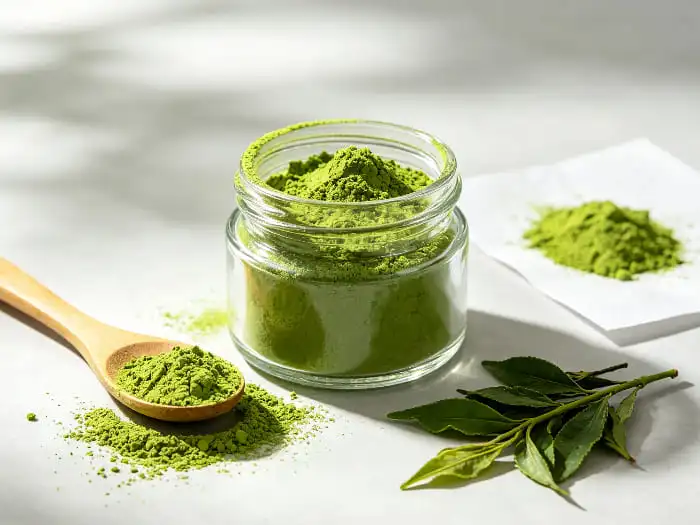
Due to consumer demand for products with clean labels and the adaptability of this vibrant green superfood, Bulk Organic Matcha Powder is growing at a rate that is unprecedented across all global markets. Organic matcha is made from Camellia sinensis leaves that have been grown in the shade and then carefully steamed, dried, and ground very finely. It has high amounts of tea antioxidants, L-theanine, EGCG, and chlorophyll. Because it can be used in cosmetics, functional drinks, fancy foods, and nutrition formulations, it is an important ingredient for companies that want to make products that are good for you and look good.
Understanding Bulk Organic Matcha Powder: Origins, Production, and Key Characteristics
Careful farming and skilled work are needed to make matcha powder from tea leaves, which is different from other green tea products. When buying teams know these basic things, they can spot signs of quality and make smart choices about where to get things.
Shade-Grown Cultivation and Traditional Processing
The plants for real organic matcha are grown in the shade for twenty to thirty days before they are picked. By design, reducing sunlight contact greatly boosts the production of chlorophyll and the content of amino acids, especially L-theanine. This is what gives matcha its sweet umami flavour and bright emerald colour. As soon as the leaves are picked, they are fixed with steam to stop rusting. This keeps the fresh flavour and health benefits that make premium powder what it is.
The grinding stage is another important factor that determines quality. Particles with sizes between 800 and 1500 mesh (about 10 to 15 microns) are made by stone-milling or micro-pulverization. This makes sure that the particles stay in suspension very well in liquids and can be easily mixed into dry matrices without making them gritty or settling.
Organic Certification Standards and Regulatory Compliance
Organic matcha powder that is going to be sold in international business-to-business markets has to go through strict certification processes. For food to be certified USDA organic, it must be completely traceable and cannot be grown or processed with manmade fertilisers, pesticides, or irradiation. The EU's organic standards are also very strict, and they pay extra attention to heavy metal buildup, which is a big problem for tea plants that are grown in certain types of soil.
These certifications cover more than just farming practices; they also cover processing plants, which must have documented quality management systems and regular audits by a third party. Clean labels are important because customers in North America, Europe, and the Asia-Pacific region want to know what's in the food they buy.
Nutritional Profile and Functional Composition
The antioxidant levels in premium organic matcha are much higher than those in brewed green tea because the whole leaf is eaten instead of just being infused. The main beneficial molecules, EGCG catechins, show measurable antioxidant activity through ORAC testing methods. L-theanine content greater than 1.5% supports the ingredient's reputation for helping people stay focused and alert without giving them the jittery feelings that come from drinking caffeine alone.
This chlorophyll-rich mix not only gives natural colours their colour, but it also helps supplement makers make claims that their products clean the body. Keeping the moisture level below 5% prevents the growth of microbes and extends the shelf life if it is properly packed. This makes it perfect for long-distance shipping and storage needs.
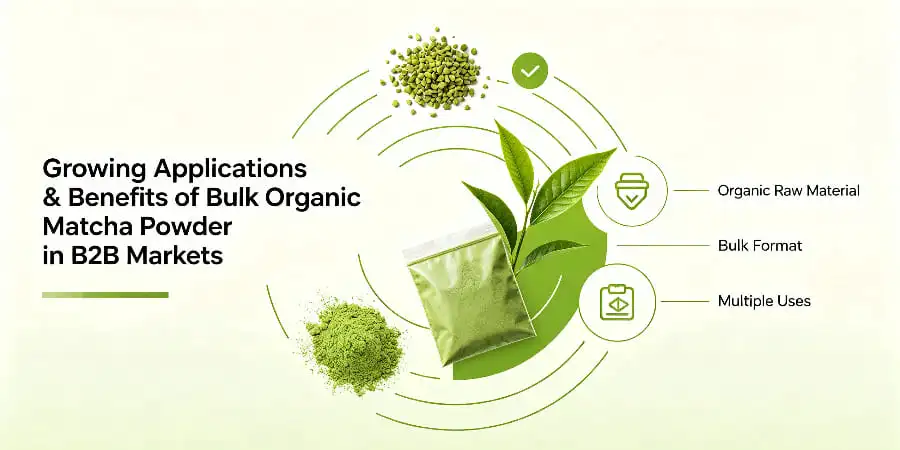
Growing Applications & Benefits of Bulk Organic Matcha Powder in B2B Markets
Matcha powder is becoming more popular in a wide range of manufacturing sectors, which shows how useful it is and how well it fits with current wellness trends. Product makers are becoming more and more aware of how this ingredient solves multiple manufacturing problems at the same time.
Functional Food and Beverage Innovation
Matcha lattes, smoothies, and cold-pressed juices have become popular thanks to modern tea beverage chains and ready-to-drink makers. The powder's ability to mix with water and handle heat makes it perfect for cold uses as well as the pasteurisation processes needed to make RTD goods that can be kept on the shelf. When compared to liquid extracts, dry powder forms give formulators more freedom and lower shipping costs while keeping colour stability from batch to batch.
Protein blend makers use culinary-grade matcha in plant-based shakes and meal replacements because it is high in antioxidants and has a clean energy profile, and for Organic Matcha Powder Bulk, the ingredient's natural sweetness enables sugar reduction without compromising taste, easing formulators' concerns about flavour masking in nutritional supplements while providing a clean-label energy boost. Because the ingredient is naturally sweet, it can be used to lower the amount of sugar in products without changing how tasty they are. This eases formulators' worries about taste covering in nutritional supplements.
Nutraceutical and Dietary Supplement Applications
Organic matcha powder is used by companies that make capsules and tablets to make nootropics that improve brain function and mental clarity. L-theanine and natural caffeine work together to provide long-lasting focus without the crash that comes with manufactured drugs. This is backed by scientific evidence. Matcha is often an expensive ingredient in green superfood mixes, which improves the antioxidant profiles and product marketing.
Quality control teams like that the ingredient can help make things more consistent. Reliable sellers provide COA paperwork that lists the amount of EGCG in the product, the particle size distribution, and all the safety tests that were done, such as GC-MS/MS and LC-MS/MS analyses of pesticide residues. This level of analytical rigour helps back up health claims and regulatory submissions.
Cosmetic and Personal Care Formulations
Skincare scientists use matcha's high EGCG content to make anti-aging serums, clay creams that clean the skin, and scrubs that remove dead skin. The small particle size makes it possible for leave-on products to have a smooth texture, and the antioxidant properties back up claims of free radical damage. Natural colourant users profit from the ingredient's steady green colouring, but pH levels and light exposure need to be carefully thought out to keep the hue's integrity.
Comparing Bulk Organic Matcha Powder: Quality, Price, and Supplier Evaluation
To get organic matcha from all over the world, you need to know about the different grading systems, quality marks, and seller skills that affect both the performance of the product and its overall cost.
Grade Classifications and Application Suitability
In the matcha business, there are three main kinds, and each one is best for a certain type of end use. The ceremonial grade is the best. It has a bright green colour, a strong umami flavour, and almost no astringency, making it perfect for use in high-end drinks and direct drinking. Barista grade strikes a balance between complex flavours and usefulness. It's made for milk-based lattes, where the ingredient needs to keep its own flavour when mixed with dairy or plant-based alternatives.
Food-grade or culinary matcha has stronger, slightly sour flavours that can handle high temperatures in baking and go well with sweetened recipes. Different shades of green may be used, from bright green to yellow-green, to show later-harvested leaves that are still nutritious and cost-effective for mass production. It would be better for procurement teams to choose grades based on what the application needs instead of automatically choosing premium levels where the functional benefits would not be seen.
Quality Control Parameters and Testing Protocols
Picky buyers judge providers by how well they can analyse data and how open they are. ICP-MS tests for heavy metals should show that the levels of lead, arsenic, cadmium, and mercury are below the limits set by California Proposition 65 and the safe levels agreed upon by governments around the world. Aluminium and fluoride are elements that plants naturally take in from the soil. This makes these factors very important for keeping an organic certification and getting goods exported.
Microbiological testing must confirm the allowed ranges for yeast and mould, total plate count, and E. coli and Salmonella in all batches of food. Suppliers who offer nitrogen-flushed packing in double-sealed, foil-lined cases know how sensitive matcha is to oxidation, which is important for keeping the fresh, bright qualities that make powder a quality product.
Batch Consistency and Supply Chain Reliability
Manufacturers look for suppliers who can provide consistent colour values, flavour profiles, and physical properties across seasonal harvests and contracts that last for more than one year. Standardised mixing procedures and climate-controlled storage facilities help reputable makers keep group differences to a minimum, which solves one of the most common problems people have when they try to buy matcha.
How to Source and Procure Bulk Organic Matcha Powder Effectively?
Strategic sourcing extends beyond comparative pricing to encompass supplier vetting, sample evaluation protocols, and relationship management practices that support long-term manufacturing success.
Essential Supplier Qualifications and Certifications
Organic matcha suppliers you can trust keep their USDA NOP and EU Organic certifications up to date, and for Organic Matcha Powder Bulk, this is verified through certificates and traceability records linking finished powder to certified farm sources, while ISO 22000 or FSSC 22000 food safety management certification provides structured quality assurance and risk controls appropriate for dietary supplement and pharmaceutical-grade applications. They can show this by sharing certificates and keeping records that connect finished powder to certified farm sources. Having an ISO 22000 or FSSC 22000 food safety management certification means that the infrastructure for quality assurance and structured risk controls is right for pharmaceutical-grade or dietary supplement uses.
Verification by the Non-GMO Project and approvals as Kosher or Halal make it easier for finished goods to get sold in more markets, especially in North American natural products outlets. Suppliers should be able to easily give full Certificate of Analysis papers for sample batches. These should include pesticide residue panels that test for more than 500 banned chemicals and confirm that "non-detected" status.
Minimum Order Quantities and Sample Programs
Commercial matcha providers usually set MOQ levels based on how the product is packaged. These levels can be as low as 25 kilograms for existing customers and as high as 100 to 200 kilograms for new ones. By negotiating the availability of samples before placing full-scale orders, R&D teams can make sure that the ingredients will dissolve properly, work with different flavours, and keep their colour in certain formulation matrices.
Progressive sellers offer flexible price systems that can adapt to different levels of growth. They do this by offering big discounts without needing large upfront inventory promises that put a strain on working capital. The terms should be very clear about the types of packages that are allowed, how they should be labelled, and how long the wait times should be in order to work with the production planning processes.
Supplier Audit and Verification Best Practices
Some ways to lower the risk are to look over third-party audit reports, ask for facility paperwork, and, if possible, do virtual or in-person site evaluations. When evaluating a supplier's responsiveness during the quotation phase, it's often possible to guess how well they will communicate and work with you to solve problems in the future. References from current customers who use similar applications can tell you a lot about how well and how reliably something works in the real world.
Future Trends and Market Outlook for Bulk Organic Matcha Powder
The rise in demand for organic matcha is a sign of larger trends toward plant-based nutrition, sustainable sources, and new useful ingredients that are changing how products are made in many different fields.
Clean Label and Sugar Reduction Initiatives
Reformulation projects are driven by regulatory pressure and consumer activism around added sugars. Matcha's natural umami complexity and subtle sweetness make it possible to lower sugar levels without using artificial high-intensity sweeteners. The single-ingredient claim helps clean-label marketing because health-conscious consumers can instantly recognise it. This supports claims on the front of the package and higher price strategies.
More and more, beverage makers are making organic approval a standard instead of a way to set themselves apart. This raises the bar for sustainability paperwork and carbon footprint openness. Socially responsible brands will choose suppliers that put money into renewable energy infrastructure and partnerships for regenerative agriculture.
Innovations in Packaging and Delivery Formats
Environmental worries lead to research into alternative packaging that can be broken down in nature and concentrated forms that lower the pollution caused by shipping. Water-soluble matcha preparations and compressed forms help solve formulation problems in clear drinks and supplements that work for a long time. These value-added services give sellers a way to stand out beyond basic prices and help customers with their growth roadmaps.
As personalised nutrition and custom supplement production become more popular, the need for batch amounts that can be changed quickly and easily grows. OEM/ODM manufacturers that serve this dynamic market segment will work with suppliers who have GMP facilities, strong inventory systems, and technical support teams.
Conclusion
Organic matcha powder is very famous in the nutrition, cosmetics, drinks, and health industries because it is good for you, legal, and people really like it, and Bulk Organic Matcha Powder is at the center of this growing market, with rigorous testing protocols and supplier evaluation based on certifications, batch consistency, and responsiveness, making it essential to partner with experienced producers who understand both cultivation and processing to stay competitive and adapt to changing market needs. The market is slowly growing as more and more people use it. To make sure the quality of the goods, strict testing methods are used, and sellers are rated on how many certifications they have, how consistent their batches are, and how quickly they respond to customer questions. To stay ahead of the competition and adapt to changing market needs, it is important to work with sources that have been in the business for a while and know both how to grow premium matcha powder and how to make it.
FAQ
What distinguishes ceremonial from culinary grade matcha in bulk procurement?
Ceremonial grade has younger, more tender leaves that produce a bright green colour, a strong umami flavour, and little astringency. It is best for high-end drinks and direct drinking. For the culinary grade, later-harvested leaves are used. These leaves have stronger, slightly bitter flavours that work well for baking, sweetening, and high-volume production where delicate flavours are not needed. Both grades still have nutritional value, but ceremonial costs more because it takes more work to choose and process.
How should organic matcha powder be stored to maintain freshness?
Powder that hasn't been opened and is kept in foil-lined, nitrogen-flushed cases away from light, heat, and moisture will keep its best quality for 24 months. Once the food is opened, oxygen speeds up the breakdown of chlorophyll and the loss of flavour. Keeping powder in sealed containers in the fridge keeps it from oxidising, but because of the risk of damp, it needs to be at room temperature before it can be opened. Controlling the humidity is very important because matcha is hygroscopic, which means it absorbs water and changes texture.
Are batch-specific test certificates available for regulatory compliance?
Reliable providers give full Certificates of Analysis for every production lot, which include tests for pesticide residue, heavy metals, microbiology, and identity proof using HPLC. These certificates help with government filings, clearing customs, and meeting customer transparency standards. Asking for sample COAs while evaluating a company shows that you can analyse information and care about quality paperwork.
Partner with Wellgreen for Premium Bulk Organic Matcha Powder Supply
Wellgreen Technology is a reliable company that makes bulk organic matcha powder. They provide certified ingredients that meet strict international standards to help nutraceutical brands, functional beverage developers, and cosmetic formulators. Our GMP-certified production sites use standard processing methods and climate-controlled storage to make sure that each run is the same. Along with full pesticide residue panels and heavy metal analysis, each shipment comes with a full COA document that proves it meets all the requirements for USDA and EU organic certification.
We know the unique problems that buying teams face, like making sure that colours stay the same across yearly harvests and figuring out how to meet strict licensing standards. Our technical support team works closely with product developers to suggest the right grades for each job, give advice on how to make the mixture, and run sample evaluation programs. Options for nitrogen-flushed packing protect your investment in high-quality ingredients, and flexible MOQ designs work for both well-known names and new ones.
Contact our team at wgt@allwellcn.com to discuss your organic matcha powder requirements, request product samples, and explore partnership opportunities. Whether you need ceremonial-grade powder for premium beverage lines or culinary-grade material for supplement blends, Wellgreen delivers the quality, consistency, and service excellence that strengthen your supply chain and accelerate market success.
References
1. Kochman, J., Jakubczyk, K., Antoniewicz, J., Mruk, H., & Janda, K. (2021). Health Benefits and Chemical Composition of Matcha Green Tea: A Review. Molecules, 26(1), 85.
2. Weiss, D. J., & Anderton, C. R. (2003). Determination of Catechins in Matcha Green Tea by Micellar Electrokinetic Chromatography. Journal of Chromatography A, 1011(1-2), 173-180.
3. Dietz, C., & Dekker, M. (2017). Effect of Green Tea Phytochemicals on Mood and Cognition. Current Pharmaceutical Design, 23(19), 2876-2905.
4. Ku, K. M., Choi, J. N., Kim, J., Kim, J. K., Yoo, L. G., Lee, S. J., Hong, Y. S., & Lee, C. H. (2010). Metabolomics Analysis Reveals the Compositional Differences of Shade-Grown Tea (Camellia sinensis L.). Journal of Agricultural and Food Chemistry, 58(1), 418-426.
5. Unno, K., Furushima, D., Hamamoto, S., Iguchi, K., Yamada, H., Morita, A., Horie, H., & Nakamura, Y. (2018). Stress-Reducing Function of Matcha Green Tea in Animal Experiments and Clinical Trials. Nutrients, 10(10), 1468.
6. Yamabe, N., Kang, K. S., Hur, J. M., & Yokozawa, T. (2009). Matcha, a Powdered Green Tea, Ameliorates the Progression of Renal and Hepatic Damage in Type 2 Diabetic OLETF Rats. Journal of Medicinal Food, 12(4), 714-721.