What Makes Beetroot Powder a Natural Colourant?
2026-07-22 14:09:42
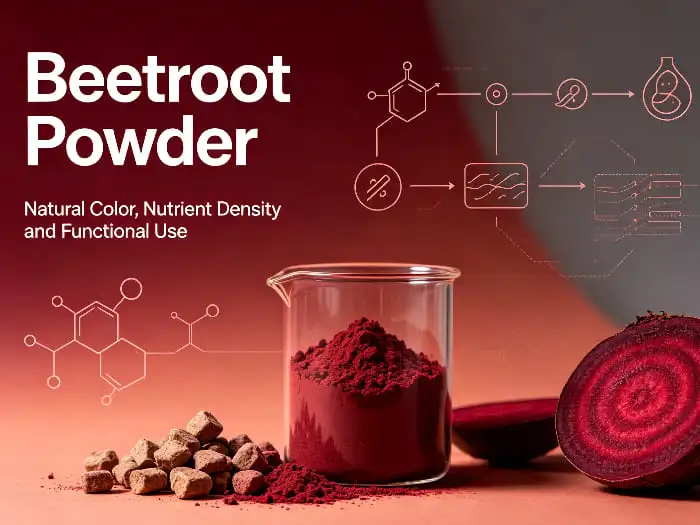
Beetroot Powder Bulk stands as a natural colourant primarily due to its rich concentration of betalains—specifically betanin—which are pigment molecules naturally present in Beta vulgaris roots. These vibrant compounds deliver red to purple hues without synthetic additives, making them ideal for clean-label formulations across food, beverage, and cosmetic industries. Organic beetroot powder retains not only its colorant properties but also natural nitrates, dietary fiber, and minerals, offering dual functionality as both a pigment and a nutritional ingredient. The powder's plant-based origin and water-soluble characteristics align perfectly with the global demand for transparent, health-conscious ingredient sourcing.
Understanding Beetroot Powder as a Natural Colourant
What Are Betalains and Why Do They Matter?
When it comes to nitrogen-based pigments, beets and a few other plant groups are the only ones that have them. Betalains are biosynthesised within the cells of the plant, giving them real red-violet tones. This is different from man-made colours like Allura Red (Red 40) or Ponceau 4R. Beets have a lot of betalain, but betanin is the main one. Since it stays stable between 4.0 and 7.0 on the pH scale, it can be used in slightly sour foods and drinks like fruit drinks and yoghurt.
The pigment's molecules are built in a way that makes them bind well to water. This means that the colour will spread evenly without the need for extra emulsifiers. Food science journals have research that shows betalains keep their colour when they are not exposed to too much heat or light. To solve this problem, we process at a controlled low temperature.
Production Process and Quality Retention
To make organic Beetroot Powder Bulk, Beta vulgaris roots that have been grown in an organic way are used in several steps. The roots are washed well to get rid of any dirt that is still on them after they have been picked. After that, low-temperature air drying is used to dry them out. This method keeps the amount of temperature-sensitive betalain but lowers the level of wetness to less than 5%. And the product stays fresh longer on the shelf because microbes can't grow.
Then, modern airflow milling technology is used to make pieces that are between 80 and 120 mesh. It is very easy to mix with cold and warm water because it is very small. This is very important for ready-to-drink (RTD) drinks and quick powder blends. We don't use chemicals like silicon dioxide to keep the powder from clumping together during preparation. We use physical microencapsulation instead to keep the powder's ability to move freely without breaking clean-label rules.
Nutritional and Functional Advantages
Organic Beetroot Powder Bulk isn't just a colourant. It also has man-made nitrates that are found naturally and are changed by the body into nitric oxide. For this reason, Beetroot Powder Bulk is a key ingredient in many pre-workout and endurance nutrition products. It helps the body's blood vessels work and gets oxygen to the cells. Vitamins, dietary fibre, potassium, folate, and other nutrients are also in the powder. This makes recipes for useful foods better for you.
Two good things about natural colourants and bioactive compounds are that they let formulators combine ingredient lists. This saves money and makes it easier to understand what the label says. People who work in the nutraceutical and functional food industries can get more for their money when they buy ingredients because they can be used for more than one thing.
How to Use Beetroot Powder Bulk as a Natural Colourant?
Recommended Dosage and Application Techniques
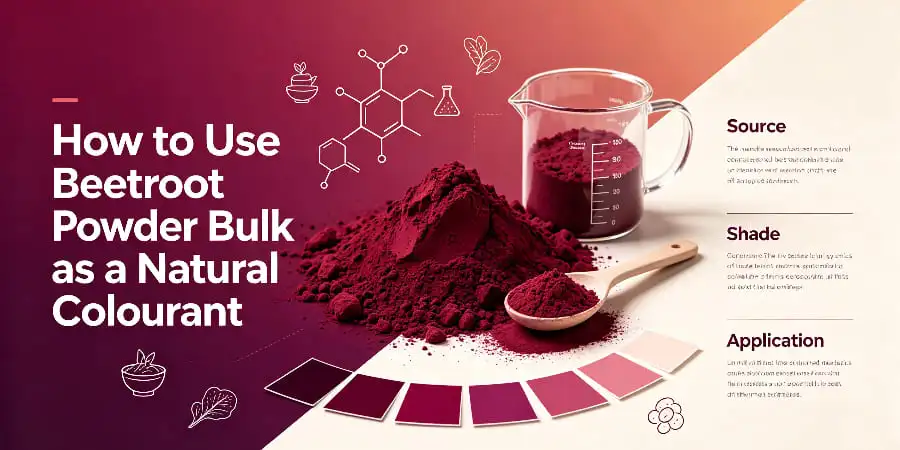
The amount of Beetroot Powder Bulk that can be used to colour something depends on what it is and how strong of a colour you want, and for Wholesale Organic Beet Powder, typical usage levels range from 0.5% to 2% by weight in beverages and 1.0% to 3.0% in confections and baked goods for vibrant red shades, with the powder readily dispersing in water-based systems though pre-blending with a small amount of liquid ensures even colour distribution and prevents clumping. Most of the time, 0.5% to 2% by weight is used for drinks and 1.0% to 3.0% by weight is used for candy and baked goods to make them brightly coloured. It's easy to mix the powder with water-based systems, but adding a little liquid first makes sure the colour is spread out evenly and keeps it from sticking.
When making solid dosage forms like tablets or gummies, the pigments can be spread out evenly by adding Beetroot Powder Bulk during the dry blending step. The powder's small pieces make it easier to mix with other things so that the final product doesn't have colour streaks. Some people who make ready-to-drink drinks like the powder because it stays stable in acidic pH environments. These are common in fruit-flavored drinks and sports hydration recipes.
Things that are being stored or worked on should be kept away from light and high temperatures for a long time. Betalains don't change colour quickly, but if you boil them for a long time above 70°C, the colour can fade faster. Handling temperatures should be kept below 60°C whenever possible, especially during the last steps of pasteurisation or hot-filling.
Storage and Shelf Life Considerations
Keeping organic Beetroot Powder Bulk in the right way for storage makes it last a lot longer. The product should be kept in a cool, dry place where the temperature is below 25°C and the relative humidity is less than 60%. It should also be kept in sealed, water-resistant packaging. The powder will stay the same colour and colour strength for up to 24 months after it was made if you store it this way.
Because there is a lot of natural sugar in Beetroot Powder Bulk, water can get into it. This is the main quality problem. Too much water can make things stick together and make it easy for microbes to grow. The materials we use for our packaging keep out moisture and inert gases to limit the amount of oxygen that gets in. Along the whole supply chain, this keeps the colour stable and the level of bacterial safety high.
Safety and Regulatory Compliance
Beetroot Powder Bulk is usually thought to be safe (GRAS) in the US and approved as E162 in the EU. This means it can be used in a lot of different kinds of food. Getting organic approval from the USDA and EU makes sure that no manmade fertilisers or pesticides are used to grow the crops. This meets the strict rules set by the government for clean-label claims.
When it comes to roots, microbiological safety is still the most important thing. We use steam treatment to quickly kill all the germs on the plates. This drops the total plate counts (TPC) without changing the cleanliness of the beads. For every batch, heavy metal tests are done to check for lead, arsenic, cadmium, and mercury. The results are always below the limits set by FDA and EFSA rules.
Comparing Beetroot Powder Bulk with Other Colourants and Forms
Beetroot Powder versus Beetroot Juice Powder
They both come from the same plant, but they work in different ways because of how they were made. When concentrated beetroot juice is sprayed dry, it turns into juice powder. Juice powder has more sugar and can hold more water than whole root powder. The second one keeps more fibre and flows more freely, which makes it easier to mix for dry blend uses.
From a cost perspective, whole root powder is generally cheaper because it is easy to process and takes less energy to dry out. Both types have about the same amount of colour per gram, but whole root powder might be better for recipes that want to cut back on carbs.
Organic versus Non-Organic Variants
This is because brands that want to sell high-end goods have to be very careful about which ingredients they use. Organic Beetroot Powder Bulk costs more because it has to be grown in an organic way and meet certain standards for approval. But it's really useful for marketing because customers trust it and it sends a clean message.
As long as there are good rules for farming and processing, organic and conventional powders don't have very different colour qualities. Tests for herbicide residues are the major difference. When it comes to regular versions, they have to follow maximum residue limit (MRL) rules, and organic versions have to show that they don't have any manufactured chemical residues. Certified organic powder gives sellers the peace of mind they need to offer to health-conscious customers or places with strict rules about how to name organic products.
Beetroot Capsules and Their Limited Colorant Role
Most of the time, encapsulated beetroot products are used as food supplements because they contain concentrated amounts of health benefits rather than colouring agents. More steps and ingredients are needed to make capsules, which raises the cost per unit and limits the use of colourants on a large scale in industry.
These items are made for people who want to take nitrate supplements to improve their heart health or their performance in sports. For procurement workers looking for ingredients for manufacturing, Beetroot Powder Bulk forms are still the best choice. This is because they offer more recipe options, lower costs, and a supply that can be scaled up or down.
How to Choose the Best Bulk Beetroot Powder Supplier?
Certification and Quality Assurance Programs
The first thing that you should do when picking a seller is look at their certifications. These show that they know how to make things and that their ingredients are safe. Organic certifications from the USDA and the EU show that organic farming standards were followed while the food was being grown and processed. If a company is certified as following Good Manufacturing Practice (GMP), it means that they follow set procedures for quality management and preventing contamination.
To check for quality issues like heavy metals, chemical residues, moisture content, mesh size, and microbe counts, you can ask for Certificates of Analysis (CoA) for a sample batch. Test results from a well-known third-party lab should be shown by suppliers. This way, there is proof from a third party that goes beyond quality checks done by the company itself. Being honest about how samples are picked and tests are done shows that the provider of Beetroot Powder Bulk is trustworthy and tech-savvy.
Supply Chain Capabilities and Service Flexibility
Making it hard to buy something is directly linked to minimum order number (MOQ) rules. This is especially true for new names or tests of new product lines. Many suppliers in the same market offer a range of MOQ amounts to meet the needs of both small-scale study projects and large-scale business production. To keep production going, you need consistent lead times and a ready supply of inventory. This is why it's important to coordinate your logistics well.
Partnerships with suppliers are more than just a business deal when they offer value-added services like private labelling, custom package designs, and technical formulation support. Suppliers with their own research and development (R&D) departments can help make products more stable, find the best dose rates, and make new products faster. These skills come in handy even when formulas need to be changed for new ways of delivery or legal markets.
Reputation and Customer Feedback
One way to get a rough idea of how well a company is doing is to look at its reputation in the field. To figure out how reliable a supplier is, read reviews from past customers and see how many of them stick with the supplier for a long time. You can also ask well-known manufacturers for advice. Going to classes and joining professional trade groups shows that you care about the rules and current technical progress in your field.
To see how committed a seller is to their customers' success, find out if they are willing to fix quality issues and meet specific needs. Some business practices that are focused on building partnerships are responding quickly, giving demos, and being honest about what can be produced. Most of the time, these non-technical factors are just as important as technical specs when it comes to building long-term ties with suppliers.
Future Trends and Opportunities in Using Beetroot Powder as a Natural Colourant
Clean Label Movement and Synthetic Dye Replacement
Because of government rules and efforts to make people more aware of the problem, companies are switching from using manmade colourants to using natural ones, and Wholesale Organic Beet Powder is a standout in this transition, delivering vibrant red-to-pink hues for beverages and confections without the negative health associations of synthetic dyes, making it a preferred choice for clean-label formulations as bans on artificial colours accelerate reformulation across the food and beverage industry. Some places have banned artificial dyes because they have been linked to kids being too hyperactive. This has made it faster to change what's in drinks and candy. Beetroot Powder Bulk is a star in this change because it gives colour performance that can be used in real life without the bad effects that come with synthetic choices.
Many big food companies have said they will no longer use fake colours in their goods. This has made a lot of people want to find natural sources of pigments. Clean-label ingredients are becoming more and more important in buying decisions in the food service and public food sectors as well as in retail brands. Because Beetroot Powder Bulk has been tested and found to be safe in the past, it is a good choice for this growing market field.
Functional Food and Sports Nutrition Integration
If you combine the colouring and food-giving functions, you can use them for more than just colouring. Beetroot Powder Bulk is used in sports nutrition not only because it looks good, but also because it is a beneficial ingredient that helps the body make nitric oxide and makes it easier to exercise. This positioning helps you in two ways: it lets you charge more for your goods and make more specific claims about them.
Because betalains are antioxidants and reduce inflammation, a new study suggests that they could be used in functional foods that help the body's metabolism and protect cells. As more scientific evidence comes in, Beetroot Powder Bulk might go from being a unique ingredient to being used a lot in health-conscious foods. Brands that think ahead and act quickly can get ahead in the market before it gets too crowded with competitors.
Sustainability and Ethical Sourcing Priorities
Businesses that promise to be environmentally friendly are having a bigger effect on the items people choose to buy. This is a good way to find out how beets affect the environment because they don't need as much water or room as some other colourant sources. Organic farming is even better for the earth because it helps wildlife and keeps the dirt healthy.
ESG (Environmental, Social, and Governance) goals are showing up more and more in how companies buy things. These goals can be met through supplier relationships that focus on open sourcing, fair labour methods, and farming that returns to the land. Choosing suppliers who share these values can help a brand's reputation and bring in customers who care about social issues. The natural colourant market gives companies a chance to match the quality of a product with ethical business practices. This can help them in more ways than one.
Conclusion
Beetroot Powder Bulk that is organic has betalain pigments that give it a real, natural colour. It's also good for you, which supports manufacturing methods that use clean labels. Food, drinks, supplements, and makeup can all use it in different ways. This makes it a useful ingredient for businesses that want to get rid of synthetic colours and add functional ingredients. When you buy from approved sellers, you can be sure of steady quality, following the rules, and a stable supply chain, all of which are needed for large-scale production. Beetroot Powder Bulk is a long-lasting method that has been shown to work in the lab to meet present needs and open up new markets. This is because both consumers and government officials still like natural ingredients. When purchasing managers work with suppliers who are skilled and care about quality, their companies are better prepared to take advantage of the quick shift toward plant-based colourants.
FAQ
How long does beetroot powder retain its color intensity?
Organic Beetroot Powder Bulk will keep its colour for about 24 months if it is kept in cases that can't be opened or get wet, at temperatures below 25°C, and out of direct sunshine. Betalain breaks down quickly in high temperatures, oxygen, and water, so it's very important to follow the storage instructions to keep the colourant working well.
Does beetroot powder pose allergy risks?
Bugs that are allergic to beets are still pretty uncommon compared to allergies to tree nuts or shellfish. It's not one of the top eight toxins in the US. It's not one of the top fourteen illnesses in the EU. In most cases, allergy labels don't need to be put on beetroot-based products, but manufacturers should learn about the markets they want to sell to.
What distinguishes organic from conventional beetroot powder in color performance?
Because they are both treated in controlled ways, organic and normal beetroot powder don't have many differences in their colour. That wasn't the main difference; it was the chemicals that were left behind and how the plants were grown. There is no guarantee that the colourant will work better just because it is certified organic. This is because consumers want ingredients that are free of pesticides.
Partner with Wellgreen for Premium Beetroot Powder Bulk Supply
Wellgreen Technology makes Beetroot Powder Bulk that meets the high standards of companies that make drugs, vitamins, and functional foods. Their production is GMP-certified, and both the USDA and the EU have approved it as organic. There is also strict quality control. We use well-thought-out farming methods and better low-temperature processing to keep the betalain stable and make sure it is safe for microbes and heavy metals. You can order in different amounts and with different labels from us so that we can meet the needs of both small and big output. You can cut down on the time it takes to make your product by getting our expert team to help you with formulation and stability testing. Contact us at wgt@allwellcn.com to discuss your requirements and receive samples from our current inventory.
References
1. Azeredo, H.M.C. (2009). "Betalains: Properties, Sources, Applications, and Stability – A Review." International Journal of Food Science and Technology, 44(12), 2365-2376.
2. Clifford, T., et al. (2015). "The Potential Benefits of Red Beetroot Supplementation in Health and Disease." Nutrients, 7(4), 2801-2822.
3. Delgado-Vargas, F., Jiménez, A.R., and Paredes-López, O. (2000). "Natural Pigments: Carotenoids, Anthocyanins, and Betalains – Characteristics, Biosynthesis, Processing, and Stability." Critical Reviews in Food Science and Nutrition, 40(3), 173-289.
4. Gandía-Herrero, F., and García-Carmona, F. (2013). "Biosynthesis of Betalains: Yellow and Violet Plant Pigments." Trends in Plant Science, 18(6), 334-343.
5. Stintzing, F.C., and Carle, R. (2004). "Functional Properties of Anthocyanins and Betalains in Plants, Food, and in Human Nutrition." Trends in Food Science and Technology, 15(1), 19-38.
6. Wootton-Beard, P.C., and Ryan, L. (2011). "A Beetroot Juice Shot is a Significant and Convenient Source of Bioaccessible Antioxidants." Journal of Functional Foods, 3(4), 329-334.