Can Maca Root Extract Balance Your Hormones?
2026-06-17 11:44:15
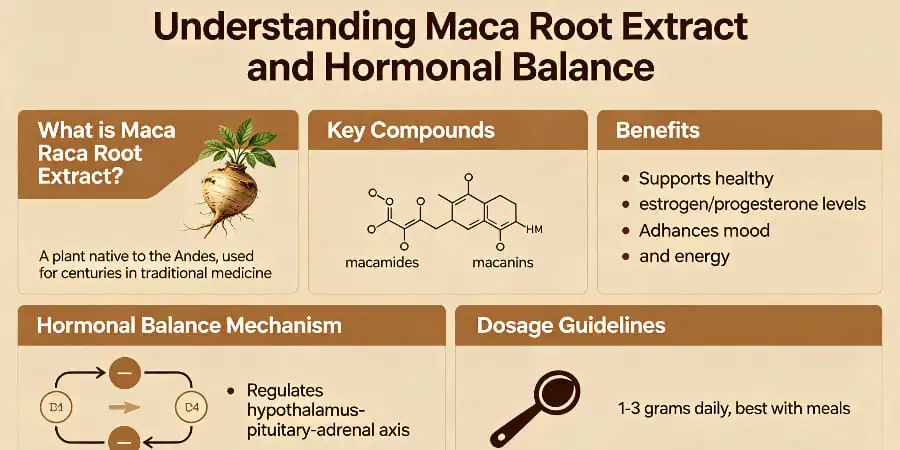
Although it is important to understand what this actually entails, maca root extract has gained popularity as a natural adaptogen that may support hormonal balance. This botanical ingredient from the Peruvian Andes does not introduce exogenous hormones into the body, unlike synthetic hormone replacement therapies. Instead, studies suggest that maca may influence the hypothalamic-pituitary-adrenal (HPA) axis, which plays a role in the body’s natural regulation of hormone production. Macamides and macaenes, two of its key bioactive compounds, may affect endocrine function and are associated with potential benefits in energy, emotional stability, and reproductive health, according to current research. For product manufacturers, quality sourcing and standardization are essential, as although promising, its mechanisms and extent of effects remain under ongoing scientific investigation.

Understanding Maca Root Extract and Hormonal Balance
What Makes Maca Root Extract Different from Ordinary Maca Powder?
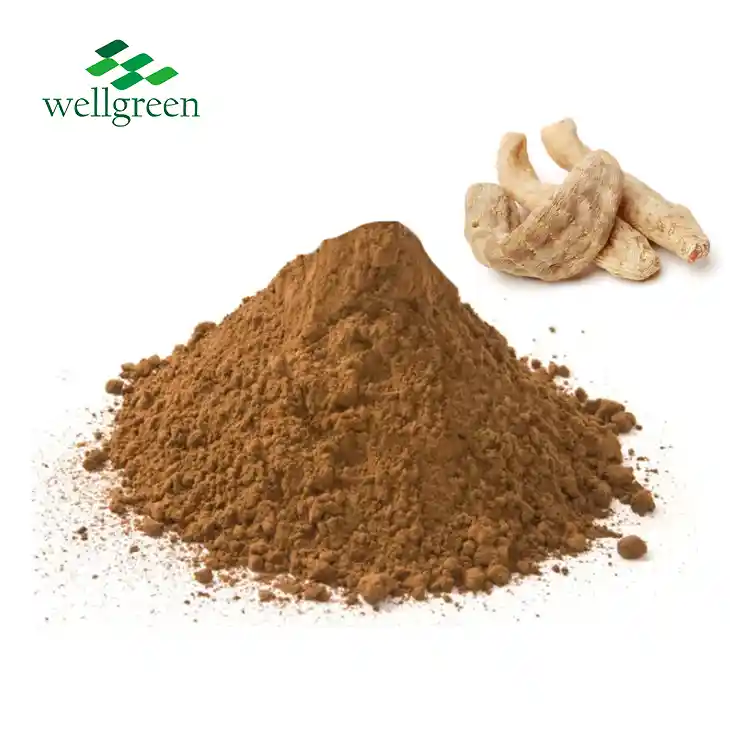
This substance comes in a variety of forms and is derived from Lepidium meyenii, a cruciferous plant that thrives at elevations above 4,000 meters in the Peruvian Andes. For formulation experts, the difference between concentrated extracts and raw maca powder is crucial. The entire nutritional profile of the root, including fibre, starch, and minerals, is present in raw powder, although the amounts of active substances are smaller. By concentrating the bioactive components in ratios between 4:1 and 50:1, extraction procedures provide significantly greater potency per gram. Compared to the starchy, gritty texture of raw flour, this concentration process also increases the extracts' water solubility, making them more appropriate for encapsulation and functional beverages.
Although it may decrease some heat-sensitive enzymes, the gelatinisation process breaks down complicated carbohydrate chains to further improve bioavailability. This translates into formulations that require lower dosages to achieve equivalent or higher efficacy for B2B product makers, which is a significant advantage when controlling cost per serving and label space.
Three Phenotypes with Distinct Functional Profiles
The three natural colours of maca roots—black, yellow, and red—are linked to many traditional applications and new scientific discoveries. Studies looking at male reproductive markers have found that black maca is particularly promising; certain clinical trials have reported increases in sperm motility and concentration. The most prevalent type, yellow maca, is the all-purpose choice and is typically taken for stamina and vitality. Applications related to bone density and prostate health are the main areas of study for red maca; early research on animals suggests that it may have protective properties.
When focusing on particular consumer segments, it is crucial from a procurement perspective to comprehend these phenotypic variations. While phenotype-specific extracts earn premium positioning for specialised health claims, many commercial extracts combine all three types to standardise chemical makeup. Verifying variety validity using DNA barcoding or HPLC profiling of glucosinolate signatures helps allay a common worry among consumers who are concerned about the proliferation of tainted goods.
How Adaptogenic Compounds Interact with Endocrine Function?
This Andean root's reputation for balancing hormones comes from its classified as an adaptogen, a chemical that aids the body in maintaining homeostasis under stress. Maca does not structurally like oestrogen, in contrast to phytoestrogens present in soy or red clover. According to research published in the Journal of Ethnopharmacology, its effects are not caused by direct hormonal action but rather by manipulation of the hypothalamus and pituitary. This species' distinctive characteristic chemicals, macamides and macaenes, seem to alter neurotransmitter systems that govern mood and sexual function.
Without appreciably changing blood oestrogen or FSH levels, clinical trials looking at menopausal women have shown increases in mood scores and decreases in hot flashes and nocturnal sweats. This supports indirect processes instead of hormone replacement, such as control of the serotonin pathway or regulation of cortisol. Because of these qualities, it appeals to product producers looking for natural substitutes that don't involve the complicated regulations that come with hormone-active chemicals.
Key Considerations When Using Maca Root Extract for Hormonal Health
Dosage Protocols and Delivery Format Optimization
Although concentrated maca extract powders call for proportionately less amounts, research investigations usually use dosages of 1,500 to 3,000 mg per day of raw maca equivalent. Theoretically, 150–300 milligrams would be needed to meet research standards for a 10:1 extract, which provides the equivalent of 10 kg of fresh root every kilogram of powder. Standardisation to marker compounds, such as 0.6% to 2.0% macamides, is more dependable for consistent formulation because extraction techniques differ greatly in their ability to retain particular compounds.
End users' perceptions of efficacy are also influenced by timing factors. While some practitioners advise spreading doses throughout the day for long-term support, others advise administering in the morning to maximise energising effects without interfering with sleep. Since the substance has a unique earthy, slightly bitter flavour character that some consumers find difficult in powdered form, capsule formats dominate the U.S. supplement industry due to its convenience and ability to hide taste. Water-soluble grades make it possible to incorporate them into protein blends, energy drinks, and functional beverages; nevertheless, formulators must properly treat them to avoid cloudiness and sedimentation.
Safety Profile and Contraindication Awareness
Traditional maca intake has a centuries-long safety record, with recent clinical research showing little side effects at recommended levels. The most frequently reported side effects include minor gastrointestinal distress on first use, which usually goes away in a few days as the body adjusts. Cruciferous vegetables contain goitrogens, which may interfere with iodine absorption, so thyroid concerns should be taken into account. Although heating or extraction procedures usually lessen goitrogenic activity, people who already have thyroid problems should proceed with caution.
Although there are still not many contraindications, they should be taken into account when labelling products and creating marketing collateral. Despite maca's non-hormonal action, people with hormone-sensitive diseases should speak with their doctors before using it as a precaution. The majority of responsible brands advise avoiding pregnancy and lactation because they are another grey area where there is inadequate research to assure total safety. Although there are still few thorough pharmacokinetic investigations, the literature now available suggests that there is little chance of drug interactions.
Comparative Analysis Against Other Hormonal Support Botanicals
Different benefit profiles appear when maca is compared to substitutes such as ashwagandha, rhodiola, or panax ginseng. While ginseng has more evidence for improving cognitive function and physical endurance, ashwagandha excels in cortisol modulation and has significant clinical support for stress-induced hormonal disturbance. Rhodiola has been shown to improve exercise performance and mental exhaustion. Because it combines energy support, mood stabilisation, and reproductive health uses without the stimulating qualities some consumers associate with ginseng, maca has a unique position.
In the field of hormone health, synergistic formulations that combine several adaptogens are becoming more and more popular. Maca works especially well with tribulus terrestris in sports nutrition situations or with ashwagandha for all-encompassing stress and vitality support. When developing complex blends, formulators should take into account potential overlapping pathways and total adaptogen load because excessive combinations may reduce the efficacy of individual compounds or make it more difficult to substantiate claims.
Evaluation and Selection of Maca Root Extract Products for B2B Procurement
Quality Certification and Origin Authentication Standards
Given the ingredient's geographic distinctiveness and the abundance of substitute sources with dubious equivalency, original Peruvian provenance is a top concern for discriminating consumers. Reputable vendors offer records that link their products to certified Peruvian farms; these records frequently include phytosanitary certificates attesting to export compliance. Although conventional farming is still the norm for most commercial production, organic certification from the USDA, EU, or comparable organisations offers value for businesses aiming for the clean-label market segment.
The cornerstone of quality assurance in botanical procurement is third-party laboratory testing verification. HPLC fingerprinting, heavy metal screening that complies with USP 232 limitations, pesticide residue analysis that follows USP 561 guidelines, and microbiology testing that verifies the absence of pathogens should all be documented in comprehensive certificates of analysis. Given that some agricultural areas have naturally elevated soil levels, lead contamination merits special attention. Lead contents are kept at 3.0 ppm by reliable providers, with premium grades reaching sub-1.0 ppm levels.
Formulation consistency is greatly impacted by standardisation methodology. Although ratio extracts (4:1, 10:1, and 20:1) offer broad-spectrum chemical profiles, certain actives may differ from batch to batch. Precise dosing is made possible and stronger efficacy claims are supported by standardised maca extract powders that ensure set percentages of marker chemicals, usually macamides or glucosinolates. Additionally important is the extraction solvent system; water-ethanol matrices preserve full-spectrum chemicals while avoiding harsh chemical residues that make clean-label positioning more difficult.
Supplier Evaluation Criteria Beyond Price Considerations
Although procurement decisions are inevitably influenced by competitive cost, a thorough supplier evaluation takes operational capabilities and service quality into account. Different business sizes are accommodated by minimum order quantity flexibility; established brands need large container loads, while startups need easily accessible entrance points. Stock-out situations that harm retailer relationships and customer trust are avoided by lead time reliability. Suppliers show their dedication to relationship stability by keeping a sizable inventory buffer stock and transparent production scheduling.
True manufacturing partners are distinguished from commodity vendors by their technical support skills. Having access to knowledgeable applications scientists helps with formulation difficulties, flavour masking techniques, and testing for ingredient compatibility. Support for documentation simplifies regulatory compliance and offers the scientific evidence required for product marketing and label claims. Some vendors allow brands without internal manufacturing skills to enter the market more quickly by providing white-label or private-label services.
Beyond the invoice price, logistical factors affect the overall landing cost. The administrative load and chance of delays are decreased by suppliers who provide customs documentation expertise, consolidated shipping alternatives, and adaptable incoterms. Just-in-time inventory management is made easier and fulfilment times are significantly shortened by domestic warehousing within destination markets, such as U.S.-based inventory for American brands.
Real-World Applications and Case Studies in Hormone Health Products
Gender-Specific Formulation Strategies
Product developers increasingly design gender-targeted formulations recognizing distinct consumer needs and marketing preferences. Men's health applications emphasize vitality, stamina, and reproductive function support, often combining black maca extract with complementary ingredients like fenugreek, tribulus, or zinc. Sports nutrition brands incorporate maca into pre-workout formulas and testosterone support stacks, capitalizing on its adaptogenic properties and exercise performance associations found in athletic research studies.
Women's health formulations address a broader spectrum including menstrual cycle regularity, menopause symptom management, energy balance, and mood support. Red maca's specific research profile for female applications makes it particularly suitable for this segment. Combinations with vitex (chasteberry), dong quai, or evening primrose oil create comprehensive hormonal support products addressing multiple symptom dimensions simultaneously. The non-hormonal mechanism of action provides a compelling marketing angle for women seeking natural alternatives to conventional HRT.
Unisex formulations emphasizing stress resilience, energy enhancement, and general wellness represent another viable market approach. These products often position maca within broader adaptogen complexes featuring rhodiola, schisandra, and eleuthero, appealing to health-conscious consumers interested in holistic vitality management rather than specific reproductive concerns.
Innovation Trends Shaping Future Product Development
The functional beverage sector represents a high-growth application area for water-soluble maca extracts. Energy drink manufacturers seeking natural alternatives to excessive caffeine loads incorporate adaptogenic botanicals for sustained vitality without jitters or crashes. Cold-brew coffee blends, plant-based protein shakes, and ready-to-drink wellness shots increasingly feature maca as a differentiating ingredient conveying natural energy and hormonal balance positioning.
Personalized nutrition platforms analyzing genetic markers, hormone panels, or lifestyle factors to recommend customized supplement regimens create demand for ingredient suppliers offering diverse specifications and flexible manufacturing. The ability to provide black, red, or yellow maca variants enables these services to tailor recommendations matching individual physiology and health objectives. Subscription-based delivery models benefit from suppliers maintaining consistent quality across production runs, ensuring customer experience continuity.
Combination products addressing multiple wellness dimensions simultaneously—such as sleep-stress-hormone formulas or energy-mood-focus blends—reflect consumer preference for simplified supplement routines. These complex formulations demand suppliers with extensive technical knowledge to navigate potential interactions, optimize synergies, and maintain stability throughout shelf life. Emerging delivery formats including liposomal encapsulation, nano-emulsification, and time-release matrices present opportunities for premium product differentiation, though they require specialized manufacturing capabilities.
Conclusion
The evidence supporting maca root extract's role in hormonal balance reveals a nuanced picture of indirect endocrine support rather than direct hormone replacement. Its adaptogenic properties, concentrated bioactive compounds, and centuries of traditional use position it as a valuable ingredient for manufacturers developing natural hormone health products. Success in this competitive category requires careful attention to quality sourcing, phenotype selection matching target demographics, and formulation strategies optimizing efficacy while addressing practical considerations like taste and solubility. The growing consumer demand for natural alternatives to synthetic hormone therapies, combined with increasing scientific validation, suggests continued market expansion. Procurement professionals who establish relationships with reliable suppliers offering transparent testing, consistent quality, and technical support will find themselves well-positioned to capitalize on this trend while delivering products meeting rigorous standards expected by regulatory bodies and informed consumers alike.
FAQ
Does maca root extract actually affect hormone levels directly?
Research indicates maca doesn't function as a phytohormone or hormone replacement. Clinical studies measuring serum hormone levels found no significant changes in estrogen, testosterone, FSH, or LH despite participants reporting symptom improvements. The effects appear mediated through hypothalamic-pituitary axis modulation and neurotransmitter regulation rather than direct hormonal mechanisms.
What is the optimal daily dosage for hormonal support applications?
Clinical studies typically employ 1,500-3,000 mg daily of raw maca equivalent, translating to proportionally lower amounts for concentrated extracts. A 10:1 extract would require approximately 150-300 mg to match research protocols. Standardized extracts containing verified percentages of macamides allow more precise dosing compared to ratio extracts with variable compound concentrations.
How should I verify authentic Peruvian origin when sourcing?
Legitimate suppliers provide documentation including phytosanitary export certificates from Peruvian agricultural authorities and traceability documentation linking batches to specific growing regions. DNA barcoding or HPLC fingerprinting comparing samples against authenticated reference standards offers additional verification. Be cautious of suppliers unable to provide origin documentation, as alternative sources may lack equivalent compound profiles.
Source Premium Maca Root Extract for Your Next Formulation
Wellgreen Technology serves as a professional maca root extract supplier with GMP-certified manufacturing facilities and comprehensive quality systems meeting international supplement standards. Our portfolio includes black, yellow, and red maca variants available as standardized extracts, ratio concentrates, or freeze-dried powders, each backed by complete COA documentation including HPLC assay verification. We maintain strict control over pesticide residues, heavy metals, and microbiological parameters, ensuring compliance with both EU and US regulatory requirements. Our stable Peruvian sourcing relationships guarantee authentic origin material, while our domestic processing capabilities enable flexible MOQ terms supporting brands at every growth stage. Beyond ingredient supply, our technical team provides formulation consultation, compatibility testing support, and OEM/ODM services for turnkey product development. Whether you're creating men's health supplements, women's hormone balance formulas, sports nutrition products, or functional beverages, our applications specialists help optimize delivery formats and compound synergies. Contact our procurement team at wgt@allwellcn.com to request samples, discuss custom specifications, or explore private label opportunities that accelerate your path to market.
References
Gonzales GF, Córdova A, Vega K, et al. Effect of Lepidium meyenii (MACA) on sexual desire and its absent relationship with serum testosterone levels in adult healthy men. Andrologia. 2002;34(6):367-372.
Meissner HO, Mscisz A, Reich-Bilinska H, et al. Hormone-balancing effect of pre-gelatinized organic Maca (Lepidium peruvianum Chacon): Clinical responses of early-postmenopausal women. International Journal of Biomedical Science. 2006;2(4):375-394.
Stojanovska L, Law C, Lai B, et al. Maca reduces blood pressure and depression, in a pilot study in postmenopausal women. Climacteric. 2015;18(1):69-78.
Gonzales GF, Gonzales C, Gonzales-Castañeda C. Lepidium meyenii (Maca): A plant from the highlands of Peru—from tradition to science. Forschende Komplementärmedizin. 2009;16(6):373-380.
Stone M, Ibarra A, Roller M, et al. A pilot investigation into the effect of maca supplementation on physical activity and sexual desire in sportsmen. Journal of Ethnopharmacology. 2009;126(3):574-576.
Dording CM, Fisher L, Papakostas G, et al. A double-blind, randomized, pilot dose-finding study of maca root (L. meyenii) for the management of SSRI-induced sexual dysfunction. CNS Neuroscience & Therapeutics. 2008;14(3):182-191.