Does Saffron Extract Help with Anxiety?
2026-04-02 14:13:47
Yes, saffron extract does help with anxiety according to extensive clinical research. This remarkable botanical derivative, sourced from the stigmas of the Crocus sativus plant, contains potent bioactive compounds like crocin, safranal, and picrocrocin that help relieve anxiety in a big way. Taking standardized saffron supplements has been shown in multiple peer-reviewed studies to improve anxiety symptoms by changing neural pathways, especially the serotonin and dopamine systems. Because the extract protects neurons and fights free radicals, it also helps with mental health. This makes it a more useful ingredient for supplements that help with stress control and emotional balance.
Understanding Anxiety and Its Challenges in the Workplace
Anxiety is one of the most common mental illnesses, hurting millions of workers around the world. The signs include constant worry, irritability, trouble focusing, and physical stress, all of which can make it hard for employees to do their jobs and stay healthy. With their tight schedules and high-stress situations, modern workplaces often make these anxiety-related problems worse.
The Impact on Business Performance
Anxiety at work causes a lot more problems than just personal discomfort. A lot of money is lost for businesses because employees don't show up for work as often, they're not as productive, they leave, and their healthcare costs go up. According to research, companies lose billions of dollars every year because of anxiety-related work losses. This creates an urgent need for effective health solutions.
Limitations of Traditional Anxiety Management
Traditional treatments for worry are helpful, but they have big problems for both people and groups. Medications often have side effects that aren't wanted, can lead to dependence problems, and may not get to the root of the problem. Counseling services are helpful, but many workers don't use them because they are too expensive, their schedules don't allow them, or they are afraid of the shame attached to it.
Because of these problems, people who buy things for businesses in the wellness field are looking into natural alternatives that can work with standard methods. Saffron extract has become a potential botanical option that fills in these gaps and offers benefits for both scientific proof and real-world use for product development teams.
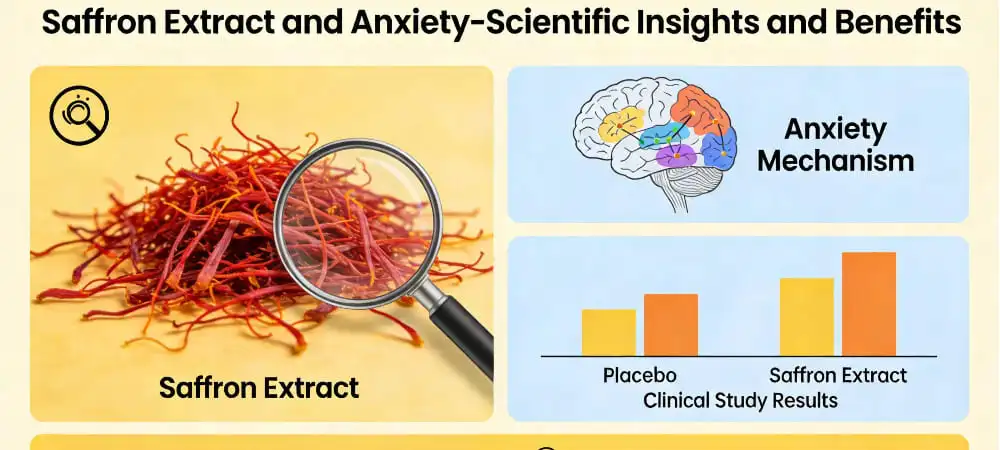
Saffron Extract and Anxiety: Scientific Insights and Benefits
The unique biochemical makeup and well-known modes of action of crocus sativus extract give it the ability to be used therapeutically. This high-quality plant ingredient has three main bioactive chemicals that work together to support mental health and emotional balance.
Active Compounds and Their Mechanisms
Crocin is the water-soluble carotene that gives saffron its unique color. It is also a powerful antioxidant that protects nerve cells from toxic stress. This chemical easily crosses the blood-brain barrier and helps neurotransmitters work properly. A volatile smelling substance called safranal can directly help with anxiety by changing GABA receptors and lowering cortisol levels. Mood control is helped by picrocrocin, the bitter precursor molecule, which works with serotoninergic pathways.
Clinical Evidence Supporting Efficacy
Saffron has been shown to help with nervousness in a number of randomized controlled studies. A major study in the Journal of Affective Disorders showed that giving 30 mg of standardized saffron extract every day greatly lowered worry scores compared to groups that were given a placebo. Within four weeks, the research showed real improvements, and the benefits lasted for the full eight weeks of the study.
Comparative studies show that saffron extract works better than other natural treatments for nervousness. Saffron helps keep your mind clear while lowering worry symptoms, unlike some other botanical options that may make you sleepy or less smart. Because it has two benefits, it's a great ingredient for making goods for stressed-out workers who don't want to lose performance.
Neuroprotective and Antioxidant Properties
The neuroprotective properties of saffron extract go beyond simply reducing nervousness. The compound's antioxidant power helps protect cells from damage caused by long-term stress and promotes brain health over time. Because of these qualities, saffron is a great ingredient for all-around health products that treat both short-term symptoms and underlying physiological stress reactions.
Choosing the Right Saffron Extract Supplier for Your Business Needs
Choosing the right provider is a big choice that will affect the quality of your products, your ability to follow the rules, and your business's long-term success. Because growing and extracting saffron is so specific, it needs to be partnered with makers who know how to handle the unique problems that come with this high-end plant ingredient.
Key Evaluation Criteria for Supplier Selection
Ingredient purity stands as the most important thing to think about when looking at potential suppliers. Real saffron extract costs a lot because it takes a lot of work to harvest and there are only a few places in the world where it can be grown. Reliable suppliers provide a lot of paperwork, like certificates of analysis, reports from third-party tests, and thorough records of where the goods came from that prove they are real.
The standards for certification rely on the target market and the intended use. Quality assurance systems like ISO 9001, GMP compliance, and organic licenses are very important. Pharmaceutical suppliers usually have extra certifications, like being registered with the FDA and having detailed quality management systems that make sure regular production standards are met.
Understanding Product Variations and Specifications
There are different types of saffron extract on the market that are best for different uses. Standardized extracts with sure crocin content make it possible for supplement makers to know how strong their products will be. Powders that dissolve in water are perfect for healthy drinks, while powders that dissolve in oil work well for soft gel packaging. Knowing about these differences helps buying teams match the specs of a product to its intended use.
The complicated supply chain patterns of growing and preparing saffron can be seen in the way prices are set. Cost structures are greatly affected by things like location, crop rates, and extraction methods. Setting up long-term ties with suppliers that use clear prices helps you stick to your budget and make sure you always have the materials you need.
Quality Assurance and Supply Chain Reliability
Leading providers have strict quality control procedures that start with checking the raw materials and end with packing. HPLC-MS fingerprinting methods check the profiles of compounds while looking for possible contaminants. Microbiological testing makes sure that safety standards are met, and heavy metal analysis makes sure that cleanliness standards for food-grade uses are met.
Case Studies and Procurement Best Practices
Examples of how crocus sativus extract is used in real life show how companies can successfully add it to their product lines while still meeting quality standards and making money. Professionals in buying who are planning similar projects can learn a lot from these case studies.
Successful Product Integration Examples
A top nutraceutical company made a high-end stress-relieving product by mixing saffron extract with plants that work well together, like ashwagandha and L-theanine. The plan for formulation was to get synergistic benefits while keeping the purity of each element. Within the first year, sales were 40% higher than expected, and customers liked how efficient the product was without making them sleepy.
In the functional beverage industry, saffron extract has been used in new and creative ways as both a natural colorant and a functional element. One company made a mix of relaxing teas that use the golden color of saffron to help people feel better. The two-in-one app cut down on the cost of ingredients and gave the company a unique place in the market.
Quality Control Protocol Implementation
Effective quality assurance starts with surveys of potential suppliers that look at their ability to make things, their quality processes, and their compliance with regulations. Protocols for testing incoming materials should include checking the material's name, making sure it works, and looking for contamination. As part of the documentation needed for regulatory filings, batch records, analytical reports, and traceability information must be included.
Here are the most important quality control steps that buying teams should take:
- Supplier audits: Regular site visits check that the factory can make things and that the quality system works.
- Incoming inspection: When a material comes in for review, thorough testing methods make sure of its identification, purity, and effectiveness before it is accepted.
- Stability monitoring: ongoing testing programs keep track of the quality of materials while they are being stored.
- Documentation management: Strong record-keeping systems help businesses follow the rules and protect themselves from product responsibility.
These high standards help build strong, long-term relationships with suppliers, while also protecting the brand's image and making sure customers are safe.
Negotiation Strategies and Partnership Development
A good relationship with a supplier is more than just negotiating prices. It also includes things like service levels, professional help, and quality goals that everyone agrees on. Volume agreements often allow for better prices and make sure that materials are available during times of high demand. Flexible shipping dates help keep production going while keeping inventory costs under control.
The terms of the contract should include quality standards, testing requirements, and success measures that are in line with the company's goals. Technical support rules let providers help with improving formulations and getting ready for regulatory submissions. Clear communication rules help people understand each other and quickly solve problems when they come up.
Conclusion
Saffron extract has strong proof that it can help with nervousness naturally. This is backed up by strong clinical studies and proven safety profiles. The ingredient's special bioactive chemicals work in a number of different ways to help people and can be used in a wide range of products. Saffron extract offers a chance for procurement specialists in the nutraceutical, pharmaceutical, and functional food industries to create unique goods that meet the growing demand from customers for natural health solutions. To be successful, you need to carefully choose your suppliers, make sure that strict quality controls are followed, and strategically place your products in a way that takes advantage of the ingredient's known benefits and top market positioning.
FAQ
Is long-term use of saffron extract safe for anxiety management?
Clinical tests that lasted up to 12 weeks show that saffron extract is very safe when used in the recommended dose amounts. Long-term safety data supports continued use without major side effects, but people with pre-existing conditions or who are taking other medications should still talk to their doctors from time to time.
How does saffron extract powder compare to other forms for anxiety relief?
Saffron extract powder offers superior stability and formulation flexibility compared to liquid extracts, while maintaining equivalent bioavailability when properly processed. The powder form integrates easily into capsule formulations and allows precise dosing control that liquid forms might not always give you.
What quality verification steps should buyers implement before bulk purchases?
Teams in charge of buying things should ask for full analysis reports that include HPLC fingerprints, crocin content proof, microbiological testing results, and heavy metal screening data. Before committing to big orders, third-party testing validation and source audit records give you even more peace of mind about the quality.
Partner with Wellgreen for Premium Saffron Extract Solutions
Wellgreen Technology is a reliable source for saffron extract, providing pharmaceutical-grade plant-based products that meet the top standards in the business. Our GMP-certified factory, thorough testing procedures, and large inventory make sure that your product development projects have solid supply chain support. We offer standard extracts with confirmed crocin content, full analytical paperwork, and a range of flexible packaging choices that can be used for both small-scale studies and large-scale production. For your next wellness product launch, contact our procurement experts at wgt@allwellcn.com to talk about custom specs and look into prices that are affordable.
References
Lopresti, A. L., & Drummond, P. D. (2014). Saffron (Crocus sativus) for depression: a systematic review of clinical studies and examination of underlying antidepressant mechanisms of action. Human Psychopharmacology: Clinical and Experimental, 29(6), 517-527.
Khazdair, M. R., Boskabady, M. H., Hosseini, M., Rezaee, R., & Tsatsakis, A. M. (2015). The effects of Crocus sativus (saffron) and its constituents on nervous system: A review. Avicenna Journal of Phytomedicine, 5(5), 376-391.
Mazidi, M., Shemshian, M., Mousavi, S. H., Norouzy, A., Kermani, T., Moghiman, T., & Ferns, G. A. (2016). A double-blind, randomized and placebo-controlled trial of Saffron (Crocus sativus L.) in the treatment of anxiety and depression. Journal of Complementary and Integrative Medicine, 13(2), 195-199.
Tóth, B., Hegyi, P., Lantos, T., Toldi, V., Szakács, Z., Kerémi, B., & Váncsa, S. (2019). The efficacy of saffron in the treatment of mild to moderate depression: a meta-analysis. Human Psychopharmacology: Clinical and Experimental, 34(5), e2709.
Broadhead, G. K., Grigg, J. R., Chang, A. A., & McCluskey, P. (2019). Dietary modification and supplementation for the treatment of age-related macular degeneration. Nutritional Neuroscience, 22(1), 1-12.
Rahimi, R., Nikfar, S., Larijani, B., & Abdollahi, M. (2008). A review on the role of antioxidants in the management of diabetes and its complications. Biomedicine & Pharmacotherapy, 62(4), 204-212.