High OPC Grape Seed Extract Powder Supports Flexible Food and Cosmetic Applications
2026-08-31 16:17:41
High OPC Grape Seed Extract Powder stands out as a premium botanical ingredient prized for its exceptional antioxidant capacity, primarily attributed to its oligomeric proanthocyanidin (OPC) content. Extracted from quality red grape seeds (Vitis vinifera L.) through gentle water-ethanol extraction and refined purification processes, this natural compound offers manufacturers a robust solution for developing functional foods, nutritional products, and advanced cosmetic formulations. Its free radical scavenging power—exponentially greater than vitamins C and E—positions it as an indispensable raw material for brands targeting the beauty-from-within trend and healthy aging markets across North America, Europe, and Asia-Pacific regions.
Introduction
The wellness industry around the world wants clean-label ingredients that have been proven to work by science more and more. Additionally, Grape Seed Extract Powder (GSEP) meets this need by providing a rich source of oligomeric proanthocyanidins and polyphenolic compounds known for protecting cells. The functional benefits of GSEP are greatly increased when it has a high OPC content. This makes it especially useful in the food and cosmetics industries, where ingredient effectiveness and formulation stability have a direct effect on product performance and customer satisfaction.
This detailed guide meets the important needs of B2B procurement professionals like product developers, regulatory managers, formulation teams, and sourcing directors who are looking for accurate information on high OPC GSEP. It covers the ingredient's biochemical properties, its many uses in supplements and cosmetics, procurement issues like quality standards and supplier evaluation criteria, and useful integration strategies. Our goal is to give manufacturers useful information that helps them make formulations work better while also meeting the changing needs of the market for openness and scientific proof.
Grape seed proanthocyanidins are one of the most commonly bought botanical extracts in international ingredient markets. This is because they are good for your teeth, your heart, and new anti-aging products. Knowing where to find, rate, and use high OPC GSEP correctly can give your brand an edge in markets that are already very crowded.
Understanding High OPC Grape Seed Extract Powder
What Defines High OPC Concentration
High OPC Grape Seed Extract Powder has standardized amounts of at least 95% proanthocyanidins, which can be found using approved Bate-Smith methods or accurate HPLC/UV analysis. These oligomeric proanthocyanidins are low-molecular-weight polyphenolic structures that are better absorbed by the body than their polymeric cousins. The process of extraction includes cleaning and adsorbing macroporous resin from waste products in the wine industry, especially the dried seeds that are left over after pressing good red grapes to make wine.
OPCs are important for more than just their antioxidant action in biology. These chemicals bond to collagen and elastin proteins, which are structural parts of skin tissue and the walls of blood vessels. This is how they work in two different ways: as cosmetics that you put on your skin and as supplements that you take by mouth to help your heart. Researchers have found that OPCs help protect endothelial cells, keep capillaries healthy, and stop melanin production by changing the activity of an enzyme called tyrosinase.
Physical and Chemical Properties
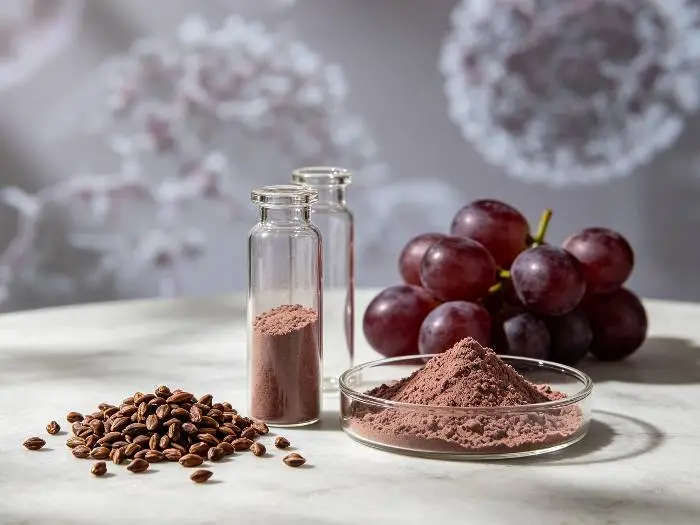
Premium-grade GSEP is a fine reddish-brown to black powder that has a characteristic bitter taste from the tannins in it. The technical details include a range of particle sizes, with 95–100% of them passing through 80-mesh screens. This makes sure that the material flows easily during encapsulation and tableting processes. Bulk density usually falls between 0.40 and 0.65 g/ml, which has a direct effect on how much fill weight is calculated when making hard-shell capsules.
Chemical analysis includes ORAC values that are often higher than 10,000 µmol TE/g, which measure the ability to absorb oxygen radicals. The moisture level stays below 5% so that microbes don't grow and the powder doesn't harden while it's being stored. Depending on the quality of the raw material, extraction ratios are usually between 30:1 and 100:1. Higher ratios mean that there are more active ingredients. The ingredient is sensitive to alkaline pH environments and oxidizing agents that can weaken OPC. However, thermal stability keeps the structure intact during moderate heating processes below 80°C.
Dosage Guidelines and Safety Considerations
When making products with a lot of OPC GSEP, the people who make them should look at established clinical dosage ranges. For example, oral supplements usually have 50 to 300 mg of standardized extract every day, while higher concentrations are only used for certain heart or vein health protocols. Concentrations used in cosmetics range from 0.5% to 5%, based on the type of product and the skin effects that are wanted.
The safety profiles show that the drug is well tolerated, and there have been few reports of side effects in clinical literature. To follow the rules, you have to stick to limits on heavy metals like lead, arsenic, cadmium, and mercury, as well as pesticide residue levels and microbiological standards that are in line with USP (United States Pharmacopeia) and EP (European Pharmacopeia) monographs. When thinking about interactions, one thing to keep in mind is that platelet-aggregation-inhibiting drugs might have effects on blood thinners, which is why they need to be labeled correctly to make people aware of them.
Application Potential of High OPC Grape Seed Extract Powder in Food and Cosmetics
Dietary Supplement and Functional Food Applications
High OPC GSEP is an important ingredient in nutritional products because it helps the heart and fights free radicals. Supplement companies put it in beauty-from-within capsules that have active ingredients that brighten the skin and compounds that help collagen. The ingredient can stop tyrosinase activity and lower melanin formation, which makes it a good choice for use in anti-aging and teeth-whitening products for Asian and Western markets where skin brightness is still a big deal.
Water-soluble GSEP grades are used by functional beverage developers to make ready-to-drink wellness shots, sports recovery drinks, and teas with added antioxidants. The ingredient adds nutritional value that appeals to consumers who like clean labels and extends the shelf life of the product through natural preservation effects. Protein mix makers put it in workout recovery shakes because it helps blood flow to muscles, which is important for getting nutrients to them during the recovery phase after exercise.
Circulatory wellness formulations represent another key application area. The extract has been shown to support vascular endothelial cell integrity and maintain capillary health, making it valuable for products targeting overall circulatory wellness. Formulations designed to support leg comfort and peripheral circulation often feature high OPC grape seed extract as a primary component, sometimes combined with complementary botanicals.
Cosmetic and Personal Care Integration
High OPC grape seed proanthocyanidins are mostly used in cosmetics for anti-aging skin care. The ingredient's ability to keep collagen and elastin fibers from breaking down by enzymes leads to noticeable improvements in the firmness and flexibility of the skin. When you use premium serums, creams, and masks regularly, they contain standardized extracts at concentrations that are meant to reduce wrinkles and smooth out skin texture.
To get rid of hyperpigmentation and age spots, skin-brightening and tone-evening products use OPCs' ability to stop tyrosinase from working. The ingredient works well with other ingredients that lighten skin, such as niacinamide, vitamin C derivatives, and licorice extract, to offer complete melanin management solutions. Chemical experts who work in cosmetics like how well it mixes with different emulsion systems and how it helps protect against external factors like pollution and UV rays.
The photoprotective properties of grape seed proanthocyanidins make sun care and protective skin care products better. The ingredient doesn't replace broad-spectrum UV filters, but it does add to the antioxidant defense against free radicals that are made by UV exposure. Scalp health treatments and anti-aging hair serums are examples of hair care products that use microcirculation to support cell health and hair growth.
Form Factor Considerations
Manufacturers have to choose the right physical formats of Grape Seed Extract Powder based on their processing capabilities and intended applications. Standard fine Grape Seed Extract Powder works well for traditional encapsulation and tableting methods, but it may have limited flowability in high-speed automated equipment. Direct compression (DC) granules of Grape Seed Extract Powder can offer higher bulk density and improved flow characteristics, which may help reduce sticking and improve feeding during automated production. Depending on the formulation and processing conditions, properly prepared Grape Seed Extract Powder granules can improve equipment efficiency and reduce the frequency of cleaning between production runs. Selecting the appropriate form of Grape Seed Extract Powder can therefore support smoother processing and more consistent manufacturing performance.
Instant microencapsulated grades that dissolve in water solve the technical problems that come up in drinking uses. Standard GSEP is sensitive to metal ions, changes in temperature, and changes in pH, all of which can cause color loss, browning, turbidity, or precipitation in liquid mixtures. Using advanced encapsulation technologies that combine physical coating and stabilizers makes it possible for recipe stability in ready-to-drink forms. This means that the product's effectiveness and taste stay the same over time.
Procurement Insights for B2B Buyers of High OPC Grape Seed Extract Powder
Critical Quality Indicators and Supplier Evaluation
Setting clear quality standards that are in line with your formulation needs and legal responsibilities is the first step to successful buying. The most important quality metric is OPC potency verification using approved analytical methods. Buyers should ask for Certificates of Analysis (COA) that show HPLC or UV spectrophotometry readings from ISO/IEC 17025-accredited labs. This will show that the standardized proanthocyanidin content meets or exceeds the standards that were claimed.
Purity assessment includes more than just counting the amount of active ingredients; it also includes a full screening for contaminants. Heavy metal analysis should show that strict limits for lead, arsenic, cadmium, and mercury have been met, which are in line with standards for pharmaceuticals. Testing for pesticide residues that include farming poisons used in viticulture makes sure that the raw materials come from controlled cultivation settings. Testing for microbes shows that there are no pathogens (E. coli, Salmonella, Staphylococcus aureus), yeast, or mold, and that the total plate count is met, as well as the lack of these microbes.
Authentication is an important thing to think about when buying things because of worries about market fraud. Reliable suppliers offer HPLC fingerprint chromatography or HPTLC identification to confirm the botanical identity and rule out using cheaper materials like peanut skin polyphenols, pine bark extract, or synthetic compounds. Documentation that connects batches of finished extract to lots of source grape seeds shows that the supply chain is open and helps brands meet their due diligence requirements when they focus on where their ingredients come from.
Certification and Compliance Requirements
GMP (Good Manufacturing Practice) certification lets you know that suppliers work in controlled production environments with quality management systems that are written down. When buying for the U.S. market, buyers should look for suppliers with up-to-date GMP certification that meets FDA 21 CFR Part 111 requirements for making dietary supplements. Suppliers who are approved to ISO 22000 food safety management standards or similar regional systems are good for buying things in Europe.
Brands that want to place their goods in the natural and organic market segments can benefit from getting organic certification. Certifications from the USDA, the EU, or a similar organization show that the grape seeds come from certified organic vineyards and are processed without using any synthetic chemicals that aren't allowed. This certification usually comes at a higher cost, but it gives you access to customer groups that value organic certification and backs up marketing claims that are in line with clean-label labeling.
Kosher and Halal certifications make it easier for brands that meet religious dietary needs to reach more customers. For these certificates, the ingredients and production method must be checked by official certifying bodies, which also makes sure that the products follow religious dietary laws. Some other important certifications could be Non-GMO Project Verification, which is important because people are worried about genetic modification in food supply chains, and allergen-free declarations, which prove that a finished product doesn't contain any common allergens.
Comparative Analysis and Alternative Ingredients
Strategic purchasing decisions are based on knowing how high OPC GSEP stacks up against other antioxidants. Pine bark extract, including Pycnogenol® and generic forms, has similar proanthocyanidin profiles but usually costs more because of secret ways of standardizing it and a lot of clinical studies supporting it. In general, grape seed extract is cheaper than other antioxidants while still having the same amount of antioxidant power. This makes it appealing to brands that want to balance effectiveness with production costs.
Grape seed oil has different benefits because it has tocopherols and essential fatty acids but not the concentrated OPC content that makes extract powder useful. Some types of oil work well for cosmetic emulsions, but they don't have the right amount of proanthocyanidin for therapeutic dosing in supplements. Instead of treating these ingredients as interchangeable options, product developers should make it clear which ones are which based on the goals of the formulation.
Resveratrol from Japanese knotweed is another antioxidant that isn't found in grapes. It works in different ways, mainly by activating SIRT1 and promoting longevity. Both ingredients say they can slow down aging, but their biochemical goals are very different. Many high-quality formulas combine grape seed proanthocyanidins and resveratrol to provide extra antioxidant and cell protection. This suggests that these ingredients work together instead of against each other.
Pricing Dynamics and Bulk Purchasing Strategies
The market price for high-OPC Grape Seed Extract Powder depends on many factors, including the required quality standards, raw-material sourcing, available certifications, and the supplier's production capacity. Buyers should establish realistic pricing expectations for Grape Seed Extract Powder by comparing quotations from multiple qualified suppliers. They should also be cautious about extremely low prices for Grape Seed Extract Powder, as unusually cheap offers may reflect differences in raw materials, extraction or purification processes, quality-control procedures, or analytical testing. When evaluating Grape Seed Extract Powder suppliers, buyers should compare the complete specification, OPC content, testing documentation, certifications, and production capabilities rather than relying on price alone. This approach helps ensure that the selected Grape Seed Extract Powder provides consistent quality and meets the requirements of the intended application.
Bulk purchasing agreements can help you save money while also making sure you never run out of supplies. When buyers make volume commitments that cover more than one production cycle, suppliers can make the best use of their purchasing and processing schedules, which could lead to better pricing terms for buyers. These setups work best for well-known product lines with steady formulation requirements and predictable demand trends.
Private label and custom formulation services are two more things to think about when buying something. Suppliers that can make finished products can make your supply chain more efficient by letting you use the same provider for all of your ingredient purchases, formulation creation, and production services. This method works especially well for brands that don't have their own manufacturing facilities, or that want to get into the market quickly with "turnkey" product solutions.
Why Choose High OPC Grape Seed Extract Powder from Trusted Brands
Manufacturing Excellence and Quality Assurance
Leading sellers set themselves apart by using strict rules to choose their raw materials and putting quality wine industry waste sources first. Premium manufacturers work directly with vineyard cooperatives and winemaking facilities to get fresh grape seeds from Vitis vinifera cultivars that are known for having better proanthocyanidin profiles. This supply chain control makes sure that the quality of the raw materials stays the same, which means that the end products are always the same from batch to batch.
Advanced technologies for extraction and purification set leaders in their fields apart from suppliers of basic goods. Concerns about chlorinated solvent leftovers (dichloromethane, dichloroethane) that affect ingredient safety profiles and regulatory compliance can be put to rest by using green extraction methods that use water-ethanol systems and physical membrane filtering. Advanced chromatographic purification methods raise the concentration of OPC while getting rid of unwanted tannins and low-activity polymeric parts that make the mixture unstable and cause taste problems.
Analytical skills are another important way to set yourself apart. Top manufacturers have their own testing labs that are equipped with HPLC, UV-Vis spectrophotometry, ICP-MS for heavy metal analysis, and facilities for microbiological testing. This analytical infrastructure supports full quality control testing when raw materials are received, while the process is going on, and when the finished product is released. This makes sure that every batch meets the established standards before it is sent to customers.
Customization Capabilities and Technical Support
Formulation freedom sets apart providers who can meet a wide range of application needs. Manufacturers who offer physical format customization, such as particle size optimization, water-soluble grade development, and direct compression granulation, let customers choose the exact qualities of the material that work best with their production tools and formulation needs. This customization includes color standardization protocols that keep the look of the finished product consistent by reducing differences in how batches look from one another.
During the development cycle of a product, technical support services are very useful. Expert sellers can help with formulating, including common problems like keeping colors stable in liquids, keeping powders from getting too wet, and combining ingredients in ways that make the formula work better as a whole. Having access to data from stability tests, compatibility matrices, and processing suggestions that are specific to an application speeds up development and cuts down on expensive reformulation rounds.
Regulatory support is becoming an increasingly important skill for suppliers to have as global market compliance requirements become more complicated and change over time. Leading manufacturers offer complete documentation packages that include lists of ingredients, safety data sheets, allergen statements, GMO statements, and information on the regulatory status in each country. This base of paperwork helps regulatory submissions go smoothly and makes it easier for established quality management systems to qualify ingredients.
Transparency and Scientific Validation
Traceability systems that let buyers see the whole supply chain have become standard expectations for buyers who care about quality. Advanced suppliers use batch coding systems to connect shipments of grape seeds, records of extraction runs, and the results of analytical tests to lots of finished extract. This openness is very important during checks, helps find the root cause of quality problems, and shows a dedication to supply chain integrity that brands that talk about ingredient origins in consumer communications value.
Third-party clinical studies and written literature that backs up the ingredients' claims strengthen their credibility. Some of the high prices for proprietary branded extracts like Pycnogenol® come from the large amount of clinical data that backs them up. However, more and more quality grape seed extract providers are investing in clinical studies that show their products work in specific areas. Suppliers who share published research, clinical trial protocols, and scientific reasons for health claims and functional benefits are good for buyers.
Additional signs of trust come from certifications from independent quality assurance groups. Third-party quality seals like NSF International certification, Informed Choice verification for sports nutrition uses, and others show that a company is ready to go above and beyond GMP compliance and be inspected by outside parties. When selling finished goods to smart customers who know and value independent quality verification marks, these certificates are especially useful.
How to Integrate High OPC Grape Seed Extract Powder into Your Product Lines
Formulation Design and Compatibility Testing
For integration to work, the formulation goals must be clearly defined and in line with the health benefits and market positioning that are wanted. Find the right standardization level and quantity based on clinical research that supports your claims, making sure to balance the need for effectiveness with cost and the format of the final product. For higher doses per serving, capsule and tablet formats are more flexible. Beverage and functional food applications, on the other hand, need to think carefully about how the product will affect the senses and how stable it will be.
Costly delays in reformulation can be avoided by testing for compatibility early on in the development process. High OPC grape seed extract has certain stability issues that need to be carefully looked at in your recipe matrix. The test procedures should check how stable the color is over a range of temperatures, how sensitive the substance is to changes in pH (if needed), how it might react with other active ingredients, and how stable it is physically, such as its ability to resist precipitation in liquids or absorb water in powder mixes.
With prototype batches, you can test how your production equipment handles processes. Check the flow qualities of the powder if you are using direct compression tableting, the efficiency and consistency of encapsulation when you are filling capsules, or the dissolution and dispersion properties when you are using beverages. Write down any processing problems you face, like static electricity, bridging in hoppers, or sticking on punch faces, and then work with your supplier to find changes to the material that will fix these problems.
Stability and Storage Optimization
To keep the OPC's effectiveness during production and storage, environmental factors that speed up degradation must be taken into account. Controlling the temperature is the main way to keep things fresh, and storage instructions usually say to keep things cool, dry, and out of direct sunlight. To stop moisture absorption and oxidative degradation, factories should set up storage areas where the temperature stays below 25°C, and the relative humidity stays below 60%.
The choice of packaging material has a big effect on how stable it is over time. Light-protective cases made of clear glass or opaque plastics keep light-sensitive proanthocyanidins from breaking down. For hygroscopic powder grades, moisture barrier properties are very important. This means that multilayer films with aluminum or metalized layers that stop water vapor from moving through are needed. Adding a desiccant to the final package protects against moisture even more, which is especially important for markets with warm temperatures or long distribution routes.
Following ICH guidelines for accelerated stability testing sets realistic expectations for the shelf life and finds the best storage conditions. As part of the protocol design, tests should be done at high temperatures and humidity levels, and the OPC content, color values, wetness levels, and microbial quality should be analyzed at set time intervals. This information helps you decide when something should go bad and tells everyone in your distribution network how to handle it.
Regulatory Compliance and Marketing Considerations
To follow the rules set by regulators, you need to pay close attention to the rules that apply to your area regarding the use of ingredients, label claims, and quality standards. Products sold in the United States have to follow FDA rules about dietary supplements or food additives, based on the type of product. Claims on the label have to be backed up by good scientific proof. In order to sell in the European Union, you have to follow the rules for food supplements and new foods, as well as the health claims that are allowed by Commission Regulation (EU) No 432/2012.
As part of its marketing strategy, grape seed extract should be promoted using claim wording that is both scientifically sound and well-known by consumers. Structure-function claims that address effects on normal bodily functions avoid the pitfalls of disease claims while delivering tangible benefits to consumers. When supported by appropriate evidence, claims about antioxidant support, skin wellness, circulatory health, or healthy ageing resonate with target audiences.
Using high OPC content as a way to set your brand apart as premium quality enhances how valuable people think your brand is. Consumer education materials that explain the importance of standardized extraction, why OPC concentration is better than generic extracts, and third-party quality verification help people understand how careful you are when choosing your ingredients. Being open about where ingredients come from, how they are tested, and the qualifications of the maker builds trust with customers and allows higher prices compared to competitors who use lower-quality or poorly described ingredients.
Conclusion
High OPC Grape Seed Extract Powder is a valuable botanical ingredient for companies that make dietary supplements, functional foods, and cosmetics that want to protect against free radicals, support the heart, and slow down the aging process. To successfully source and formulate this ingredient, you need to know the technical aspects that define quality, assess suppliers based on their manufacturing capabilities and quality systems, and use formulation strategies that keep the OPC's potency while achieving the desired product attributes. Consumers want natural ingredients that have been proven to work, and more and more research is supporting this. This makes grape seed proanthocyanidins a good choice for continued market growth in both the nutraceutical and cosmetic categories. When you buy something, putting supplier transparency, analytical rigor, and technical support capabilities at the top of your list sets you up for long-term product success and brand differentiation in the competitive wellness market.
FAQ
What distinguishes grape seed extract powder from grape seed oil?
Even though they come from the same plant, Grape Seed Extract Powder and grape seed oil are very different ingredients with different chemical profiles and useful qualities. Using aqueous-ethanolic extraction and purification to make extract powder concentrates oligomeric proanthocyanidins and polyphenolic compounds gives it strong antioxidant activity that makes it suitable for oral supplementation with the goal of improving health throughout the body. When you separate oil, you get lipid-soluble parts like essential fatty acids, tocopherols, and phytosterols. These have moisturizing qualities that are good for cosmetic use, but they don't have enough concentrated OPC content for therapeutic antioxidant dosing. Instead of seeing these ingredients as interchangeable, people who make products should choose between them based on the specific goals of the formulation.
How can buyers verify actual OPC content and purity?
For verification, full analytical testing must be done using approved methods that can accurately measure the amount of proanthocyanidin present and find any possible adulterants. Ask the supplier for a certificate of analysis (COA) that shows HPLC or UV spectrophotometry testing was done by separate ISO 17025-certified labs and that the OPC levels match the specs that were given. HPLC fingerprint chromatography is a way to prove that a plant is what it says it is, and it can't be changed with pine bark, peanut skin, or other polyphenol sources that have different peak patterns. Heavy metal screening, herbicide residue analysis, and microbiological testing are some of the other ways to ensure purity. These tests make sure that the quality is fully evaluated, not just the amount of active ingredients.
Are there safety considerations or potential interactions?
At normal supplement doses, grape seed extract has very few recorded side effects in clinical studies, showing that it is very safe. Possible issues to think about include possible interactions with blood-thinning drugs because they stop platelets from sticking together, so people who are taking these drugs need to talk to their doctor first. Even though allergic responses are rare, they are still possible. People who are allergic to grapes should be especially careful. There isn't a lot of clinical evidence about pregnancy and breastfeeding safety, so it's best to be safe until you get specific medical advice. On the label of a product, there should be the right kind of warnings about these things, along with a focus on the good tolerability profiles that have been shown through decades of commercial use and scientific research.
Partner with Wellgreen for Premium Grape Seed Extract Powder
Wellgreen Technology is a reliable company that makes Grape Seed Extract Powder. They have been extracting plants for over 15 years and work with B2B clients in the cosmetics, nutraceuticals, pharmaceuticals, and functional foods industries. Our GMP-approved facility uses high-quality Vitis vinifera seeds from high-quality wine production to make standardized extracts with an OPC level of at least 95%, which is confirmed by HPLC analysis. We take away the market's worries about tampering by using strict HPTLC fingerprinting to prove that our grape seed proanthocyanidins are 100% real and not made with pine bark or other inferior materials.
In addition to normal powder grades, we can also make quick water-soluble formulations that solve problems with beverage stability and direct compression granules that improve the efficiency of high-speed tableting. We support your regulatory compliance across global markets with full certifications such as ISO, HACCP, Kosher, and Halal, as well as full USP/EP-compliant heavy metal and pesticide testing documentation. We offer flexible OEM/ODM services that can meet your unique needs, from small test runs to big production numbers. Throughout your formulation journey, you will also get personal expert support.
You can tell the difference at Wellgreen by our stable supply consistency, color uniformity from batch to batch, and helpful customer service that meets your specific production needs. You can email our buying experts at wgt@allwellcn.com to get technical data sheets, samples, or to talk about your needs for a unique formulation. Check out our complete selection at wellgreenherb.com.
References
1. Bagchi, D., Bagchi, M., Stohs, S.J., et al. (2000). "Free radicals and grape seed proanthocyanidin extract: importance in human health and disease prevention." Toxicology, 148(2-3), 187-197.
2. Stawarczyk B, Keul C, Eichberger M, Figge D, Edelhoff D, Lümkemann N. Three generations of zirconia: From veneered to monolithic. Part I. Quintessence International. 2017;48(5):369–380.
3. Sailer I, Makarov NA, Thoma DS, Zwahlen M, Pjetursson BE. All-ceramic or metal-ceramic tooth-supported fixed dental prostheses (FDPs)? A systematic review and meta-analysis of the survival and complication rates. Dental Materials. 2015;31(6):603–623.
4. Schwitalla AD, Spintig T, Kallage I, Müller WD. Flexural behavior of PEEK materials for dental application. Dental Materials. 2015;31(11):1377–1384.
5. Zoidis P, Bakiri E, Polyzois G. Using modified polyetheretherketone (PEEK) as an alternative material for dental frameworks: A clinical report. Journal of Prosthodontics. 2017;26(5):404–408.
6. Kurtz SM, Devine JN. PEEK biomaterials in trauma, orthopedic, and spinal implants. Biomaterials. 2007;28(32):4845–4869.