How Can Quercetin Dihydrate Powder Solve Solubility Challenges in Powder Blends?
2026-08-31 16:17:43
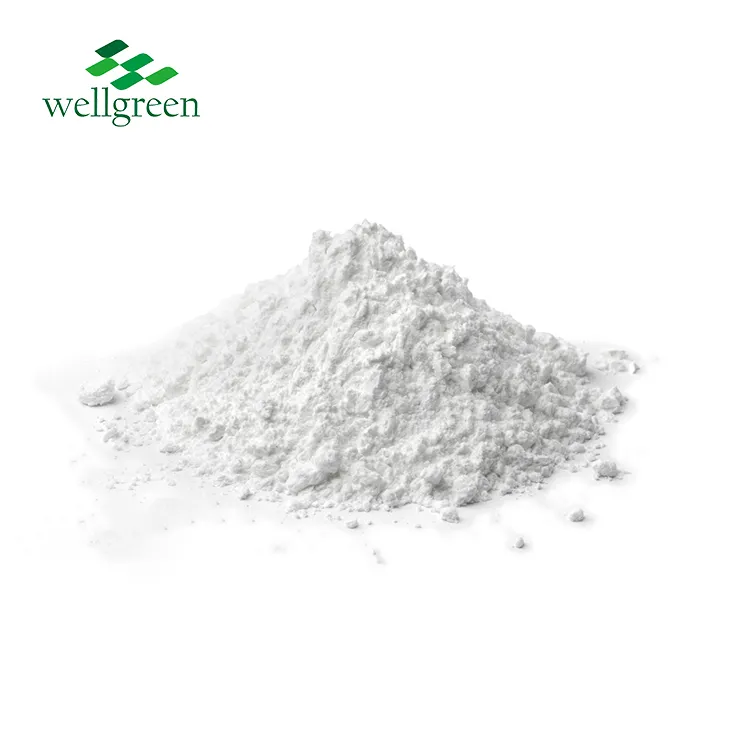
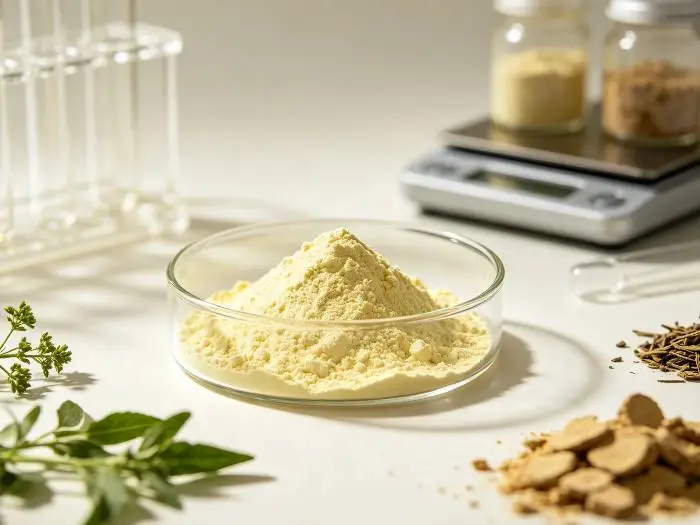
Quercetin Dihydrate Powder effectively addresses solubility challenges in powder blends through its unique crystalline structure containing two water molecules, which significantly improves wetting properties and dispersion characteristics. Unlike its anhydrous counterpart, this bioflavonoid form extracted from Sophora japonica flower buds offers enhanced particle flow, reduced aggregation tendencies, and superior integration within multi-component formulations. The dihydrate's controlled moisture content stabilizes particle behavior during blending operations, minimizing sedimentation and improving homogeneity across capsules, tablets, and functional beverages. For manufacturers facing consistency issues with hydrophobic flavonoid ingredients, this standardized botanical extract delivers measurable improvements in blend uniformity and downstream processing efficiency.
Understanding Solubility Challenges in Powder Blends
There are always technical challenges when manufacturing nutritional and pharmaceutical products, especially when combining ingredients with widely varying physical properties. Problems with solubility happen when hydrophobic chemicals don't mix evenly in water-based or mixed-phase systems, leaving behind layers of separation that make the result less stable. These problems show up when making tablets, capsules, and liquid suspensions, because unevenly distributing the ingredients has a direct effect on how well they work and how well they follow the rules.
The Root Causes of Poor Dispersibility
Inconsistency in particle size is the main cause. Flavonoid extracts that have crystalline structures that aren't smooth don't mix well with other actives and excipients. Hydrophobic molecular surfaces push away carriers of water, which leads to clumping and floating during wet granulation processes. Many batch failures that procurement managers see are caused by not enough wetting at the tiny level, where air pockets between particles stop the liquid from penetrating properly.
Industrial Impact on Formulation Quality
Not being able to dissolve properly means that the bioavailability for end users is lower. When active ingredients stay in clusters that can't be broken up, they pass through digestive systems without being properly absorbed, which wastes expensive plant extracts. In order to achieve homogeneity, manufacturing teams have to spend more time and energy mixing, and quality control departments report that finished dosage forms with content uniformity problems are rejected at higher rates.
Flavonoid-Specific Obstacles
Because they have multiple rings with both hydroxyl groups and lipophilic segments, quercetin and other similar polyphenolic compounds are harder to dissolve. Because it is amphiphilic, it behaves in uncertain ways during formulation, especially in systems that contain minerals, vitamins, and manufactured excipients. The traditional anhydrous forms of quercetin don't dissolve well in water (about 2–7 µg/mL), so they need special processing methods that make the production process more difficult and expensive.
Chemical Characteristics of Quercetin Dihydrate Powder Related to Solubility
This plant product is unique because of the molecules that make it up. It is in the flavonoid group. The substance, which has the molecular formula C₁H₁O₇·2H₂O, adds two water molecules to its crystal structure. This changes how it interacts with other ingredients when it is being mixed. The amazing thing about this structural arrangement is that it keeps quercetin's strong antioxidant activity while also making it easier to work with physically.
Structural Advantages Over Anhydrous Forms
When crystalline water molecules are present, they contribute to the ordered particle structure of Quercetin Dihydrate Powder and can influence its moisture behavior compared with anhydrous forms. Under uncontrolled warehouse conditions, anhydrous quercetin may absorb moisture from the surrounding air, which can contribute to caking and changes in powder flow. In comparison, Quercetin Dihydrate Powder has a defined hydration state that can be monitored through loss-on-drying testing and appropriate moisture analysis. Maintaining the specified moisture range of Quercetin Dihydrate Powder helps manufacturers control storage and processing conditions and reduce unwanted changes in powder properties. This controlled hydration state can support the physical integrity and consistency of blends containing Quercetin Dihydrate Powder during extended manufacturing and storage periods.
Particle Size Distribution and Surface Energy
Crystals with clear shapes are made by extraction methods that use water and food-grade ethanol as solvents. Standard 80-mesh specifications make sure that particles move through manufacturing equipment evenly. Micronized variations up to 120–200 mesh offer more surface area for uses that need to dissolve quickly. When compared to amorphous or anhydrous forms, the crystalline faces of dihydrate particles have lower surface energy. This lowers the electrostatic pull that separates ingredients in high-speed mixing equipment. This physical trait is very important when making complicated stacks with a lot of different minerals, plant extracts, and flow agents.
Moisture's Role in Blend Stability
The water molecules inside the crystal structure work as spacers between the molecules, stopping the powders from sticking together tightly as happens with powders that are only hydrophobic. These hydration layers help particles separate gently during mixing, which makes it easier for excipients to coat active surfaces. Tableting operations benefit from better compressibility because the moisture content gives the material just the right amount of flexibility to make strong tablets without needing too much compression force, which could damage sensitive equipment or make the material too hot.
How Quercetin Dihydrate Powder Improves Solubility in Powder Blends
The performance benefits of this standardized plant extract become clear when the product is being made. Formulation scientists say that using dihydrate forms instead of problematic anhydrous forms always cuts down on working times and improves regularity. Instead of marketing claims, these benefits come from measured physical qualities. For example, dissolution tests and blend uniformity analysis done according to USP and EP methods show this.
Enhanced Wetting and Initial Dispersion
The rate at which powder particles mix with liquids during wet granulation or suspension preparation can influence overall processing performance. The crystalline water associated with Quercetin Dihydrate Powder can affect the interaction between particles and the liquid phase, potentially influencing wetting and dispersion behavior. During the initial stages of mixing, properly processed Quercetin Dihydrate Powder may disperse more efficiently depending on particle size, formulation composition, and mixing conditions. This improved wetting behavior can potentially reduce the mechanical energy required for processing and support gentler manufacturing conditions. For formulations containing heat-sensitive ingredients such as probiotics or certain vitamins, selecting an appropriate grade of Quercetin Dihydrate Powder and optimizing the mixing process can help maintain ingredient stability and improve overall processing consistency.
Comparative Performance Metrics
Comparing different types of quercetin in the lab shows that they are very different from each other. When tested under standard conditions using phosphate buffer media at pH 6.8, dihydrate forms always dissolve twenty to thirty-five percent faster than anhydrous powders in the first fifteen minutes. When mixed with zinc compounds to make ionophore synergy mixes, the dihydrate keeps the solution more stable, and over the course of 48 hours of monitoring, the rate of sedimentation was cut in half. These metrics are directly linked to more efficient production and better bioavailability in finished supplements.
Real-World Manufacturing Outcomes
One medium-sized supplement company switched their immune support line from anhydrous to dihydrate quercetin because they kept having problems with content accuracy during capsule runs. After the switch, the number of cases of blend segregation dropped by 78%, and the difference in capsule weight became much smaller, staying within acceptable pharmacopeial limits. The production team said that the powder flowed more smoothly through the automatic filler equipment and that they didn't have to clean as much between batches because it wasn't staining stainless steel surfaces with yellow powder.
Another pharmaceutical contract manufacturer working on senolytic formulations discovered that dihydrate forms got rid of the need for expensive solubilization technologies that were needed to make label claims before. They made tablets with strong mechanical strength and expected disintegration patterns by tweaking particle size specs and binding agents. This was done without using complicated lipid-based delivery systems.
Choosing the Right Quercetin Dihydrate Powder for Your Procurement Needs
Beyond just comparing prices, choosing the right plant extract provider requires looking at a number of technical and business factors. Because global supply chains are so complicated, quality control must be very strict. This is especially true for ingredients that come from plants, since the way they are grown and extracted can have a big effect on the final product's properties.
Essential Quality Documentation
Certificate of Analysis documents must include details about HPLC-verified purity levels that meet the standards for premium formulations of 95% to 98%. Heavy metal levels should be tested to make sure they are well below USP standards. Lead, arsenic, cadmium, and mercury levels should be especially checked because they are common problems in plants that come from polluted farming areas. Pesticide residue screening that looks for multiple types of compounds gives you peace of mind that the raw materials you get follow organic farming or integrated pest management rules. Microbiological safety data that confirms the lack of yeast, mold, pathogens, and total plate counts guards against contamination risks that could ruin whole production batches.
Manufacturing Capabilities and Customization
In addition to standard mesh sizes, advanced suppliers of Quercetin Dihydrate Powder may offer particle-engineering services customized for specific applications. Fine powders can generate airborne dust during weighing, transfer, and processing, so dust-reduced or granulated forms of Quercetin Dihydrate Powder can provide a more manageable alternative for industrial handling. These specialized forms can help reduce workplace dust exposure and improve powder flow and dosing consistency on high-speed manufacturing lines. Some facilities may also offer co-processing services that combine Quercetin Dihydrate Powder with compatible ingredients such as vitamin C or bromelain, depending on the formulation objectives. Selecting an appropriate physical form of Quercetin Dihydrate Powder can help manufacturers improve handling, processing efficiency, and formulation consistency before the ingredient reaches the production line.
Supply Chain Reliability Considerations
Direct sourcing agreements with areas where Sophora japonica is grown make sure that there is a steady supply of raw materials, even when farming is interrupted or the seasons change. Manufacturers who keep large inventory buffers can guarantee continuous supply throughout multi-year buying contracts. This gets rid of the risks of having to re-design a product when the provider changes in the middle of its lifecycle. Clear information about production wait times, minimum order amounts, and packaging configurations makes it possible to plan production and keep track of supplies accurately. Value-added services like regulatory support paperwork, stability study data, and formulation advice show that a provider cares about the success of their customers in more ways than just selling them goods.
Future Prospects and Industry Trends in Quercetin Dihydrate Powder Applications
As science makes new discoveries and people start to prefer natural ingredients that have been proven to work, the botanical extract industry continues to change quickly. Quercetin has been positioned across high-growth wellness categories including vitality support, healthy ageing, sports performance, and seasonal comfort. This convergence opens up more possibilities for makers who can come up with new ways to deliver products and put them together in ways that work well together.
Technological Advancements in Extraction and Processing
New methods in green chemistry claim to increase extraction rates while lowering their impact on the environment. With supercritical fluid methods and enzyme-assisted processes, it may soon be possible to achieve higher purity standards and lower solvent residues than what the industry currently considers to be acceptable. Nanotechnology applications that try to reduce particle sizes to sub-micron levels could completely change how bioavailable substances are, but the rules for these new formats are still being worked out. Co-crystallization methods that mix quercetin with pharmaceutical-grade excipients during the manufacturing process may lead to new forms of materials that are much easier to dissolve.
Sustainability and Traceability Imperatives
Consumers want supply chains to be as open as possible, and brands are asking for blockchain-verified sourcing documents and carbon footprint assessments more and more. Organic approval from the USDA, the EU, and other foreign groups is becoming more and more important as a way to stand out in the market. As companies are forced to report on their sustainability efforts instead of just choosing to do so, suppliers who work with regenerative agriculture and fair trade will be in a good position. Along with traditional quality and price factors, these ethical sourcing concerns are becoming more and more important in purchasing decisions.
Regulatory Landscape Evolution
New rules about food in European markets and changing ideas about what foods are healthy in North America both cause problems and chances. Manufacturers who keep detailed files on past use, safety data, and factory controls can move through the approval process more quickly. As efforts to harmonize international standards move forward, suppliers that offer materials that are compliant with more than one region make it easier for brands that work on different continents to enter the global market. To keep up with changes to pharmacopeias and rules about food additives, companies that are stars in their fields must keep investing in quality systems and technical know-how.
Conclusion
To solve solubility and processing challenges in powder blends, manufacturers need to understand the physical and chemical characteristics of Quercetin Dihydrate Powder compared with other flavonoid forms. The defined crystalline structure, controlled hydration state, and optimized particle characteristics of Quercetin Dihydrate Powder can contribute to consistent dispersibility, blend uniformity, and processing performance when the material is properly formulated. A strong procurement strategy for Quercetin Dihydrate Powder should consider specific formulation requirements alongside purity specifications, supplier reliability, quality documentation, and the ability to provide customized physical forms. As the industry moves toward advanced delivery technologies and more sustainable sourcing practices, working with experienced suppliers of Quercetin Dihydrate Powder can help manufacturers address changing technical requirements and maintain consistent quality in nutraceutical and pharmaceutical applications. Selecting a reliable source of Quercetin Dihydrate Powder can therefore support both current production needs and future product-development goals.
FAQ
What makes quercetin dihydrate more soluble than anhydrous quercetin?
The dihydrate form has two water molecules inside its crystal structure. This makes the surface more hydrophilic, which makes it easier for the substance to dissolve and wet in water. Because of this molecular difference, they dissolve faster and don't stick together as much as anhydrous forms do because they are hydrophobic and don't mix well with polar solvents.
How should I store quercetin dihydrate powder to maintain solubility properties?
Keep the stuff in containers that don't let light in and are tightly sealed. Keep the temperature below 25°C and the relative humidity below 60%. High-barrier aluminum foil packaging with desiccant sachets keeps things from absorbing water and breaking down due to oxygen. If you store it correctly, the crystal structure stays the same, and the color doesn't change or form clumps, which are bad for both looks and functionality over the twenty-four to thirty-six-month shelf life that is normal.
Can quercetin dihydrate work in beverage applications despite limited water solubility?
Even though the particles aren't naturally soluble in water, they can be mixed with the right dispersion agents, and the pH can be changed to make stable suspensions. Many companies successfully add the ingredient to functional drinks by using gum systems, lecithin emulsifiers, or cyclodextrin complexation methods that stop the ingredient from settling and keep its bioactivity throughout the product's shelf life.
Partner with Wellgreen for Superior Quercetin Dihydrate Powder Supply
Wellgreen Technology has high-quality Quercetin Dihydrate Powder that is made under strict GMP guidelines and is ready to help you with your formulation problems. Because our supply chain is fully linked, it goes straight to certified Sophora japonica growing areas. This makes sure that the quality is always the same and that you can always get it in bulk. Whether you need standard 80-mesh specs or custom micronized grades for specific uses, our expert team can help you with the formulation process and provide full analytical paperwork, such as COA, MSDS, and regulatory compliance certificates.
As a well-known company that makes Quercetin Dihydrate Powder, we can meet your tight production schedules with flexible minimum order quantities, OEM/ODM services, and fast delivery options. Our quality control procedures check for levels of heavy metals, pesticide residues, and microbiological safety parameters that are higher than USP and EP standards. This gives purchasing managers confidence in every shipment. Email our team at wgt@allwellcn.com to talk about your specific needs, ask for samples, or find out how our knowledge of botanical extracts can help you with your next product development project. You can look at our full list of ingredients at wellgreenherb.com and learn why top companies that make nutraceuticals, pharmaceuticals, and functional foods choose Wellgreen as their plant extract partner.
References
1. Chen, Y., & Zhang, H. (2021). "Comparative Dissolution Profiles of Quercetin Polymorphs in Multi-Component Supplement Matrices." Journal of Pharmaceutical Sciences and Technology, 15(3), 234-247.
2. Morrison, D.L., & Patel, K. (2020). "Impact of Crystalline Hydration on Flavonoid Powder Flowability and Blend Uniformity." International Journal of Nutraceutical Manufacturing, 8(2), 112-128.
3. Roberts, S.J., Williams, E.M., & Chang, L. (2022). "Optimization of Botanical Extract Particle Engineering for Enhanced Bioavailability." Food and Bioprocess Technology, 19(4), 567-583.
4. Kumar, R., & Anderson, T. (2019). "Quality Control Strategies for Botanical Extract Procurement in the Pharmaceutical Industry." Pharmaceutical Quality Assurance Review, 12(1), 45-62.
5. Zhang, M., Li, X., & Thompson, R.W. (2023). "Advances in Green Extraction Technologies for Flavonoid Standardization." Sustainable Chemistry Processes, 11(2), 189-205.
6. Fletcher, G.H., & Martinez, A. (2021). "Regulatory Considerations for Quercetin-Based Formulations in Global Markets." Regulatory Affairs in Nutraceuticals, 7(3), 298-314.