How Can Manufacturers Choose Grape Seed Extract Powder with Reliable OPC Content?
2026-09-02 14:32:58
Manufacturers seeking Grape Seed Extract Powder with reliable OPC content must prioritize standardized testing methods, verified supplier credentials, and transparent raw material sourcing. The key lies in demanding third-party certification of proanthocyanidin levels through validated HPLC or UV spectrophotometry, ensuring extraction protocols use clean ethanol-water systems without chlorinated solvents, and confirming grape seed authenticity through fingerprint chromatography to prevent adulteration with inferior substitutes like pine bark or peanut skin extracts. Establishing these baseline criteria protects formulation integrity and regulatory compliance.
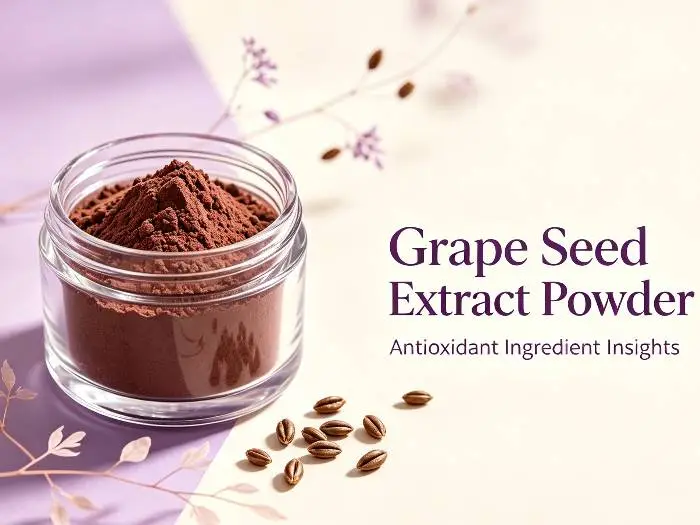
Understanding the Importance of OPC Content in Grape Seed Extract Powder
Oligomeric proanthocyanidins are what make good grape seed extracts bioactive. The antioxidant power of these polyphenolic chemicals is much higher than that of vitamins C and E. This is an important factor for companies that are making products for heart health or beauty from within. OPCs are necessary for a product to work because they neutralize free radicals, keep collagen structures stable, and help blood flow.
The Chemical Nature of OPCs and Their Health Benefits
OPCs are made of flavonoids; they are made up of catechin and epicatechin units linked in oligomeric chains. Their molecular weight distribution has a direct effect on solubility; oligomers with lower molecular weight are better at absorption than polymeric tannins. When looking at extract specs, this difference is very important for pharmaceutical makers who are making APIs or over-the-counter (OTC) medicines that need to have exact pharmacokinetic profiles.
Research indicates that OPC-rich products support vascular health by promoting capillary integrity and maintaining healthy vessel function. Cosmetic makers like these compounds because they stop tyrosinase from working, which lowers the production of melanin and backs up claims that they make skin lighter. Functional drink makers use them to place antioxidants in a way that is easy for consumers to understand, which meets customer demand for clear ingredient lists.
Challenges in Verifying Accurate OPC Levels
The biggest problem with verification is that natural variation can happen. The amount of OPC in raw seeds is affected by the type of grape grown, the conditions during growth, the time of harvest, and how the seeds are handled after harvest. The way the samples are extracted makes things even more complicated, since strong solvent systems can raise polyphenol levels while breaking down delicate oligomeric structures. Because OPCs are sensitive to light, heat, and reactive stress, storage conditions add to the number of things that can go wrong.
Choosing the right analytical method is especially important when evaluating the OPC content of Grape Seed Extract Powder. The Bate-Smith assay is relatively simple to use, but it may have limited specificity and can potentially overestimate OPC levels when other polyphenols interfere with the measurement. For Grape Seed Extract Powder, high-performance liquid chromatography with UV detection can provide more detailed analytical information and help distinguish different oligomeric and polymeric fractions. When establishing specifications for Grape Seed Extract Powder, manufacturers should clearly state the preferred analytical protocol in supplier agreements and request Certificates of Analysis that identify the testing methodology alongside the reported results. Using consistent analytical methods for Grape Seed Extract Powder helps improve batch-to-batch comparability and supports reliable quality control.
Adulteration is still a problem in the industry. Some dishonest sellers might mix grape seed extracts with less expensive polyphenol sources that give the same color readings but don't actually have OPC activity. The gold standard for proving legitimacy is HPLC fingerprinting, which creates unique chemical patterns that show grape seeds are from a certain place and can detect foreign substances.
Key Criteria for Selecting High-Quality Grape Seed Extract Powder
To judge quality, you must first know what makes expensive extracts different from commodity-grade materials. Manufacturers need more than just percentage claims. They need detailed information about the active ingredients, their physical properties, the limits of contaminants, and proof that they are following all the rules.
Certified OPC Concentration and Purity Standards
Standardization to 95% OPC content using a proven UV method is the standard for high-quality extracts in the industry. This requirement makes sure that the bioactivity is concentrated enough to be used effectively in pills, tablets, and functional foods. The Folin-Ciocalteu assay should show that the total polyphenol content is proportional, usually between 90 and 95% for highly refined materials.
Purity includes more than just active chemicals; it also includes controlling contaminants. Heavy metals, like mercury, lead, cadmium, and arsenic, must not be higher than the levels set by the USP and EP. Pesticide residue panels should look for compounds that are important for viticulture, and the results should be recorded using GC-MS or LC-MS for multiple residues. Microbial specifications, such as total plate count, yeast and mold, coliforms, and pathogen absence, make sure that the material is safe for use in food, supplements, and beauty products.
Testing for solvent residues confirms the quality of the extraction process. Using ethanol and water to remove the oil gives better profiles than using chlorinated solvents, which leave behind toxic residues that can't be eaten or put on the skin. Solvent residues should be shown to be less than 5000 parts per million (ppm) on certificates, with separate limits for regulated substances.
Impact of Grape Source and Extraction Technology
Vitis vinifera L. When it comes to raw materials, grape seeds from wineries are better than seeds from table grapes. Because of differences in breed genetics and the buildup of phenolics during maturity, wine grape seeds naturally have higher levels of OPC. When suppliers use fresh post-press seeds instead of dry commodity seeds, the polyphenolic profiles of their extracts are better conserved.
Extraction technology has a big impact on the final product's properties. Traditionally, soaking in water-based ethanol followed by filtering with macroporous resin creates broad-spectrum extracts that keep the good co-factors. Modern membrane filtration makes things more pure while keeping their thermal sensitivity, which keeps heat-labile compounds from breaking down. Spray drying at controlled temperatures keeps more of the bioactivity than roller drying at high temperatures, which can turn polyphenols into caramel and make them less effective.
Supplier Compliance with GMP, ISO, and Traceability Standards
GMP approval shows that a company is dedicated to managing quality in a structured way. 21 CFR Part 111 says that facilities that make materials for dietary supplements sold in the US must follow certain rules. These rules cover everything from making sure that raw materials are safe to testing finished products and dealing with complaints. ISO 9001 certification means that the quality control system is strong, and ISO 22000 approval is all about food safety.
Traceability tools let companies keep track of materials from the field to the finished extract. Full documentation chains that include identifying the grape source, extraction batch records, testing results, and distribution records keep the supply chain running smoothly and let people quickly fix quality problems. Partner accountability is strengthened by asking for the right to audit suppliers and doing regular on-site inspections.
Third-party certifications add extra layers of independent checking. Organic certification is good for clean-label brands, and Kosher and Halal certifications let you reach certain groups of people. Verification of non-GMO status is important for consumers who care about transparency, but grape seeds rarely cause concerns about genetic modification.
Comparative Analysis of Grape Seed Extract Powder Products in the Market
There are a lot of different plant extracts on the market that contain proanthocyanidins. Each has its own pros and cons. Knowing these differences helps you choose materials that are right for your formulation goals and target audience.
Grape Seed Extract vs. Other Antioxidants
When compared to resveratrol, which is also a substance found in grapes, OPC-rich products have more antioxidant effects and are more stable when they are mixed. When exposed to light, resveratrol's trans-isomer easily changes to its less active cis-form, which makes product creation more difficult. While green tea catechins are also antioxidants, they come with caffeine concerns and the possibility of liver safety issues at high doses, which aren't present with grape seed materials.
Because pine bark extract and grape seed extract have similar structures, some sellers use grape seed extract instead of pine bark extract or mix the two. Pine bark does have some bioactive properties, but its unique polyphenolic fingerprint and possible allergenicity make it hard to use as a substitute without telling anyone. This kind of adulteration can be found by using HPLC to compare the sample to reference standards and check for authenticity.
Bulk Powder Specifications and Customization Options
Physical form has a significant effect on how Grape Seed Extract Powder performs during manufacturing. Standard fine Grape Seed Extract Powder below 80 mesh can work well for many applications, but it may have limited flowability during high-speed encapsulation or tableting. Granulated Grape Seed Extract Powder can provide improved flow properties and generate less dust, which may help create a cleaner and more manageable production environment. Spray-dried Grape Seed Extract Powder formulated with suitable solubilizing carriers can be used to develop instant water-dispersible or water-soluble grades. These specialized forms of Grape Seed Extract Powder can facilitate incorporation into ready-to-drink beverages while helping reduce issues such as precipitation or uneven dispersion. Selecting the appropriate physical form of Grape Seed Extract Powder according to the intended application can improve processing efficiency and finished-product consistency.
When formulating capsules, fill weight calculations are affected by bulk density that ranges from 0.40 to 0.60 g/ml. When powder is being processed, manufacturers who are making specific dosage types should ask for density optimization. A moisture level below 5% stops microbes from growing and clumping during storage, especially in humid places or warehouses that don't have climate control.
The way particles are distributed affects how quickly they dissolve and how bioavailable they are. Powders that are micronized and have a D90 number below 50 microns dissolve more quickly, which is good for liquid formulas and could make absorption better. When gradual dissolution is desired, controlled-release matrices may work better with particles that are bigger.
Validating OPC Content Through Third-Party Testing
Using only supplier certificates creates risk that isn't needed. Specifications can be checked without bias by independent lab tests at accredited centers. Before making big purchases, make sure the quality of the material by sending representative samples to ISO 17025-accredited laboratories for OPC quantification, heavy metal screening, and microbial testing.
Analytical data should come with proof that the method worked. Laboratories need to show that their methods meet the needs for linearity, accuracy, precision, and specificity for the analytes they are interested in. It's easier to trust stated values when you ask for method blanks, matrix spikes, and repeat analyzes.
When a product is being developed, stability testing shows how OPC breaks down in different situations. Accelerated studies at high temperatures and humidity can predict how long something will last on the shelf, and real-time aging at room temperature and humidity can confirm these statements. This information helps with formulation strategies like using antioxidants that work together, oxygen barriers, and light-blocking packaging.
Procurement Best Practices for Manufacturers and OEM Clients
Strategic relationships with sources give businesses more than just cost benefits. By forming relationships with skilled suppliers, you can be sure of getting reliable access to high-quality materials, expert help while formulating, and the freedom to increase production as needed by the market.
Evaluating Supplier Credentials and Manufacturing Capabilities
Reviewing the facility's paperwork is the first step in fully qualifying a supplier. Ask for GMP certificates, business licenses, quality system summaries, and production flow maps. Finding out about a supplier's production capacity, tools, and professional staff helps you figure out if they can meet your needs for customization and volume.
Customer reference checks are a useful way to find out how well a company is doing. Talking to current customers about how reliable delivery is, how quickly technical support responds, and how problems are solved shows operational realities that go beyond marketing materials. A supplier's reputation that has been built up over many years is very important. Suppliers with a long history of success show that they are stable and skilled.
Factory audits are the most thorough way to check something out. On-site checks look at how raw materials are stored, how production equipment is maintained, how well the lab works, how well cleaning is handled, and how well records are kept. Instead of reading written descriptions, watching real operations can help you find gaps between rules and practice.
Managing MOQ, Sampling, and Logistics Considerations
There is a balance between buyer freedom and seller effectiveness in minimum order numbers. Larger companies often have MOQs of several hundred kilograms, which can be hard for smaller companies or those trying new formulas. Negotiating fair initial orders and promising to increase output as products do well leads to agreements that are good for both sides.
Getting samples lets you test the recipe before committing to a large batch. Ask for samples that match the exact specifications that will be used for production instead of generic grades, since physical properties like solubility and flow vary from specification to specification. By doing accelerated stability studies on samples, you can guess how the whole material will perform.
International shipping of Grape Seed Extract Powder adds a level of complexity that needs to be carefully planned. Understanding Incoterms, especially FOB, CIF, and DDP, helps clarify who is responsible for transportation costs, customs-related responsibilities, and when the risk transfers between the buyer and seller. Customs delays for Grape Seed Extract Powder can be reduced by preparing accurate documentation, such as commercial invoices, packing lists, Certificates of Analysis, and applicable regulatory compliance statements. For international shipments of Grape Seed Extract Powder, working with experienced freight forwarders who understand the import requirements for botanical ingredients can also streamline logistics. Proper planning and documentation help ensure that Grape Seed Extract Powder reaches its destination efficiently while supporting regulatory and supply-chain requirements.
Leveraging OEM Services for Custom Formulations
OEM partnerships let brands release products without having to make large investments in manufacturing. Botanical extract makers with a lot of experience can help with formulating, making pilot batches, checking for stability, and writing regulatory paperwork. This all-inclusive service model cuts down on time-to-market while keeping quality high.
Private label services offer complete options for companies that value speed and ease of use. Development times are cut down by using formulas that have already been made and have stable data and regulatory compliance. Customization options, such as dosage strength, delivery format, and packaging design, let brands stand out while utilizing the expertise of suppliers.
Technical teamwork during the development of a recipe is very helpful. Suppliers who know a lot about the application can suggest the best extract grades, help with stabilization problems in difficult matrices, and fix processing problems. When compared to transactional buying relationships, this partnership approach leads to better results.
Ensuring Long-Term Supply Stability and Product Consistency
For businesses to be sustainable, they need to be able to get ingredients reliably and at regular quality levels. Supply continuity is at risk because of changes in the market, in agriculture, and in geopolitics. This is why strategic risk management is so important.
Raw Material Sourcing and Seasonal Considerations
When it comes to the Northern Hemisphere, harvest time is between late summer and early fall, which is also when grape seeds become available. Post-harvest processing concentrates seed supplies during certain times of the year, which could cause price changes during those times. Suppliers who are good at managing their inventory keep extra stocks to smooth out seasonal changes and make sure that their products are available all year.
When weather events happen in wine regions, they affect the amount and quality of grapes. Drought lowers grape yields and may concentrate polyphenols in fruit that survives. Too much rain weakens active ingredients and raises the risk of disease. Diversified sourcing across several wine areas protects against problems that only happen in one area.
Long-term supply agreements that promise volumes and keep prices stable protect both parties from changes in the market. These contracts give sellers a reason to share their production capacity and give buyers a way to plan their budgets by knowing what the costs will be. Putting quality standards and testing procedures in contracts stops arguments about what is acceptable.
Quality Control Protocols and Batch-to-Batch Consistency
Before taking delivery, thorough testing of all arriving materials makes sure that every shipment meets the requirements. Identity confirmation, active content quantification, contaminant screening, and physical property verification should all be part of testing programs. Rejecting materials that don't meet standards when they are received keeps production running smoothly and protects the brand's image.
When applied to analysis results, statistical process control finds trends before they hurt quality. By keeping an eye on OPC content, bulk density, moisture, and other factors across batches, you can tell if the differences are still within acceptable limits or if they show process drift that needs to be fixed. Control charts and capability analyzes are objective ways to show that a provider is consistent.
Keeping samples from each batch that comes in lets you look into problems that happened in the past if they happen with finished goods. Sample retention times should match the shelf life of the product plus a small amount to allow for stability testing. Properly storing samples in controlled environments keeps the purity of the material so that tests can be useful.
Building Strategic Supplier Partnerships
Relationships of collaboration go beyond buying and selling and turn into strategic partnerships. Sharing information about the market, working together to create new apps, and spending in quality changes all give both companies a competitive edge. Suppliers get useful information about their customers that helps them set R&D priorities, and manufacturers get access to new ideas and special treatment when decisions are made about allocation.
Communication and performance evaluation become more formal when there are regular business reviews. Meetings every three months or once a year to talk about delivery performance, quality metrics, market trends, and ways to make things better keep everyone on the same page and find problems before they get worse. Talking openly about problems and limits helps everyone understand and trust each other.
Technical exchange programs help people get to know each other better and share knowledge. Inviting technical staff from suppliers to help develop formulations is a good way to share application knowledge and show what the product needs to do. Going to supplier sites to watch the production and testing processes helps you understand how complicated manufacturing is and how strict quality control has to be.
Conclusion
To choose a trustworthy Grape Seed Extract Powder, you need to carefully look at things like analytical confirmation, supplier records, physical specs, and the possibility of forming a relationship. Manufacturers who put in the time to create thorough qualification criteria, have independent testing done on OPC content, and build cooperative relationships with their suppliers will be successful in the long term. Getting botanical extracts requires a lot of care and technical know-how, but the end result is products that meet regulatory standards and meet consumer expectations for safety and effectiveness. Strategic sourcing turns buying raw materials from a cost center into a way to gain a competitive edge.
FAQ
What is the optimal OPC percentage for nutraceutical formulations?
Standardized extracts with 95% OPCs offer concentrated bioactivity that can be used to make dietary supplements work well. This standard lets the mixture be flexible while making sure there is enough active ingredient for clinical use. For lower percentages, therapeutic thresholds may need to be reached with larger capsule sizes or multiple unit doses.
How can I verify my supplier isn't substituting pine bark extract?
The unique polyphenolic pattern of grape seed extract makes HPLC fingerprint chromatography a sure way to identify it. Ask for full chromatograms along with reports of analysis. If you find taxifolin or other markers that are only found in pine bark, it means that the bark has been tampered with. Unbiased confirmation comes from independent lab tests done in accredited facilities.
What storage conditions preserve OPC stability?
Keep extract powders in containers that can't be opened and are out of the way of light, heat, and moisture. Conditions that are best are below 25°C temperatures and below 60% relative humidity. By stopping oxidative degradation, nitrogen flushing or oxygen-absorbing packets make food last longer on the shelf. When stored properly, things stay active for at least 24 months.
Partner with Wellgreen for Premium Grape Seed Extract Powder Supply
Wellgreen offers extract products that are safe enough for use in pharmaceuticals, along with full quality assurance and expert support. Our GMP-certified facilities turn high-quality Vitis vinifera seeds into standardized powders that are checked through careful HPLC analysis to make sure they contain only real OPC. We offer customized specs, such as grades that dissolve in water and granules that flow freely, and we also have variable MOQs to support both well-known names and new companies that are trying to break new ground. Regulatory qualification is made easier by large certification portfolios that cover ISO, organic, and pharmacopeial compliance. Get in touch with our team at wgt@allwellcn.com to talk about your recipe needs and ask for samples from our current production lots. You can look at our whole line of botanical extracts at wellgreenherb.com.
References
1. Bagchi D, Bagchi M, Stohs SJ, et al. Free radicals and grape seed proanthocyanidin extract: importance in human health and disease prevention. Toxicology. 2000;148(2-3):187-197.
2. Shi J, Yu J, Pohorly JE, Kakuda Y. Polyphenolics in grape seeds—biochemistry and functionality. Journal of Medicinal Food. 2003;6(4):291-299.
3. Yamakoshi J, Kataoka S, Koga T, Ariga T. Proanthocyanidin-rich extract from grape seeds attenuates the development of aortic atherosclerosis in cholesterol-fed rabbits. Atherosclerosis. 1999;142(1):139-149.
4. Cos P, De Bruyne T, Hermans N, Apers S, Berghe DV, Vlietinck AJ. Proanthocyanidins in health care: current and new trends. Current Medicinal Chemistry. 2004;11(10):1345-1359.
5. Pezzuto JM. Grapes and human health: a perspective. Journal of Agricultural and Food Chemistry. 2008;56(16):6777-6784.
6. Prior RL, Gu L. Occurrence and biological significance of proanthocyanidins in the American diet. Phytochemistry. 2005;66(18):2264-2280.