How pineapple powder can be used in the food industry
2026-07-17 14:58:39
Pineapple powder is a flexible ingredient that can alter the composition of many different kinds of food. It tastes very tropical, stays fresh for a long time, and is better for you than fresh fruit in many ways. You can spray-dry or freeze-dry this fruit powder, which is made from good Ananas comosus. The natural enzymes like bromelain, healthy nutrients, and real flavours are all kept. It also solves important issues with storage, transportation, and consistency in formulations. More and more, companies that make food, drinks, and supplements need to use this clean-label ingredient to keep their supply lines running smoothly and save money, all while meeting customer demands for natural goods with no added ingredients.
Understanding Pineapple Powder in the Food Industry
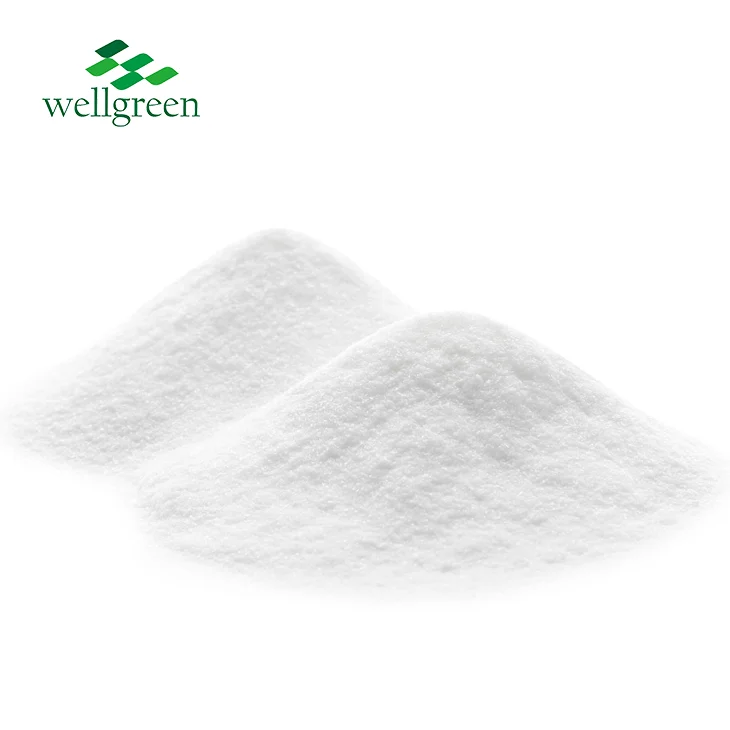
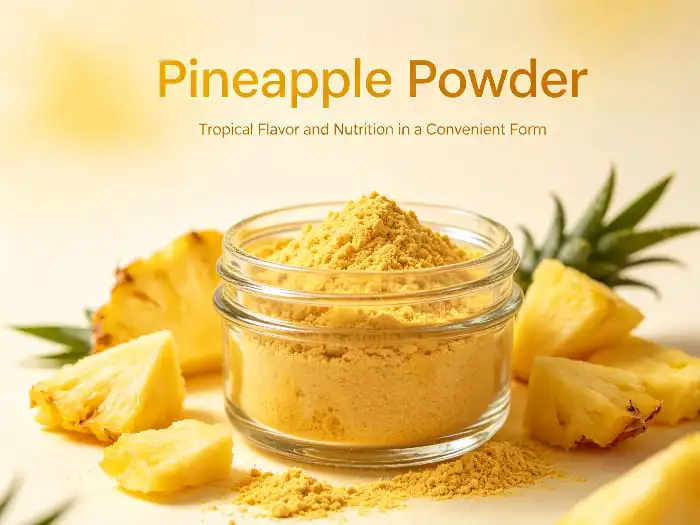
Fresh pineapple has been turned into a powder that can be kept for a long time. This is a big step forward in food technology. This dried form keeps the fruit's health benefits while getting rid of the problems that come with handling food that goes bad quickly.
What Makes Quality Pineapple Powder Stand Out
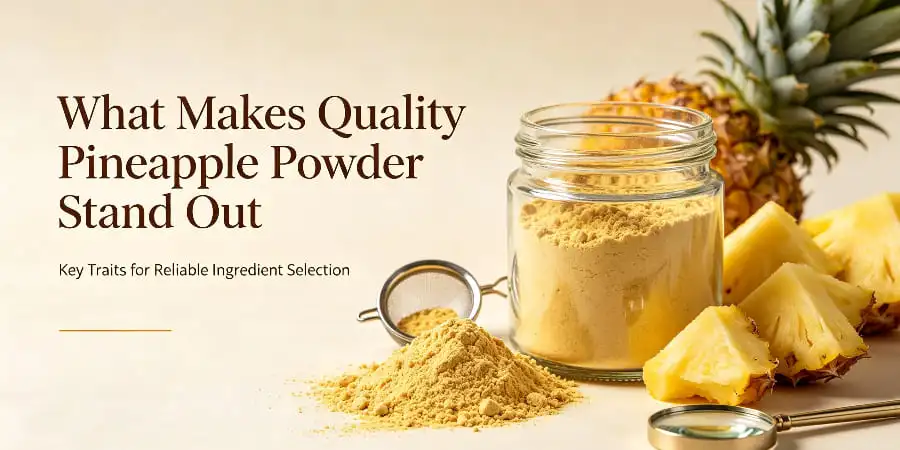
To make good pineapple powder, you must first pick Ananas comosus fruits that are fully ripe and have the right amount of water and sugar. Things are made in a certain way, which changes how they work. For instance, freeze-drying keeps more volatile chemicals that give things their scent longer than spray-drying. Either way, the moisture level is lowered to less than 5%, which protects the element from oxidation and bacterial growth. The protease enzyme bromelain, which is naturally found in pineapple, does more than just make the food taste better. When powders are properly made, this enzyme stays partly active. This helps make meat soft and could also be used to help the digestive system. There is less vitamin C in enriched foods than in fresh fruits, but it is still high enough to act as an antioxidant and back up what the labels say.
Production Methods and Their Impact on Quality
To use spray-drying, you mix pineapple juice or mush into very small drops and put them in a room with hot air. It makes the water dry out quickly. Powders that are easy to mix and flow are made this way. This makes them great for making instant drinks and drink mixes. Manufacturers often add maltodextrin or other carriers to powders during spray-drying to keep them from sticking together and make them better. The process of freeze-drying is called sublimation. It takes the water out of frozen pineapple when there is a Hoover. When you use this softer method, chemicals that are damaged by heat are better protected. This makes powder that tastes better and looks better. Which of these ways you pick will depend on your application's needs, your budget, and the features you want it to have.
Nutritional Profile and Functional Benefits
Pineapple powder tastes like a tropical fruit and is full of good things for you, like manganese, natural fruit sugars, and dietary fibre. Because it has bromelain, this ingredient is different from many others. It can be used in both sweet and spicy foods and vitamin mixes in unique ways. The natural acidity of the powder is liked by food scientists because it can help change the pH of some mixtures and make mixed foods taste better.
Key Applications of Pineapple Powder in Food Manufacturing
Pineapple powder is helpful for product manufacturers who want to come up with new ideas while still adhering to clean-label rules because it can be used in many different kinds of food.
Beverage and Functional Drink Applications
People who make drinks buy a lot of pineapple powder because it mixes well with other ingredients and tastes like real pineapple. It gives functional drinks more vitamins, a tropical taste, and natural sweetness without adding any other ingredients. Companies that make sports nutrition use it to make electrolyte mixes because the natural sugars in the fruit give you energy, and the taste is good. The safety and stability of the powder help make sure that all production runs of quick drink mixes have the same taste. People who care about their health will love this ingredient in protein shakes, smoothie bases, and ready-to-mix drinks. People who make cold-brew tea have found that pineapple powder goes well with the tastes of plants and does not add too much sugar.
Confectionery and Gummy Applications
People who make candies like pineapple powder because it gives the whole thing a real fruit taste without the problems that come with liquid flavourings moving around. Naturally occurring pectin can help add texture, and the fruity taste is great for both kids' treats and adult wellness candies. This powder is used to make candy like hard candies, fruit chews, and chocolate mixes. A big plus is that it stays stable in a variety of handling situations. It's important to think about how much bromelain to use in gelatin-based systems because too much enzyme activity can make it hard to gel. However, this is easy to fix by using the right preparation methods.
Baking and Dessert Innovations
Bakers like that pineapple powder can be added to dry mixes to make them taste like fruit without adding too much water, which could change the texture or shorten the shelf life of the mixes. It's used in cake bases, frostings, and sauces, and the tropical notes stay the same all the way through. Since the powder is naturally acidic, it works best in cookies, cakes, and quick breads, where it can speed up the rising process. Because it doesn't crystallise when it freezes and thaws, it can be used in the bases and ripples of ice cream and other frozen desserts. Some of the ingredients are very strong, so a little goes a long way. This saves money compared to buying fresh fruit or fruit products that go bad quickly.
Savory Food and Sauce Applications
Bromelain, which is found in pineapple powder, naturally breaks down proteins to improve structure. This makes it useful for making meat more tender in marinades and rubs. People who make sauces use the powder as a main ingredient in Asian-style salads, barbecue sauces, and sweet-and-sour glazes. Plus, it tastes good and does something useful. There are ready-made meals with a tropical theme, stir-fry seasoning blends, and marinades that use it. It's always the same because the powder doesn't change when it's cooked or processed. Fresh pineapple is not the same. The amount of sugar and vinegar in fresh pineapple changes with the seasons.
Advantages of Using Pineapple Powder Over Fresh Pineapple in the Food Industry
When you switch from fresh fruit to powdered alternatives, you can save time and money, which can have a direct impact on your bottom line and the quality of your production.
Extended Shelf Life and Storage Efficiency
It is important to store fresh pineapple in a cold chain, process it quickly, and move it through a complicated network of cold storage units so it doesn't go bad. In the whole production line, this makes things more difficult and costs more. If you pack Pineapple Fruit Powder correctly, it can last 18 to 24 months at room temperature, so you don't need these conditions. This longer shelf life cuts down on waste, keeps producers from having to rush to find supplies, and lets them buy more at a lower price. Warehouse space needs go down by a huge amount because powder takes up much less room and can be kept at room temperature. This frees up room in the cold storage for foods that go bad fast.
Cost Predictability and Supply Chain Stability
Price changes for fresh pineapple depend on the time of year, the weather, and how crops are grown in different places. This makes budgeting tough for teams that buy things. Manufacturers are protected from the ups and downs of the spot market by powder suppliers who offer more stable pricing and longer-term contracts. Shipping costs are a lot less when you send concentrated powder instead of fresh fruit that is mostly water. Landed costs go down, which helps companies that are far from growth places the most. If you buy fresh food from more than one seller around the world, you can be more sure that you will always have enough.
Consistency in Product Quality
Because the taste, colour, and amount of sugar in fresh pineapple change from batch to batch, the recipe has to be changed all the time to make sure the product is always the same. Good powder makers give standard specs and proof of analysis paperwork to make sure that every shipment meets the quality standards that have already been set. This consistency makes sure that the finished products have reliable sensory properties. This means that customers will complain less, and the recipe won't need to be changed as often. When you work with standard ingredients instead of farm products that can naturally change, it is easier to keep an eye on quality.
Processing and Formulation Advantages
So you don't have to peel, core, and crush the fruit to make powder for recipes. Instead, you can just add the powder. It's easy to mix powder blends with the dry format, and you don't need any special tools or steps to keep the moisture level in check while mixing. Instead of planning their days around when fresh fruit comes in and when it can be handled, companies can make pineapple-flavoured things whenever customers want them. In this way, output is more adaptable.
How to Select the Right Pineapple Powder Supplier
You should consider more than just price when choosing a supplier partner. How well your finished product does and how well your name is known depend on the quality of the items you use.
Essential Certifications and Quality Standards
Make sure the suppliers you're looking at have up-to-date GMP certification. You can tell they care about good manufacturing methods and quality processes because they did this. Organic approval is important if the people you want to buy from you care about claims that are organic. But powders that you buy every day often work just as well and cost less. The ISO rules, especially ISO 22000 for managing food safety, show how to keep things clean and make sure the quality is good. Ask the seller for proof that the ingredients have been tested for heavy metals, chemical residues, and microbes to make sure they are following the rules for food-grade ingredients.
Processing Capabilities and Product Range
Being able to choose between freeze-dried and spray-dried products makes it easy to find the best ones for a range of uses and price points. The fact that the company can customise solubility, particle size, and transport content shows that it is tech-savvy and cares about its clients. You can pick the enzyme-standardized product that best fits your needs from enzyme-standardized fruit powders, concentrated juice powders, and fruit powders that haven't been processed. OEM and ODM skills are useful when you want to make your own brand of things or need help formulating new uses for old ones.
Supply Chain Reliability and Communication
Before you choose a supplier, make sure they can keep consistent inventory levels and deliver on time. If you don't, missing ingredients can stop production lines and make customers unhappy. So that shipments don't get held up, international providers need to show that they are good at export paperwork, planning goods, and following customs rules. Being quick to respond to communication is very important when there are technical questions or orders that need to be taken care of quickly. Customer references from companies that work in related areas can tell you a lot about how reliable a supplier is, but marketing materials alone can't.
Technical Support and Documentation
A good provider will give you detailed technical data sheets with normal analysis values, suggested usage rates, and where to store the data. More helpful than just getting the ingredients is being able to talk to application specialists who know about food science and can help with recipes. It is easier to follow the rules set by the government when you have all the information you need, such as allergen statements, non-GMO promises, and kosher or halal certifications when they apply. There are samples for product development trials that people can use to check out something before they buy the whole thing.
Best Practices for Incorporating Pineapple Powder in Food Production
To do a good job, you need to know how much to use, how to handle the product, and how to mix it based on the type of product and how it will be processed.
Formulation Guidelines and Dosage Recommendations
A lot of the time, drinks use between 2 and 8 percent. Higher percentages give drinks a stronger tropical taste, while lower percentages add lighter notes to the background. This ranges from 3 to 10 percent, depending on how strong a flavour is needed and how it mixes with other things. For baking, addition rates between 2% and 5% work well. However, to find the best sensory patterns for each recipe, they may work better if they are tried across a range. Think about how sweet the powder is by itself when you're balancing the amount of sugar in the recipe. Most of the time, this means you don't need to add sugar.
Storage and Handling Protocols
Keep pineapple powder in cool, dry places in sealed containers that can't be opened so that it doesn't harden and soak up water. It is best to use the item within the time limits given and put the package back together as soon as it is opened. It is important to keep the humidity in production areas under control because hygroscopic fruit powders can easily soak up water from the air and change how they spread and flow. To make sure that old stock is used up before it goes bad, use first-in, first-out inventory movement.
Regulatory Compliance and Labeling Considerations
Make sure that your supplier gives you the correct regulatory information for the markets you want to reach, as each region has its own rules about what labels can say and what additives can be used. If the powder still has a lot of bromelain activity, you should think about whether your product needs enzyme activity declarations or allergen-adjacent warnings. You need to be clear on any carriers or processing aids that were used to make the powder in order to get a clean label. Make sure you get this information from your suppliers early on in the development process. Products in the US and other countries must follow the rules set by the FDA when they make health claims about vitamin content or gut support.
Quality Control During Production
Make rules for reviewing arriving goods, making sure that important things like colour values, particle size distribution, and moisture content are in line with the standards that have been agreed upon. A trained panel of tasters can pick up on changes in flavours that lab tests might miss. This keeps the quality of the product safe before customers have problems with it. Samples from each production run should be kept for at least as long as the finished product is good, so they can be checked later if there are quality problems. Every step of the way, microbes are tested on both the ingredients and the finished goods to make sure that food safety standards are met.
Conclusion
When it comes to the food business today, pineapple powder is an important ingredient that gives foods a real tropical taste and has benefits that fresh fruit can't match. To make sure that new products are made well and customers are happy, it's important to know the differences between processing methods, pick skilled suppliers with strong quality systems, and use the right preparation methods. Natural, well-known products are still in high demand thanks to clean-label trends. This powder gives manufacturers the tools they need to meet these needs while staying efficient and making money. It's a good choice for companies that want to come up with new ideas in the baking, candy, savoury food, and drinks areas because it has a longer shelf life, stable supply lines, and formulation freedom.
FAQ
Does pineapple powder retain the nutritional value of fresh pineapple?
Some vitamins that are damaged by heat lose some of their health benefits when they are processed. Minerals, protein, and vitamin C, on the other hand, stay mostly the same in good pineapple powder. Most of the time, freeze-dried foods keep more of their nutrients than spray-dried foods because they are treated at lower temperatures. Since they are more concentrated, smaller amounts of fresh fruit have the same amount of nutrients as larger ones. But instead of guessing, the makers should test for exact amounts of nutrients.
How does freeze-dried pineapple powder differ from spray-dried versions for specific applications?
The taste is stronger, the colour is brighter, and freeze-dried powder keeps volatile aromatic chemicals better. This is better for expensive goods where the taste is worth the extra cost. Spray-dried powder dissolves better in liquids, mixes with other things more easily, and costs less when these things are more important than having the strongest flavour. Both types work well in food manufacturing. The one you pick will depend on your budget and performance needs.
What storage conditions maximize pineapple powder shelf life?
Conditions that are best for storing are those with tight lids, low humidity (below 60% relative humidity), and temperatures between 50°F and 70°F. Keep it out of direct sunlight and heat sources that could make it break down faster. If you store powder the right way, it will last for 18 to 24 months. At the end of its shelf life, it may start to lose some of its sensory properties, but it will still be safe for microbes.
Partner with Wellgreen for Premium Pineapple Powder Supply
Wellgreen Technology is ready to give you pineapple powder that you can trust. You can choose between spray-dried and freeze-dried options. They are all made in our GMP-certified plant under strict quality controls. We have a lot of food-grade powder in stock, so we can quickly send it anywhere in the EU or the US. It comes with all the paperwork for the COA and the reports of bacterial tests. Any OEM or ODM partner is welcome to work with us, and we can change the acidity, sweetness, and taste strength to fit your needs. The technical team at our company works together on functional drink and gummy formulations. This helps you solve formulation issues and make the best products work even better. You can email us at wgt@allwellcn.com to get samples, talk about your specific needs, and learn how our steady supply and wide range of affordable pineapple powder for sale can help you add more products to your line and make the buying process easier.
References
1. Barrett, D.M., Beaulieu, J.C., & Shewfelt, R. (2010). Color, flavor, texture, and nutritional quality of fresh-cut fruits and vegetables: desirable levels, instrumental and sensory measurement, and the effects of processing. Critical Reviews in Food Science and Nutrition, 50(5), 369-389.
2. Ketnawa, S., Chaiwut, P., & Rawdkuen, S. (2012). Pineapple wastes: A potential source for bromelain extraction. Food and Bioproducts Processing, 90(3), 385-391.
3. Marques, L.G., Silveira, A.M., & Freire, J.T. (2006). Freeze-drying characteristics of tropical fruits. Drying Technology, 24(4), 457-463.
4. Patel, S., & Patel, J.K. (2016). A comprehensive review of the nutritional, phytochemical, and pharmacological properties of pineapple. Journal of Food Science and Technology, 53(4), 1675-1684.
5. Ramallo, L.A., & Mascheroni, R.H. (2012). Quality evaluation of pineapple fruit during the drying process. Food and Bioproducts Processing, 90(2), 275-283.
6. Tochi, B.N., Wang, Z., Xu, S.Y., & Zhang, W. (2008). Therapeutic application of pineapple protease (bromelain): A review. Pakistan Journal of Nutrition, 7(4), 513-520.