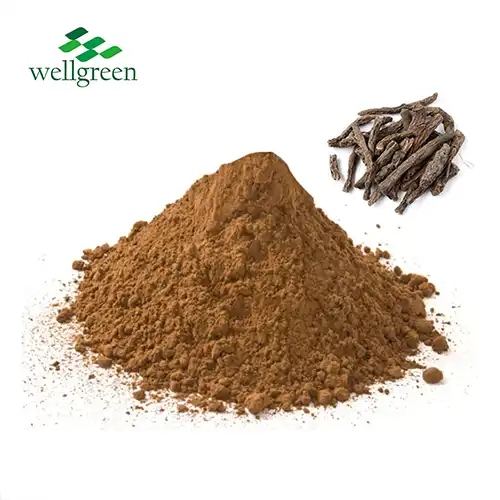
The Secret Benefits of Eyebright Herb Extract in Eye Skincare
2026-07-20 14:02:44
Eyebright Herb Extract, which comes from Euphrasia officinalis, has become a revolutionary ingredient in eye skincare products, providing unmatched benefits for the delicate area around the eyes. This plant extract is full of bioactive compounds like aucubin, flavonoids, polyphenols, and tannins. It also has iridoid glycosides, which are powerful anti-inflammatories and antioxidants that help with skin problems like dark circles, puffiness, and environmental stress. As the need for clean-label, plant-based actives that work in both topical and beauty-from-within products grows, Eyebright Herb Extract stands out as a solution that combines traditional herbal knowledge with new ideas in cosmeceuticals.
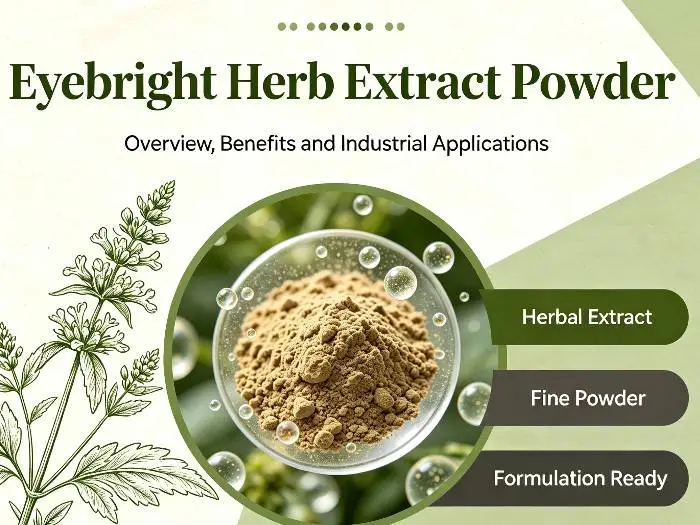
Understanding Eyebright Herb Extract and Its Role in Eye Skincare
Botanical Origin and Active Constituents
The raw materials for making high-quality Eyebright Herb Extract come from the whole aerial parts of Euphrasia officinalis. The 14th-century pharmacopoeias list this traditional European herb as a way to treat eye pain. It grows well in natural grasslands. These days, solvent-based methods like certified ethanol-water mixtures or advanced CO2 supercritical extraction are used to concentrate medicinal chemicals while keeping molecules that are sensitive to heat, like aucubin.
The molecular profile includes flavonoids like quercetin and apigenin, which are very good at getting rid of free radicals. Tannins and polyphenolic compounds work together to make astringent properties that tighten the skin around the eyes. Standardised extracts usually keep ratios of 4:1 or 10:1, and the total flavonoid content is measured by UV spectroscopy, while individual markers are measured by HPLC.
Scientific Validation for Eye Skin Health
Eyebright Herb Extract works to protect the skin around the eyes from oxidative stress brought on by blue light and digital screen fatigue, as shown by clinical observations and in vitro studies. The iridoid glycosides reduce inflammation by blocking the COX-2 pathway. This stops the production of prostaglandins, which cause heat and swelling. Researchers have found that standardised extracts keep their high ORAC values, which means they are better antioxidants than many synthetic alternatives.
The beneficial chemicals in the extract get through the thin skin around the eyes and help the capillaries and lymphatic systems that need it. This mechanism addresses fluid retention that manifests as under-eye bags while simultaneously supporting collagen integrity. When B2B sourcing workers look at ingredient portfolios, these scientifically proven benefits make them stand out in competitive markets where formulation decisions are based on data on how well the ingredients work.
Key Benefits of Eyebright Herb Extract in Eye Skincare Formulations
Anti-Inflammatory and Soothing Properties
The area around the eyes is still very vulnerable to environmental irritants, allergens, and mechanical stress from rubbing your eyes a lot. Eyebright Herb Extract helps with these problems by reducing inflammation in a number of ways that protect the eyes and skin. The tannins have instant astringent effects that narrow blood vessels to reduce swelling and noticeable veins that are common in sensitive skin.
Compared to chemical corticosteroids or anti-inflammatory drugs, this botanical alternative is gentler and doesn't have the long-term side effects that come with using topical steroids for a long time. Formulation scientists like Eyebright Herb Extract can be added to creams and serums at concentrations ranging from 0.5% to 3%. This lets the benefits rely on the dose and not affect the stability of the product or cause sensitisation reactions.
Enhanced Hydration and Barrier Protection
Beyond inflammation control, the polysaccharide fractions within Eyebright Herb Extract contribute to moisture retention by forming a protective film over the epidermis. This hygroscopic trait pulls water molecules into the stratum corneum, which smooths out fine lines and makes the skin around the eye area more flexible. The improved barrier function stops transepidermal water loss, which is very important for keeping the smooth look of eye contour areas that age quickly.
The extract works especially well in emulsion systems because it keeps the oil-water interfaces stable without affecting the effectiveness of the preservative. Premium eye care product makers can use these moisturising benefits along with other humectants like hyaluronic acid to make multifunctional formulas that treat dryness, sensitivity, and signs of fatigue all at the same time.
Synergistic Botanical Combinations
Combining Eyebright Herb Extract with plant products that work well together improves the healing effects and gives you a business edge. Bilberry extract, rich in anthocyanosides, enhances microcirculation when combined with Eyebright Herb Extract, reducing dark circle pigmentation more effectively than single-ingredient approaches. Chamomile adds more healing properties, making a complete anti-irritation mix that can be used for skin care after surgery or for skin conditions that are sensitive.
People who want advanced natural solutions like these synergistic formulations, and procurement teams, like how easy it is to get the ingredients they need. Suppliers who offer botanical blends that are already mixed can shorten the time it takes to make a new product and lower the cost of testing different formulations. This is especially helpful for OEM manufacturers who work with many brand clients who have different needs.
Choosing the Right Eyebright Herb Extract for Your Product Line
Organic Versus Conventional Extract Selection
As customers become more aware of where ingredients come from and how they are grown, the market strongly favours organically approved ingredients. Organic Eyebright Herb Extract is highly valued because it was grown without using any synthetic pesticides, herbicides, or chemical fertilisers. If a brand wants to sell natural products or get their products certified as organic, they have to use organic-grade extract, even though it costs more.
Conventional extracts that pass strict tests for pesticide residue can be used in mass-market formulations where saving money is still the most important thing. Buyers should ask for full residue screening results that include glyphosate, organophosphates, and other common poisons used in farming. Suppliers who follow EU or US food-grade standards usually keep residue levels well below the levels allowed by law. This makes sure that the products are safe for a wide range of uses in the market.
Extract Format Considerations for Different Applications
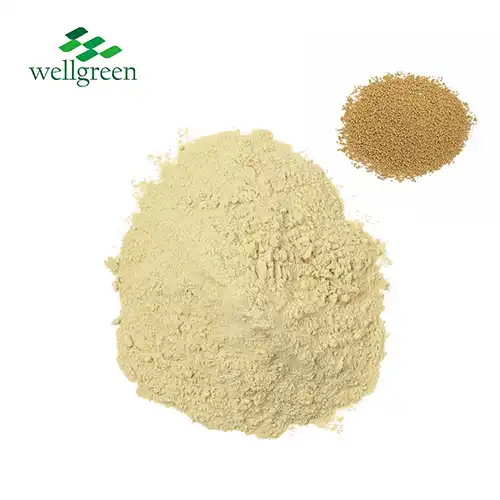
Powder extracts can be used in a lot of different ways. They can be put into tablets and capsules as supplements, or they can be mixed into makeup bases that don't need water, like creams and oil serums. The small particles that go through an 80 mesh make sure that the mixture is evenly spread out and mixed when the production process is scaled up. Specifications for bulk density affect how things compress, which makes this number very important for tableting processes.
Liquid concentrates and hydro-alcoholic remedies work well in face sprays, toners, and watery gel systems that need to dissolve right away. Water-soluble grades that go through membrane filtration get rid of turbidity issues in clear product formats. However, these specialised types need careful supplier qualification to make sure that optical clarity stays the same from one production batch to the next.
Spray-dried extracts that have been processed with low-temperature vacuuming keep the aucubin content that breaks down when exposed to too much heat. To stop microbes from growing during storage, technical specification sheets should list drying factors and leftover moisture levels below 5%. By knowing these differences in format, procurement teams can match extract types with intended uses, which cuts down on the time needed for reformulation and speeds up the time it takes to get products to market.
Supplier Certification and Quality Assurance
In the plant extract market, trustworthy partners are easily distinguished from dishonest sellers by strict checks of their qualifications. ISO 9001 certification shows that quality management systems have been in place for a while, and GMP compliance shows that manufacturing processes meet the high standards needed for making dietary supplements and cosmetics. When buyers start working with a new supplier, they should check the facility inspection records and third-party audit reports.
Each batch must come with a full Certificate of Analysis that lists the active marker content by HPLC, the heavy metal screening levels that are below the pharmacopeial limits, the number of microbes that meet USP standards, and the pesticide residue levels that were tested. When suppliers give access to batch-specific COAs through online platforms, they increase openness, which makes it easier to follow regulations and track lots all the way through the distribution chain.
Market Insights: Procurement, Pricing, and Distribution of Eyebright Herb Extract
Pricing Dynamics and Value Drivers
Eyebright Herb Extract pricing structures in B2B procurement situations are affected by a number of factors. The ratio of extraction has a big effect on price. For example, concentrated 10:1 extracts cost more than 4:1 variants because they need more raw materials and are harder to process. Standardisation to specific marker compounds raises the cost of analysis, but it ensures consistency in the formulation, which is why quality-focused brands can charge more.
Extra costs are added for things like organic certification, clean solvent processes, and special forms like clear-soluble grades. Tiered pricing structures are possible with volume commitments, and annual contracts get better rates than buying on the spot. To find ways to save money while still meeting quality standards, purchasing managers should ask for detailed breakdowns that separate the parts of the process that involve raw materials, extraction, testing, and certification. This will help them find ways to improve efficiency without affecting the integrity of the product.
Strategic Sourcing and Supplier Partnerships
Building ties with suppliers who offer specialised account management and technical help is more valuable than just buying things one time. Partners who help with formulation, stability testing, and legal paperwork can make internal research and development (R&D) easier. This is especially helpful for smaller brands that don't have large scientific teams. Strategic suppliers are different from commodity brokers because they can ask for specific requirements, like flavonoid percentages or alcohol-free water extraction.
Geographical factors affect lead times and logistics costs. For example, North American and European suppliers can deliver goods more quickly to the main markets in these areas. Buyers should look at how much inventory suppliers have and how much they can make to make sure they have a steady supply, even when demand changes or when seasonal raw material shortages happen. When formulation problems come up, long-term partnerships encourage working together to find solutions. This gives the company a competitive edge by allowing proprietary ingredient changes that can't be bought from a standard catalogue.
Emerging Demand Trends in Eye Skincare
Eyebright Herb Extract demand is rising quickly because the markets for eye health and skin care are coming together. People are becoming more aware of the damage blue light from digital devices can do, which has made them rush to find safe products that can stop digital eye pain and early ageing. Beauty-from-within trends combine oral supplements with skin care routines that you put on your skin. This means that Eyebright Herb Extract can be used in more product categories under the same brand.
Eyebright Herb Extract is a star ingredient in vegan and cruelty-free product lines because it is used by clean beauty groups that prefer plant-based ingredients to manmade ones. People who are looking for honesty and effectiveness will be interested in marketing claims that highlight both traditional herbal heritage and modern scientific validation. OEMs that understand how these trends affect each other can make unique products that gain market share in the growing natural eye care area.
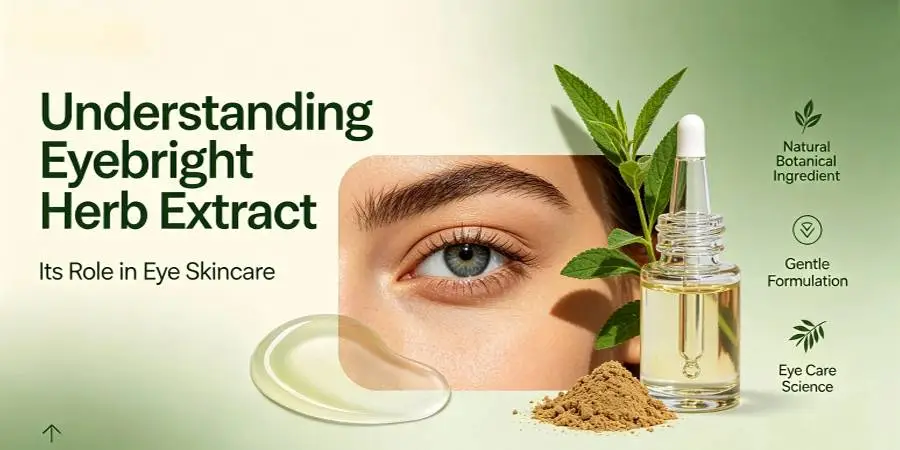
How to Integrate Eyebright Herb Extract into Eye Skincare Products Successfully
Formulation Best Practices and Dosage Optimization
To get therapeutic benefits, you need to pay close attention to concentration levels and how well the ingredients work together. Eye serums and creams for the eyes usually have 1% to 3% eyebright extract in them to reduce puffiness and soothe the skin. Higher amounts, up to 5%, may help intensive treatment products that are aimed at chronic inflammation or allergic reactions. Solubility properties need to match the base of the formulation. For example, oil-soluble fractions work well in lipophilic systems, while water-based extracts work well in hydrogel and emulsion formats.
Proteins or alkaloids can settle out of complicated mixtures that contain many plant extracts because of the tannin content. Before they are used in industrial production, possible incompatibilities are found through stability testing that includes temperature cycling and accelerated ageing methods. Adding chelating agents like EDTA helps stop the tannin-metal complexation that causes discolouration, so the product looks good for as long as it's in the store. Changing the pH to a slightly acidic range (5.0–6.0) makes flavonoids more stable and matches the acid layer of the skin.
Regulatory Compliance and Safety Considerations
When applied to the skin at the recommended concentrations, Eyebright Herb Extract has a very good safety profile, with few reported side effects. Before applying to the whole face, especially for formulations that are good for sensitive skin, patch testing should be done to look for rare allergic reactions. There aren't many reasons not to use it, but people who are allergic to ragweed may react to it, which is why it needs to be labelled with care.
Regulatory frameworks vary between markets. For example, the US FDA controls Eyebright Herb Extract as a cosmetic ingredient when claims are limited to benefits for the face's appearance. On the other hand, therapeutic claims lead to drug classification, which requires premarket approval. Eyebright Herb Extract can be on positive ingredient lists for cosmetics made in the European Union, but the concentration must be limited for certain uses. The procurement and regulatory teams need to work together to make sure that the language used in marketing is in line with the proof of ingredients and the rules that apply in each region. This will lower the legal risks that come with making unapproved health claims.
Client Success Examples and Validated Formulations
Leading cosmetics companies have successfully added Eyebright Herb Extract to award-winning eye care products aimed at millennials and Gen Zers who are worried about the effects of too much screen time. One important project they worked together on was making a dual-phase eye serum with Eyebright Herb Extract, lutein, and zeaxanthin. This serum was sold as a complete digital defence for the skin around the eyes. The formula became popular in stores after clinical tests showed that using it twice a day for two weeks reduced puffiness in a way that could be measured.
Private label manufacturers who work with a lot of different brands have set up standard Eyebright Herb Extract-based formulas that can be used with a variety of positioning strategies. These "turnkey" solutions lower the cost of development and speed up the time it takes for new brands to get into the market that don't have their own formulation capabilities. Being able to change active ingredient amounts, fragrance profiles, and packaging forms while still using tried-and-true base formulas gives OEM partners who can adapt quickly to changes in the market a competitive edge.
Conclusion
Eyebright Herb Extract is a plant ingredient that has been scientifically proven to help with eye health in a number of ways. Its wide range of phytochemicals helps with modern problems like digital eye strain, outdoor stress, and early periorbital ageing by acting as an anti-inflammatory, an antioxidant, and a shield. When purchasing, professionals look at natural active ingredients. Eyebright Herb Extract stands out because it has been used for a long time, and there is current clinical proof to support this. To integrate things well, you need to pay close attention to things like extract quality, formulation compatibility, and regulation compliance. Strategic supply partnerships offer technical help that speeds up the time it takes to make and sell a product.
FAQ
What concentration of eyebright extract should be used in eye cream formulations?
Most general maintenance products that target dark circles and puffiness have concentrations between 1% and 3% of Eyebright Herb Extract. Up to 5% of the extract may be used in intensive treatments for chronic inflammation. The best concentration depends on how the extract is standardised. Standardised grades with higher potency need lower percentages than basic extraction ratios.
Does eyebright extract interact with other cosmetic ingredients?
Some proteins and alkaloids can become precipitated because of the tannin content, which could make complex botanical blends less stable. When Eyebright Herb Extract is mixed with more than one active ingredient, it is best to test the safety of the formulation first. In well-designed products, bad interactions are usually avoided by using the right pH change and chelating agents.
How does eyebright compare to synthetic anti-inflammatory ingredients?
By blocking the COX-2 pathway, Eyebright Herb Extract works just as well at reducing inflammation as synthetic corticosteroids, but it doesn't have the long-term side effects that come with using them for a long time. It has extra antioxidant benefits that single-mechanism synthetic alternatives don't have. This makes it perfect for clean beauty products aimed at health-conscious people.
Partner With Wellgreen for Premium Eyebright Herb Extract Supply
Wellgreen Technology stands ready to support your product development initiatives with pharmaceutical-grade Eyebright Herb Extract manufactured in our GMP-certified facility. As a trusted Eyebright Herb Extract supplier, we provide standardised botanical powders with verified flavonoid and aucubin content, backed by comprehensive COA documentation including HPLC analysis, heavy metal screening, and microbial testing. Our technical team offers formulation consultation, stability testing support, and regulatory guidance specific to the US and European markets. Whether you require organic-certified grades, custom extraction ratios, or private label manufacturing services, our scalable production capacity and extensive inventory ensure reliable supply for long-term brand partnerships. Contact our procurement specialists at wgt@allwellcn.com to request samples, discuss bulk pricing, or explore OEM collaboration opportunities tailored to your specific eye skincare formulation needs.
References
1. Foster, S. & Duke, J.A. (2014). Medicinal Plants and Herbs: Eastern and Central North America. Houghton Mifflin Harcourt Publishing.
2. European Medicines Agency. (2015). Assessment Report on Euphrasia officinalis L. and Euphrasia rostkoviana Hayne, herba. Committee on Herbal Medicinal Products.
3. Castleman, M. (2017). The New Healing Herbs: The Classic Guide to Nature's Best Medicines. Rodale Books, Third Edition.
4. Wichtl, M. (2004). Herbal Drugs and Phytopharmaceuticals: A Handbook for Practice on a Scientific Basis. CRC Press, Third Edition.
5. Mills, S. & Bone, K. (2005). The Essential Guide to Herbal Safety. Churchill Livingstone Elsevier.
6. Blumenthal, M. et al. (2000). Herbal Medicine: Expanded Commission E Monographs. American Botanical Council, Integrative Medicine Communications.
_1783672554649.webp)