
How to Identify Adulterated Organic Ginger Extract Powder: Quality Control Guide
2026-11-04 09:34:21
Adulteration seldom announces itself. It arrives as a drum of pale yellow powder whose COA reads clean, whose appearance line matches the specification you drafted, and whose price sits quietly a little under the market. For a purchasing team qualifying organic ginger extract powder, that small gap between price and paper is usually the first real clue, not the certificate. This guide sets out how adulteration works in this category, which bench and laboratory checks expose it, and how to write specifications that make it expensive to attempt.
Why This Category Attracts Adulteration More Than Most
Ginger is a high-value, low-visual-complexity material. Three structural features make it a repeat target, and none of them are the fault of any particular region or producer.
The price spread between grades is wide
Rhizome quality, drying method, extraction yield and organic certification all move cost, while the finished powder looks broadly similar across grades. When two materials differ several-fold in input cost but are nearly indistinguishable in a 25 kg drum, the substitution incentive is structural rather than personal. A receiver cannot see the difference at the loading dock; only a test can.
Powder erases the evidence that whole rhizome carries
Whole ginger can be judged by fibre, skin, size and break. Milling and extraction remove those cues. What remains — colour, odour, flow, solubility — is comparatively easy to imitate with starch, colourants and a modest dose of genuine material.
Marker compounds can be added rather than grown
When a specification reduces quality to one number, a supplier can meet that number by spiking an isolate into a weak base material. The lot passes a single-point assay and fails a fingerprint. Specification format therefore matters as much as the test, and assay-only purchasing is the most exposed position a buyer can take.
Six Adulteration and Downgrade Patterns
The table separates fraud from downgrade. Both damage your process, but they need different contract language, because a downgrade can be legitimate when it is declared and priced accordingly.
| Type | Motive | Fast screen | Confirmatory method |
|---|---|---|---|
| Starch, flour or maltodextrin filler | Extend volume and cut cost per kilogram | Iodine spot test turns blue-black; starch granules visible under polarised light; powder settles into a dense bed | Microscopy with granule count; starch or fibre by enzymatic method; sugar profile by HPLC |
| Spent material re-blended after extraction | Sell extracted rhizome residue as extract | Flat, dusty aroma; weak pungency; dull colour; high sediment on dispersion | HPLC fingerprint with low total gingerol against a reference lot; elevated acid-insoluble ash; collapsed cell structures in microscopy |
| Cheaper related species or non-organic stock blended in | Replace costly certified material | Colour shifts toward orange or grey; aroma loses the citrus-wood top note | HPLC marker ratios; TLC band pattern; organic transaction certificate checked against the batch |
| Exogenous 6-gingerol or isolate used to balance the assay | Reach a declared figure cheaply | Assay passes while aroma and taste stay weak | Full gingerol and shogaol fingerprint; 6- to 8- to 10-gingerol ratio; isotope or chiral check where a laboratory offers it |
| Colouring and anticaking agents | Mask a dull colour or improve flow | Unnatural brightness; slippery or gritty hand feel; dust behaves differently from a pure extract | Solvent extraction with spectrophotometric reading; silica indicated by ash level and microscopy |
| Moisture and ash brought into range by handling | Pass a failing lot without re-drying | Clumping and caking in the bag; warm feel; musty note on opening | Oven or Karl Fischer moisture; total and acid-insoluble ash by the method named in the specification |
Downgrade deserves a separate conversation from fraud. A lower-grade lot that is declared and priced accordingly is honest trade; undeclared spent material is misrepresentation whatever the intent.
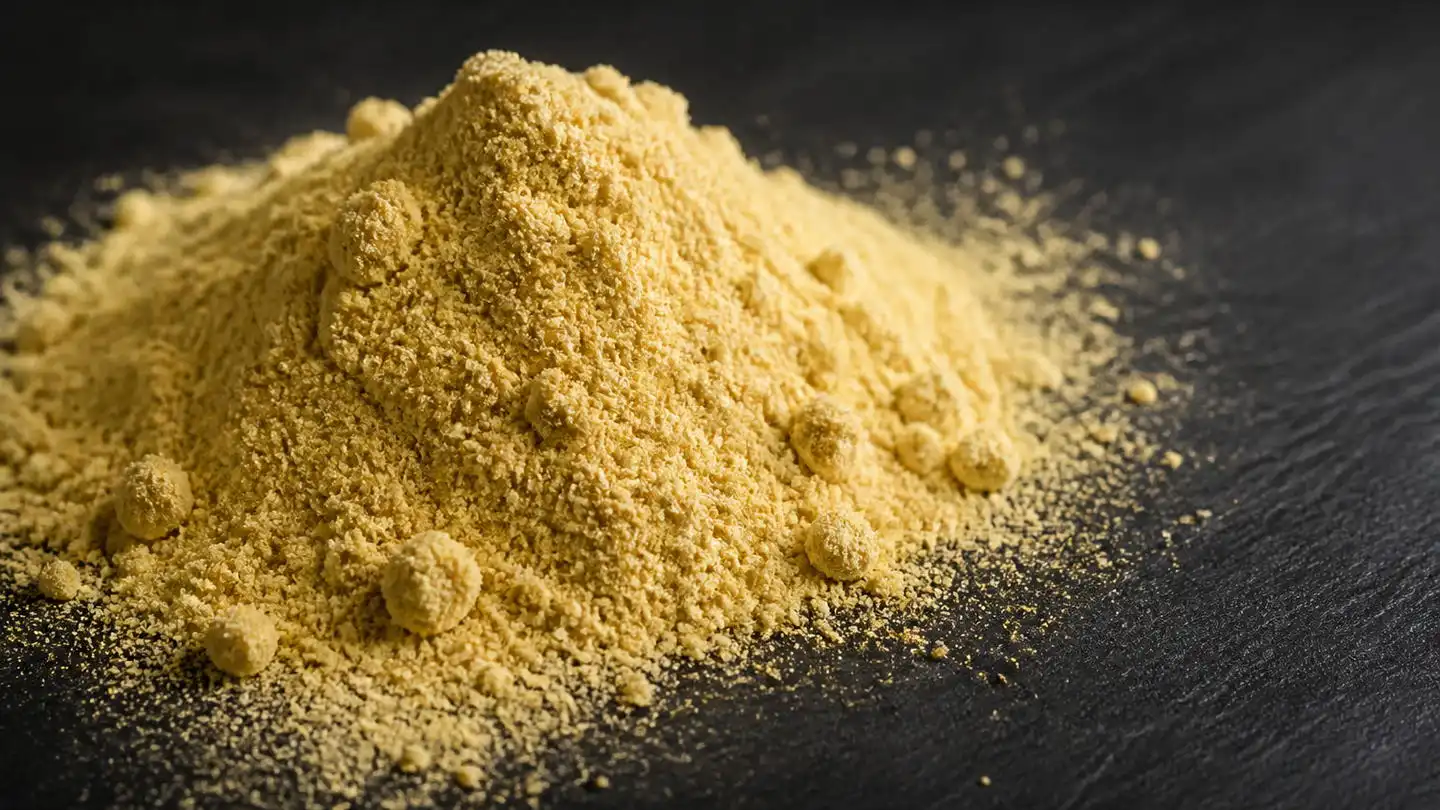
Field Screening: What Your Bench Can Establish Before a Laboratory Is Involved
None of the following replaces an accredited laboratory result. Together they decide which lots deserve the spend, and they supply the language for your first conversation with the supplier.
Microscopy first, because it is cheap and hard to fake
At 100 to 400 times magnification, genuine ginger powder shows characteristic starch granules, abundant fibre and scattered oil cells. Starch from maize, wheat or potato appears as populations of uniform granules that do not match the ginger pattern, and diatomaceous silica appears as refractive fragments with sharp edges. A wet mount with dilute iodine turns filler starch blue-black within seconds.
Water, solubility and sedimentation
Disperse a gram in 50 ml of water and watch. A well-made extract wets out, disperses and largely dissolves, leaving little grit. Silica and spent fibre settle as a compact, sandy bed within minutes. Solubility is a declared parameter for a reason: our product page COA specifies not less than 78%, and a sample that leaves a heavy residue is inconsistent with that figure before any instrument is switched on.
Aroma, pungency and hand feel
Ginger aroma should be sharp, citrus-wood and slightly warm, not flat or musty. Pungency is a sensory check rather than a health claim: a small pinch on the tongue should develop heat within a few seconds and fade cleanly. A powder that smells correct but tastes bland is the classic signature of a spiked assay on a weak base. Rub a pinch between thumb and forefinger; genuine extract feels slightly oily and clings, while filled material feels dry and silica feels slippery.
Understand the process the material claims to come from
Many adulteration signals only make sense once you know what a process should remove and what it should leave behind. Before agreeing a specification with a new source, it is worth reviewing how gingerol is extracted from ginger, because the extraction route sets the realistic range for yield, colour and ash.
Laboratory Confirmation: Tests That Produce Evidence
A laboratory report is only as useful as the question it was asked. Send the sample with the hypothesis you are testing, not with a request to check quality in general. For buyers assembling a full release panel, the parameter structure used for standardized ginger extract powder is a practical template.
A fingerprint beats a single number
Ask for the chromatogram, not only the result. A genuine extract shows the expected series of gingerols and shogaols in a consistent pattern across lots. Isolate-spiked material shows an abnormally dominant single peak with a thin background. Compare the ratio of 6-, 8- and 10-gingerol against your retained reference lot; a ratio that moves between shipments is a stronger warning than any individual value, because ratios are expensive to forge consistently.
Ash tells you what the acid left behind
Total ash and acid-insoluble ash are the quiet workhorses of spice authenticity. Mineral fillers, silica and soil push them upward; a light filler can push them down. Run both, and reconcile the result against the limit in your own specification rather than against a supplier summary. The published product page COA for our material lists acid-insoluble ash at not more than 12.0%.
TLC as a cheap second opinion
Thin-layer chromatography costs little and produces a visual band pattern a technician can hold beside a reference plate. It is a sensible triage step before committing to a full HPLC programme, and a useful exhibit when a supplier disputes a finding.
Isotope and origin testing where available
Stable isotope ratio analysis and multi-element profiling can separate material from different growing regions and flag blends a certificate does not describe. Availability, cost and turnaround vary by laboratory, so reserve these as escalation tools for high-value or repeat-problem supply rather than routine release tests.
The Logic Test That Beats Every Instrument
Two signals in combination are stronger than either alone: an assay that lands exactly on the declared minimum, and a price clearly below the market for that specification. Genuine production creates a distribution. Most lots sit comfortably above the minimum, a few sit near it, and the values scatter. A supplier whose every lot reports exactly the declared figure, with no scatter at all, is reporting a target rather than a measurement.
Combine that pattern with a price that cannot plausibly cover certified rhizome, extraction losses, testing and freight, and you have grounds for a full investigation before the material reaches your warehouse. Neither signal is proof, but together they justify the cost of proving or disproving the case.
Reading a COA Backwards
Most buyers read a certificate top-down and stop at the results column. Read it backwards: start with the methods, then the batch identity, and only then the numbers.
Four questions that decide whether the document is worth the paper
The parameter list should cover identity, assay, physical characteristics, ash, heavy metals, microbiology and, where relevant, solvent residues. Every line should name a method or a standard reference rather than a generic phrase. Nothing should read only as conforming without a value attached. And the batch number must match the drum label, packing list and your retained sample, because a certificate that cannot be tied to a physical lot is a marketing document.
| Red flag on the COA | What it usually indicates | What to request |
|---|---|---|
| Results column shows only "Conforms" with no measured value | The document was templated rather than generated from a test | Full analytical report with values, units and method references |
| No method named for assay or ash | Result may come from an in-house shortcut or an unstated kit | Method statement and, for assay, the chromatogram |
| Every lot reports an identical assay figure to two decimals | Target copied into the report rather than measured | Twelve months of lot history to check natural scatter |
| Microbiology reported as a single total count only | Pathogen and yeast/mould testing was skipped | Separate results for total plate count, yeast and mould, and pathogens |
| Batch number absent, handwritten or not matching the label | Certificate not traceable to the shipped material | Re-issued certificate tied to the shipping batch, plus retained sample |
| Heavy metals reported as one combined figure | Individual element limits were not tested | Element-by-element results with the method used |
| Certificate older than the lot, or re-used across shipments | Testing was not performed for this production run | Certificate dated within the production window |
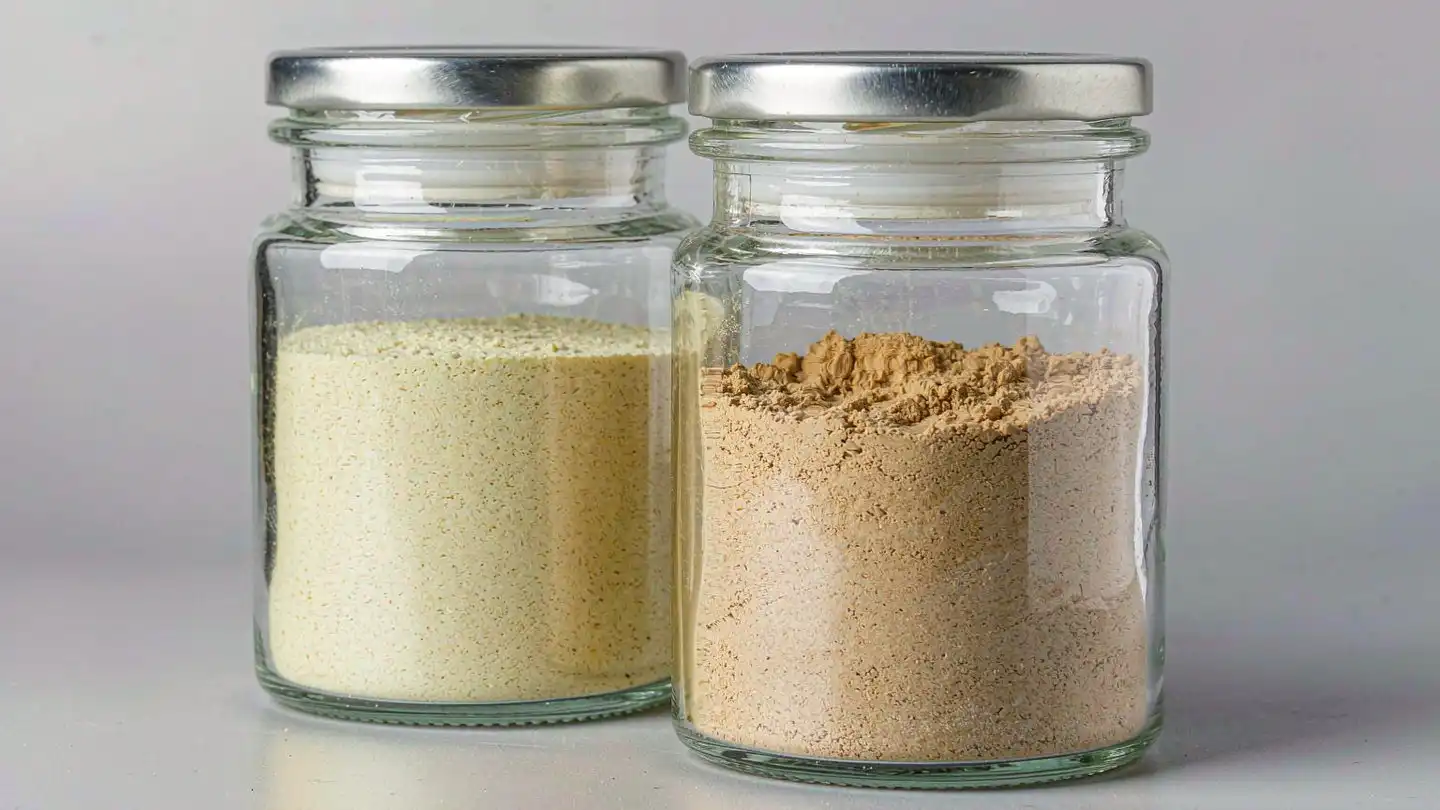
Writing Anti-Adulteration Terms into the Contract
A specification that lives only in an email thread is not enforceable. These clauses belong in the purchase agreement or the quality agreement behind it.
- Specification by method and limit. State the method, the limit and the units, so a disagreement is about a result rather than an interpretation. "Assay by HPLC at not less than the declared figure, method stated on the COA" is enforceable; "standard quality" is not.
- Retained samples and re-test rights. Reserve the right to keep a sealed sample of every lot for a defined period and to re-test it at any time, including after release to production.
- Third-party testing and cost allocation. Name an agreed laboratory or a short list, and state who pays. The usual arrangement is that the buyer funds routine verification and the supplier reimburses confirmed non-conformity, including freight and handling.
- Remedies on confirmed adulteration. Define replacement, credit or rejection, plus the allocation of downstream costs such as rework, line downtime and customer notification. Vague remedies are rarely used.
- Change notification. Any change of raw material source, extraction route, carrier or processing aid should require written notice and, where it affects a declared parameter, re-qualification before shipment.
- Traceability documents. Link each shipment to a batch record, an organic transaction certificate where organic status is claimed, and the matching certificate of analysis.
Sampling: Batch Definition, Sample Points and Retention
Sampling errors produce both false alarms and missed adulteration, and they are the most common reason a genuine dispute cannot be resolved.
Define the batch before you define the sample
Agree in writing what constitutes one batch: one production run, one rhizome source, one drying cycle, one blend. A supplier that counts a mixed pallet as a single batch has removed your ability to isolate a problem, and its own ability to defend a good lot.
Sample the bag, not the pallet
Draw from the top, middle and lower third of individual bags rather than from the surface of a pallet, because segregation during transport concentrates fines and dense fillers at different depths. A sample taken only from the top layer systematically misses settled mineral material.
Composite, split, seal and store
Composite the increments into one representative sample, split it into at least three portions — one for your laboratory, one for the supplier and one retained — and seal each with a label carrying batch number, date, sampler and quantity. Retain for the shelf-life period on the specification, which is two years for our material stored cool and dry, so a later dispute can be settled on the original material rather than on memory.
Six Capability Checks Before You Approve a Supplier
- Documented batch genealogy. Can they trace a finished drum back to a rhizome lot, a drying record and an extraction record without reconstructing it afterwards?
- In-house analysis or a named partner laboratory. Either is acceptable; an inability to name either is not.
- Organic certificate scope. Confirm the certificate covers the product form and the processing step performed, not only raw rhizome trade.
- Change control procedure. Ask for the written procedure and one real example of a change notification issued to a customer.
- Retained-sample practice. Ask how long they keep samples and where. A supplier that keeps none cannot investigate a complaint.
- Willingness to be audited and to accept your sampling plan. Reluctance here predicts every later disagreement.
A Reference Specification You Can Compare Against
The parameters below are taken from the product page COA for Wellgreen organic ginger extract powder. They are not a universal standard, but they show the level of detail a buyer should expect to see matched lot by lot. Teams weighing certified against conventional supply can run the same document comparison described in organic versus regular ginger powder.
| Parameter | Limit or result (product page COA) |
|---|---|
| Appearance | Yellow fine powder |
| Odour and taste | Spicy |
| Water content | Not more than 8% |
| Solubility | Not less than 78% |
| Sieve | 85% pass 80 mesh |
| Bulk density | 40–70 g/100 ml |
| Acid insoluble ash | Not more than 12.0% |
| Heavy metals | Not more than 10 ppm |
| Lead (Pb) | Not more than 1 ppm |
| Arsenic (As) | Not more than 2 ppm |
| Mercury (Hg) | Not more than 1 ppm |
| Cadmium (Cd) | Not more than 0.1 ppm |
| Total plate count | Not more than 1000 cfu/g |
| Yeast and mould | Not more than 100 cfu/g |
| E. coli / Salmonella | Not detected |
| Shelf life | 2 years, cool and dry |
Two notes on using a table like this. These are release limits, not typical values, so ask for the measured figure beside each limit. And a supplier who can quote a specification but cannot produce a chromatogram or batch record for the lot in your hand has given you a document, not a material.
Next Step
Wellgreen can support your qualification work with a specification sheet, a batch-specific COA, and a retained sample for your own laboratory, together with a discussion of how the material behaves in your matrix. Write to wgt@allwellcn.com with the parameters you need verified. Our documentation position is summarised on the quality accreditation page, which is the usual starting point for a supplier approval file.
References
ISO 6571. Spices, condiments and herbs — Determination of volatile oil content. 2008.
ISO 4833-1. Microbiology of the food chain — Horizontal method for the enumeration of microorganisms — Part 1: Colony count at 30 °C by the pour plate technique. 2013.
ISO 6579-1. Microbiology of the food chain — Horizontal method for the detection, enumeration and serotyping of Salmonella — Part 1: Detection of Salmonella spp. 2017.
ISO 21527-1. Microbiology of food and animal feeding stuffs — Horizontal method for the enumeration of yeasts and moulds — Part 1: Colony count technique in products with water activity greater than 0.95. 2008.
European Pharmacopoeia. Monograph — Ginger (Zingiberis rhizoma). 11th Edition. 2022.
USP–NF. Monograph — Ginger. United States Pharmacopeial Convention.
This article is intended for business-to-business ingredient sourcing and formulation discussion. It does not provide medical, nutritional, or regulatory advice for any specific product or market.