
How to Source Organic Turmeric Powder from China: MOQ and Lead Time
2026-11-20 10:10:27
Two buyers can request the same grade of turmeric from the same supplier and receive lead times four weeks apart, because lead time is not a property of the product — it is a property of the order. Quantity, specification, certification status and the position of the order against the harvest cycle all move the date. Understanding what drives minimum order quantity and lead time is therefore the difference between a plan that holds and a shipment that arrives after the promotion it was bought for. This note covers both, with the caveat that a serious buyer should confirm every figure in writing against organic turmeric powder offers rather than rely on generic ranges.
What Actually Sets a Minimum Order Quantity
MOQ is usually not a commercial preference. It is the smallest run a plant can produce without losing yield, and it is driven by three practical constraints: the minimum batch the milling and blending line can handle, the minimum quantity the raw material supplier will release, and the minimum consignment that makes documentation and freight economic.
The production batch floor
A milling line has a minimum charge. Below it, the equipment does not run efficiently and the loss to dust and retention becomes a large share of output. A supplier quoting a small quantity is often quoting a hand-packed sample from stock rather than a production run, and the material may not represent the grade that will ship later.
The raw material lot
Turmeric is bought in crop lots. A supplier that must open a new raw material lot to fill a small order will either decline or price the order against the whole lot. This is why MOQ often drops when a production run is already scheduled and rises when a buyer needs a quantity outside the current campaign.
Documentation and freight economics
Organic transaction certificates, residue testing and export documentation carry fixed costs per consignment. Below a certain size those costs become a material share of the landed price, which is why a smaller order is sometimes cheaper to ship consolidated than to document as a standalone export.
| MOQ driver | What it means for the buyer | What to negotiate |
|---|---|---|
| Minimum production batch | Small orders may come from stock rather than a run | Ask whether the quantity is produced or picked; request lot continuity |
| Raw material lot size | A new lot may be opened only for a full batch | Align orders with the supplier's campaign schedule |
| Documentation cost per shipment | Fixed cost spread over a small quantity | Consolidate shipments, or accept a documented surcharge knowingly |
| Certification scope | Organic material is segregated, which limits flexibility | Confirm the certified quantity available in the period |
| Packaging format | Retail-ready packs have their own minimum run | Separate bulk MOQ from pack MOQ in the agreement |
The practical consequence is that MOQ should be discussed as a schedule question, not a threshold. A buyer who can place two orders inside one campaign often gets a better unit price than one who places a single larger order at an inconvenient time.
There is a second, less obvious driver: the number of grades a supplier runs in a period. A plant producing one cut of one grade can schedule flexibly. A plant switching between several cuts and several products loses time to cleaning and changeover, and it will set a higher floor for any order that requires an extra changeover. Buyers who standardise their cut across products are easier to schedule and are sometimes rewarded for it.
Anatomy of a Lead Time
A quoted lead time is a sum, and each element has a different owner. Breaking it apart is the only way to negotiate the part that is actually negotiable.
Raw material availability
Turmeric is harvested in a defined season, and material is dried, cleaned and stored for the rest of the year. A supplier buying against the new crop has material from the harvest onward; one buying late in the cycle may be working through stored stock and blending to hold the specification. If the order falls in the gap before the new crop, the date moves.
Production scheduling
Milling, sieving, blending and metal detection run in campaigns. A grade that is already scheduled can ship quickly; a bespoke cut or a special blend needs a slot. This is the element most amenable to negotiation, because a buyer who can accept a standard cut generally gets a shorter date than one who needs a custom sieve fraction.
Quality hold and documentation
Release testing, residue reports from an external laboratory and the organic transaction certificate all take time, and they run partly in parallel and partly in sequence. A buyer who needs the transaction certificate before shipment should say so at the quotation stage, because it changes the critical path.
Freight and destination clearance
Transit time is the visible part and usually the smallest surprise. Clearance at destination is where variability lives, particularly where a residue or labelling check is triggered. Building a buffer for clearance is cheaper than expediting.
| Lead-time element | Typically controlled by | How a buyer can influence it |
|---|---|---|
| Raw material availability | Harvest cycle and supplier stock position | Order inside the campaign; confirm stock before committing a launch date |
| Production slot | Supplier scheduling | Accept a standard cut; book capacity early; avoid bespoke blends late |
| Release testing | Supplier laboratory capacity | Agree which tests are per lot and which are periodic |
| Organic transaction certificate | Certification body | Request it at quotation; confirm the certificate covers the shipment |
| Freight booking | Forwarder and route | Choose the route before the price negotiation, not after |
| Destination clearance | Authorities | Check labelling and residue rules before the goods leave |

Sampling and approval, if the buyer adds it
A buyer who requires a pre-shipment sample, an approval step and then a production run has added two weeks of its own process to the supplier's. That is a reasonable practice, and it should be planned rather than complained about when a launch date slips.
Order Sizing That Survives Reality
Sizing an order from a forecast alone is how buyers end up with either a stock-out or material approaching the end of its shelf life. A more robust method starts from consumption and works backwards through the uncertainty.
Take monthly usage, multiply by the lead time in months, add a safety buffer expressed in weeks of cover rather than in tonnes, and then round to the nearest quantity that fits the supplier's production batch. Where shelf life is limited, cap the order at the quantity that will be consumed within the usable window. A simple example: a buyer using two tonnes a month with an eight-week total lead time needs roughly four tonnes in the pipeline before the buffer; the buffer, not the lead time, is the number worth arguing about.
That arithmetic also exposes the real cost of a long lead time. Every extra week of transit is working capital sitting on water, and it is worth comparing against the price difference between routes.
Specification Items to Fix Before Asking for a Volume Price
Quotations are only comparable when the specification is fixed. For turmeric, the items that change both price and lead time are the mesh cut, the curcuminoid declaration, the volatile oil figure, the moisture limit and the organic status. A buyer who leaves the cut open will receive quotes for different products.
The difference between organic and conventional material is not only a price line: organic supply is segregated, certified and audited, and the available quantity in a given period is smaller. The practical implications are set out in this comparison of organic and conventional turmeric powder, and the demand pressure behind the organic line in this review of growing demand in nutraceuticals.
Incoterms and the Cost of Ambiguity
Most disputes at this stage are not about price but about who owns which risk. Whether the buyer or the supplier arranges carriage and insurance, and at which point risk transfers, determines who pays when a container is delayed or a pallet is damaged. Agree the term explicitly, then check that the quotation is built on it: a price that looks lower is often a price under a term that transfers more work to the buyer.
Payment terms belong in this conversation as well, because they change the effective lead time. A letter of credit adds days to both ends of the chain, and a deposit released late can push a production slot to the next campaign. Where cash flow allows, agreeing the payment instrument at quotation time removes a variable that nobody tracks until it becomes a delay.
Sampling Before Committing
A pre-shipment sample and a production lot are not the same thing. The sample proves the grade exists; the lot proves the supplier can reproduce it. Buy a small production quantity before a seasonal commitment, assay it on receipt, and compare the result with the pre-shipment sample. Two consecutive production lots that match are a stronger basis for a forecast than any number of certificates.
Contract Terms Worth Spending Time On
- Specification attached as an annex, with methods and release criteria
- Notice period for any change of origin, cut, carrier or certification status
- Documentation list per shipment, including the organic transaction certificate
- Partial shipment and tolerance clauses, so a shortfall does not stop a launch
- Acceptance testing and the consequence of a failed result
- Shelf life at delivery, not only shelf life at production
- Force majeure defined against the harvest cycle rather than in general terms
Supplier selection criteria for this category are covered in this note on choosing trusted turmeric suppliers, and the grade definitions in this guide to what organic turmeric powder is. The certification framework a supplier operates inside is listed on the quality and accreditation page.
Conclusion
MOQ and lead time are planning variables, not fixed penalties. Ask what the production batch floor is, when the next campaign runs, which documents sit on the critical path and what the destination clearance history looks like. A supplier that answers those four questions clearly is giving a buyer something more useful than a short lead time: a date that can be planned against.
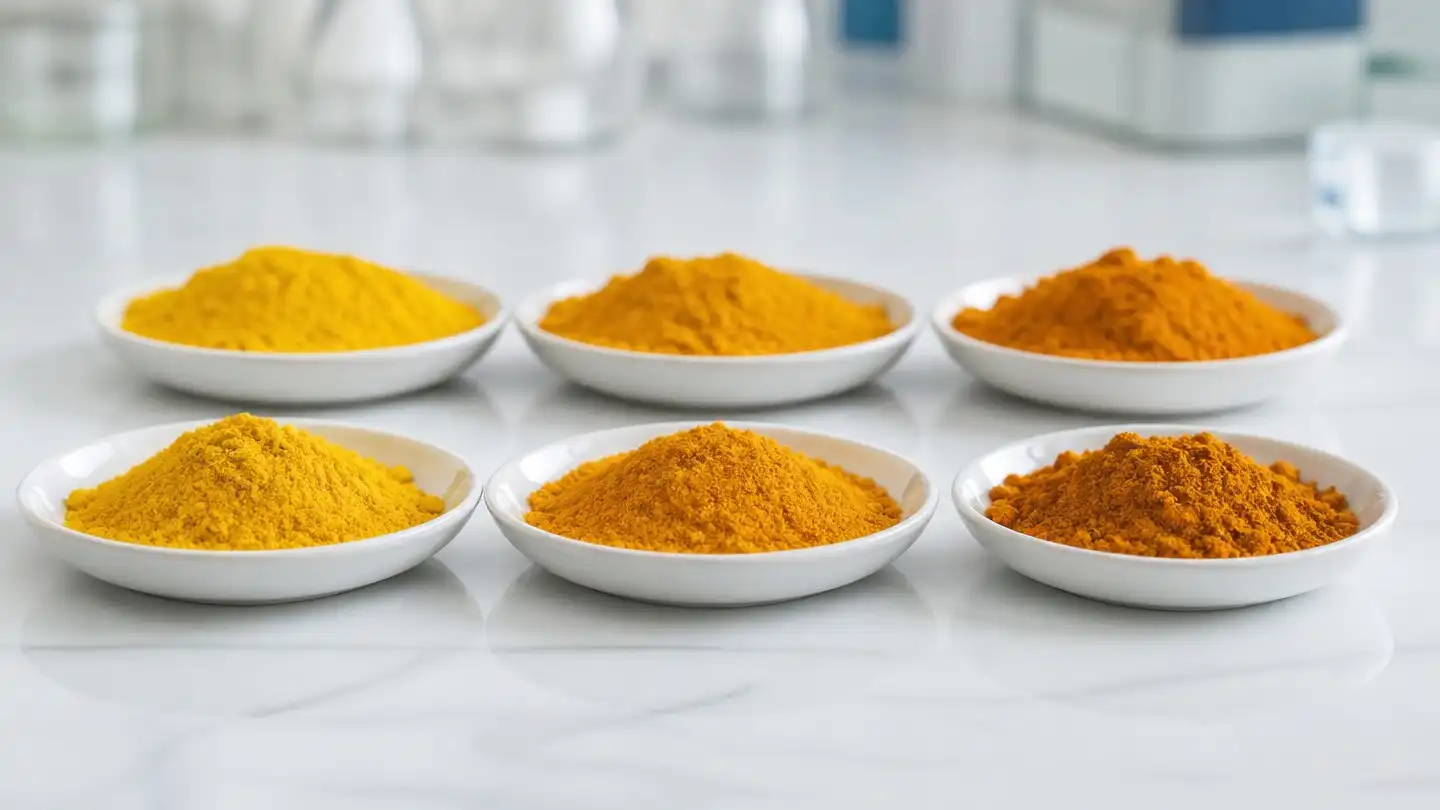
If you are planning a seasonal programme and need to align quantity with the harvest cycle, we can confirm the current specification, the production schedule window, the documentation set and the available certified quantity for the period. Send the grade, the annual volume and the destination market to wgt@allwellcn.com, and the team will respond with a schedule rather than a single figure.
References
- Codex Alimentarius Commission. General Standard for Contaminants and Toxins in Food and Feed (CXS 193-1995, as amended). FAO/WHO.
- United States Department of Agriculture. National Organic Program, 7 CFR Part 205. Current edition.
- International Organization for Standardization. ISO 6571 — Spices, condiments and herbs: determination of volatile oil content. 2008.
- International Organization for Standardization. ISO 3310-1 — Test sieves: technical requirements and testing. 2016.
- International Chamber of Commerce. Incoterms 2020. ICC, 2019.
- U.S. Food and Drug Administration. 21 CFR Part 101 — Food Labeling. Current edition.
This article is intended for business-to-business ingredient sourcing and formulation discussion. It does not provide medical, nutritional, or regulatory advice for any specific product or market.