Lion's Mane Mushroom Extract Powder: Mushroom Dosage, Benefits & Buying Tips
2026-07-27 17:42:49
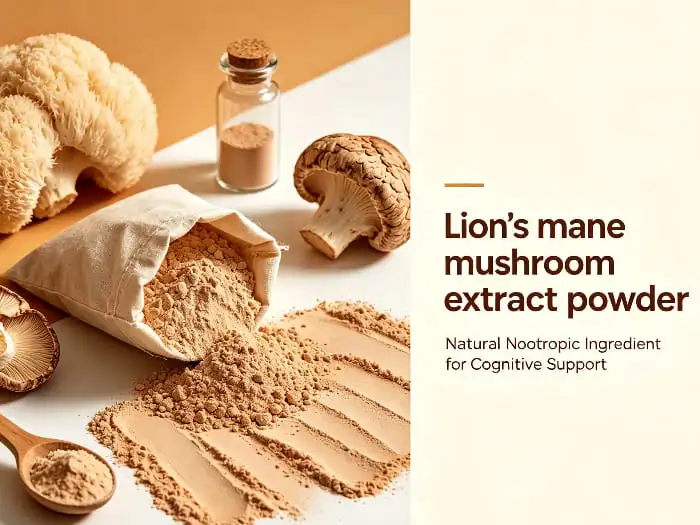
Lion's mane mushroom extract powder has emerged as a cornerstone ingredient for nutraceutical manufacturers seeking cognitive health solutions backed by solid science. Derived from the pristine fruiting bodies of Hericium erinaceus through gentle water and ethanol extraction methods followed by vacuum concentration and spray drying, this natural active ingredient delivers standardized polysaccharides alongside unique bioactive compounds—hericenones from fruiting bodies and erinacines from mycelium. These molecules cross the blood-brain barrier to stimulate nerve growth factor synthesis, positioning lion's mane as a premium choice for nootropic formulations, stress management products, and functional beverages targeting brain fog relief and focus enhancement across North American and Australian markets.
Understanding Lion's Mane Mushroom Extract Powder
What Makes Lion's Mane Extract Different from Whole Mushroom Products?
If you compare Lion's Mane mushroom extract powder to whole mushroom products, what makes them different? Quality is determined by how the product is made. In contrast to raw mushroom powder, which has chitin walls that can't be digested, Lion's mane mushroom extract powder concentrates bioactive polysaccharides by using controlled hot water extraction to break down cell structures and release beta-glucans that are necessary for immune modulation. Adding an ethanol step to dual extraction helps separate fat-soluble terpenoids like hericenones that hot water alone can't do. This two-step process adds compounds that aren't found in simple dried mushroom powders, capsules with mycelium-on-grain substrates, or alcohol tinctures that don't have water-soluble parts.
Standardisation is very important for business-to-business purchases. Reliable makers list the polysaccharide content, which is usually 30%, 40%, or 50%, and use enzymatic Megazyme tests to tell the difference between real beta-glucans and starch fillers. This check stops the adulteration that happens a lot when low-cost goods are mixed with rice or grain bases that add weight without adding any usefulness.
Extraction Methods and Purity Standards
When immune support is important, hot water extraction is the best way to get the polysaccharides out while keeping the molecules' integrity. When cognitive benefits are the main goal of formulation, dual extraction is a must, since hericenones need ethanol to dissolve properly. Heavy metals like lead, arsenic, cadmium, and mercury are taken out using chromatographic separation. This makes sure that the levels of lead and arsenic are below the FDA and EU limits of 2ppm and 1ppm, respectively.
GC-MS/MS multi-residue screening of over 400 substances shows that organic sources get rid of pesticide residues. Clean growing conditions keep things from getting contaminated, and ISO 22000 and GMP licenses show that each batch is the same. So that cheaper fungal varieties don't get used instead, procurement teams should demand Certificates of Analysis that show sulphur dioxide limits, microbial counts, and HPTLC fingerprinting that proves the species is real.
Safety Profile and Long-Term Use Considerations
Twelve-week clinical tests show that daily amounts of up to three grams are well tolerated. Mild stomach pain happens very rarely and usually goes away when the dose is changed or the timing of meals is changed. There are no major drug interactions reported in the literature. However, people who take blood thinners should talk to their doctors because of the possible effects on platelet aggregation seen in vitro. People who are pregnant or nursing don't have enough safety information, so the product description should leave them out as a safety measure.
Long-term supplementation keeps working without building up a tolerance, so Lion's mane mushroom extract powder can be used in formulas for long-term brain support. Because mushrooms can take in poisons from the environment, checking each batch for mycotoxins like aflatoxins and ochratoxin A makes sure that the food is safe. Hygroscopic polysaccharides easily take water from the air, which makes them clump together and makes it harder for them to flow when they are being encapsulated or tableted. Proper keeping in moisture-barrier packaging stops degradation.
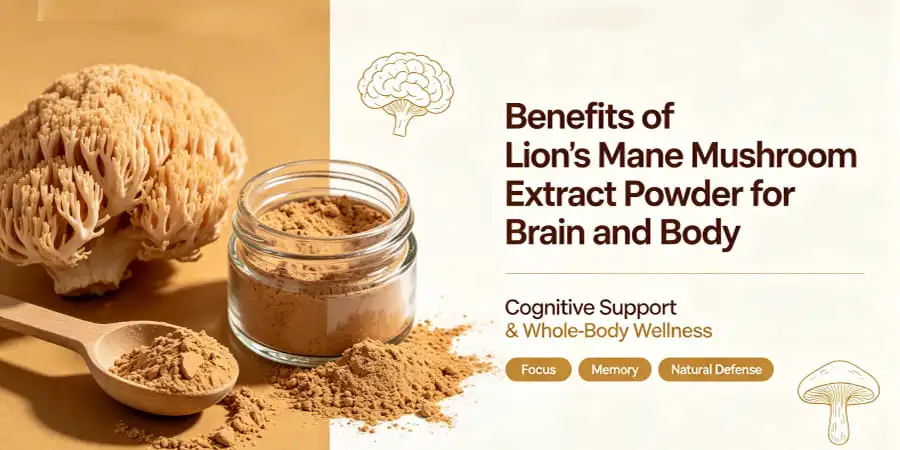
Benefits of Lion's Mane Mushroom Extract Powder for Brain and Body
Cognitive Enhancement and Neuroprotection Mechanisms
Research shows that only hericenones and erinacines can cross the blood-brain barrier. They then cause the production of nerve growth factors in the hippocampus and cortex, which are responsible for consolidating memories. This neurotropic activity helps broken neurones get myelin, which might slow down the cognitive loss that comes with getting older. After eight weeks of taking 750 mg of nootropics every day, controlled trials show measurable improvements in working memory tasks and processing speed. These results set formulation standards for nootropic brands that want to help professionals who are mentally tired.
The two-part mechanism helps with both short-term focus needs and brain health in the long term. Polysaccharide fractions modulate neuroinflammation through microglial regulation, creating neuroprotective environments that support synaptic plasticity. This link between the brain and gut has benefits beyond cognitive function. Improving the beta-glucan barrier helps the effects on the central nervous system, which is in line with cutting-edge studies on vagus nerve communication pathways between the stomach and neural systems.
Comparison with Combination Supplements
Lion's mane mushroom extract powder gives you more control over how you mix it than pre-mixed goods do, and for Lions Mane Extract Powder Wholesale, manufacturers can combine it with other nootropics that work well with it, such as L-theanine for nervousness reduction, citicoline for choline digestion support, or phosphatidylserine for membrane fluidity, while fixed-blend supplements don't let you make precise ratio changes that meet specific cognitive outcome targets like memory, attention, or mood stabilisation. Manufacturers can combine Lion's mane mushroom extract powder with other nootropics that work well with it, such as L-theanine, which lowers nervousness, citicoline, which helps the digestion of choline, or phosphatidylserine, which makes membranes more fluid. Fixed-blend supplements don't let you make precise ratio changes that meet specific cognitive outcome targets, like memory, attention, or mood stabilisation. This modular approach does.
More and more, isolated Lion's mane mushroom extract powder is used in clinical efficacy studies to find dose-response relationships. Products that contain more than one type of mushroom reduce the concentrations of each ingredient, making it harder to figure out which is responsible for the benefits seen and for regulatory support. Smart procurement teams know that separate ingredients with strong data on monotherapy are better for marketing claims and intellectual property rights than proprietary blends that don't make their composition clear.
Practical Dosage Guidelines for Product Formulation
Daily amounts that work run from 500 mg to 3000 mg, based on the concentration of the extract and the purpose of the use. Standardised 30% polysaccharide extracts usually suggest taking 1000–1500 mg per day, split into two servings. This is because this way, the nutrients are better absorbed and the serving sizes are still good for capsules or drinks. When it comes to timing, you can give it in the morning to help you focus or in the evening with relaxation herbs for stress management recipes.
Adding black pepper extract (piperine) or healthy fats to functional food matrices can help increase bioavailability. Dissolving Lion's mane mushroom extract powder in warm drinks speeds up gastric release compared to compressed pills, which need time to break down. Manufacturers that serve practical coffee markets like instant water-soluble grades that mix with cold brew without settling, which keeps the product's good looks, which is important for customer acceptance in premium beverage categories that are growing very quickly.
Comparison and Selection of Lion's Mane Mushroom Extract Powder Products
Evaluating Powder Formats Versus Capsules and Tinctures
Lion's mane mushroom extract powder is the most popular item bought by businesses because it can be used in a lot of different ways. Bulk powder can be put into controlled-fill-weight custom capsules, mixed into special recipes, or directly added to food materials like energy bars, protein shakes, and baked goods. Cost efficiency goes up as the quantity bought goes up—buying by the kilogram gives unit economics that isn't possible with pre-encapsulated products that cost more for packaging and labour.
Tinctures are used in specific situations where the high alcohol content and higher cost per dose are worth it because they are quickly absorbed under the tongue. But worries about shelf stability and transportation problems with ethanol-based products make them less appealing for global supply chains. Lion's mane mushroom extract powder stays stable at room temperature and has a long shelf life—24 months if kept properly—which makes it easier to keep track of inventory and cuts down on waste from expiration, both of which are important for lean production operations that want to get the most out of their working capital.
Buying capsules is only a good idea for small brands that want to see how the market reacts before investing in big powder. The structure of the markup makes it harder to optimise the profit margin, and for new businesses, the minimum order amounts often go beyond what they actually need. Once a company's volume levels allow for dedicated encapsulation lines or co-packing relationships with contract makers who handle powder-to-capsule conversion, they always switch to buying Lion's mane mushroom extract powder.
Quality Benchmarks and Third-Party Testing Requirements
The best extracts have more than 25% beta-glucan content, which was confirmed by chemical tests that separate functional (1→3),(1→6)-beta-D-glucans from alpha-glucan starches that increase polysaccharide rates without bioactivity. A starch content of less than 5% confirms that the source of the fruiting body is pure, as opposed to mycelium-on-grain products that contain rice or oat substrate residues that lower the active compound density. When the bulk density is between 0.45 and 0.65 g/ml, it means that the processing was done correctly and that there was no extra moisture or carrier added.
Particle size uniformity—95% passing 80-mesh screens—ensures even mixing in mixtures with multiple ingredients and steady dissolution rates that change the rate of absorption. Colour changes from light tan to deep brown depend on the extraction ratio and processing parameters. Reliable suppliers keep batch-to-batch consistency within defined chromatic ranges, so brands that care about quality don't have to deal with problems like finished product appearance changes. A moisture level below 5% stops microbes from growing and clumping during storage, and an ash level below 10% shows that there is only light mineral contamination from growth materials.
Comprehensive testing panels should document:
- Heavy metal screening via ICP-MS confirms that the levels of lead (0.5 µg/day) and arsenic, cadmium, and mercury meet California Prop 65 safety standards.
- Pesticide residue analysis covering pyrethroids, fungicides, and organophosphates using approved multi-residue methods that can find amounts in parts per billion.
- Microbial limits meeting the standards for dietary supplements for total plate count (<10,000 CFU/g), yeast/mold (<1,000 CFU/g), and the lack of pathogens like Salmonella, E. coli and Staphylococcus aureus.
- Mycotoxin screening quantifying aflatoxins and ochratoxin A below the amounts required by law to protect people's health.
Validation by a third-party lab from an ISO/IEC 17025-certified facility gives marketing claims and regulatory submissions more weight. Buyers should ask for full paperwork that includes the methods used, the limits of what can be detected, and the qualifications of the analyst to show that they are technically competent.
Buying and Procuring Lion's Mane Mushroom Extract Powder for Business Needs
Direct Manufacturer Relationships Versus Marketplace Sourcing
Partnering with GMP-certified manufacturers provides quality security and a clear view of the Lion's Mane mushroom extract powder supply chain that you can't get from trading sites. Direct connections allow facility checks, process validation, and collaborative product creation where specs can be changed to fit the needs of each formulation. Communication channels help solve problems quickly and give technical advice on the best usage rates, stability testing, and getting regulatory paperwork ready for entering the market.
Marketplace sourcing adds extra layers of complexity that make it harder to confirm the source of goods and raise the risk of pollution by adding more places where they are handled. People think that online platforms are more convenient, but the fact that you can't physically check factory settings or certifications makes quality assurance programs less reliable. There are a lot of fake certificates of analysis out there, so it's important to have independent proof through retained sample testing. This is more expensive than going straight to the maker, but it's necessary.
Minimum order quantities vary significantly. Established makers usually need 50–100 kg contracts to make sure production runs smoothly. Smaller speciality houses, on the other hand, can handle 25 kg trial orders to help with product development. Negotiation power increases when you commit to a certain amount of goods. For example, annual contracts that call for deliveries every three months get better terms, like longer payment terms, consignment inventory arrangements, and dedicated technical support that speeds up the time it takes to launch a new product.
Organic Certification and Clean Label Considerations
Premium pricing is caused by consumers' desire for organic certification, but it also expands the market segments that can be sold at higher prices, which is why ingredient costs go up. To get USDA Organic, EU Organic, or a similar foreign certification, you have to show that the growing, processing, and handling of the food follows strict rules that don't allow synthetic pesticides, fumigants, or irradiation. Certification groups do checks every year to make sure that rules are being followed. This gives marketing credibility that is hard for rivals without credentials to copy.
Clean label trends stress using few chemicals and being clear about what they are. People like natural products, so Lion's mane mushroom extract powder processed without using any chemicals other than food-grade ethanol is a good fit. Suppliers that offer non-GMO certification, gluten-free certification, and allergen-free guarantees give brands that cater to specific dietary groups more formulation options. These certifications need different paperwork and testing procedures, which makes the buying process more difficult but helps finished products stand out in a crowded market.
Logistics and International Shipping Considerations
With the right packing, wetness and oxidative damage can't happen while the goods are in transit. For domestic shipments, multi-layer aluminium foil bags with zip-lock closures and outer corrugated boxes are enough to keep the goods safe. For international ocean freight that has to deal with long transit times and changes in temperature, vacuum-sealed metallised pouches inside fibre drums are best. Desiccant packets keep the primary packing dry, which keeps the Lion's mane mushroom extract powder mobile and stops it from clumping, which would slow down production.
Customs documentation requirements vary by destination country. Harmonised System numbers put mushroom extracts into specific tariff groups that change the rates of tax and the limits on imports. Depending on the rules for importing agricultural products that cover fungi, health certificates, phytosanitary certificates, and fumigation documentation may be needed. Manufacturers with a lot of experience hire regulatory experts to help them deal with these complicated issues. This makes sure that customs clearance goes smoothly and that there aren't any costly delays that mess up production schedules or break customer promises.
Shipping insurance that covers the value of the goods protects them from damage or loss while they are being shipped. Having clear terms that spell out how to file a damage claim, when to get a replacement product, and who is responsible for what keeps disagreements from ruining business relationships. International terms like FOB, CIF, and DAP set cost and risk transfer points that need to be carefully looked over to make sure they are in line with budget expectations and working capital limits that affect managing cash flow.
How to Choose the Best Lion's Mane Mushroom Extract Powder for Your Business?
Defining Quality Standards and Certification Requirements
Specifications for buying Lion's mane mushroom extract powder should include polysaccharide content ranges, beta-glucan minimums, and starch maximums, and for Lions Mane Extract Powder Wholesale, limits on moisture stop microbes from growing, and limits on heavy metals make sure that consumers are safe and that regulations are followed in all target areas, while different particle sizes have an effect on the manufacturing process—finer meshes work best for beverage applications that need fast dispersion, while coarser grades work well for encapsulation where dissolution happens after consumption. This will help make objective acceptance standards. Limits on moisture stop microbes from growing, and limits on heavy metals make sure that consumers are safe and that regulations are followed in all target areas. Different particle sizes have an effect on the manufacturing process. Finer meshes work best for beverage applications that need fast dispersion, while coarser grades work well for encapsulation where dissolution happens after consumption.
Certification portfolios distinguish professional sellers can be told apart from shady traders. GMP approval verifies controls in the manufacturing process, such as training for workers, equipment testing, and cleaning methods that stop contamination. ISO 22000 food safety management systems show thorough risk assessment and the use of critical control points (HACCP) to keep the integrity of the product while it is being made. Halal and Kosher certifications make it easier for religious groups, which make up big parts of North America's consumer population, to buy things.
Formulation compatibility testing during supplier evaluation prevents downstream issues. Stability studies assessing colour changes, moisture uptake, and active chemical breakdown under fast-aging conditions can be used to guess how long something will last on the shelf. Compatibility with other formula ingredients—checking for interactions that might change taste, look, or potency—avoids expensive reformulation cycles that delay product starts and make companies less competitive in supplement categories that change quickly.
Evaluating Supplier Reliability and Transparency
The first step in evaluating a vendor is checking the facility's credentials and production capacity. Site visits show how advanced the equipment is, how clean the workplace is, and how skilled the staff is, all of which can be used to predict consistent output quality. Suppliers with various production lines show that they can handle growing business needs without affecting lead times or giving capacity to competing customers during busy times.
Full disclosure of extraction ratios, carrier materials, and processing aids is part of product transparency. Some companies use maltodextrin or silicon dioxide as flow agents to make their products easier to handle. Knowing about these additions makes sure that the formulas are correct and that the labels are followed. Concerns about adulteration or quality steps that go against expensive brand positioning strategies are raised when suppliers refuse to give full composition disclosure.
Responding to communication requests and providing technical help are signs of partnership possibility that goes beyond transactional relationships. Suppliers who offer formulation advice, regulatory documentation templates, and the chance to work together on a stability study add value that goes beyond providing raw materials. The consultative method shortens the time it takes to make a product, lowers the cost of making mistakes, and uses the supplier's experience gained from working on many different projects for different clients to help create best practices that can be used on new projects.
Critical Questions for Supplier Selection
Before finalizing partnerships, procurement teams should confirm:
- What is the starch content of your lion's mane extract? Values below 5% are acceptable and show pure fruiting body sourcing without grain substrate contamination diluting active compounds.
- Which testing method validates your polysaccharide claims? Megazyme enzyme tests tell the difference between beta-glucans and alpha-glucans, which is better than using general UV spectroscopy to measure total carbohydrates, which includes inactive parts.
- Can you provide retained sample testing from independent laboratories? Third-party proof through random testing makes sure that Certificates of Analysis made by suppliers are correct, which protects against fake paperwork.
- What is your standard lead time and what happens during supply disruptions? Knowing production cycles and having backup plans in place keeps you from running out of stock when yearly changes in farming happen, or demand rises without warning.
- Do you offer product customization for specific extraction ratios or particle sizes? Flexibility means having the technical know-how and the willingness to come up with custom solutions that help differentiate products in their own right.
- What documentation supports your organic certification claims? By looking at real certificates from reputable organisations like the USDA or Ecocert, you can be sure that the product is real and not just saying it's organic without any proof.
Conclusion
The cognitive health and functional mushroom markets are expanding quickly, and Lion's mane mushroom extract powder is an ingredient that has been proven to work. To be successful at procurement, you need to know how to extract polysaccharides, make sure that they are standardised, and build direct ties with manufacturers to ensure quality and openness. The unique ability of hericenones and erinacines to cross the blood-brain barrier and stimulate nerve growth factor synthesis supports strong product claims backed by clinical evidence. Additionally, their dual benefits in neuroprotection and gastrointestinal health make them useful for a wide range of formulations in nootropics, functional beverages, and wellness supplements. For strategic sourcing to work in competitive North American markets that want clean-label, effective ingredients, suppliers must be carefully screened, their testing must be thorough, and licensing profiles must be carefully watched over.
FAQ
What is the optimal daily dosage of lion's mane extract for cognitive benefits?
Clinical tests show that taking 500 mg to 1500 mg of a standardised Lion's mane mushroom extract powder containing 30% polysaccharides every day works. The benefits build up over eight to twelve weeks of regular supplementation. Higher doses, up to 3000 mg per day split between meals, may be used in formulas for acute focus. Lower doses are usually used in maintenance routines for long-term brain health. Dosing is affected by the concentration of the extraction; for example, smaller portion amounts are needed for higher polysaccharide percentages to have the same bioactive effect. Product designers should think about the age and gender of their target audiences. For example, older adults may need longer periods of supplementation to see measurable cognitive improvements than younger people who want to improve their performance.
Are there known side effects or precautions with lion's mane supplementation?
According to published studies, Lion's mane mushroom extract powder is very safe. The only side effects were mild digestive problems in less than 5% of participants, which were usually resolved by lowering the dose or taking it with food. For people who are allergic to mushrooms, there are theoretical worries, but lion's mane rarely causes the allergic reactions seen with other types of mushrooms. There are no known major drug combinations in the literature. However, people who take immunosuppressants should talk to their doctors because polysaccharides can change the immune system. There aren't enough safety data on breastfeeding and pregnancy yet, so products aimed at these groups should be cautiously avoided until more research is done.
How can buyers verify supplier authenticity and product quality?
To start the verification process, full Certificates of Analysis from third-party accredited laboratories must be requested, not just internal testing documents made by the supplier. Independent verification through retained sample testing at facilities chosen by the buyer confirms the accuracy of the information and finds fake paperwork. Supplier site audits check for GMP compliance, calibrated equipment, and process controls that predict group consistency. Validating a certificate means calling the organization that issued it directly—the USDA for organic claims and ISO officials for quality management systems—to make sure the certificate is real and still valid. The risk that comes with getting ingredients from unknown sources can be reduced by building relationships with reputable makers and keeping clear contact and detailed records.
Partner with Wellgreen for Premium Lion's Mane Mushroom Extract Powder
With GMP-certified ingredients standardised to 30%-50% polysaccharides, confirmed beta-glucan content, and low starch levels, Wellgreen Technology is your go-to source for Lion's mane mushroom extract powder. Our fruiting body extracts are 100% pure and go through a strict multi-stage chromatographic processing process. This makes sure that they are free of heavy metals and pesticides and dissolve instantly in water, making them perfect for use in functional beverages. We support OEM/ODM partnerships by offering flexible minimum order quantities, extraction ratios that are tailored to your cognitive health formulations, and full regulatory documentation that makes it easier for you to get into the market. Wellgreen is your strategic partner for sourcing premium mushroom extracts for the competitive North American nutraceutical market. They have a large inventory that allows for quick fulfilment, third-party testing that confirms the quality, and dedicated technical support that helps you figure out the best way to use the extracts. Email our team at wgt@allwellcn.com to talk about your unique needs, ask for samples, and find out how our manufacturing know-how and reliable supply chain can help your product line with this powerful nootropic ingredient.
References
1. Mori, K., Inatomi, S., Ouchi, K., Azumi, Y., & Tuchida, T. (2009). Improving effects of the mushroom Yamabushitake (Hericium erinaceus) on mild cognitive impairment: a double-blind placebo-controlled clinical trial. Phytotherapy Research, 23(3), 367-372.
2. Friedman, M. (2015). Chemistry, nutrition, and health-promoting properties of Hericium erinaceus (Lion's Mane) mushroom fruiting bodies and mycelia and their bioactive compounds. Journal of Agricultural and Food Chemistry, 63(32), 7108-7123.
3. Brandalise, F., Cesaroni, V., Gregori, A., Repetti, M., Romano, C., Orrù, G., Botta, L., Girometta, C., Guglielminetti, M.L., Savino, E. & Rossi, P. (2017). Dietary supplementation of Hericium erinaceus increases mossy fiber-CA3 hippocampal neurotransmission and recognition memory in wild-type mice. Evidence-Based Complementary and Alternative Medicine, 2017, Article ID 3864340.
4. Khan, M.A., Tania, M., Liu, R., & Rahman, M.M. (2013). Hericium erinaceus: an edible mushroom with medicinal values. Journal of Complementary and Integrative Medicine, 10(1), 253-258.
5. Li, I.C., Lee, L.Y., Tzeng, T.T., Chen, W.P., Chen, Y.P., Shiao, Y.J., & Chen, C.C. (2018). Neurohealth properties of Hericium erinaceus mycelia enriched with erinacines. Behavioural Neurology, 2018, Article ID 5802634.
6. Sabaratnam, V., Kah-Hui, W., Naidu, M., & Rosie David, P. (2013). Neuronal health – can culinary and medicinal mushrooms help? Journal of Traditional and Complementary Medicine, 3(1), 62-68.