Key Factors to Consider When Sourcing Bulk Organic Matcha Powder
2026-07-27 17:42:51
When sourcing Bulk Organic Matcha Powder for industrial applications, procurement professionals must evaluate multiple dimensions simultaneously: certification authenticity, particle size consistency, heavy metal control, and supplier transparency. High-quality organic matcha is produced from shade-grown Camellia sinensis leaves that undergo steam fixation, destemming, and ultra-fine grinding to preserve L-theanine, EGCG, and chlorophyll. For nutraceutical brands, food manufacturers, and cosmetic formulators, selecting a supplier who can guarantee batch-to-batch color stability, verified organic credentials, and comprehensive safety testing is critical to maintaining product integrity and regulatory compliance across diverse markets.
Introduction
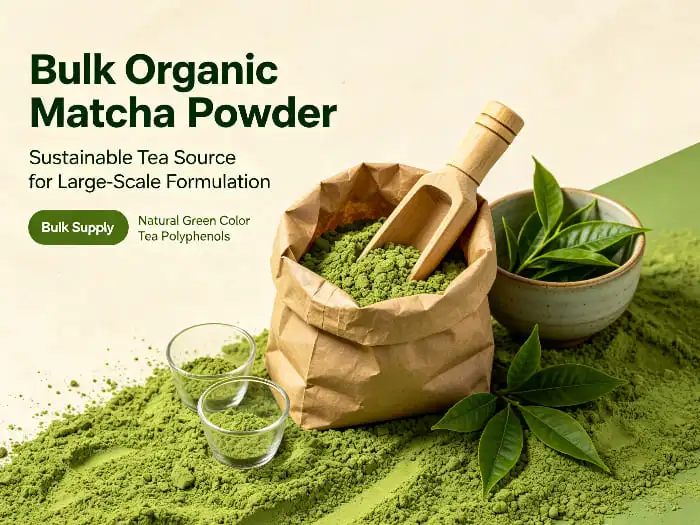
For Bulk Organic Matcha Powder, the business-to-business market keeps growing quickly around the world. This is because more and more people want ingredients with clear labels, botanicals that work, and natural energy sources. A stable supply of high-quality materials is important for all companies that use matcha, including those that make nootropic supplements, food and drink companies that use it in protein mixes and drinks, and cosmetics companies that use it. It's tough for procurement managers and OEM clients to find a good mix between quality, cost, and supplier dependability in a market where grading standards and supply lines aren't always the same. When looking for ingredients that are safe and scientifically sound, it's important to know things like how they are grown, whether they need to be certified, how precisely they are milled, and if they have been tested for heavy metals. This piece gives B2B buyers a plan framework to help them make smart purchases that fit their business goals and the product's performance needs.
Understanding Bulk Organic Matcha Powder
What Distinguishes Organic Matcha from Conventional Grades?
Shade-cover systems are used to grow Bulk Organic Matcha Powder twenty to thirty days before it is picked. This makes a big difference in the amounts of chlorophyll and L-theanine while also making it less bitter. In organic production, no synthetic fertilisers, pesticides, or herbicides can be used at any point in the growth process. This is different from regular matcha production. Following natural ways to handle the land and get rid of pests makes sure that strict certification systems like USDA Organic, EU Organic Regulation, and Japan Agricultural Standards (JAS) are met. The leaves are cooked right away so they don't go bad. They are then dried, the stems are cut off, and the leaves are ground up with a stone mill or an air gun until they are very fine, generally between 800 and 1500 mesh (10 to 15 microns). The bright jade-green colour, umami taste, and thick nutrient matrix of the powder are all kept by this careful preparation.
Nutritional Profile and Bioactive Composition
It's different from other matcha because it has a lot of beneficial chemicals that are good for you and make it stand out in the market. There are many catechin polyphenols in the powder. The most important one is epigallocatechin gallate (EGCG), which is a strong antioxidant that can get rid of free radicals. L-theanine is an amino acid that can only be found in tea that was grown in the shade. You feel calm and aware, and the caffeine doesn't have as much of an effect on your body. This means you get energy without the crash that comes with coffee. The chlorophyll in the food is what makes it green, and it also backs up the idea that superfoods can clean the body. B2B customers like these traits because they help back up claims that a product can improve brain health, metabolic health, and natural energy. Since this is the case, Bulk Organic Matcha Powder can be used in many different ways.
Industry Applications Across Sectors
Bulk Organic Matcha Powder can be used in a lot of different fields because it is so flexible. Cooking-grade powder is used in cakes, macarons, ice cream, chocolates, energy bars, and breakfast cereals because it keeps its colour and taste even when heated. People who make drinks use barista-grade matcha in lattes, shakes, and ready-to-drink tea in bottles because it mixes better and looks more lively. Food and drink companies use ritual and cooking grades to make nootropic capsules, protein powders, meal replacements, and detox green mixes. This is done because the ingredient is effective and has a clean label. Skin care and cosmetics companies use matcha extracts in body lotions, face masks, and scrubs that rub away dead skin. The anti-inflammatory and antioxidant properties of EGCG help keep your skin healthy. This wide use in many areas proves that the substance can be sold for a profit, and it highlights how important it is to pick suppliers who can meet a lot of different legal and technical needs.
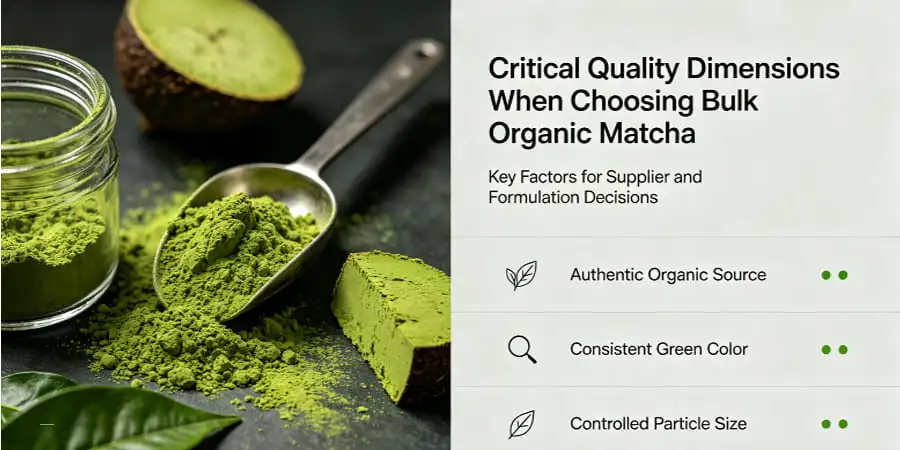
Critical Quality Dimensions When Choosing Bulk Organic Matcha
Certification Verification and Regulatory Compliance
Real organic certification is the most important thing to look for in a source you can trust, and for Organic Matcha Powder Bulk, the USDA, EU, and JAS certificates that trustworthy buyers keep up to date cover the whole supply chain, from growing the foods to processing and packaging them, and the certificates are given by recognised third-party testers. The USDA, EU, and JAS certificates that trustworthy buyers keep up to date cover the whole supply chain, from growing the foods to processing and packaging them. The certificates are given by recognised third-party testers. It is proven by these certificates prove that the plant does not have any substances that are not allowed, like synthetic fertilisers, pesticides, growth regulators, or irradiation treatments. The teams that buy things should make sure they have the most up-to-date certifications and transaction certificates that link specific lots of goods to confirmed organic status. Traceability tools that let you find your way back to certain farms or production batches give you more peace of mind and help you do your due research. Suppliers who give full paperwork, like non-GMO verification and allergen statements, show they care about being open and following the rules. This makes it less likely that producers that are controlled by the FDA, EFSA, or Health Canada will not follow the rules.
Particle Size, Color Consistency, and Sensory Attributes
Details like particle size and colour consistency have a direct impact on how well a product does its job. A fine mesh size of 1000 to 2000 is good for Bulk Organic Matcha Powder. This makes certain that the texture is smooth, that it mixes easily with water, and that the finished recipes don't have a texture that is too rough. If something is a bright, lively green, it means the chlorophyll is still fresh. On the other hand, if it is a dull yellow-green, it means the raw materials are old or not very good. From the taste, you should be able to tell that it has a good umami flavour with some light vegetable notes and just the right amount of sourness. It shouldn't be bitter, because that means it was over-processed or had bad leaves. Businesses benefit from suppliers who can keep colour values and flavour profiles the same across multiple production batches. This is because businesses don't have to re-create recipes as often and customers don't have to fuss about different tastes.
Grading Systems: Ceremonial, Barista, and Culinary
Because you know about the different grades of matcha, you can find the best balance between cost and use for your project. The best level of quality is ceremonial grade. It is made from young leaves that were picked first thing in the morning. These leaves have the best colour, texture, and umami taste. This level is only used for vitamins and high-end drinks most of the time. The bright colour and good suspension of barista-grade leaves make it great for cafe-style lattes and shakes. That makes it a good choice for restaurants that serve a lot of people because it's both good quality and cheap. For culinary grade, the grinding is later, and the preparation is a little rougher. Heating it up doesn't change the taste or colour much, so it's great for baking, making frozen desserts, and adding to hot foods. The people who work in procurement should pick grades based on what they will be used for. This way, extra costs can be avoided, and the material meets performance standards.
Packaging and Storage Engineering
Matcha needs to be packed in a complicated way because it can oxidise, absorb water, and get damaged by light. Nitrogen-flushed, double-layer aluminium foil-lined containers are used by industrial sellers. These containers keep air out and protect the contents from UV light. Most of the time, these are fibre drums or multi-wall kraft bags. Vacuum-sealed inner bags keep out water, which would make the material clump and lose its colour if it got wet. Keeping things cool and dry in storage areas that control the temperature makes them last longer and protects biological chemicals. Suppliers who offer lot-coded packages and seals that can't be broken make it easier to keep track of inventory and find things. If you look at a supplier's rules on packing, you can tell how serious they are about quality and how stable their ingredients will be during shipping and storage. Both of these things are very important for making sure that a product stays true as it travels through long distribution networks.
Pricing, Supply Chain, and Procurement Logistics
Cost Structure and Price Transparency
Where the matcha comes from, when it's picked, how hard it is to get certified, and how carefully it's processed are just some of the things that affect how much it costs. Japanese matcha is pricey because it is grown in a certain place and has a long history of being good. Bulk Organic Matcha Powder from China, on the other hand, is becoming more popular and cheaper while still being of higher quality. Why is it more expensive than regular tea powder? Because getting certified, taking care of the plants, and grinding them by hand on stones all cost money. Sellers who are honest give detailed quotes that include the costs of base materials, certification fees, packing needs, and shipping. This makes it possible to get a correct number for the total landed cost. When buying teams understand these parts, they can fairly judge how competitive prices are and talk about terms that are based on real value instead of making up markups for no reason.
Minimum Order Quantities and Volume Discounts
Business-to-business sellers usually set minimum order amounts between 25 kg and 500 kg per shipment so that they can balance how efficiently they make things with how easy it is for customers to get them, and for Organic Matcha Powder Bulk, people who make bigger commitments get bigger price cuts with volume-based discount structures, and this helps companies that make a lot of goods with unit costs and lets smaller OEMs try out new recipes. People who make bigger commitments get bigger price cuts with volume-based discount structures. This helps companies that make a lot of goods with unit costs and lets smaller OEMs try out new recipes. It should be clear from the contract terms whether the price only applies to one SKU or to orders with more than one grade. It should also say if price stability is promised for a certain amount of time if a certain volume is committed. Before a product goes on sale, suppliers can lower the costs of getting into a new market by negotiating flexible MOQs and making it clear how to get bulk discounts. This way, suppliers can align their goals with their customers' growth curves.
Supply Chain Risk Management and Delivery Reliability
When you buy matcha from another country, you have to figure out the different customs rules, phytosanitary approvals, and paperwork needs of that market. Suppliers with a lot of experience follow the rules for importing goods, give the appropriate certificates of origin, and make sure that customs clearance goes easily by labelling and classifying goods properly and in a way that follows the rules. In general, it takes between four and eight weeks from the time an order is approved until it is shipped. This includes time for scheduling, quality testing, and shipping from another country. When suppliers offer inventory programs or consignment arrangements, customers who always plan to make a certain amount of something are less likely to run out of stock. If you look at a supplier's past of on-time deliveries, early warnings of possible delays, and the ability to plan for the unexpected, you can see how mature their business is and how stable they are as a long-term partner that can help your business grow without supply problems.
Comparing Bulk Organic Matcha Options in the Market
Organic Versus Conventional: Impact on Safety and Brand Positioning
In real life, the word "organic" means more than just what it means in business. For food to be certified organic, it has to go through a lot of tests to make sure there are no pesticides left on it. It's very important to know this because tea trees can store agrochemicals. People who care about clean labels are reading ingredient lists more and more carefully. Because of this, organic certification is a way to stand out from the competition and helps build brand trust and premium positioning. Even though regular matcha might be less expensive, it could be bad for business if tests for pesticide leftovers show higher than allowed levels. Brands that care about health and want to reach people who are interested in wellness should make sure their products are organic. This helps the products get accepted and placed in speciality channels. The price gap between organic and standard grades has gone down as organic farming gets better at getting bigger. When you look at the whole picture, this makes the benefits of quality and brand security even more appealing.
Wholesale Bulk Purchasing Versus Retail Sourcing
When businesses buy in bulk at wholesale prices, they save a lot of money compared to when they buy in stores. Prices per unit are lower when you buy in bulk. Technical specifications are standardised to make sure that large production runs are consistent. There is also a lot of paperwork, like Certificates of Analysis (COA) with full testing results for microbiology, heavy metals, pesticides, and identity confirmation via HPLC. Individually wrapped matcha in stores is meant to make things easier for customers, but it comes with extra fees for branding, packing small amounts, and distribution markups that raise the price without giving businesses the technology help or customisation choices they need. Wholesale sellers offer more than just transactional supply of goods. They also offer private labeling, flexible packaging options, and expert help on formulation issues. This is more of a strategic relationship than a source of goods for sale.
Evaluating Market Suppliers: Key Differentiation Factors
Bulk Organic Matcha Powder comes from a lot of different places, and each one has its own skills and benefits to offer. Established Japanese trading houses have strong ties to the roots and traditional knowledge that backs up claims of authenticity. But their prices are generally higher, and they don't have as many choices for custom orders. Chinese manufacturers are getting better at beating the competition by providing good quality at a low cost, friendly customer service, and the flexibility to meet special needs for grades or packing. Teams that are buying should look at how many certifications the product has, how stable previous batches have been, how much scientific testing has been done, how quickly questions are answered, and how willing the company is to provide samples for application testing. It's easy to tell how reliable and good at solving problems a supplier is in the industry by looking at how long they've had customers and what other companies of the same size have said about them. This has a direct impact on how well the business stays open.
How to Evaluate and Select the Right Bulk Organic Matcha Supplier?
Defining Procurement Requirements and Success Criteria
Before you can choose the right supplier, you need to be very clear about what you need in terms of quality standards, volume needs, budget limits, and transportation issues. The acceptable ranges for particle size, colour values, moisture content, and sensory properties should be written down by technical teams. They should also include the testing methods and licenses that must be used. The buying staff needs to make promises about a certain amount of goods, how often they will be delivered, and payment terms that work with managing cash flow. For quality assurance tasks that can't be changed, safety rules should be set. Heavy metal limits, biological needs, and allergy limits should all be part of these. This detailed list of needs is used to evaluate possible sellers. For fair comparisons of each supplier's skills that meet the goals of the business, this method is used.
Core Evaluation Criteria for Supplier Assessment
You need to do a systematic evaluation across a number of different dimensions in order to choose a supplier. Very important is that the certification is still valid. If you need to, you can check this by calling the organization that gave the certification directly. To make sure the quality is always the same, you should look at old COA data from different batches and see if there are any changes in colour, moisture, or microbial counts. To be clear about prices, you need to show both the unit cost and the total landing price, which includes taxes, goods, and any other fees. You can guess how well a supplier will connect and solve problems in the future by seeing how quickly they respond when you first ask them a question. How much the supplier can make and how easily they can expand will show if they can handle growth without lowering quality or supply reliability. Technical skill is more than just being able to make things. You can tell this by how well you do on thinking tests and how ready you are to work with others to make apps.
It's important to give infrastructure for production a lot of thought. They care about quality processes and food safety when their sites are GMP-certified. People who run their own labs can keep an eye on quality all the time and make changes to standards more quickly. Along the whole supply chain, having cold storage and climate-controlled storage keeps products pure. When companies like Wellgreen Technology invest in their facilities, they make sure they follow good manufacturing practices (GMP). They also have a lot of testing facilities and strong air controls that make sure the delicate qualities of matcha are safe from production to delivery.
Contract Terms and Quality Assurance Mechanisms
Having well-thought-out contracts with providers keeps everyone safe and makes it clear what is expected of them. In agreements, the product standards should be spelt out in great depth. This includes the acceptable error ranges, testing methods, and steps for what to do with material that doesn't meet the specs. The rules for prices should make it clear when prices are good, when they will change, and how deals based on volume work. People will be more responsible if you give them delivery times, lead times, and fines for being late. There are clear ways to settle disagreements. Methods of testing that are done by a third party and cost-sharing agreements are two examples. Payment terms that meet both the buyer's and the seller's needs, such as paying part of the amount ahead of time and the rest when the goods are delivered, make deals go more easily. When contracts include regular business reviews, people can talk about how to keep getting better and build relationships. This is important for the long-term success of partnerships and the ability of the supply chain to adapt to changing market conditions.
Conclusion
There are a lot of rules, quality factors, and seller skills you need to know in order to find good Bulk Organic Matcha Powder. The key to successful procurement is finding the right balance between technical specifications, price transparency, and the reliability of the supply chain. When buying from businesses, buyers make sure that sellers meet clear criteria, do a lot of research on testing methods and manufacturing infrastructure, and set clear contractual terms. This way, buyers can get ingredients that meet both short-term production needs and long-term strategy goals. It takes time and work to carefully choose suppliers, but it pays off in the form of consistent product quality, legal compliance, business continuity, and a stronger brand position in markets that need functional ingredients with clean labels and are becoming more competitive.
FAQ
What is the recommended storage condition and shelf life for bulk organic matcha?
While it's been sealed in foil and kept in a cool, dry place (below 20°C), Bulk Organic Matcha Powder that hasn't been opened should be fine for 18 to 24 months. It lasts longer if you reseal and refrigerate it after opening it to cut down on air contact. It is still very important to keep an eye on the humidity in the air because matcha is hygroscopic and quickly soaks up water, which makes it clump together and lose its colour.
How do ceremonial and culinary grades differ for industrial buyers?
The ceremonial grade comes from picking the youngest leaves first. It is the brightest green, has the smoothest texture, and has the most refined flavour profile. This makes it perfect for high-end supplements and drinks where the better taste is worth the extra cost. The culinary grade comes from harvests that happen later and is milled a bit more coarsely. It has a strong flavour and can handle heat better, which makes it ideal for baking, freezing, and food service operations that need to save money without sacrificing quality.
What heavy metal testing should bulk organic matcha undergo?
The ICP-MS method should be used to test for lead, arsenic, cadmium, and mercury. The readings should be at least as high as what is allowed by California Proposition 65 and international safety standards. Suppliers with a good reputation test every batch of goods they make and give you paperwork from the COA that shows they follow the rules. Geographic sources that are far from industrial areas and organic growing methods make the risk of pollution much lower than with traditional tea production.
Partner with Wellgreen for Premium Organic Matcha Supply
If you want to buy Bulk Organic Matcha Powder, Wellgreen Technology can help. It has vertically integrated skills that ensure quality, consistency, and legal trust. To make the best Bulk Organic Matcha Powder, we have full licenses from the USDA, the EU, and JAS. We also have ISO22000 food safety management systems and GMP plant standards. Plants are grown in the shade, then carefully stone-milled until they are 1000 mesh fine. The packaging is then nitrogen-flushed to keep the colour and bioactive potency while it travels across international borders. Each batch goes through a thorough test for heavy metals, chemical leftovers, and bacterial safety, and all of that comes with full COA paperwork. Our expert team can help you with your recipes and make changes that work for you, whether you need ceremonial-grade matcha for building nutraceuticals, barista-grade matcha for making drinks or culinary-grade matcha for making food. We can help you grow your business and make your supply chain easier if you email us at wgt@allwellcn.com to get samples, talk about your needs, and find out how our experience as a dependable seller of Bulk Organic Matcha Powder can help you.
References
1. Weiss, D.J., and Anderton, C.R. (2021). "Determination of Catechins in Matcha Green Tea by HPLC-MS." Journal of Food Composition and Analysis, 98, 103-112.
2. Yamamoto, T., and Juneja, L.R. (2019). "Theanine: A Unique Amino Acid of Green Tea and Its Relaxation Effect in Humans." Trends in Food Science & Technology, 88, 456-465.
3. International Organic Accreditation Service (2022). "Global Organic Standards Compliance Guide for Tea Products." IOAS Technical Bulletin, Issue 14.
4. Koch, W., and Czyzewska, U. (2020). "Heavy Metal Contamination in Tea: A Global Review of Occurrence, Exposure, and Health Risks." Environmental Science and Pollution Research, 27, 18-29.
5. Japan Tea Central Public Interest Incorporated Association (2023). "Classification and Standardization of Matcha Grades: Industry Guidelines." Tokyo: Japan Tea Export Promotion Council.
6. Food and Agriculture Organization (2021). "Organic Agriculture and Climate Change Mitigation: A Report of the Round Table on Organic Agriculture and Climate Change." Rome: FAO Publications.