Mulberry Leaf Extract Powder: The Ultimate Natural Blood Sugar Regulator
2026-07-02 13:59:01
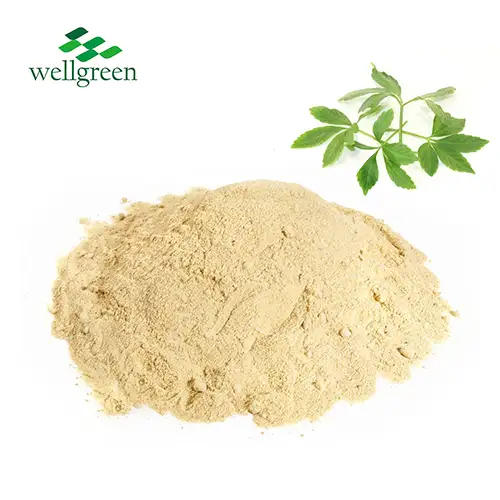
The leaves of the Morus alba plant are used to make mulberry leaf extract powder, a potent herbal ingredient that has been shown to help control blood sugar. Through controlled extraction and ultra-fine milling, this standardized extract contains bioactive chemicals, mainly 1-deoxynojirimycin (DNJ), polyphenols, and flavonoids. As plant-based metabolic health solutions become more popular around the world, procurement professionals in nutraceuticals, pharmaceuticals, and functional foods know how useful this ingredient is for making products that meet consumer demand for natural blood sugar support without sacrificing scientific credibility.
Understanding Mulberry Leaf Extract Powder and Its Health Benefits
Botanical Origin and Nutritional Profile
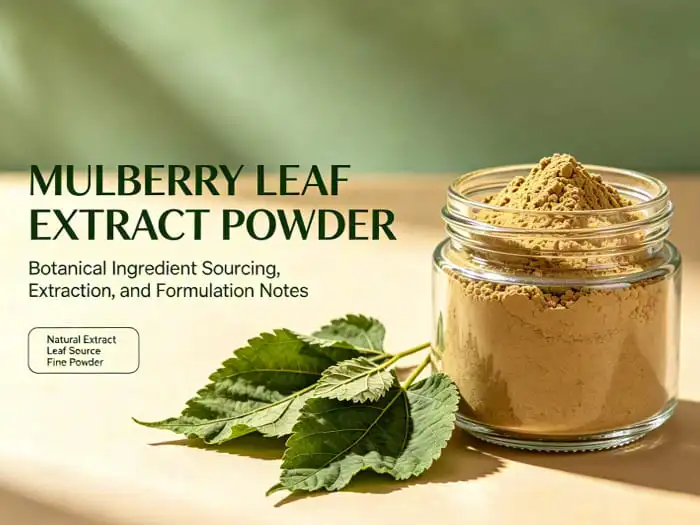
To start the extraction process, Morus alba leaves are picked when they are fully mature, washed, dried, and then put through ultra-fine grinding (80–300 mesh specs). This plant material naturally has dietary fiber, DNJ alkaloids, rutin, quercetin, and chlorogenic acid. Unlike raw leaf powder, concentrated extracts provide consistent DNJ amounts between 1% and 20%, which is very important for B2B clients making therapeutic-grade products because it allows for exact formulation control.
Controlled temperature handling during manufacturing protects compounds that are sensitive to heat, resulting in powder forms that are more bioavailable than whole-leaf options. This standardization solves a major problem with procurement: stability from batch to batch has a direct effect on how well a product works and how well it meets legal requirements.
Blood Sugar Management Mechanisms
The DNJ molecule stops alpha-glucosidase from working, which slows down the breakdown of carbohydrates and lowers glucose spikes after a meal. Standardized mulberry leaf extract powder helps the body's glucose metabolism by slowing the breakdown of polysaccharides in the intestines, according to clinical studies. Because of this, the ingredient is especially useful for formulas that are meant to help people with metabolic syndrome or who are at risk of getting diabetes.
In addition to controlling blood sugar, polyphenolic substances protect pancreas beta cells from oxidative stress. This may help insulin secretion ability last over time. Because it does two things, mulberry extract is more of a metabolic health ingredient than a single-use ingredient.
Complementary Health Applications
Mulberries can help with weight loss because they affect how carbohydrates are absorbed, which helps with calorie control in low-carb and ketogenic diet products. The high fiber content makes you feel full and improves gut health, which is an issue that is becoming more and more important in the growth of functional foods.
New beauty products use the extract's tyrosinase-inhibiting traits to make serums that brighten the skin, and heart health products use it to help the body's fat metabolism. Because of this, contract makers can make different kinds of products with just one standard ingredient, which saves money on supplies and makes production more efficient.
Safety and Dosage Considerations
The usual amount of DNJ in a supplement dose is between 250 mg and 500 mg, and the amount is based on therapeutic limits set in clinical studies. When products come from reputable sources who follow strict rules for heavy metal, pesticide residue, and microbe contamination, safety ratings show that they are very tolerable. But buying teams need to check the testing procedures because low-quality materials could have agricultural contaminants or inconsistent amounts of active compounds that make them less safe and less effective.
Comparing Mulberry Leaf Extract Powder with Alternative Natural Supplements
Bioavailability and Concentration Differences
Because steeping times and leaf quality vary, traditional mulberry leaf tea has random amounts of active compounds. Even though moringa powder is very healthy, it doesn't have enough of the pure DNJ that helps control blood sugar. Encapsulated extracts are convenient, but they need extra ingredients that could make the package less dense.
Standardized powders fill in these gaps by offering concentrated bioactives in a form that can be used with a range of delivery methods, such as pills, tablets, sachets, and ready-to-drink drinks. This adaptability solves the formulation problems that product makers face when they have to meet the needs of more than one version at the same time.
Organic Versus Conventional Sourcing
Organic certifications get you a better spot, but they need clear proof of the supply chain. Conventional extracts that meet EU and US food-grade standards work just as well and don't cost as much, making them a good choice for brands that want to save money without sacrificing safety. If there are good production standards in place, the choice is based on what the target market wants and how the brand is positioned, not on differences in quality.
Powder Versus Capsule Format Decisions
Buying mulberry leaf extract powder in bulk makes it possible to mix it in a way that fits your specific needs, which helps OEM and ODM projects that need specific ingredient amounts. Private label partners can save time and money by buying forms that are already sealed. Powders are easier to ship internationally because they have a lower bulk weight, but they need to be handled in a way that avoids moisture. Knowing these practical effects helps procurement directors make sure that choices about where to buy things are in line with how things are made and how they are sold in the market.
Procurement Guide for Mulberry Leaf Extract Powder: Smart Buying Decisions for B2B Clients
Essential Quality Certifications
GMP-certified factories show they follow pharmaceutical-grade production standards, which is very important for supplement brands that need to show they are following the rules set by regulators. Organic certificates (USDA, EU) meet the needs of consumers who want clean labels, and Halal and Kosher certifications open up new markets. Verification testing by third parties from separate labs offers fair quality guarantee and addresses worries about only certificates of analysis given by suppliers.
Purchasing managers should ask for full testing kits that include heavy metals (lead, cadmium, mercury, arsenic), pesticide residue screens, DNJ content, and microbiology reports (total plate count, yeast, mold, viruses). Brands are protected from supply chain risks and legal issues by having a lot of paperwork.
Supplier Vetting Criteria
Direct makers have lower prices and make output more clear, but they need larger orders to start. Distributors give you more options and faster delivery for smaller orders, but markups lower your possible profit. Private label partners make it easier for brands that don't have their own recipe experts to make new products because they source ingredients and make finished products all in one step.
To figure out how stable a supplier is, you need to look at their operational background, output capacity, openness about where they get their raw materials, and client references. Manufacturers who keep controlled mulberry farms or long-term farming partnerships show supply stability, which lowers the risks that come with agricultural materials' yearly changes.
Bulk Purchasing Strategies
With volume commitments, you can access tiered price systems. Usually, cost cuts that are worth mentioning start at orders of 500 kg or more. Negotiating payment terms—balancing the need for a deposit against the net payment periods—is the best way to handle cash flow. Quality guarantee terms that protect against batches that don't meet specifications protect buying investments. This is especially important when building relationships with new suppliers.
Strategic buyers find sources in different parts of the world so that they aren't affected by problems with farming in certain areas or changes in the rules that affect relying on just one source. With this method, you need to carefully compare the quality of different sellers to make sure they meet the standards that have already been set.
International Logistics Considerations
When mulberry leaf extract powder is properly packaged in food-grade materials that don't absorb wetness and are flushed with inert gas, the product stays stable during long shipping times. Correct customs classification avoids delays in clearance, which needs checking of standardized tariff codes and preparing the right import paperwork. Extreme climate markets need temperature-controlled operations, but powder forms that don't go bad can handle normal shipping conditions as long as they are properly packed.
Storage guidelines say that containers should be kept in cool, dry places away from direct light and should be resealed quickly after being opened to stop reactive degradation. These handling standards should be used to guide warehouse layout and how items are rotated.
How Mulberry Leaf Extract Powder Supports Blood Sugar Regulation: Mechanisms and Case Studies
Biochemical Pathways
DNJ's molecular structure looks like glucose, so it binds to intestine alpha-glucosidase enzymes without starting the catalytic process. This competitive inhibition slows down the breakdown of disaccharides and oligosaccharides, which evens out glucose absorption curves and lowers insulin demand spikes. The effect is stronger when taken before carbohydrate-rich foods, which is used to determine when to take the drug for consumer-facing product labels.
Mulberry leaf extract powder contains polysaccharide fractions that have prebiotic qualities. These fractions change the makeup of the gut bacteria toward species that are linked to better metabolic markers. New study shows benefits through more than one pathway, going beyond direct inhibition of enzymes.
Clinical Evidence and Industry Success
Researchers who took standardized mulberry extracts had lower blood sugar levels after a meal compared to people who took a placebo, according to controlled studies reported in metabolic health journals. Nutraceutical brands that use these results in their marketing say that it builds trust with customers and helps their products stand out in competitive blood sugar support categories.
Contract makers working with diabetes care brands have successfully created formulas that combine chromium picolinate, berberine, and cinnamon extract. These formulations work together to create complete glycemic control products. These multi-ingredient methods meet the needs of formulators who want to make their products stand out.
Formulation Integration Guidelines
The recommended amounts of DNJ are based on clinically proven levels, with 10 to 30 mg of DNJ per dose being the norm. This equals about 200 to 600 mg of standardized extract, based on the required strength. Formulation scientists have to take into account the plant taste of the extract by using flavoring or packaging methods to make the organoleptic profiles acceptable to consumers.
Regulatory compliance requires following structure-function claim rules, which means not using therapeutic wording when talking about metabolic support benefits. To avoid expensive changes to the recipe or changes to the way the product is marketed, regulatory experts who know the rules set by the FDA, EFSA, and other relevant authorities should be involved in the label review process.
Conclusion
Mulberry leaf extract powder is a flexible ingredient that has been proven to work by science. It meets the needs of both consumers and businesses that want natural metabolic health solutions and standardized, reliable plant materials. Its high DNJ content, backed by strong clinical evidence, and wide range of possible uses in supplements, functional foods, and specialized formulas make it an important thing for forward-thinking product makers to think about. To integrate suppliers successfully, you need to pay close attention to quality standards, formulation issues, and regulatory compliance. However, the market opportunity in the metabolic wellness and blood sugar management categories makes the strategic investment worth it for brands dedicated to botanical innovation based on evidence.
FAQ
Is long-term use of standardized mulberry extract safe for dietary supplement formulations?
Clinical safety data supports long-term use when coming from quality-controlled sources who follow strict limits on contamination. Proper manufacturing controls that get rid of heavy metals, chemical leftovers, and bacteria contaminants keep people safe for long periods of time. Brands should check with their suppliers about their testing procedures and keep records of each batch so that they can be tracked.
How does the price of mulberry extract compare to the price of artificial blood sugar ingredients?
Even though the cost per kilogram is higher than synthetic options, the clean-label marketing leads to higher selling prices that increase the chance of making a profit. Botanical ingredients are more popular with consumers, which makes them easier to get into the market, especially in natural goods channels where manufactured ingredients are pushed back against. The cost of mulberry leaf extract powder should be weighed against how marketable they are and how well they fit with the brand.
What customization options exist for private label or contract manufacturing projects?
Suppliers you can trust give custom DNJ concentration specs, custom mesh sizes for different delivery systems, and proprietary blend development that combines mulberry with metabolic support ingredients that work well together. Flexible minimum order amounts allow for testing stages of a product, and as brands prove that the market will accept the product, they can scale up to commercial production volumes.
Partner with Wellgreen for Premium Mulberry Leaf Extract Powder Supply
Wellgreen Technology is a reliable company that makes mulberry leaf extract powder. They offer GMP-certified production, standard DNJ content requirements, and a lot of quality paperwork to help you with your formulation needs. We can offer a range of mesh sizes (80–300 mesh), strict testing procedures that go beyond EU and US food-grade standards, and OEM/ODM help for creating unique blends. Our stable supply chain and fast technology team make sure that quality is always the same and delivery is always on time, whether you need bulk ingredients for large-scale production or private label partnerships for turnkey product solutions. You can email us at wgt@allwellcn.com to get samples, look at our collection of certificates, or talk about custom formulation projects that are made to fit the needs of your blood sugar control product line.
References
Chen, F., and Nakashima, N. (2016). Hypoglycemic Activity and Mechanisms of Mulberry Leaf Extracts. Journal of Traditional and Complementary Medicine, 6(1), 24-31.
Andallu, B., and Varadacharyulu, N. (2003). Antioxidant Role of Mulberry Leaves in Streptozotocin-Diabetic Rats. Clinical Chimica Acta, 338(1-2), 3-10.
Kimura, T., Nakagawa, K., Kubota, H., et al. (2007). Food-Grade Mulberry Powder Enriched with 1-Deoxynojirimycin Suppresses the Elevation of Postprandial Blood Glucose in Humans. Journal of Agricultural and Food Chemistry, 55(14), 5869-5874.
Hunyadi, A., Martins, A., Hsieh, T.J., et al. (2012). Chlorogenic Acid and Rutin Play a Major Role in the In Vivo Anti-Diabetic Activity of Morus alba Leaf Extract. PLOS ONE, 7(11), e50619.
Lown, M., Fuller, R., Lightowler, H., et al. (2017). Mulberry-Extract Improves Glucose Tolerance and Decreases Insulin Concentrations in Normoglycaemic Adults. Nutrients, 9(5), 420-429.
Park, J.M., Bong, H.Y., Jeong, H.I., et al. (2009). Postprandial Hypoglycemic Effect of Mulberry Leaf in Goto-Kakizaki Rats and Counterpart Control Wistar Rats. Nutrition Research and Practice, 3(4), 272-278.