Oyster Mushroom Extract Powder: Nutrition Facts and Health Benefits
2026-07-03 14:20:57
Oyster mushroom extract powder represents a concentrated botanical ingredient derived from Pleurotus ostreatus, offering nutraceutical and functional food manufacturers a clean-label solution rich in polysaccharides, plant-based proteins, and dietary fiber. As global demand accelerates for plant-derived proteins and immune-supporting ingredients, this extract has emerged as a foundational component in supplement formulations, functional beverages, and alternative protein products across North American and European markets.
Understanding Oyster Mushroom Extract Powder
What Makes Oyster Mushroom Extract Unique?
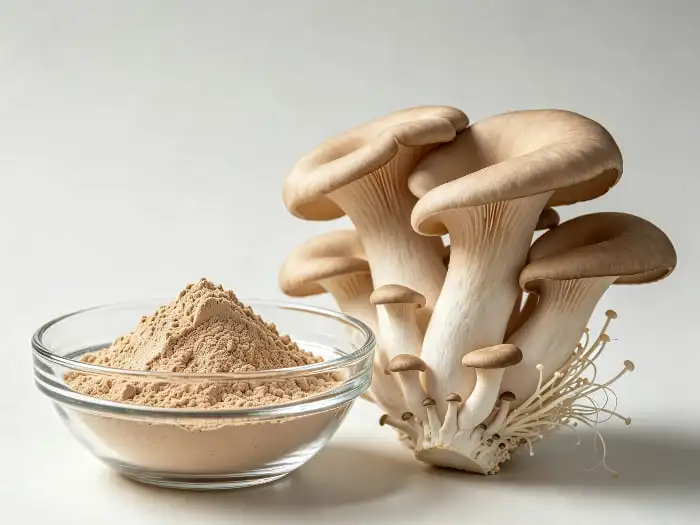
Through a controlled process that includes washing, drying, and fine grinding, oyster mushroom extract powder is made from fresh Pleurotus ostreatus growing bodies. In contrast to raw mushroom powders, extraction increases bioactive substances such as proteins, B vitamins, selenium, zinc, and beta-glucans. The process breaks down the cell walls of fungi, which makes the drug more bioavailable and makes sure that all output batches have the same amount of strength. This concentration method gives consistent test values that are needed to follow the rules and back up health claims in functional foods and dietary supplements.
The element solves several problems with composition at the same time. Its natural umami profile can be used to improve the taste of plant-based meat substitutes and tasty snacks, which could mean that manmade MSG or yeast extracts are used less. The low-fat and low-calorie content fits with the idea of a weight-loss product, and the high fiber content backs up claims about gut health that health-conscious customers are increasingly asking for.
Processing and Extract Forms
Manufacturing specs have a big effect on how well ingredients work in finished goods. For capsules, standard mesh sizes are between 60 and 120 mesh. For drinking systems and ready-to-mix vitamins, ultra-fine powders that are finer than 200 mesh dissolve better. Spray-drying technology creates round pieces with controlled wetness levels, usually below 8%. This keeps the food stable for a longer time and stops microbes from growing while it's being stored or shipped.
Choosing between organic and standard production is a very important buying choice. For organic approval, farmers must follow the USDA NOP or EU 834/2007 rules, which say they can't use synthetic chemicals and need to test the soil every year. While organic versions are more expensive, standard extracts made according to Good Agricultural Practices (GAP) can meet strict contaminant limits if sellers use approved testing methods. Teams in charge of buying things should ask for a Certificate of Analysis (COA) that shows that heavy metal levels are below certain levels, like lead below 2ppm, arsenic below 1ppm, cadmium below 1ppm, and mercury below 0.1ppm, as tested by ICP-MS. They should also ask for pesticide residue screens that follow USP standards.
Quality Markers and Specifications
To tell the difference between real oyster mushroom extract powders and fake ones, you need to know some important scientific standards. Total carbohydrate content in good extracts is usually between 20% and 40%, but this number isn't enough on its own. Maltodextrin spikes can be used to change generic UV spectrophotometry, which falsely raises polysaccharide readings without adding functional beta-glucans. Reliable providers use enzyme-based tests to precisely measure beta-1,3/1,6-D-glucans, the immunomodulatory chemicals that are good for your health.
Another sign of authenticity is the amount of protein in the powder. Real oyster mushroom extract powders have 15 to 25 percent plant-based protein. Using HPLC to profile amino acids can help confirm the identity of a species and find grain substrate pollution that is common in mycelium-based goods. Pure extracts should have an ash content of less than 5%. A high mineral waste level means that the extract wasn't completely cleaned or an enhancer was added.
Health Benefits and Usage of Oyster Mushroom Extract Powder
Immune System Support
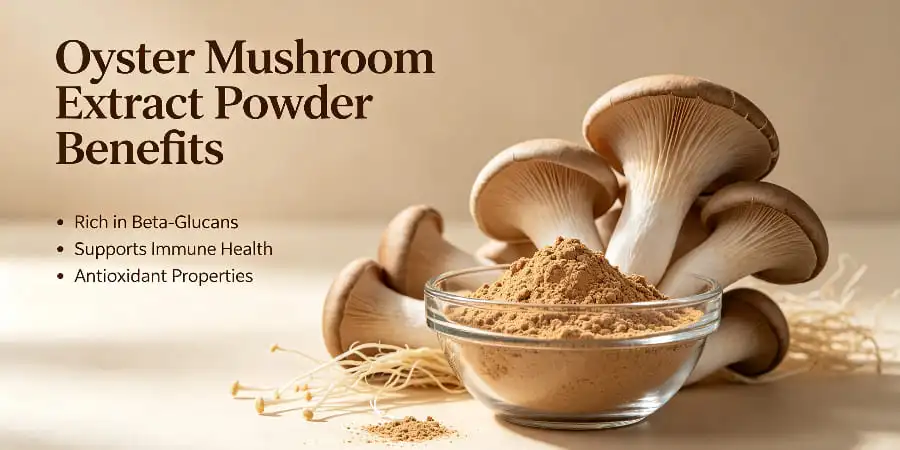
The main healing property of oyster mushroom extract powder comes from the beta-glucan it contains, which turns on the innate immune system's macrophages and natural killer cells. Fungal carbohydrates link to specific receptors on immune cells, which makes cytokines and makes it easier for the body to recognize pathogens. In this way, oyster mushroom extract powders are seen as useful ingredients in seasonal health goods and daily immune support pills aimed at health-conscious people.
Oyster mushrooms have antioxidants like ergothioneine and phenolic acids that fight oxidative stress, which is linked to chronic inflammation and cellular aging. Formulation experts combine these extracts with vitamin C, resveratrol, and other plant extracts to make antioxidant complexes. These complexes work together to protect cells in a wide range of ways.
Cardiovascular and Metabolic Benefits
Multiple ways are available for the cholesterol-lowering benefits of oyster mushroom extract powder ingredients. Dietary fiber links to bile acids in the digestive system, which makes them easier to pass out of the body and forces the liver to make new bile from cholesterol in the blood. At the same time, beta-glucans stop the small intestine from absorbing cholesterol. These two processes help cardiovascular health positioning in useful foods and heart health supplements. This is especially important because metabolic syndrome is so common in Western countries.
Oyster mushroom extract powder can be used in blood sugar control products because they have a low glycemic profile and a high fiber density. Food companies that want to sell to diabetics and people who are at risk of diabetes use these extracts to make meal replacement shakes and vitamins that help the body's glucose metabolism. They do this by using the extracts' nutritional value and ability to make people feel full.
Application Guidelines for Industrial Buyers
The recommended dose changes depending on the quantity and the use. Each tablet of a dietary product usually has between 500 and 1000 mg of standardized extracts that provide 10 to 30 percent polysaccharides. Functional beverage formulas include 200 to 500 mg per dose, while taking into account how the drug will taste and how well it will dissolve. Protein powder mixes can have up to 2–5% oyster mushroom extract powder by weight. This adds umami depth and improves nutritional profiles without overpowering the base tastes.
Before going on sale, the product should be put through accelerated stability tests at 40°C and 75% relative humidity for six months. This should prove that the bioactives stay in the product and that it is stable for microbes. Using hydroxypropyl methylcellulose (HPMC) or vegetable capsules for encapsulation allows for vegan placement, and taste-masking technologies cover up the earthy notes that can be a problem for gummy and drink uses.
Comparing Oyster Mushroom Extract Powder Options
Organic Versus Conventional Sourcing
The choice about organic certification has effects on more than just business strategy. Synthetic fungicides are not allowed in organic farming, and base materials must be burned. This could lower the amount of residues in the environment. However, organic approval does not ensure that the bioactive content is higher. Controlled environment agriculture (CEA) systems that use standard methods can make better extracts by carefully managing the environment and pests, which lowers the risk of contamination.
Compliance with regulations changes from market to market. For new food uses, U.S. makers focus on USDA organic status and FDA GRAS confirmation, while EU organic certification and following Regulation (EC) No 1881/2006 for contaminant limits are important to European buyers. Regulatory rules should be spelled out in procurement contracts, and suppliers should have to show proof of compliance through third-party testing documents.
Powder Versus Liquid Extract Forms
The choice of physical form relies on the infrastructure for making the product and the format of the final product. Dry oyster mushroom extract powder has practical benefits, such as being able to be stored at room temperature, having lower shipping costs per active unit, and being easier to keep track of in stock. These ingredients are easy for powder blending tools to handle, but for ultra-fine grades, dust control steps and explosion-proof facilities may be needed.
For beverage makers with direct injection methods, liquid extracts make things easier because they don't have to deal with the problems that come with powder distribution. But liquid forms need to be kept in the fridge, have shorter shelf lives (usually 12 to 18 months), and cost more to ship because they are heavier because they contain water. Liquid extracts based on glycerin or propylene glycol make the product more stable, but they also add more ingredient information that might not be good for clean labeling.
Oyster Mushroom Versus Other Functional Mushrooms
Comparing oyster mushroom extract powder to well-known types like lion's mane or turkey tail helps figure out the best uses. The herb lion's mane (Hericium erinaceus) is good for nootropic formulations because it is said to help with brain function by stimulating nerve growth factors. Turkey tail (Trametes versicolor) has PSK and PSP compounds that have strong clinical proof for supporting the immune system. This is why it costs a lot more than other oncology support items.
In a unique situation, oyster mushroom extract powder offers balanced nutrition, a high protein level, and low cost for mass-market use. The softer flavors of these mushrooms work better with food than the stronger earthy flavors of reishi or chaga. Multi-mushroom mixes that combine oyster extract with specific types of mushrooms make formulations that help with immunity, memory, and energy all at the same time, making the labels look better and giving you more health benefits.
Procuring Oyster Mushroom Extract Powder – A Buyer's Guide
Critical Evaluation Criteria
Manufacturing licenses that show the quality system is mature are the first step in qualifying a supplier. ISO 22000 approval proves that food safety management is integrated, and GMP compliance, whether it's FDA 21 CFR Part 111 for vitamins or EU GMP for food ingredients, proves that production controls are working. Third-party checks through NSF International, Informed Choice, or similar programs provide independent confirmation of label claims and the lack of contamination. This is especially helpful for sports nutrition applications that need to screen for banned substances.
Protocols for testing should include more than one level of proof. Using DNA barcoding to identify species stops people from replacing expensive mushroom types with cheaper ones. Total plate count (usually less than 10,000 CFU/g), yeast and mold counts (less than 1,000 CFU/g), and disease lack, such as Salmonella and E. coli. Common cross-contaminants from shared production lines must be ruled out through allergy testing in order for allergen-free product claims to be true.
Supplier Capabilities and Scalability
Suppliers must be able to show steady performance from batch to batch and scalable output capacity in order to build long-term relationships. When a manufacturer runs their own growing facilities, they are in charge of the quality of the raw materials from preparing the substrate to when they collect them, making sure that the plants are fully mature for the most polysaccharide content. When demand changes, vertically linked suppliers can change the amount of goods they make without affecting specs or delivery times.
The ability to provide technical help is what sets strategic partners apart from commodity providers. Experienced sources can help with recipe issues like solubility problems, improving flavors, and putting together ingredients that work well together. They provide stability data to back up claims about shelf life and offer unique specs, such as changing the particle size, choosing the carrier, or standardizing to specific bioactive markers, that shorten the time it takes to make a product and get it on the market.
Logistics and Commercial Terms
Cost-effectiveness and supply security should both be taken into account in procurement plans. Different sellers have very different minimum order amounts (MOQs). For stock items, known suppliers may only need 50–100 kg, but for custom extracts, they may need 250–500 kg. At 500 kg, 1 metric ton, and 5 metric tons, volume price tiers usually go into effect. Discounts are given for growing, preparing, and transporting more than a large amount.
Shipping things across international borders needs careful packing and paperwork. Aluminum foil bags that don't absorb moisture and nitrogen flushing keep the integrity of the product during ocean freight. The outer boxes should have moisture signs and handling directions. For stock items, lead times are between 4 and 6 weeks, and for organic certified or custom specs, they are between 8 and 12 weeks. This means that demand forecasting and safety stock plans are needed. Payment terms—usually a 30% payment with the rest due against the bill of lading—should be discussed, along with quality hold clauses that let the goods be tested by someone else before they are officially accepted.
Conclusion
Through its clean-label placement, adaptable functionality, and strong nutritional profile, oyster mushroom extract powder offers appealing value across nutraceutical, functional food, and personal care applications. For procurement to go well, suppliers must be carefully evaluated, with a focus on analytical proof, regulatory compliance, and operating scalability. By putting beta-glucan quantification ahead of generic polysaccharide claims, using advanced testing to confirm species identity, and choosing partners who are willing to work with them technically, product developers can confidently add this ingredient to new formulas that meet consumers' growing needs for plant-based nutrition and immune system support.
FAQ
What is the typical polysaccharide content in quality extracts?
Validated ways show that premium oyster mushroom extract powders have 20–40% total carbohydrates. Instead of taking general polysaccharide percentages, procurement professionals should ask for specific beta-glucan quantification using enzymatic assays. This is because starch-based adulterants can falsely raise these values without offering any useful immune benefits.
How should extracts be kept so that they keep their effectiveness?
Keep oyster mushroom extract powder out of direct sunlight and below 25°C in containers that can't leak or get wet. Controlling humidity is very important because hygroscopic powders soak up water, which can cause them to clump together and allow microbes to grow. Under the right conditions, nitrogen cleaning can stretch the shelf life to 24 to 36 months. However, regular testing is still needed to make sure that the bioactive properties stay the same during storage.
Can oyster mushroom extracts cause allergic reactions?
Mushroom allergies are still not very common, but they have been recorded. People who are known to be sensitive to fungi should be careful. When industrial buyers make consumer goods, they should put the right information on the labels about what mushrooms are in them and think about how to test for allergens. Common medicines don't seem to mix with each other, but people with immune disorders or who are taking immunosuppressant drugs should still talk to their doctors.
Partner with Wellgreen for Premium Oyster Mushroom Extract Powder Supply
Wellgreen Technology is a company that makes oyster mushroom extract powder. They offer uniform extracts that meet food-grade standards in the EU and the US. Our GMP-certified factory makes normal mesh, ultra-fine, and organic certified versions that are used in the nutraceutical, functional food, and herbal supplement industries for OEM, ODM, and private label purposes. Strict quality standards include checking for pesticide residue, analyzing heavy metals using ICP-MS, and doing full microbial testing. Each package comes with full COA paperwork. Our expert team works with formulation scientists to make sure that the right particle size, solubility, and quantity are used in drinks, capsules, and plant-based protein mixes. Stable batch production capacity makes sure that established buying programs have a steady supply over the long run. You can email our team at wgt@allwellcn.com to get samples, talk about special requirements, or look into prices for buying oyster mushroom extract powder in bulk. Wellgreen's dedication to quality, openness, and quick service helps them build long-lasting relationships with ingredient buyers who need dependable mushroom extract providers.
References
Badalyan, S.M., "Edible Ectomycorrhizal Mushrooms: Biologically Active Compounds and Their Therapeutic Potential," International Journal of Medicinal Mushrooms, Vol. 21, No. 8, 2019.
Chang, S.T. and Miles, P.G., "Mushrooms: Cultivation, Nutritional Value, Medicinal Effect, and Environmental Impact," CRC Press, 2nd Edition, 2004.
Lindequist, U., Niedermeyer, T.H.J., and Jülich, W.D., "The Pharmacological Potential of Mushrooms," Evidence-Based Complementary and Alternative Medicine, Vol. 2, No. 3, 2005.
Patel, Y., Naraian, R., and Singh, V.K., "Medicinal Properties of Pleurotus Species: A Review," World Journal of Fungal and Plant Biology, Vol. 3, No. 1, 2012.
Rathee, S., Rathee, D., Rathee, D., Kumar, V., and Rathee, P., "Mushrooms as Therapeutic Agents," Brazilian Journal of Pharmacognosy, Vol. 22, No. 2, 2012.
Wasser, S.P., "Medicinal Mushroom Science: Current Perspectives, Advances, Evidences, and Challenges," Biomedical Journal, Vol. 37, No. 6, 2014.