Pure Prickly Pear Fruit Extract Bulk Supply for Clean Label Product Development
2026-09-03 16:33:19
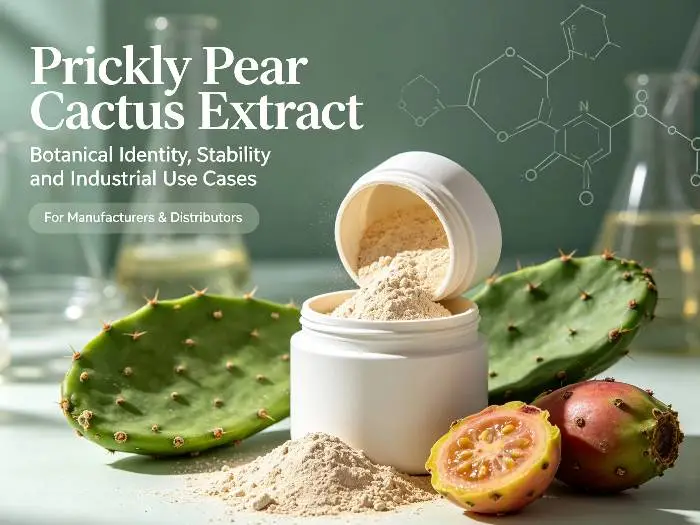
Clean label product development demands ingredients that combine exceptional functionality with complete transparency, and Pure Prickly Pear Fruit Extract Bulk has emerged as a superior choice for discerning manufacturers. Derived from the mature, succulent fruits of Opuntia ficus-indica, this standardized extract delivers rare betalain pigments, polysaccharides, natural vitamin C, and bioactive flavonoids through gentle water-ethanol extraction followed by precision chromatography and spray-drying. Procurement professionals across nutraceutical, pharmaceutical, functional beverage, and cosmetic sectors increasingly recognize this ingredient as a transformative solution for antioxidant-rich, consumer-transparent formulations.
Introduction
The move toward "clean label" goods around the world has completely changed how B2B buying teams in North America and Europe look for ingredients. Product developers, regulatory managers, and purchasing directors now have to meet both the needs of consumers who want ingredients that they can recognize and the strict quality standards and functional effectiveness that come with them. Pure Prickly Pear Fruit Extract Bulk meets these needs by having bioactivity that has been proven by science, natural coloring properties, and an easy-to-understand ingredient list that appeals to health-conscious customers.
This complete guide gives you useful information on how to buy this powerful botanical ingredient in bulk. We look at descriptions of the ingredients, different types of extracts, factors for judging suppliers, and useful ways to mix ingredients for dietary supplements, functional foods, and cosmetics. Our goal is to give people who make decisions the technical knowledge and strategy framework they need to find high-quality extracts that improve the placement of products while also making sure they follow the rules and the supply chain is reliable.
Understanding Pure Prickly Pear Fruit Extract: Composition, Benefits, and Usage
Botanical Origin and Active Constituents
Pure Prickly Pear Fruit Extract Bulk only comes from the ripe, bright red fruits of Opuntia ficus-indica. It is carefully separated from extracts made from the stems or pads. The process of extraction keeps the same amounts of betalains, which are made up of betanin and indicaxanthin. These are rare pigments found in terrestrial plants that are better at fighting free radicals than traditional anthocyanins. These phytochemicals do a great job of protecting cells from oxidative stress, which is a key process for anti-aging and photoprotection uses in makeup.
The polysaccharide part of the extract helps keep the water balance in check and reduces inflammation. Vitamin C and flavonoids, which are found naturally, work together to provide protective effects. Independent lab tests show that good extracts keep their bioactive profiles stable, which lets formulators make sure that finished products work as expected.
Validated Health Applications
Clinical studies back up a number of important health benefits that are important to B2B formulation objectives. Studies show that parts of prickly pear fruit help the body's fluid metabolism without taking away important minerals. This makes them useful for people in cities who sometimes worry about holding on to water. The physiological effect comes from the extract's natural ability to make you pee and its ability to save electrolytes.
In addition, the substance may help protect the liver by lowering C-reactive protein and other inflammatory factors linked to alcohol metabolism. This process forms a safe layer in the stomach that slows the absorption of alcohol, which helps ease hangover symptoms like headaches, nausea, and thirst. The natural electrolyte makeup of the extract helps with hydration balance and healing after exercise when used in sports nutrition.
Dosage Considerations for Industrial Formulations
Doses used in bulk formulation are usually between 150 and 500 milligrams per serving, but this depends on the benefits that are wanted and how the drug is delivered, and for Bulk Prickly Pear Fruit Extract, manufacturers of capsules and tablets usually use 250 to 300 milligrams to get good antioxidant support, while makers of functional drinks may use 100 to 200 milligrams per dose to get the best mix of effectiveness and cost-effectiveness, and safety tests show that these dosage ranges are well tolerated, and human trials have not reported any major side effects. Manufacturers of capsules and tablets usually use 250 to 300 milligrams to get good antioxidant support, while makers of functional drinks may use 100 to 200 milligrams per dose to get the best mix of effectiveness and cost-effectiveness. Safety tests show that these dosage ranges are well tolerated, and human trials have not reported any major side effects. When formulators figure out loading doses, they should take standardization levels into account to make sure that bioactives are delivered consistently.
Comparing Prickly Pear Extract Options for Bulk Procurement
Extract Format Selection
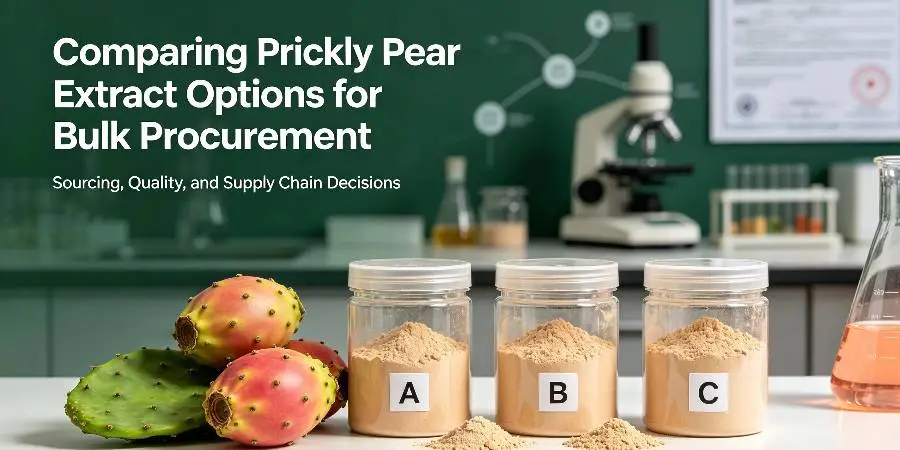
Pure concentrated extracts and spray-dried powders are the two main types that procurement teams come across. Pure extracts have higher amounts of betalain and are usually standardized to certain betanin percentages. This makes them perfect for capsules where space is limited and potency is needed. Spray-dried powders are better at mixing and flowing, which makes them useful for things like compressing tablets and making drinks that need to dissolve quickly in cold water.
Fruit extract processing used to be hard because it was sensitive to wetness and tended to clump together. But new spray-drying methods have solved these problems. Modern powder types that don't clump have special encapsulation technologies that keep the powder's free-flowing qualities even in normal warehouse humidity levels. This makes it easy to use with high-speed sealing and mixing equipment.
Organic Certification Considerations
When deciding between organic and conventional, you have to weigh the benefits of approval against the needs of brand image. Organic-certified ingredients get a lot of attention in high-end supplement lines for people who care about the environment, especially in European markets where the share of organic products in some categories is over 30%. On the other hand, regular products that pass strict tests for pesticide residue often have similar safety ratings and are cheaper for mass-market use.
Smart procurement teams compare the value of certifications to certain distribution channels and groups of customers. Organic premiums may be worth it for natural products stores and e-commerce sites that focus on clean beauty and wellness. On the other hand, private-label manufacturers that cater to price-conscious customers can set themselves apart with non-GMO and clean label positioning without having to get organic certification.
Botanical Source Differentiation
Genuine Pure Prickly Pear Fruit Extract Bulk products are not the same as general cactus extracts or materials made from pads. Fruit-based extracts have a unique betalain profile and a pleasant flavor that stem-based extracts don't have because stem extracts tend to focus on mucilage content and have astringent taste profiles. To make sure that the right phytochemical composition and organoleptic qualities are met, procurement requirements should make it clear that only fruit should be used.
Chemical fingerprinting using HPTLC or HPLC analysis verifies the botanical identity and tells the difference between real fruit extracts and fakes or adulterants. Suppliers of good quality give batch-specific chromatograms that show unique betalain peaks and no markers that show stem inclusion.
Bulk Procurement Insights: Sourcing and Pricing of Pure Prickly Pear Fruit Extract
Supplier Vetting Protocols
To find reliable suppliers, you need to carefully look at their quality systems and manufacturing capabilities. Facilities that are GMP-certified and have written standard operating procedures for checking raw materials, controlling the process, and testing the finished product are the basis for a steady supply. To figure out how mature operations are, procurement teams should ask for site audit reports, factory flow maps, and records of individual batches.
The best manufacturers have strict testing procedures that check for things like identity, standardized bioactive content, heavy metals (like lead, arsenic, cadmium, and mercury), pesticide residue panels, and microbial contamination, and for Pure Prickly Pear Fruit Extract Bulk, meeting the standards set by the USP, FDA, and the European Pharmacopoeia shows dedication to meeting foreign quality standards, which is necessary for selling in more than one market. Meeting the standards set by the USP, FDA, and the European Pharmacopoeia shows dedication to meeting foreign quality standards, which is necessary for selling in more than one market.
Market Dynamics and Cost Optimization
Different factors, like the amount of food harvested, the way it was extracted, the level of standardization, and the status of the approval, affect how much something costs. In recent years, prices have stayed stable on the market because of more farming in the Mediterranean and Latin America. However, spot market rates can change depending on the time of year when fruit is available. When you commit to buying a certain amount, you usually get access to different price levels. When you buy more than a few hundred kilos a year, you start getting real savings.
Strategic buyers make framework agreements that spell out quality standards, delivery dates, and pricing systems that are based on objective metrics instead of spot quotes. This method makes the budget more stable while keeping suppliers motivated to keep up their good work. Long-term partnerships often include measures for joint development, in which suppliers help with testing the stability and optimization of formulations.
Logistics and Storage Requirements
The integrity of the extract is kept safe throughout the supply chain by handling it correctly. For well-encapsulated spray-dried powders, ambient shipping works fine, but climate-controlled transport lowers the risk of humidity exposure in the summer. As a general rule, things should be stored in cool, dry places that are out of direct sunlight and in containers that can't let moisture in.
Under the right conditions, the shelf life usually lasts between 18 and 24 months, and stability data shows that the betalain content and microbiological quality stay the same. For international shipments, it usually takes six to eight weeks from the time the order is placed until it arrives at the warehouse. This includes the time it takes to make the goods, clear customs, and test them for quality.
Incorporating Pure Prickly Pear Fruit Extract into Clean Label Product Development
Market Demand and Regulatory Landscape
Consumer study shows that natural antioxidants and well-known ingredients are the main reasons people buy supplements, useful foods, and makeup. Both requirements are met by Pure Prickly Pear Fruit Extract Bulk, which shows up on ingredient panels as a pure fruit extract instead of man-made chemicals or chemically altered versions of the fruit. This openness is in line with the ideas of clean labeling and has benefits that have been proven by science.
The regulatory situation in the major markets is still good. In the US and EU, the extract is allowed as a food ingredient, and it has been used in the past, which supports the idea that it is safe. Cosmetic uses benefit from INCI nomenclature recognition and the lack of concerns about restricted substances, which makes international labeling and registration easier.
Formulation Strategies Across Applications
Nutraceutical makers are able to successfully add the extract to complete antioxidant complexes. They often mix it with ingredients that work well together, like vitamin E, astaxanthin, or glutathione, to make free radical defense systems that work better together. The natural red color and mild, fruity flavor of the extract mean that artificial colors and flavorings aren't needed as much in gummy, chewable, and drink forms.
Functional food and drink formulators like that the extract dissolves easily in cold water and has a clear appearance, which keeps ready-to-drink applications from becoming cloudy or sedimentary. Specialized refined grades get rid of all the pectin, waxes, and insoluble fiber, leaving behind solutions that are perfectly clear for sparkling waters, protein shakes, and beauty drinks. Color that comes from nature makes it look nice, and a hint of sweetness makes it taste good without adding too much sugar.
Technical Solutions for Stability Challenges
Betalain colors are sensitive to changes in temperature, light, and pH, so they need to be carefully mixed, and for Bulk Prickly Pear Fruit Extract, protective matrices and advanced encapsulation technologies keep the pigments from breaking down due to oxygen, which means the color stays in the product longer, and adding natural buffers and acidity controllers like citric acid or ascorbic acid to betalain helps keep the pH levels in the right ranges so that it stays stable. Protective matrices and advanced encapsulation technologies keep the pigments from breaking down due to oxygen, which means the color stays in the product longer. Adding natural buffers and acidity controllers like citric acid or ascorbic acid to betalain helps keep the pH levels in the right ranges so that it stays stable.
During processing, manufacturing methods should use low-temperature packaging and avoid keeping temperatures high for long periods of time. When processing things with heat, like pasteurization, quick cooking and cooling processes keep the color more intact than longer hold times. Packaging choices that focus on blocking light and air help protect final goods even more.
How to Choose the Right Prickly Pear Extract Supplier: A Decision Support Framework?
Defining Evaluation Priorities
To choose a good provider, you must first be clear about your needs in a number of different areas. Quality standards should include ranges for standardization, levels of purity, levels of contamination, and ways to test. Depending on the market, organic, non-GMO, kosher, or halal credentials may be needed for certification. Commercial terms include minimum order amounts, payment terms, and standards for volume commitments.
Some of the things that affect the reliability of a supply chain are its ability to manufacture, store, and handle crises. The smartest procurement departments use weighted score systems to measure these factors and make it possible to compare different supplier options in an objective way. This organized method stops people from making choices based only on the original price, without taking the full cost of ownership into account.
Building Strategic Partnerships
Transactional buying relationships make it harder for people to work together to come up with new ideas and solve problems. Strategic relationships with chosen suppliers allow for joint research and development, priority setting when supplies are low, and custom solutions that solve specific formulation problems. Leading suppliers put time and money into learning about how their customers use their products and offer expert help that goes beyond just delivering the products.
As part of building relationships, frequent performance reviews check for consistency in quality, on-time delivery rates, accurate paperwork, and quick responses to questions or problems. Being honest with each other about predictions, limitations on capacity, and changes in the market helps everyone make good plans and adjust to new situations. In the end, these relationships lower the risk in the supply chain and improve the transfer of all value.
Conclusion
Pure Prickly Pear Fruit Extract Bulk is a great way for companies that want to differentiate their nutraceuticals, functional foods, drinks, and products with clean labels. The nutrient has been shown to be an effective antioxidant, has natural coloring qualities, and is positioned in a way that is friendly to consumers thanks to its standardized betalain content and high-quality processing. For procurement to go well, suppliers must be carefully evaluated using GMP manufacturing, thorough testing protocols, and reliable supply chains. Strategic sourcing methods that balance quality, certification needs, and business terms improve both product performance and cost structures. This gives brands an edge in markets that are becoming more demanding.
FAQ
What is the typical shelf life of bulk pure prickly pear fruit extract?
When stored correctly, Pure Prickly Pear Fruit Extract Bulk stays stable for 18 to 24 months after it was made, as long as it is kept in sealed cases in cool, dry places away from direct light. Independent tests have shown that high-quality spray-dried powders with advanced encapsulation are more stable than others. At the end of their shelf life, they still have more than 95% of their betalain content. Keeping something in the fridge can make it stable for longer than the usual amount of time, but this isn't required for well-made goods. Suppliers should show accelerated stability data to back up the shelf life claims under certain storage conditions.
How can I verify the purity and concentration of prickly pear fruit extract?
Verification uses a number of different scientific methods to look at different quality factors. HPLC analysis measures the amount of certain betalain compounds, which proves that the product is standardized and finds any possible contaminants. HPTLC gives complete phytochemical fingerprints that verify the name of plants and tell fruit extracts from stem extracts apart. ICP-MS testing for heavy metals, multi-residue methods testing for pesticide residues, and microbial enumeration round out the verification protocol. Reliable sources give Certificates of Analysis for each production batch that show that these tests were done. For important uses, third-party lab proof is also available.
Are there any contraindications or side effects relevant to formulation?
Clinical safety data shows that the substance is well tolerated and has few negative effects when taken at normal amounts. There have been a few reports of minor stomach sensitivity, which usually goes away when the dose is changed. The natural diuretic activity of the extract makes it worth thinking about for products that aim to help people who have problems with their fluid balance, though the effects are still mild compared to pharmaceutical diuretics. There have been no reports of any major drug interactions, but smart formulators include standard label warnings that people with medical conditions or who are taking medications should talk to a doctor. Based on dermatological patch tests, cosmetic uses don't seem to cause skin sensitization very often.
Partner with Wellgreen for Premium Prickly Pear Extract Supply
Wellgreen is ready to be your reliable Pure Prickly Pear Fruit Extract Bulk supplier. We offer pharmaceutical-grade botanical ingredients and are fully GMP and ISO certified. Our cutting-edge production plant keeps a large stock of standardized extracts with full supporting documentation for clean label claims, FDA compliance, and meeting foreign regulatory standards. We have variable minimum order amounts, quick sampling programs, and committed technical support that helps with formulation development from the first idea to the product's release on the market. Our quality control procedures make sure that every batch goes through strict checks for betalain levels, heavy metals, pesticides, and the absence of microbes. You can talk to our procurement experts at wgt@allwellcn.com about your specific needs and find out how our customized solutions, competitive structures, and reliable logistics can help you come up with new clean label products faster.
References
1. Tesoriere, L., Allegra, M., Butera, D., & Livrea, M. A. (2014). Absorption, excretion, and distribution of dietary antioxidant betalains in humans: Intervention studies and bioavailability assessment. Archives of Biochemistry and Biophysics, 559, 54-63.
2. Wiese, J., McPherson, S., Odden, M. C., & Shlipak, M. G. (2004). Effect of Opuntia ficus indica on symptoms of the alcohol hangover. Archives of Internal Medicine, 164(12), 1334-1340.
3. Chavez-Santoscoy, R. A., Gutierrez-Uribe, J. A., & Serna-Saldivar, S. O. (2009). Phenolic composition, antioxidant capacity and in vitro cancer cell cytotoxicity of nine prickly pear (Opuntia spp.) juices. Plant Foods for Human Nutrition, 64(2), 146-152.
4. Stintzing, F. C., & Carle, R. (2005). Cactus stems (Opuntia spp.): A review on their chemistry, technology, and uses. Molecular Nutrition & Food Research, 49(2), 175-194.
5. Moussa-Ayoub, T. E., El-Samahy, S. K., Kroh, L. W., & Rohn, S. (2011). Identification and quantification of flavonol aglycons in cactus pear (Opuntia ficus-indica) fruit using a commercial pectinase and cellulase preparation. Food Research International, 44(9), 2843-2849.
6. Sumaya-Martínez, M. T., Cruz-Jaime, S., Madrigal-Santillán, E., García-Paredes, J. D., Cariño-Cortés, R., Cruz-Cansino, N., Valadez-Vega, C., Martínez-Cárdenas, L., & Alanís-García, E. (2011). Betalain, ascorbic acid, phenolic contents and antioxidant properties of purple, red, yellow and white cactus pears. International Journal of Molecular Sciences, 12(10), 6452-6468.