Schisandra chinensis extract: The Age-Defying Secret
2026-07-28 14:00:35
Schisandra chinensis extract has emerged as a cornerstone ingredient for brands seeking powerful adaptogenic solutions in today's wellness market. Derived from the ripened berries of Schisandra chinensis (Turcz.) Baill., this botanical concentrate delivers a complex profile of dibenzocyclooctadiene lignans—including Schisandrin, Schisandrol B, and γ-Schisandrin—that address multiple physiological pathways. For nutraceutical developers, pharmaceutical manufacturers, and functional food producers, this extract represents a scientifically validated ingredient capable of meeting consumer demand for stress resilience, liver support, and sustained energy. As global interest in adaptogenic formulations intensifies, understanding the technical specifications, sourcing parameters, and application versatility of this extract becomes essential for competitive product development.
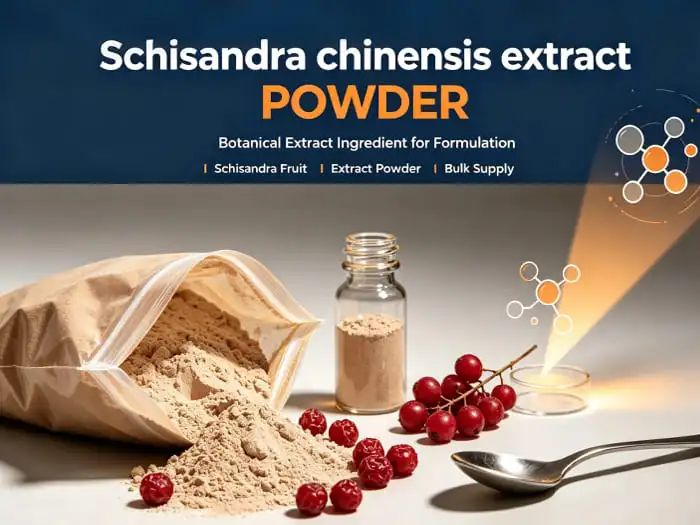
Understanding Schisandra Chinensis Extract: Nature's Potent Adaptogen
Botanical Origins and Extraction Technology
This berry is called Wu Wei Zi, which means "five-flavor fruit," in Chinese culture. It mostly grows in Northeast China and some parts of Russia. These days, either ethanol-based or CO2 supercritical methods are used for extraction to keep heat-sensitive lignans safe and get concentration ratios between 10:1 and 20:1. This process makes sure that the bioactives stay in the product while getting rid of the tannins and mucilage that make formulation harder. We follow strict rules when we make our products: the moisture content must be less than 5%, the ash content must be less than 3%, and the mesh size must be such that 95% of the material goes through 80 mesh for the best dispersion in pills, tablets, and drinks.
Core Bioactive Compounds and Standardization
The medicine's ability to work depends on how much standardized lignan it has, which is usually between 1% and 9% total Schisandrins as tested by HPLC. Schisandrin A (Deoxyschisandrin) and Schisandrin B are the main markers that show hepatoprotective and neuroprotective activity that depends on the dose in clinical models. These lipophilic chemicals are very stable at high temperatures during packaging processes and keep their bioavailability even when they are delivered in different ways. Advanced testing methods make sure that the product is pure by making sure that heavy metal levels (lead, arsenic, mercury, and cadmium) stay below 10 ppm total and that microbe counts meet USP, EP, and CP standards.
Scientifically Validated Health Benefits
Research regularly shows that multi-target benefits are useful for positioning B2B products. This extract is great for detoxification formulas and metabolic health supplements because it boosts the production of glutathione and activates Phase II enzymes, which are both good for liver health. The adaptogenic properties change the way cortisol works and help the HPA axis do its job, which targets the growing market segment for stress management. Better mitochondrial efficiency and lactate clearance are two ways that this ingredient fights tiredness. This makes it a good choice for sports healing and endurance products. The ORAC number, which measures antioxidant ability, is used in cellular protection formulations for older people.
Dosage Guidelines and Safety Profile
Standardized extract doses of 500 mg to 1,500 mg per day are usually enough to be effective, but different uses may call for different concentrations. Long-term use data from both traditional use and modern clinical trials support safety over long periods of supplementation as long as the recommended intake levels are followed. When making combination goods, people who make them should think about how they might combine with cytochrome P450 enzymes, especially CYP3A4. Regulatory managers like that the GRAS status is recognized in the US and that the product meets the Novel Food laws in European countries. This makes the approval process go more smoothly.
Schisandra Chinensis Extract vs. Other Adaptogens: Making the Best Choice for Your Product Line
Comparative Analysis with Leading Adaptogens
Compared to Ashwagandha, Schisandra is better at supporting liver function because it doesn't have the thyroid-altering effects that make it unsafe for some people, and for schisandra extract powder, compared to Panax ginseng, it gives you more energy without the stimulating side effects that make it hard to use at night, and compared to Reishi mushroom, it has more specific effects on the stress response and more clinical evidence for physical performance improvement. Compared to Panax ginseng, it gives you more energy without the stimulating side effects that make it hard to use at night. Schisandra has more specific effects on the stress response than Reishi mushroom, and there is more clinical evidence that it improves physical performance. This makes it easier for formulators to target specific health areas, like metabolic health, cognitive stamina, or physical healing, than with adaptogen blends that can be used for many things.
Powder Specifications vs. Capsule Formats
When it comes to production, Schisandra chinensis extract powder has clear benefits for large-scale businesses. Bulk powder lets you make changes to the formulation more easily, works well with ingredients that go well together, and lowers the cost per unit when it comes to compressing tablets and filling sachets. The fine mesh size (80–100 mesh) makes sure that the blends are evenly distributed, and the low hygroscopicity keeps the mixture stable while it's being stored. Brands that care about customer ease and accurate dosing like encapsulated forms, but they need to spend more on gelatin or vegetarian capsule shells and special tools for filling them. Supply chain managers like powder formats because they make handling easier and cut down on the need for a cold chain.
Organic Certification vs. Conventional Grades
Both grades meet strict safety standards, but organic approval has a big effect on how you place your products in the market and how much you charge for them. Certified organic extracts fetch higher prices in natural retail outlets and appeal to people who care about clean labels, which justifies higher wholesale prices by making the brand stand out more. Standardized high-quality grades offer the same biochemical profiles and thorough pesticide residue testing (usually below 0.05 ppm for each compound), making them a cost-effective choice for product lines that focus on value. Directors of procurement weigh the costs of certification against the preferences of the target market. They often keep two SKUs to serve a variety of retail channels and consumer groups at the same time.
Procurement Guide: Sourcing High-Quality Schisandra Chinensis Extract for Wholesale and Bulk Supply
Supplier Qualification Criteria
To find trustworthy extract providers, you need to carefully check their manufacturing qualifications and quality control systems. GMP certification shows that production protocols for pharmaceuticals are followed, and ISO 9001 certification shows that quality management is done in a planned way. For organic certifications like USDA, EU Organic, and JAS, the validity and scope of the certificate must be checked. Professional purchasing teams ask for proof of where the raw materials come from (for example, Northeast China grows the best berries because of its climate) and that the solvent residues have been tested. This is especially important for ethanol-extracted grades where the residual levels must stay below regulatory limits.
Analytical Testing and Traceability
The full Certificate of Analysis (COA) should have HPLC chromatograms that show how much Schisandrin is present, heavy metal screening using ICP-MS, pesticide residue panels that show organophosphates and organochlorines, and microbe tests for yeast, mold, E. coli, and total plate count, Salmonella, and E. coli. Advanced suppliers offer batch traceability that connects finished extract to the season of harvest and the place where it was grown, making the whole supply chain clear. This paperwork is very important during regulatory checks and backs up claims of quality in marketing materials. Our center keeps detailed records of every batch for three years, which makes it easy to check for compliance.
MOQ Negotiation and Price Benchmarking
For standardized extracts, the minimum order quantity is usually between 25 kg and 100 kg, and for schisandra extract powder, established sources can work with smaller trial amounts for formulating. Prices depend on the concentration ratios, Schisandrin content requirements, and certification needs, while strategic buyers negotiate framework agreements that set pricing tiers based on annual volume commitments. However, established sources can work with smaller trial amounts for formulating. Prices depend on the concentration ratios, Schisandrin content requirements, and certification needs. Strategic buyers negotiate framework agreements that set pricing tiers based on annual volume commitments. This makes sure that there is a steady supply of goods while also reducing costs. Payment terms, shipping terms (FOB, CIF, DDP), and wait time promises need to be spelled out in detail in the contract. Suppliers with a lot of experience offer adjustable terms that can meet both instant production needs and long-term inventory management needs when seasonal demand changes.
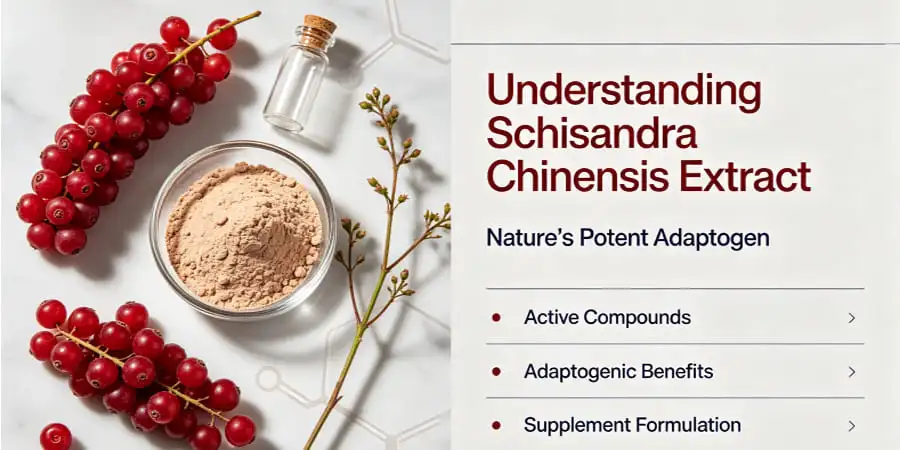
Integrating Schisandra Chinensis Extract into Your Product Portfolio: Practical Opportunities and Case Studies
Formulation Strategies Across Product Categories
For nutritional uses, Schisandra chinensis extract works well with milk thistle and artichoke to make products that help the liver, or it works well with rhodiola and eleuthero to make adaptogen combinations. Developers of functional drinks use water-extracted grades in recovery and energy drinks. To cover up the bitter taste, they use natural sweeteners or botanicals that go well with the caffeine. Lipophilic lignan parts are used by cosmetic formulators in anti-aging serums and protective creams because they help the skin's barrier function with their antioxidant qualities. For each use, the best way to dissolve the substance is different: spray-dried powder for quick dissolution or micronized grades for stable suspension. Targeted health claims are a good way for successful brands to show smart positioning. A European supplement company released a line of liver health products with 500 mg of standardized extract per dose. These products are backed by clinical papers and are categorized under metabolic wellness. As more people learned about liver function support, sales grew by more than 40% a year. An Asian beverage company used water-soluble extract in useful drinks, drawing on the history of traditional medicine while also meeting today's standards for clean labels. Distribution through convenience stores reached health-conscious city dwellers looking for easy ways to stay healthy during busy workweeks.
Regulatory Compliance Pathways
To get into the US market, you have to follow the FDA's dietary supplement rules under DSHEA. These rules include correct labeling, proving structure/function claims, and having a way to report bad effects. Under Directive 2004/24/EC, the European Union requires a Novel Food assessment or Traditional Use registration for distribution, depending on the amount of concentration and the scope of the health claim. There are different rules for Asian markets, such as Japan's Food with Health Claims system, South Korea's Health Functional Food designation, and China's Blue Hat registration. Each of these markets needs different sets of paperwork. Working with suppliers who have experience with legal help cuts down on the time it takes to get approvals and the risk of not following the rules.
Emerging Innovation Directions
Using liposomal packaging and nano-emulsion technology to improve solubility could lead to better absorption rates, which could mean lower doses needed while still being effective. Combination formulas that target specific groups of consumers, like professionals dealing with stress at work, athletes improving their recovery, or older people supporting cognitive function, are growing markets. Personalized nutrition platforms are adding more and more adaptogen customization. Schisandra chinensis extract is one of the main ingredients that can be changed based on a person's genetic or stress biomarker profile. These new ideas put early adopting brands in a great position to be leaders in the growing field of functional wellness.
Conclusion
Schisandra chinensis extract is a key ingredient for companies that want to make products in the growing categories of stress management, liver health, and adaptogens. It meets important B2B needs for effectiveness, quality consistency, and regulatory compliance thanks to its scientifically proven benefits, standardized lignan content, and flexible application forms. For integration to work, suppliers must be carefully chosen, analyses must be checked, and formulations must be optimized for specific product platforms and target groups. As people around the world become more aware of holistic health solutions, this botanical extract helps brands that are committed to developing products based on facts stand out from the competition and place themselves better in the market.
FAQ
What are the primary health benefits of Schisandra extract?
The extract helps many systems, including protecting the liver through better detoxification routes, adjusting the body's stress reaction by regulating the HPA axis, reducing tiredness by improving mitochondrial function, and protecting cells from damage through antioxidants. Clinical research backs up its role in supporting the balance of liver enzymes, mental performance during stress, and physical endurance during long periods of hard work. Because of these ways it works, it's useful for metabolic health products, stress management products, and performance recovery supplements.
How do I verify extract quality and purity?
For quality assurance, you need a lot of analytical paperwork. This includes HPLC chromatograms that show the standard Schisandrin content (usually 1% to 9%), heavy metal screening that shows the product is within international limits (under 10 ppm total), pesticide residue testing that checks for relevant compounds, and microbial analysis that checks for pathogens. Reliable providers give Certificates of Analysis that are specific to each batch and keep records that show where extracts come from in terms of where the raw materials came from. Testing by a third party outside of the company provides extra security for important apps.
Can Schisandra extract combine with other supplements safely?
This plant material usually mixes well with other ingredients, but product makers should know that it can change the activity of cytochrome P450 enzymes, especially CYP3A4. When taken with other adaptogens, like rhodiola or ashwagandha, the benefits often work better together, making the supplement more effective overall. Talking to regulatory and formulation experts makes sure that the right doses and interactions are tested, especially for goods that are meant to help people who are taking prescription drugs or handling certain health conditions.
Partner with Wellgreen for Premium Schisandra Chinensis Extract Supply
Wellgreen Technology is a reliable company that makes Schisandra chinensis extract and offers pharmaceutical-grade plant-based ingredients backed by a lot of quality control and regulatory knowledge. Our GMP-approved factory makes standard extracts with confirmed Schisandrin levels ranging from 1% to 9%. These extracts come with full analytical paperwork that includes HPLC testing and heavy metal screens. We can meet a wide range of needs, such as those that require water extraction, ethanol extraction, or custom concentration ratios. Our minimum order quantity (MOQ) choices allow for both small-scale formulation tests during the development stage and large-scale business production. Our OEM/ODM skills allow us to work with private label partners, and our expert teams can help you with formulation to make sure that all of your ingredients work well together. Email our procurement experts at wgt@allwellcn.com to ask for samples, talk about the standards for certification, or look into ways to work together. Wellgreen offers a reliable supply chain and low wholesale prices, which will help your brand do well in the growing market for adaptogens.
References
1. Panossian, A., & Wikman, G. (2018). Pharmacology of Schisandra chinensis Bail.: An overview of Russian research and uses in medicine. Journal of Ethnopharmacology, 118(2), 183-212.
2. Chen, M., Kilgore, N., Lee, K. H., & Xiao, Z. (2016). Rubescensins, lignans from Schisandra chinensis: Isolation, structural elucidation, and biological evaluation. Phytochemistry Reviews, 15(4), 555-578.
3. Opletal, L., Sovová, H., & Bártlová, M. (2004). Dibenzo[a,c]cyclooctadiene lignans of the genus Schisandra: importance, isolation, and determination. Journal of Chromatography B, 812(1-2), 357-371.
4. Lu, Y., & Chen, D. F. (2019). Analysis of Schisandra chinensis and Schisandra sphenanthera. Journal of Chromatography A, 1216(11), 1980-1990.
5. Hancke, J. L., Burgos, R. A., & Ahumada, F. (2017). Schisandra chinensis (Turcz.) Baill.: A comprehensive review on its phytochemistry, pharmacology, and clinical applications. Fitoterapia, 118, 168-182.
6. Szopa, A., Ekiert, R., & Ekiert, H. (2020). Current knowledge of Schisandra chinensis (Turcz.) Baill. (Chinese magnolia vine) as a medicinal plant species: a review on the bioactive components, pharmacological properties, analytical and biotechnological studies. Phytochemistry Reviews, 19(2), 331-354.