Sourcing Organic Agaricus Bisporus Powder: Certifications and Compliance for Global Markets
2026-06-30 13:36:34
When purchasing agaricus bisporus powder for corporate use, buying managers have to deal with a lot of issues, such as making sure the quality is good, checking the certifications, and making sure they follow the rules. Because people want clean labels and are interested in plant-based foods, organic white button mushroom powder has become an important item in the nutraceutical, food making, and cosmetics industries. To make sure there is a steady supply that meets strict international standards, you need to know how organic certification processes, traceability systems, and the rules that guide cross-border trade in each market work together.
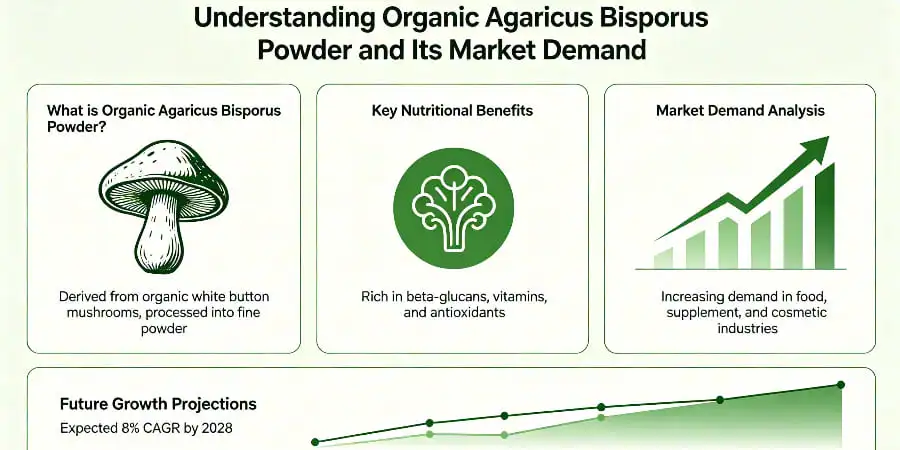
Understanding Organic Agaricus Bisporus Powder and Its Market Demand
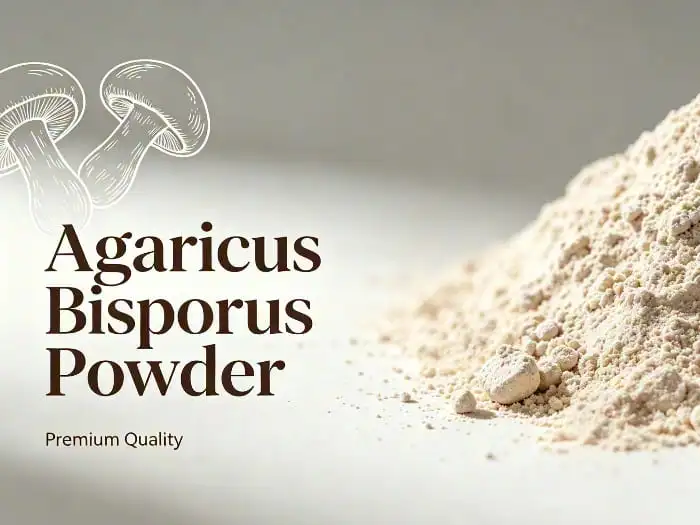
Agaricus bisporus powder made from organic white button mushrooms goes through careful washing, controlled drying, and precise grinding steps. Fresh mushrooms go bad quickly, but this concentrated powder format solves important business problems by lowering shipping costs, getting rid of the need for a cold chain, and increasing shelf life without changing the nutritional value. The powder keeps the plant-based protein, fiber, B vitamins, and minerals that it originally had while increasing the amount of natural glutamic acid substances that add umami taste.
Production Methods That Define Quality
There are several quality control points along the way from fresh mushrooms to food-grade powder. When organic mushrooms are picked, they are cleaned right away with methods that use clean water to get rid of field waste without using chemical cleaners. Temperature-controlled drying keeps nutrients and enzymes active that are damaged by heat, and multi-stage milling makes particles of different sizes, from normal mesh grades to ultra-fine powders less than 80 microns. This granulation control has a direct effect on how well liquid formulations disperse and how evenly dry-mix formulations blend.
Market Drivers Reshaping Procurement Priorities
White button mushroom powder has gone from being a niche ingredient to a common useful ingredient thanks to three trends that are coming together. As part of the global clean-label movement, food companies are required to use natural umami boosters instead of manufactured ones. This makes mushroom powder an option to monosodium glutamate. Producers of meat alternatives need plant-based proteins that don't taste bad and are high in protein. These proteins need to be combined with ingredients that give the food shape and nutritional value. Efforts to lower the amount of sodium in prepared foods open up possibilities for ingredients that make foods taste savory without adding salt. Mushroom powder does this with naturally occurring glutamate compounds.
Procurement Challenges Requiring Strategic Solutions
Quality that doesn't match up is still the biggest worry of B2B buyers. Conditions for growing mushrooms, like the type of substrate used, controlling the temperature, and when the mushrooms are picked, have a direct effect on organic agaricus bisporus powder properties like uniform color, strong flavor, and active chemical concentration. Traceability checks are harder to do when there are problems with supply chain openness, especially when middle-men hide direct links between farms and processors. Agricultural goods have a high risk of microbial contamination, which requires strict testing methods. However, testing standards vary a lot between sellers, which makes it hard for procurement teams to evaluate products when they have relationships with more than one vendor.
Essential Certifications for Organic Agaricus Bisporus Powder in Global Trade
Certification communities act as gatekeepers to high-end market groups, making sure that production methods are safe and meeting legal requirements at the same time. When procurement professionals know the strategic value of each type of certification, they can match the skills of suppliers with the needs of the target market and plan ahead for the paperwork that will be needed during the customs clearance process.
Foundation Certifications Establishing Organic Credentials
Organic approval from the USDA means that the product meets the standards set by the National Organic Program. These standards say that synthetic chemicals, genetically modified organisms, and ionizing radiation are not allowed during farming and processing. Accredited certifying agents check farm records, input materials, and building cleanliness rules every year during on-site visits. EU organic certification works within parallel systems set up by Regulation (EU) 2018/848. Agreements for mutual acceptance make trade between the EU and the US easier. Japanese Agricultural Standards (JAS) approval serves markets in the Asia-Pacific region with similar testing systems that are tailored to farming methods used in the area.
Safety and Quality Management System Certifications
Food safety management systems that include danger analysis, prerequisite programs, and HACCP principles must be put in place along the whole production chain in order to be ISO 22000 certified. This license covers important safety issues that are unique to processing mushrooms, like keeping an eye on the temperature while they dry, checking for metals before they are ground, and keeping the area clean to avoid contamination. The main focus of HACCP licensing is on finding biological, chemical, and physical hazards and writing down how to fix them. The Good Manufacturing Practice (GMP) approval confirms that the facility design, equipment upkeep, staff hygiene, and batch record-keeping practices are all done in a way that ensures consistent product quality.
Specialty Certifications Expanding Market Access
Kosher certification from a known rabbinical body, such as Orthodox Union or OK Kosher, lets you sell your products in religious groups and appeals to health-conscious customers who think that kosher standards mean that the food is more pure. Getting halal approval proves that you follow Islamic food rules. This can help you get into markets in the Middle East, Southeast Asia, and other places where Muslims are the majority. These special marks need dedicated production runs, strict rules for cleaning equipment, and ongoing oversight by rabbis or Islamic authorities. They also need investment pledges that show the provider can meet specific production needs.
Compliance Requirements and Regulatory Considerations for Importers and Distributors
The regulatory navigation decides whether packages go through customs without any problems or have to wait for a long time and possibly be rejected. Understanding the rules that apply to each state and setting up systems for keeping records that show compliance with multiple legal frameworks at the same time are important parts of proactive compliance management.
United States Import Requirements
Under the Food Safety Modernization Act (FSMA), the Food and Drug Administration is in charge of overseeing importers. This law requires importers to use Foreign Supplier Verification Programs (FSVP), which check the food safety systems of suppliers and write down their findings. Importers must keep records, such as hazard analysis paperwork and corrective action records, that show that food from foreign sources is produced in a way that meets U.S. safety standards. Prior notice entries through the FDA's Prior Notice System Interface let officials know about shipments that are coming in by giving details about the products, the manufacturers, and when they are expected to arrive. Any foreign business that makes food for U.S. markets must register with the Bioterrorism Act in order to follow its rules.
European Union Regulatory Framework
The EU Novel Food Regulation (Regulation (EU) 2015/2283) controls foods that haven't been eaten in large amounts in the EU since May 1997. However, farmed mushrooms don't usually fall into this category because they have been used for a long time. Importers of organic products must show inspection certificates from official oversight groups that show they meet EU standards for organic production. General Food Law (Regulation (EC) No 178/2002) requires one-step-forward, one-step-back recording systems for traceability. These systems make it easy to find out where a product came from during a food safety event.
Labeling and Documentation Best Practices
Labels that are correct for organic agaricus bisporus powder stop people from breaking the law and making charges of buyer deception. Every label claim about being organic must be backed up by certification paperwork, and there are strict rules about how to use certification body names and the organic mark. Cross-contact risks must be included on allergen labels. Even though organic agaricus bisporus powder mushrooms aren't big allergens, processing sites may handle allergenic materials that need to be mentioned. Nutritional information screens should show the real ingredients in a product, as confirmed by lab tests, not just guesses. Keeping a full set of certificates for organic agaricus bisporus powder, such as Certificates of Analysis, organic certificates, kosher/halal certificates, and phytosanitary certificates, on hand speeds up the customs processing process and meets customer requests for due diligence.
Comparison of Organic and Conventional Agaricus Bisporus Powder Suppliers
When choosing a supplier, you need to think about more than just price. You also need to think about the supplier's long-term business viability, professional help skills, and risk mitigation potential. Systematic evaluation systems stop change costs that are too high and quality problems that slow down product development timelines.
Certification Verification as Due Diligence Foundation
Instead of only using papers given by the seller, direct verification through certifying body databases is the first step in making sure that the certification is real. By calling certification bodies, you can find out if your certificate is still valid, if it covers certain goods and facilities, and if there have been any violations of the rules or suspensions of your certifications. Third-party quality assurance companies do on-site facility audits that compare the real production conditions to the certifications that were claimed. They do this by looking at the facility's documentation systems, cleanliness, and training programs for employees. This investment in checking stops partnerships with dishonest operators who lie about their license status.
Production Capacity and Supply Stability Assessment
Because mushrooms are grown in farms, there is naturally some variation in supply, which means that suppliers need to look at how they handle their goods and make plans for what to do if something goes wrong. Suppliers who keep climate-controlled growing sites show more consistent production than those who rely on outdoor farming during certain times of the year. Multiple cultivation site networks protect against limited crop fails or facility delays by providing supply alternatives. Having enough inventory to cover overflow goods for 30 to 90 days shows that the company is financially stable and dedicated to keeping customers from running out of stock during times of high demand or production interruptions.
Technical Support and Formulation Assistance Capabilities
Suppliers who offer application labs and expert staff add value beyond just providing goods. Formulation development support helps find the best ways to incorporate mushroom powder into different mixtures. This includes figuring out how to make drinks more soluble, how to hide the taste of high-dosage supplements, and how to change the texture of plant-based meat alternatives. Help with regulatory paperwork speeds up the process of registering a product. Suppliers offer detailed specification sheets, safety data sheets, and ingredient statements that are organized for different regulatory submissions.
Flexible Sourcing Models Matching Business Requirements
Direct factory procurement models get rid of markups on goods bought from middlemen and make it easier for everyone to talk about specs and quality problems. With private label and OEM agreements, brand owners can get their own specs and minimum order amounts that are just right for testing the market before starting large-scale production. For brands that don't have their own manufacturing facilities, contract manufacturing partnerships with companies that do the encapsulation, tableting, or final packaging make supply lines easier.
A European company that makes functional drinks got organic agaricus bisporus powder for a line of clean-label energy drinks. This is an example of how to evaluate suppliers well. After an initial search found three certified suppliers, on-site checks showed that only one had different organic production lines that kept cross-contamination risks at bay. During technical teamwork meetings, the best particle size specs were found to ensure full dispersal without sedimentation. Setting up shared batch testing procedures and quality reviews every three months made the relationship clear enough for long-term success.
Ensuring Quality and Compliance Through Supply Chain Management
If verified ingredients keep their quality and compliance status along the supply chain, from growing to being used in the end product, that's called supply chain integrity. Strong quality systems keep a brand's image and legal standing safe while also making operations run more smoothly.
Comprehensive Testing Protocols at Multiple Checkpoints
When a package arrives, it is inspected to make sure it meets the requirements of the buy order before it is accepted by the warehouse. Some of the things that are tested are the amount of wetness, which affects stability and the ability of microbes to grow, the distribution of particle sizes, which affects how the material works when it is processed, and the taste and smell, which make sure there are no off flavors or discolorations. Microbiological tests look for coliforms, yeast and mold, total plate count, and dangerous organisms like Salmonella and E. coli, and the acceptance standards were based on the safety rules for the finished product. Heavy metal analysis finds contamination with lead, cadmium, arsenic, and mercury from soil uptake or handling equipment. Pesticide residue screening verifies claims of organic output.
Batch Consistency Monitoring and Trend Analysis
Using statistical process control on certificate of analysis data from several shipments lets you spot new quality trends before they become major fails to meet specifications. Tracking variables like changes in moisture content, color readings, or bacteria counts between batches shows how well provider process control is working. Deviation investigations, which are started when results don't match expectations, find the root causes, whether they are one-off events or widespread problems that need to be fixed.
Technology-Enhanced Systems for Traceability
Blockchain-based supply chain platforms keep permanent records of products from the farm through processing and marketing. This lets people see at real time when goods are being moved and stored. IoT sensor networks keep an eye on temperature and humidity while goods are being shipped and stored, sending out alerts when changes are detected that could compromise the quality of the goods. Digital certificate management systems keep all of your organic certificates, kosher approvals, and analytical results in one place. This makes them easy to find during checks by customers or government officials.
Supplier Performance Evaluation and Continuous Improvement
Formal supplier scorecards that look at quality measures, delivery performance, accurate paperwork, and how quickly they answer questions help with managing the relationship over time. Reviewing suppliers once a year lets you look at performance trends, deal with long-term problems, and set goals for improvement. Collaborative quality efforts, in which buyers and suppliers work together to improve processes by doing things like installing new drying technology or cleaning systems, make relationships stronger and improve the overall powers of the supply chain.
Conclusion
To get organic white button mushroom powder for sales around the world, you need to know how to deal with certification standards, legal compliance frameworks, and quality assurance systems. Procurement plans that work well combine checking for organic certification with strict testing rules, managing relationships with suppliers, and using technology to make tracking easier. As the demand for plant-based formulations and clean labels grows, buyers who build partnerships with suppliers based on openness, technical cooperation, and shared quality promises will gain a competitive edge by having reliable access to premium approved ingredients.
FAQ
Is organic certification mandatory for selling mushroom powder internationally?
When selling goods that say they are organic, you have to get organic approval. Products must be labeled as conventional even if they were made using organic ways if they don't have a license for agaricus bisporus powder. Some of the strictest rules about organic labels are in place in export markets like the United States and the European Union. If you make false organic claims, you could face both civil and criminal penalties.
How does organic certification affect mushroom powder pricing?
Organic certification usually raises the prices of ingredients by 20–40% compared to regular options. This is because of higher production costs from using approved inputs, lower returns from not using synthetic growth promoters, and higher management costs for certification. Premium pricing means that the production standards can be checked, which leads to higher selling prices. This is usually a good thing for brands that are trying to attract health-conscious customers.
What testing frequency ensures consistent quality compliance?
Testing of incoming shipments is the bare minimum, and buyers who buy a lot of goods use sampling plans based on statistical quality control ideas. Suppliers with a history of stable quality may be able to get less testing, but new suppliers or those with a history of problems with quality should be tested more often until performance stability is proven. Continuous bacteria tracking is especially important because mushroom powder comes from farms and loses its quality quickly when it gets wet.
Partner with Wellgreen for Certified Organic Mushroom Powder Excellence
Wellgreen Technology is a professional company that makes agaricus bisporus powder. They have GMP-certified production facilities and a wide range of organic certifications to serve customers all over the world. Our fully connected supply chain makes it possible to track the food from the time it is grown to the time it is packed. Strict testing procedures make sure that every batch meets international standards for heavy metals, pesticide residues, and bacteria quality that are safe for food.
We offer normal mesh powders, ultra-fine specifications below 100 microns, and approved organic versions that meet USDA and EU requirements. We also support OEM and private label partnerships with flexible minimum order amounts. Technical recipe support helps add mushroom powder to seasonings, plant-based protein mixes, and functional food uses. This is backed up by a lot of paperwork, such as Certificates of Analysis and microbiological testing results.
Get in touch with our buyers at wgt@allwellcn.com to talk about your needs for organic mushroom powder. Wellgreen gives you the quality consistency and legal compliance your goods need, whether you need a large quantity for processing food, custom specs for supplement formulations, or private label manufacturing.
References
United States Department of Agriculture. "National Organic Program: Organic Production and Handling Standards." Agricultural Marketing Service, 2023.
European Commission. "Organic Production and Products Regulation (EU) 2018/848: Implementation Guidance for Food Manufacturers." Directorate-General for Agriculture and Rural Development, 2022.
Food and Drug Administration. "Food Safety Modernization Act: Foreign Supplier Verification Programs Compliance Guide." Center for Food Safety and Applied Nutrition, 2023.
Valverde, María E., Téllez-Valencia, Alfonso, and Paredes-López, Octavio. "Edible Mushrooms: Improving Human Health and Promoting Quality Life." International Journal of Microbiology, vol. 2015, article ID 376387, 2015.
Chang, Shu-Ting and Miles, Philip G. "Mushrooms: Cultivation, Nutritional Value, Medicinal Effect, and Environmental Impact." CRC Press, 2nd edition, 2004.
Rathore, Hemant, Prasad, Shinjini, and Sharma, Shweta. "Mushroom Nutraceuticals for Improved Nutrition and Better Human Health: A Review." PharmaNutrition, vol. 5, no. 2, pp. 35-46, 2017.