The Diverse Benefits of Ginseng Extract
2026-06-03 15:03:06
Ginseng extract has become an important part of modern nutraceutical and useful product development. Its use has been around for hundreds of years and has been proven to work by modern science. This concentrated botanical powder comes from the roots of Panax ginseng and Panax quinquefolius. It has standard amounts of ginsenosides, which are the bioactive chemicals that give ginseng its many health benefits. Professionally made ginseng extract is more consistent in its effectiveness than raw root material. This means that formulators can make energy-boosting products, supplements for cognitive health, and all-around wellness products that meet strict regulatory standards and meet consumer demand for natural, science-backed ingredients.
Understanding Ginseng Extract: Definition, Types, and Nutritional Value
Origins and Extraction Methods
Ginseng extract comes from roots that have been grown and are usually picked after four to six years, when the quantity of ginsenoside is highest. Solvent-based methods, usually water or water-ethanol systems, are used in the extraction process to turn raw plant material into a concentrated powder. This method separates the biologically active saponins from the inactive cellulose and other substances that make the drug less bioavailable. Spray-drying turns the product into a fine powder with a controlled moisture content below 5%. This keeps the product stable and stops the growth of microbes while it is being stored and shipped.
Korean Versus American Ginseng: Technical Distinctions
Asian ginseng (Panax ginseng) and American ginseng (Panax quinquefolius) have different ginsenoside profiles that affect how they are used. Higher amounts of Rg1 and Re are found in Korean red ginseng, which study links to stimulating properties good for energy-boosting formulas. American varieties have higher amounts of Rb1, which is linked to calming effects that work well with stress-relieving products. Because the ginsenoside fingerprint has a direct effect on how well a finished product works, procurement teams must choose these botanical sources based on the functional results they want.
Product Formats and Manufacturing Considerations
There are a lot of different forms on the market to meet the needs of different formulations. Tablets, pills, and sachets are made from spray-dried powders that have been tested and found to contain 5–80% total ginsenosides. Water-soluble types go through extra filtration to get rid of sediments, which lets them be mixed into clear drinks without forming crystals. Encapsulated formats work well for consumer goods that need easy dosing, and bulk powders work well for makers who are making their own blends. For example, spray-dried extracts are hygroscopic, which means they need to be stored below 45% relative humidity so they don't stick together during processing.
Bioactive Compound Profile
The health benefits and nutritional value come from ginsenosides Rb1, Rb2, Rc, Rd, Re, Rf, Rg1, and Rg3. Each one has its own cellular functions. Polysaccharides in the extract help to change the immune system, and small minerals and peptides provide extra benefits. Standardization through HPLC analysis makes sure that each batch is the same, and records of analysis show the exact ginsenoside ratios. This level of analytical rigor meets the needs of the pharmaceutical industry for API-grade materials and helps brands of dietary supplements meet the standards for label claims throughout the shelf life of the product.
Key Benefits and Uses of Ginseng Extract for Business Applications
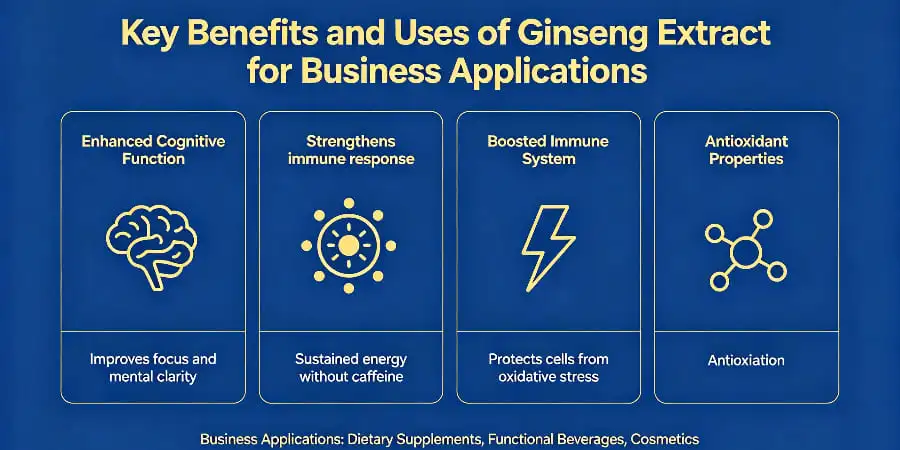
Energy Support and Physical Performance
Clinical studies show that ginseng root extract can improve the energy balance of cells by making mitochondria work better and using glucose more efficiently. These mechanisms can be used in daily energy-supporting products for workers, athletes, and people who are always on the go. The extract is often mixed with B vitamins and amino acids in formulas to make them work better together. The adaptogenic traits help the body keep homeostasis when it's under a lot of physical stress. This makes it a great ingredient for pre-workout supplements and sustained-release energy capsules that don't cause the crash that stimulant-based products do.
Cognitive Function and Mental Clarity
Neuroscience studies have shown that ginseng can boost working memory, reaction time, and attention span when the body is under a lot of metabolic stress. Because of these results, it is added to nootropic stacks and brain-health products. The extract helps make acetylcholine and protects neurons from oxidative damage. These are two benefits that formulators looking to make products for older people and workers who need to think quickly on their feet will like. Manufacturers of drinks have added water-soluble grades to functional drinks that are marketed as natural options to synthetic brain boosters. This helps them stand out in markets that are already very crowded.
Immune System Modulation
Ginseng extract contains polysaccharide fractions that have immunomodulatory effects. These fractions boost the activity of natural killer cells and help maintain a healthy cytokine production. This trait is useful in seasonal health formulas and all-around immune-support supplements. Manufacturers mix it with elderberry, vitamin C, and zinc to make multi-ingredient products that address customers' worries about keeping their immune systems strong. Because the extract can boost protection in two ways without overdoing it, it is better than ingredients that only work in one way.
Stress Adaptation and Recovery
Ginseng's ability to help living things deal with different kinds of stress by controlling the HPA axis and changing cortisol levels is reflected in its adaptogenic classification. Supplement companies use this benefit to make stress-relieving mixes and recovery goods for use after working out. The extract affects the balance of stress hormones and works with magnesium and ashwagandha to make full adrenal-support mixes. Functional drink makers have made calming tonics with American ginseng types because they are gentler and less stimulating, making them perfect for drinking in the evening.
Emerging Applications in Specialized Markets
Ginseng's antioxidant properties have led to new possibilities in nutricosmetics, which is the use of oral supplements to improve skin health from the inside out. Because the extract can boost collagen production and lower inflammation, it is a good ingredient for anti-aging products. Standardized ginseng extract is being used more and more in sexual health products because studies have shown that it can help blood vessels work better and keep hormones in balance. For example, these new uses show that the ingredient can be used for more than just energy and defense.
Safety, Dosage, and How to Take Ginseng Extract: Ensuring Quality and Compliance
Safety Profile and Precautionary Guidelines
Ginseng powder is generally safe as long as it comes from a reputable company that follows Good Manufacturing Practices. Possible side effects are still pretty low at the suggested doses, but they could include mild stomach pain or trouble sleeping if taken late at night, especially with Korean varieties that are very stimulating. To meet the standards set by USP, EP, and JP monographs, pharmaceutical-grade extracts are put through a lot of tests to look for heavy metals (like lead, arsenic, cadmium, and mercury), pesticide leftovers, and microbes that could be harmful. This control of contamination is necessary because, over the course of several years of farming, raw ginseng roots bioaccumulate soil pollutants.
Regulatory Compliance and Certification Standards
For global procurement to work, regional regulatory systems must be taken into account. ISO 22000 and GMP certifications show that quality management is used systematically throughout the production process. Clean-label product makers like organic approvals (USDA and EU Organic), but they need to make sure that their supply chains are free of synthetic fertilizers and pesticides. Halal and Kosher approvals help brands that cater to certain groups of customers get into more markets. Regulatory approval for finished goods entering a variety of international markets is sped up when suppliers provide full paperwork, such as certificates of analysis, allergen statements, and BSE/TSE declarations.
Dosage Recommendations for Formulation Development
In clinical studies, 200 to 400 mg of extract standardized to 4 to 7 percent ginsenosides is usually used every day. However, energy-boosting products may contain 600 to 1200 mg, based on the level of standardization. Formulators figure out doses by looking at how much raw root is equal to how much extract there is. For example, if the extract concentration is 10 times the powder concentration, 300 mg of powder is equal to 3000 mg of raw root. Product placement is affected by timing: morning dosing is best for energy uses, while split doses help with long-lasting effects. Because ginseng is naturally bitter, it needs to be carefully taste-mask in beverage applications, while capsules allow for exact dosing.
Quality Verification Protocols
To prove that ginseng root extract is real, you need to use more than just looks and smell to analyze it. By comparing samples to reference standards using HPLC fingerprints, the identity of the plants is confirmed and cheap plant materials that have been mixed in can be found. By looking at them under a microscope, scientists can see that the cells have features that are typical of real Panax species. Independent labs that do testing for a third party add extra layers of verification that keep buyers safe from fake materials, which is a problem that keeps coming up in botanical supply chains. Setting up supplier qualification programs with on-site audits makes sure that buying requirements are always met and lowers the number of batches that are rejected.
Comparative Insights: Choosing the Best Ginseng Extract for Your Business Needs
Ginseng Versus Alternative Botanicals
When evaluating adaptogenic ingredients, procurement professionals must weigh functional profiles against sourcing logistics and cost structures. Maca root extract offers energy support through different mechanisms—nutritive density rather than specific saponins—typically at lower price points but with less robust clinical validation. Ginkgo biloba addresses cognitive function primarily through vascular mechanisms, lacking ginseng's broader adaptogenic range. Rhodiola rosea provides comparable stress-adaptation benefits with faster onset but presents supply chain challenges due to limited cultivation regions. Ginseng's extensive research portfolio and established consumer recognition often justify premium positioning despite higher acquisition costs.
Korean Red Ginseng Versus American White Ginseng
Procurement decisions between Asian and American species should align with target product positioning. Korean red ginseng (steamed and dried) commands premium pricing due to processing intensity and perceived potency, with market prices reflecting established reputation in Asian markets. American ginseng presents cooler energetic properties in traditional frameworks, appealing to formulations emphasizing calm focus over stimulation. Ginsenoside profiles differ significantly—Asian varieties contain higher Rg1:Rb1 ratios (approximately 1:1 to 1:2) while American types invert this relationship (Rg1:Rb1 around 1:3). Supply dynamics favor American sources for buyers prioritizing consistent availability, as North American cultivation faces fewer geopolitical disruptions.
Organic Versus Conventional Production
Organic certification adds approximately 20-40% to raw material costs but delivers marketing advantages in premium consumer segments increasingly scrutinizing ingredient sourcing. Conventional production allows for integrated pest management, potentially reducing crop loss and stabilizing supply. Residue testing protocols have advanced to detect pesticides at parts-per-billion levels, enabling conventional materials to meet strict European limits when properly managed. Bulk buyers must evaluate whether organic premiums translate into finished product price points their target markets will support, particularly when competing against synthetic alternatives.
Powder Versus Pre-Encapsulated Formats
Raw extract powder offers formulation flexibility and cost efficiency for manufacturers operating encapsulation lines, with typical bulk density (0.40-0.60 g/ml) optimized for high-speed capsule filling equipment. Pre-encapsulated options suit smaller brands lacking in-house manufacturing capabilities but carry significant cost premiums and limit customization. Particle size specifications (95% through 80 mesh) ensure uniform dispersion in powder blends and prevent settling in finished encapsulations. Water-soluble powders designed for beverage applications require specialized processing adding 30-50% to base powder costs but eliminate formulation challenges associated with standard grades.
Procurement Insights: How to Source High-Quality Ginseng Extract for Your Business
Evaluating Supplier Credentials and Manufacturing Standards
Selecting reliable partners begins with verifying manufacturing certifications that demonstrate quality system maturity. GMP facilities implement documented procedures for raw material receiving, in-process controls, and finished product release testing. Large inventory capabilities indicate established supply relationships and financial stability to weather agricultural yield fluctuations. Complete certificate portfolios—including organic, Kosher, Halal, and region-specific registrations—reflect investment in quality infrastructure. Experienced suppliers offer R&D support for custom specifications, such as adjusting ginsenoside ratios or developing proprietary blends combining multiple botanical extracts for differentiated formulations.
Bulk Supply Models and Logistics Considerations
Purchasing strategies balance order quantities against working capital and storage capacity. Minimum order quantities for custom specifications typically range from 25-100kg, while stock standardized grades may allow smaller initial purchases. Established manufacturers maintain inventory buffers enabling rapid fulfillment—often shipping within 48-72 hours for standard products versus 4-6 weeks for made-to-order specifications. Packaging configurations in 25kg fiber drums with double polyethylene liners protect hygroscopic powders during international transit. Buyers should clarify Incoterms to understand cost allocation for freight, insurance, and customs clearance, with DDP terms simplifying logistics but typically increasing unit prices by 8-15% compared to FOB arrangements.
Authentication Methods and Anti-Counterfeiting Measures
The economic incentive to adulterate premium botanicals necessitates robust verification protocols. DNA barcoding techniques confirm species identity by analyzing specific gene sequences unique to Panax ginseng and Panax quinquefolius, detecting substitution with Panax notoginseng or non-Panax species. Thin-layer chromatography provides rapid screening for characteristic ginsenoside patterns, while HPLC quantifies individual saponins against certified reference materials. Reputable suppliers maintain traceability documentation linking finished extracts to specific root lots, cultivation regions, and harvest dates. Requesting retention samples from each production batch enables future testing if quality concerns emerge during product commercialization.
Building Strategic Supplier Relationships
Long-term partnerships deliver advantages beyond transactional purchasing. Preferred suppliers prioritize established customers during supply constraints caused by poor harvests or regulatory disruptions. Collaborative relationships enable co-development of specialized grades tailored to unique formulation requirements, such as low-bitterness profiles for beverage applications or ultra-fine particle sizes for instant-dissolving formats. Volume commitments often unlock preferential pricing tiers and payment terms extending beyond standard net-30 arrangements. Regular communication about forecasted demand helps suppliers plan production schedules, reducing lead times and preventing costly reformulation delays when launching new product lines.
Conclusion
Ginseng root extract represents a scientifically validated ingredient offering diverse functional benefits across energy support, cognitive enhancement, immune modulation, and stress adaptation applications. Its versatility serves nutraceutical manufacturers, pharmaceutical formulators, functional beverage producers, and cosmetic developers seeking standardized botanical actives with established safety profiles. Successful procurement requires understanding botanical source distinctions, extraction standardization methods, regulatory compliance frameworks, and supplier qualification criteria. The ingredient's expanding research base continues revealing new applications, positioning it as a long-term strategic component for businesses developing innovative health products that meet consumer demand for natural, effective solutions backed by both traditional wisdom and modern scientific evidence.
FAQ
What distinguishes Korean ginseng extract from American ginseng extract?
The primary distinction lies in ginsenoside composition and resulting functional properties. Korean (Panax ginseng) varieties contain higher ratios of stimulating ginsenosides Rg1 and Re, making them suitable for energy-focused formulations. American (Panax quinquefolius) types feature elevated Rb1 levels, providing calming adaptogenic effects preferred in stress-management products. These chemical differences reflect in applications—Asian ginseng dominates pre-workout and vitality supplements, while American varieties suit evening-use cognitive products. Sourcing dynamics also differ, with Korean materials commanding premium pricing due to established market positioning, whereas American sources offer more stable supply chains for buyers prioritizing consistent availability throughout production planning cycles.
How can buyers verify authentic ginseng extract quality from suppliers?
Authentication requires multi-layered verification starting with HPLC analysis confirming ginsenoside profiles match declared standardization levels and species-specific patterns. Reputable manufacturers provide certificates of analysis from accredited laboratories documenting heavy metal levels, pesticide residues, and microbial counts meeting pharmacopeial standards. DNA barcoding offers definitive species confirmation, detecting substitution with inferior botanicals. On-site facility audits verify GMP implementation and quality system documentation. Requesting samples from multiple production batches helps assess consistency, while third-party testing through independent laboratories adds objective verification protecting against sophisticated adulteration that simple organoleptic inspection cannot detect.
What dosage range proves effective for energy-support applications?
Clinical research supporting energy and vitality claims typically employs 200-600mg daily of extract standardized to 4-7% total ginsenosides, equivalent to approximately 2-4 grams of raw root. Formulation decisions must account for extraction ratio and standardization level—a 10:1 extract at 5% ginsenosides differs functionally from a 20:1 extract at 10% despite similar-sounding concentrations. Higher potency materials allow smaller serving sizes, advantageous for capsule count reduction and cost-per-dose optimization. Beverage applications often incorporate 300-400mg per serving to balance efficacy with taste considerations. Developers should reference clinical trial dosages when establishing label claims and consider bioavailability factors influenced by delivery format and timing relative to meals.
Partner with Wellgreen for Premium Ginseng Extract Supply
Wellgreen Technology stands as a professional ginseng extract manufacturer and supplier committed to delivering pharmaceutical-grade botanical ingredients that elevate your product formulations. Our GMP-certified facility maintains extensive inventory of standardized extracts ranging from 5% to 80% total ginsenosides, validated through HPLC testing protocols ensuring batch-to-batch consistency your quality assurance teams demand. We provide complete certification documentation including ISO, organic, Kosher, and Halal credentials, streamlining your regulatory approval processes across international markets. Our technical team offers comprehensive OEM support, collaborating on custom specifications—from water-soluble beverage grades to ultra-pure pharmaceutical APIs—backed by rapid R&D capabilities and flexible minimum order quantities accommodating both emerging brands and established manufacturers. Wellgreen's rigorous testing standards verify authenticity and purity, protecting your brand from counterfeit materials while our optimized logistics ensure fast delivery aligned with your production schedules. Contact our procurement specialists at wgt@allwellcn.com to discuss your ginseng extract requirements and discover how our reliable supply partnerships support your business growth.
References
Kennedy, D.O., & Scholey, A.B. (2003). Ginseng: Potential for the Enhancement of Cognitive Performance and Mood. Pharmacology Biochemistry and Behavior, 75(3), 687-700.
Attele, A.S., Wu, J.A., & Yuan, C.S. (1999). Ginseng Pharmacology: Multiple Constituents and Multiple Actions. Biochemical Pharmacology, 58(11), 1685-1693.
Kiefer, D., & Pantuso, T. (2003). Panax ginseng. American Family Physician, 68(8), 1539-1542.
Yun, T.K. (2001). Brief Introduction of Panax ginseng C.A. Meyer. Journal of Korean Medical Science, 16(Suppl), S3-S5.
Reay, J.L., Kennedy, D.O., & Scholey, A.B. (2005). Single Doses of Panax ginseng Reduce Blood Glucose Levels and Improve Cognitive Performance During Sustained Mental Activity. Journal of Psychopharmacology, 19(4), 357-365.
Bahrke, M.S., & Morgan, W.P. (2000). Evaluation of the Ergogenic Properties of Ginseng: An Update. Sports Medicine, 29(2), 113-133.