Valerian Root Benefits: How to Use Nature's Wonder Root
2026-06-04 14:38:49
Valerian extract is one of the plant ingredients that has been studied the most in the natural health field. This herbal remedy, which comes from the roots of Valeriana officinalis, has been used for a long time and has been shown to help with sleep and worry. The extract has high amounts of valerenic acids, which are bioactive chemicals that work with GABA receptors in the brain to help people feel calm and sleep well. Knowing how valerian extract works and all the different ways it can be used helps product makers and purchasing teams make effective formulas that meet the growing demand for plant-based health products from consumers.
Understanding Valerian Root and Its Benefits
The Science Behind Valerian's Calming Properties
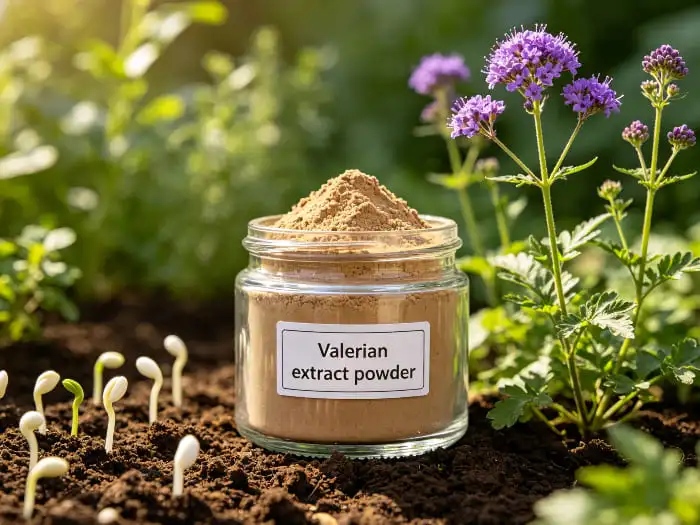
Valerian has been used in traditional medicine for hundreds of years, and new study confirms that it can be used to treat health problems. There are many useful things in the root, like valerenic acids, valepotriates, and volatile oils that all work together to make it effective. Clinical studies show that these chemicals change the function of GABA-A receptors, which control how excited neurones are and help people rest. When GABA activity goes up, the central nervous system is stimulated less, which makes it easier to fall asleep and lessens anxiety reactions.
The fact that valerian is well-known to be safe makes it especially useful for business-to-business uses. Unlike fake sleep aids, valerian rarely leads to dependence or serious side effects when used correctly. The most common side effects are still mild—occasional tiredness, headaches, or stomach pain—and they don't happen very often. Product developers should know that standardised extracts with 0.8% valerenic acids are the standard in the industry when it comes to quality control and uniform effectiveness.
Primary Health Applications for Formulation Development
The botanical extract handles two of the most important health issues in the nutraceutical market. Most of the time, it's used to help people sleep. Studies have shown that taking 300–600 mg before bed can improve the quality and length of sleep. When mixed with melatonin, GABA, or L-theanine, the extract works especially well, making complete sleep solutions.
Managing stress and worry is the second main area of application. Because it calms people down, valerian can be used in daytime stress-relieving goods in the right amounts. When taken in the right amounts, valerian products can lower stress without affecting your ability to think or remember things. Because of this, producers can use the same botanical ingredient to make products that help people sleep at night and calm down during the day.
Key Considerations for B2B Procurement
Quality differences have a big effect on how well a product works and how well it follows the rules. Heavy metals, microbial contamination, and pesticide leftovers should all be checked very carefully in high-quality valerian root extract. The strong smell that is caused by isovaleric acid actually serves as a sign of authenticity, though there are deodorised forms for uses like functional drinks.
When making choices about where to get things, you should give more weight to suppliers who provide full testing documentation, such as HPLC analysis confirming valerenic acid content. The way the sample is extracted is very important. For example, ethanol-water extraction systems keep all the bioactive chemicals while leaving behind clean solvent profiles that meet USP and EP standards. By understanding these technical details, procurement teams can make sure that the materials they choose provide the same therapeutic effects across all production batches.
Comparing Valerian Extract with Other Herbal and Supplement Options
Valerian Versus Melatonin in Sleep Formulations
There are a lot of different ingredients in the natural sleep aid area, and each one works and helps in a different way. Melatonin works quickly by regulating circadian rhythms; effects usually show up 30 to 60 minutes after exposure. Valerian takes longer to work at its best—usually two to four weeks of constant use—but it helps the nervous system in more ways than just controlling sleep-wake cycles.
Product designers often put these things together in a planned way. Melatonin helps you fall asleep right away, and valerian roots help you stay relaxed and sleep better. This complementary method leads to more complete formulations that deal with more than one aspect of sleep dysfunction. The mix also lets lower amounts of each ingredient be used, which might lower side effects while keeping the product's effectiveness.
Positioning Against Chamomile and Passionflower
Some plants, like chamomile and passionflower, are softer and have calming effects. Apigenin, which is found in chamomile, binds to benzodiazepine receptors and has mild effects compared to standard valerian products. While passionflower and valerian both have GABA-boosting effects, passionflower is usually not as strong.
Valerian extract is the best choice for therapeutic-grade supplements because it has the most clinical evidence for moderate to severe sleep problems. Passionflower and chamomile work well in lifestyle items that help people who have trouble sleeping or mild stress. Product managers can better place formulations in different price ranges and market groups when they understand these differences.
Form Factors and Bioavailability Considerations
Product structure has a big effect on how well ingredients work and how well customers like the product. Standard hydroalcoholic extracts work well in pills and tablets because they have a high concentration of active ingredients and can last for a long time. These formats work well in the dietary supplement business, where consistent quality and regular doses are very important.
For functional beverage uses, there are specific water-soluble types that keep the clarity and don't settle. When making liquid goods, the strong organoleporic profile makes it hard to formulate, and microencapsulation or advanced flavor-masking technologies are often needed. Soft chews and sweets are becoming more popular, but you need to be careful not to use temperatures that could damage sensitive valepotriates when making them. The best format to use is chosen by weighing these technical needs against the tastes of the target market.
How to Use Valerian Extract Effectively in B2B Applications?
Dosage Guidelines for Product Development
Clinical study sets clear dosage guidelines that are used to make product specifications. Usually, 300 to 600 mg of a standardised extract (0.8% valerenic acids) is taken 30 to 90 minutes before bed. This helps with sleep. Lower amounts of 100–300 mg taken two to three times a day may be used for anxiety relief. These areas help with therapy while keeping side effects to a minimum.
Product designers should think about using sustained-release technologies to make things easier to use and more compliant. Time-release forms of valerian can keep its calming benefits going all night, so you don't have to wake up in the middle of the night. Documentation that backs up dosage choice is very important during regulatory review and proving marketing claims, so specs that are based on science are very important.
Manufacturing and Stability Considerations
Valerian extract has specific treatment needs that affect how things are made. The powder has hygroscopic properties, which means it can easily take in water from the air. To stop microbial growth and clumping, the moisture level must stay below 5%. When they are weighing, mixing, and encapsulating, production sites should keep the humidity under control.
Bulk density is usually between 0.4 and 0.60 g/ml, which affects how well it flows through high-speed capsule-filling machines. A particle size distribution where 95% of the particles pass through an 80-mesh screen guarantees consistent flow features and even blend distribution. Because of these physical properties, the manufacturing parameters need to be optimised, and flow agents or special machine settings may be needed to get high production rates.
Storage and Packaging Requirements
The beneficial parts of valerian powder are kept safe throughout the supply chain by storing it properly. The stuff should be kept in its original, sealed packages at temperatures below 25°C, away from direct light and too much water. These conditions keep the valerenic acid level stable and make the product last longer than the usual 24 months.
The choice of packaging affects how stable the product is and how the customer feels about it. High-barrier materials, like aluminium foil laminates, stop water from getting in and damage from oxidation. Amber glass or opaque boxes keep the product's high-end status while protecting it from photodegradation. Because of the strong smell, it's important to choose the right containers and maybe add desiccants to keep the quality throughout the product's lifecycle.
Procurement Guide: Sourcing Quality Valerian Extract at Competitive Prices
Essential Quality Certifications and Testing Standards
Full certification standards are the first step in quality assurance. Getting GMP approval shows that factories follow strict quality control rules while they're making things. ISO certifications give even more proof that quality control systems are consistent. Independent audits are a good way for B2B buyers to make sure that providers keep their certifications up to date.
The standards for testing go beyond just confirming your identity. ICP-MS research makes sure that the levels of heavy metals are within the limits set by Prop 65 and the international pharmacopoeia. Testing for microbes shows that there are no pathogens and that the total plate counts are good. Screening for pesticide residue guards against agricultural contaminants. Asking for Certificates of Analysis for each batch gives the proof needed for quality control and regulatory compliance programs.
Evaluating Supplier Capabilities and Reliability
Choice of supplier affects quality of products, supply reliability, and total business performance. Trading companies don't always give the same quality as established manufacturers with their own extraction facilities. Site visits or audits by a third party confirm the claimed skills and the conditions of production. Clear communication about where to get raw materials, how to extract them, and how to make sure the quality is good is a sign of a potentially reliable relationship.
Supply security is affected by production ability and how well inventory is managed. Suppliers who keep enough stock on hand can react quickly to changes in demand and keep production from stopping. Being able to change the minimum order amounts is important when a product is being developed or when there are a lot of SKUs to manage. By looking at these operational factors along with technical skills, you can be sure to find partners who will help your business grow in the long run.
Strategic Pricing and Contract Negotiations
Valerian extract prices depend on a number of things, such as the quality of the raw materials, the method used for extraction, the amount of standardisation, and the certification requirements. Knowing about these cost drivers helps you negotiate better. Most of the time, buyers can get better prices when they commit to buying in bulk, but they have to weigh the cost saves against the costs of keeping inventory and the risk of items becoming obsolete.
Long-term supply deals offer stable prices and guaranteed availability, which is especially useful when agricultural commodities go up and down in price. The terms of the contract should include standards for quality control, lead times, testing, and ways to settle disagreements. Building collaborative relationships with suppliers that go beyond transactions provides value for both sides and helps everyone succeed in a market that is always changing.
Future Trends and Strategic Insights in Valerian Extract Market
Growing Consumer Demand for Natural Sleep Solutions
More people are becoming aware of how important sleep is for general health, which is driving the sleep health market to grow quickly. People now strongly prefer plant-based products over pharmaceutical ones because they think they are safer and better for you overall. Valerian extract benefits from this trend, especially among people in Gen Z and millennials who care about natural goods.
Formulations with clean labels are a big growth driver. People are paying more attention to ingredient lists and looking for natural names instead of synthetic ones. This trend likes standard plant extracts that come from clear sources and don't go through a lot of processing. Product makers who stress purity, traceability, and sustainability are in line with what customers want and set their products apart in crowded market segments.
Innovation in Extraction and Formulation Technologies
Advances in technology are changing how valerian root extract is made and how it can be used. Organic and solvent-free extraction methods are liked by high-end customers because they keep the purity of bioactive compounds. Supercritical CO2 extraction makes extracts that are very pure and free of solvent remains, but it is more expensive than other methods so it isn't widely used.
Combination formulas that use botanical mixes that work well together are another area of innovation on the cutting edge. When you mix valerian with other ingredients that work well together, like ashwagandha, magnesium, or L-theanine, you get multi-mechanism products that help with sleep and stress in more than one way. These high-tech goods cost a lot and are bought by health-conscious people who want complete solutions instead of single-ingredient supplements.
Regulatory Landscape and Quality Standards Evolution
There are more and more strict rules being put in place to control botanical additives. Better identity testing, tighter limits on contamination, and having to report bad events are some of the things that affect how the industry works. Companies that are proactive see these changes as chances to show they are good leaders, not as things they have to do to comply.
Certification programs run by a third party have become more important as trust signals for both B2B buyers and end customers. Quality claims can be independently checked by USP verification, NSF approval, and informed-sport registration. Suppliers who pay for these certifications put themselves in a good situation as the industry grows and differentiating quality becomes more important for staying competitive.
Conclusion
Valerian extract represents a scientifically validated botanical ingredient with diverse applications across sleep support, stress management, and functional wellness products. The extract's well-documented efficacy, favorable safety profile, and growing consumer acceptance create compelling opportunities for product developers and manufacturers. Success in this market requires attention to quality specifications, particularly standardized valerenic acid content, comprehensive testing, and appropriate certifications. Strategic sourcing from reliable suppliers who demonstrate technical expertise and operational excellence ensures consistent product performance. As consumer demand for natural wellness solutions continues expanding, valerian extract formulations positioned with clear quality differentiation and transparent communication will capture market share and build lasting brand equity.
FAQ
What are the side effects of valerian extract?
Valerian extract is generally well-tolerated when used at recommended dosages. Clinical studies report that side effects occur infrequently and remain mild in nature. Common experiences include occasional drowsiness, mild headache, digestive discomfort, or vivid dreams. These effects typically resolve without intervention. Rare cases of dizziness or mental dullness have been reported. Long-term continuous use may lead to mild withdrawal symptoms upon discontinuation, though this occurs less frequently than with pharmaceutical sleep aids. Gradually reducing dosage over one to two weeks minimizes any discontinuation effects. Pregnant women, nursing mothers, and individuals taking sedative medications should consult healthcare providers before using valerian-containing products.
How does valerian extract compare to prescription sleep medications?
Valerian extract offers a distinct profile compared to pharmaceutical sleep aids. Prescription medications typically produce faster onset but carry higher risks of dependency, tolerance, and significant side effects. Valerian requires longer to reach full effectiveness—usually 2-4 weeks of consistent use—but provides nervous system support without habituation concerns. The botanical extract enhances natural sleep processes rather than artificially inducing sedation. This makes valerian particularly suitable for individuals seeking long-term sleep support or those wishing to avoid pharmaceutical interventions. Product positioning should communicate these differences clearly to help consumers make informed choices aligned with their wellness philosophies and health circumstances.
What standardization level ensures effective valerian extract?
Industry standards specify 0.8% total valerenic acids as the benchmark for therapeutic-grade valerian extract. This standardization level ensures consistent bioactive compound delivery across production batches and aligns with clinical research demonstrating efficacy. Ratio extracts (such as 10:1) indicate only raw material concentration without guaranteeing active constituent levels, making them less reliable for professional supplement applications. B2B buyers should prioritize suppliers who provide HPLC analysis confirming valerenic acid content for each batch. This analytical documentation supports regulatory compliance, quality assurance programs, and marketing claim substantiation. Standardized extracts command premium pricing but deliver predictable performance essential for building consumer trust and product reputation.
Partner with Wellgreen for Premium Valerian Extract Supply
Wellgreen Technology operates as a professional plant extract manufacturer specializing in standardized botanical ingredients for nutraceutical, pharmaceutical, and functional food applications. Our GMP-certified production facilities maintain rigorous quality standards throughout the extraction and processing workflow. We supply high-purity valerian extract standardized to 0.8% valerenic acids, supported by comprehensive testing documentation including heavy metal analysis, microbial screening, and HPLC verification. Large inventory capacity ensures rapid delivery to meet production schedules, while our technical team provides formulation support and custom specification development. Whether you need bulk powder for capsule production, water-soluble grades for beverage applications, or specialized extracts for cosmetic formulations, our flexible OEM capabilities and responsive service support your product development goals. Contact our team at wgt@allwellcn.com to discuss your valerian extract requirements and receive detailed specifications, pricing information, and sample availability from a trusted valerian extract supplier committed to your success.
References
Bent S, Padula A, Moore D, Patterson M, Mehling W. Valerian for sleep: a systematic review and meta-analysis. American Journal of Medicine. 2006;119(12):1005-1012.
Fernández-San-Martín MI, Masa-Font R, Palacios-Soler L, Sancho-Gómez P, Calbó-Caldentey C, Flores-Mateo G. Effectiveness of Valerian on insomnia: a meta-analysis of randomized placebo-controlled trials. Sleep Medicine. 2010;11(6):505-511.
Shinjyo N, Waddell G, Green J. Valerian root in treating sleep problems and associated disorders—a systematic review and meta-analysis. Journal of Evidence-Based Integrative Medicine. 2020;25:2515690X20967323.
Muller SF, Klement S. A combination of valerian and lemon balm is effective in the treatment of restlessness and dyssomnia in children. Phytomedicine. 2006;13(6):383-387.
European Medicines Agency Committee on Herbal Medicinal Products. Assessment report on Valeriana officinalis L., radix and Valeriana officinalis L., aetheroleum. London: European Medicines Agency; 2016.
Becker A, Felgentreff F, Schröder H, Meier B, Brattström A. The anxiolytic effects of a Valerian extract is based on valerenic acid. BMC Complementary and Alternative Medicine. 2014;14:267.