Uncaria Gambir vs. Green Tea Extract: A Comparative Study for Skin Health
2026-06-26 14:07:12
When comparing uncaria gambir extract to green tea extract for skin health applications, both botanical ingredients offer compelling antioxidant and anti-inflammatory properties, yet they differ significantly in their phytochemical profiles and clinical mechanisms. Uncaria gambir, derived from the tropical Asian climbing plant, delivers concentrated catechins and flavonoids with astringent qualities ideal for pore-refining and barrier-strengthening formulations. Green tea extract, sourced from Camellia sinensis, provides high concentrations of epigallocatechin gallate (EGCG) renowned for photoprotection and collagen preservation. Understanding these distinctions enables procurement professionals and product developers to make strategic sourcing decisions aligned with formulation objectives, regulatory requirements, and consumer expectations in the competitive cosmetics and nutraceutical markets.
Understanding Uncaria Gambir and Green Tea Extracts
Botanical Origins and Traditional Uses
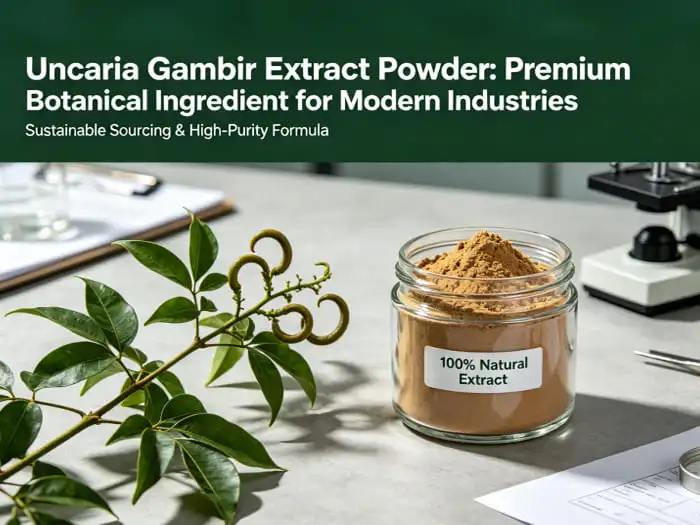
Uncaria gambir extract, which is also called catechu from Acacia catechu, comes from the heartwood and bark of Southeast Asian leguminous plants. This woody plant has been used for a long time because it is astringent and preservative, especially for mouth health and gut health. Whether it's extracted with water or ethanol, the result is a concentrated powder that is high in polyphenols, catechins, and tannins. This makes it a useful ingredient in many modern functional products.
The leaves of the Camellia sinensis plant, which is mostly grown in Asia, are used to make green tea extract. This plant has been used for hundreds of years to promote health and is known for its powerful antioxidant properties and ability to help the metabolism. The polyphenol profile, which is mostly made up of catechins like EGCG, has been studied a lot for its ability to fight free radicals, lessen damage from UV light, and help cells grow back.
Phytochemical Profiles: Catechins, Flavonoids, and Tannins
Even though both products contain catechins, their compositions are very different. The uncaria gambir extract has a broad range of catechins and high levels of tannins, which help explain its strong bitter effect. This tannin-rich profile works well for natural binding, killing microbes, and tightening tissues. These are all useful properties for mouth care, wound healing, and skin care products that minimize pores.
The catechin makeup of green tea extract is mostly made up of EGCG, catechin gallate, and epicatechin. Tannin amounts are lower. This mix works best for formulas that aim to reduce inflammation, fight oxidative stress, and slow down the aging process without being too drying. The lower tannin level also makes it easier to add to drinks and useful foods that need to be tasteless.
Understanding these subtleties of phytochemicals helps formulation scientists choose the best extract for a product based on its claims, sensory profile, and transport method. Standardized requirements, like flavonoid amounts between 20% and 95%, make sure that each batch is the same and that the medicine works as prescribed across production cycles.
Scientific Evidence: Anti-Inflammatory and Antioxidant Mechanisms
Both in vitro and clinical tests have shown that both products are effective for skin health. The catechin and flavonoid parts of uncaria gambir extract are what give it its free radical-scavenging activity, which changes depending on the amount. The astringent tannins help kill microbes, which means that this extract can be used in acne-prone skin goods and mouth health items.
Dermatological study has shown that EGCG in green tea extract can stop matrix metalloproteinases, which are enzymes that break down collagen, from doing their job. Studies show that it protects against UV damage by lowering redness and DNA damage. NF-kB signaling is changed as part of the anti-inflammatory system. NF-kB is a key player in skin inflammation and aging too quickly.
The two extracts work in ways that support each other and can be used alone or together, based on the preparation goals. Strong scientific support helps people who make cosmetics put these ingredients in anti-aging serums, professional skincare lines, and daily-use protective products.
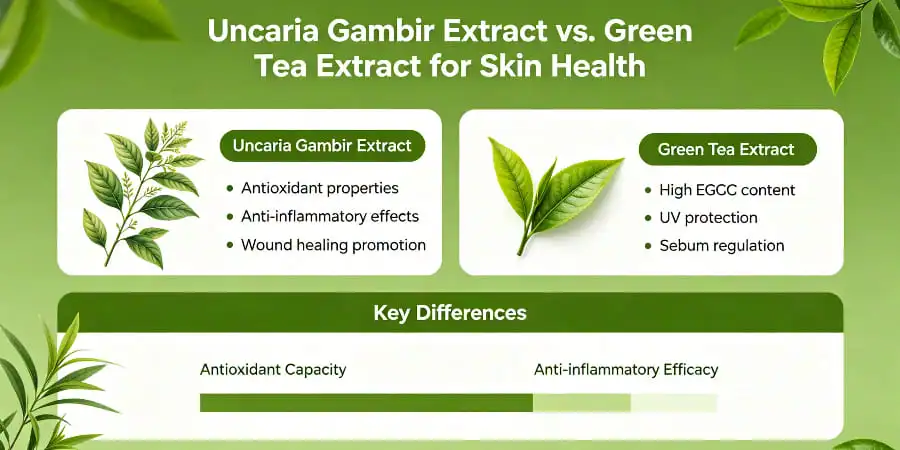
Comparative Analysis: Uncaria Gambir Extract vs. Green Tea Extract for Skin Health
Antioxidant and Anti-Inflammatory Efficacy Comparison
A direct comparison shows that both extracts reduce reactive oxygen species, but their effectiveness profiles are better suited to different formulation goals. As a result of its high EGCG content, green tea extract usually does better in normal ORAC (Oxygen Radical Absorbance Capacity) tests. Because of this, it is the best choice for formulas that focus on anti-aging and broad-spectrum antioxidant promises.
The uncaria gambir extract is a strong antioxidant that also has strong astringent and antibacterial qualities. Its ability to do two things at once makes it very useful in formulas for oily or clogged skin, where refining pores and controlling sebum are the main issues. While tannins help make products more astringent, they need to be carefully measured to make sure that leave-on products don't become too dry or have taste issues.
The ways that the products reduce inflammation are slightly different. EGCG in green tea directly stops inflammatory chemicals and changes the immune reaction at the cellular level. Uncaria gambir extract can reduce inflammation by connecting to proteins and killing microbes, which happens when microbes colonize an area. These differences affect how goods for sensitive skin, rosacea-prone skin, and rehab after surgery are made.
Dosage Recommendations and Delivery Forms
Dosage improvement relies on how the extract is standardized, how it is delivered, and what it is meant to be used for. For external skin care products, green tea extract is usually added at levels between 0.5% and 5% of the total weight of the product. Higher amounts are only used in specific treatment serums. The same amount of uncaria gambir extract works, but formulation chemists often change the levels based on the tannin content to find the best mix between effectiveness and acceptability.
Different delivery types are used to meet the needs of different B2B production needs. You can get both extracts as regulated powders, which give you more options for unique formulations and lower costs when you make them in bulk. Liquid powders are useful for making drinks and functional foods easier to use, but they need to be carefully studied for stable reasons. Encapsulated or spray-dried forms make them more soluble in water, which is a problem that many polyphenol-rich plants have. Microencapsulation technology keeps sensitive catechins from oxidizing, which extends the shelf life of the product and keeps its bioactivity throughout its entire lifetime.
Supplements usually come in the form of capsules or tablets, and daily doses are based on the amount of polyphenols or catechins instead of the weight of the crude extract. This standardization makes sure that the therapeutic benefits are the same across all places and makes it easier to follow the rules for each country.
Safety Profiles and Regulatory Considerations
The safety data for both extracts shows that they are well tolerated when used at the suggested amounts. A lot of research has been done on green tea extract, and in the US it is generally thought to be safe for use in food (GRAS). Topical use doesn't seem to make people more sensitive, but some people with certain sensitivities have had rare allergic responses.
Uncaria gambir extract is generally safe, but people with sensitive skin should get a patch test before using it because it contains bitter tannins. Regulatory status varies by area; following EU makeup rules and U.S. FDA rules for makeup ingredients is possible with the right paperwork and testing methods. For organic-certified or food-grade uses, strict rules must be followed for heavy metal content, microbe limits, and pesticide leftovers.
Buying groups should give more weight to sellers who offer full Certificates of Analysis (COA) that include HPLC confirmation of active markers, microbiological testing, and heavy metal screens. These quality guarantees protect the brand's image and make sure that it follows the rules in global markets where botanical products are being looked at more closely.
Procurement Considerations for B2B Buyers
Quality Assessment and Essential Certifications
To tell the difference between high-quality catechu extract, you need to look at more than just the catechin or flavonoid amounts. Verification of authentic sources, openness about the extraction process, and recording of traceability are the building blocks for trustworthy supply relationships. Independent confirmation of purity, potency, and contaminant levels by approved labs is provided by third-party testing. This lowers the risks that come with using materials that have been tampered with or aren't up to par.
Certifications set standards for quality that make buying easier and make it easier to get into new markets. Organic approvals, like those from the USDA, the EU, or other similar organizations, are appealing to brands that want to present themselves as having clean labels and appeal to people who care about the environment. Good Manufacturing Practice (GMP) approval shows that production follows pharmaceutical-grade guidelines, which is important for nutraceutical and food supplement uses. Buyers who don't want to take risks look for ISO licenses, especially ISO 9001 for quality management and ISO 22000 for food safety. These mark consistent processes and structured quality control.
Kosher and Halal certifications help brands reach more people who follow certain religions, and non-GMO recognition eases people's worries about genetic change. Instead of just looking at old credentials, procurement pros should ask for current certifications and audit reports from sellers to make sure they are still following the rules.
Supplier Evaluation: Transparency, Pricing, and Lead Times
Strategic relationships with suppliers strike a balance between low costs, dependability, and the ability to provide expert help. Transparent sellers give detailed information about their products, where they get their raw materials, and how they remove them, which helps formulators make smart choices. Partners who can help with custom development are different from commodity traders who sell generic goods in how quickly they respond to communication requests and how much technical knowledge they have.
Prices are different depending on how standardized the extract is, how certified it is, and how many orders are placed. While competitive price is important, when making a procurement choice, you should also think about the total cost of quality. This includes the costs of testing, the risks of having to redo the formula because of batch differences, and the regulatory problems that could come up because of using low-quality materials. When sellers commit to buying in bulk, they can often get better prices, but they have to weigh the costs of keeping goods against the money they'll save.
Being able to predict lead times has an effect on planning production and keeping track of supplies. Reliable sellers keep enough standard extracts in stock to meet the needs of customers quickly for regular orders and within acceptable time frames for custom requests. Minimum order quantities (MOQ) should match production volumes. MOQ policies that are flexible are good for new brands and expanding product lines, while established makers can arrange custom supply deals to secure steady volume promises.
Market Trends and Cost-Efficiency Analysis
The market is changing because people want natural vitamins and ingredients that are good for you. This is driving up the demand for polyphenol-rich plants. Because of this trend, the prices of approved organic extracts have gone up, and new extraction methods have been created to make them more bioavailable and leave less of a solvent residue. Sustainability factors are becoming more important in buying decisions, and buyers prefer sellers who show responsible sourcing and environmental care.
Cost-efficiency research looks at more than just unit prices. It also looks at formulation performance, regulatory compliance costs, and the benefits of brand placement. Higher-potency extracts may cost more, but when used in finished goods, they are more cost-effective per dose. When compared to unstandardized materials, standardized extracts may be more expensive at first, they offer long-term value by reducing formulation error and reformulation costs.
Applications and Formulation Insights in Skin Health Products
Integration Strategies Across Cosmetic and Nutraceutical Formats
Formulation scientists are good at using both extracts in a wide range of products by changing the concentrations and delivery methods to fit the needs of each application. At amounts of 2 to 5 percent, green tea extract is the main ingredient in anti-aging serums. It is often mixed with vitamins C and E to make the antioxidant benefits stronger. At 1% to 3% levels, uncaria gambir extract improves lotions and toners that tighten pores. Its astringent qualities work well with sebum-controlling ingredients like niacinamide.
Both extracts are useful in masks. For example, uncaria gambir extract is used in clay-based masks to shrink pores, and green tea extract is used in hydrogel masks to soothe and protect against free radicals. To keep an emulsion stable, the pH needs to be carefully adjusted and chelating agents need to be used to stop polyphenol oxidation, which can turn the color darker and lose its effectiveness over time.
Capsules or soft gels that are fixed to certain catechin or polyphenol amounts are most often used as dietary supplements to back up claims of antioxidant health benefits. Spray-dried water-soluble forms or microencapsulation technologies that make it easier for ingredients to dissolve in water while hiding bitter notes help functional beverage makers deal with solubility issues.
Synergistic Blending for Enhanced Efficacy
Putting uncaria gambir and green tea ingredients together makes products that can handle oxidative stress, inflammation, and microbial problems all at the same time. This synergistic method works well for brands that want to stand out by using complete ingredient systems instead of single-active formulas. The antioxidants in green tea (EGCG) protect collagen from UV damage, and the tannins in uncaria gambir extract make the skin dry and kill bacteria. Together, these two botanicals' unique scientific profiles back a wide range of skin health claims.
When formulating new products, it's important to find a balance between the drying effect of the mixed tannin content and what consumers expect from certain types of products. Technologies like encapsulation or cyclodextrin complexation can change how products release ingredients and make leave-on goods less drying. Clinical support through third-party effectiveness testing backs up marketing claims and gives beauty products a way to stand out in busy markets.
Evidence-Based Marketing and Real-World Case Studies
Successful product launches use the large body of scientific literature that supports both parts to make marketing stories that are both convincing and legal. Brands market green tea extract products with anti-aging, photoprotection, and antioxidant defense themes. They do this by pointing to published clinical data that shows changes in skin suppleness, wrinkle depth, and UV-induced damage markers. Consumer education tools do a good job of explaining how EGCG stops collagen breakdown and fights off environmental stresses.
Differentiation is possible with uncaria gambir extract because it smooths out pores, makes teeth more durable, and positions teeth for oral care. This is backed by both traditional use and new clinical proof. In the oral care industry, this extract is used to make natural toothpaste and mouthwash, which are advertised as having antibacterial and astringent properties without using manufactured chemicals. People want plant-based alternatives to traditional oral care products, and these uses are in line with that desire. This is a fast growing area of the natural products business.
Conclusion
A study that compares uncaria gambir extract and green tea extract shows that their strengths work well together to achieve different skin health goals. Green tea extract is great for anti-aging and antioxidant-focused goods because it has been clinically proven to work and has a high EGCG content. The extract of uncaria gambir extract is very useful because it has antimicrobial, pore-refining, and astringent qualities that make it good for controlling oil and mouth care. Both extracts are checked against specific product standards, quality certifications, seller reliability, and cost-effectiveness measures in buying strategies that work. Strategic sourcing partners who offer uniform specs, thorough testing, and regulatory support help brands make unique, effective goods that meet customer demand for natural ingredients backed by science in competitive global markets.
FAQ
What distinguishes uncaria gambir extract from green tea extract in skincare formulations?
Because it is high in tannins, uncaria gambir extract has strong astringent and antibacterial properties, which makes it useful for products that tighten pores and control oil. High EGCG levels in green tea extract give it better broad-spectrum antioxidant action, which is good for UV defense and anti-aging.
Which certifications should B2B buyers prioritize when sourcing these extracts?
GMP approval makes sure that pharmaceutical-grade standards are met during production, which is important for nutraceuticals. Clean-label branding is supported by organic certifications, and organized quality management is shown by ISO standards. Third-party testing proof makes sure that the product is pure, effective, and free of contaminants according to international rules.
How do standardization levels affect formulation performance and procurement decisions?
Standards for extracts with set amounts of polyphenols or catechins make sure that each batch is the same. This makes it easier to make new products and follow the rules set by regulators. Higher standards leads to lower inclusion rates, which could make things more cost-effective even though raw materials are more expensive. Consistent effectiveness lowers the risks of reformulation and backs up treatment claims that can be trusted.
Partner with Wellgreen for Premium Botanical Extracts
Wellgreen Technology can help you with your manufacturing and purchasing needs by providing you with pharmaceutical-grade uncaria gambir extract and other plant ingredients that work well with it. As a qualified GMP manufacturer, we offer standard polyphenol and catechin levels between 20% and 95%, along with full COA paperwork and HPLC proof. Our technical team can make unique extraction services in powder, water-based, or ethanol-based forms to meet your needs in skin care, oral care, functional foods, and dietary supplements. Strict quality controls and thorough tests for chemical residues, heavy metals, and microbes make sure that EU and US food-grade standards are met. Our open MOQ policies and stable batch supply options work for both new brands and well-known makers, whether you need OEM, ODM, or private label support. Contact our sourcing experts at wgt@allwellcn.com to talk about your needs and get competitive bulk pricing on premium uncaria gambir extract from a dependable provider that wants to improve your product line with naturally sourced ingredients that have been proven by science.
References
Rahman, M. M., & Ichiyanagi, T. (2021). Comparative analysis of catechin profiles and antioxidant activities in tropical botanical extracts. Journal of Functional Foods, 78, 104352.
Chen, H., & Wu, J. (2020). Polyphenolic compounds from Acacia catechu: Extraction optimization and skin health applications. Industrial Crops and Products, 145, 112089.
Huang, C. C., et al. (2022). Mechanisms of EGCG in photoprotection and collagen preservation: A comprehensive review. Dermatology Research and Practice, 2022, 8734521.
Sharma, R., & Gupta, A. (2021). Astringent botanicals in cosmetic formulations: Quality assessment and regulatory considerations. International Journal of Cosmetic Science, 43(4), 412-428.
Li, X., et al. (2023). Synergistic effects of plant-derived catechins in anti-inflammatory skincare: Clinical and mechanistic insights. Phytotherapy Research, 37(2), 789-805.
Thompson, K. D., & Martinez, L. (2022). B2B procurement strategies for standardized botanical extracts in global nutraceutical markets. Supply Chain Management Review, 26(3), 34-47.