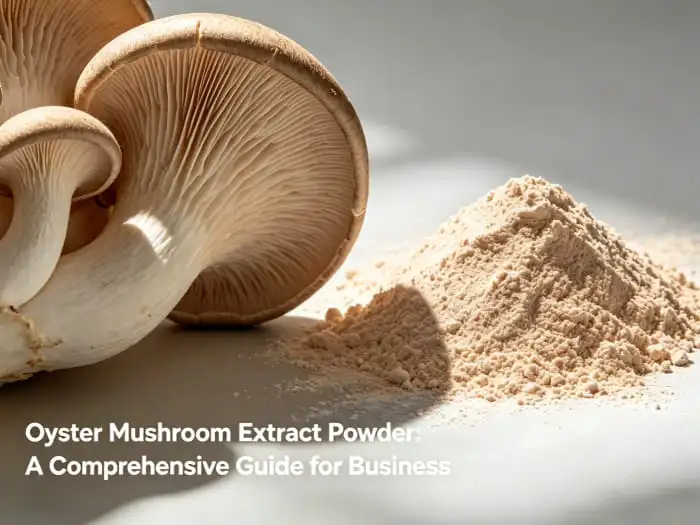
The Manufacturing Process of Oyster Mushroom Extract Powder
2026-06-26 14:00:02
The process of making oyster mushroom extract powder carefully controls the cleaning, drying, and grinding steps that turn fresh Pleurotus ostreatus into a concentrated, nutrient-dense ingredient. This natural food still has good things for you in it like fiber, plant-based protein, vitamins, and minerals that help your immune system work well and keep you healthy overall. When purchasing teams know how makers keep quality consistent by using exact processing parameters, they can choose dependable sources and make sure that business formulations for nutraceutical, functional food, and cosmetic uses are stable from batch to batch.
Overview of Oyster Mushroom Extract Powder
What Makes This Extract Unique?
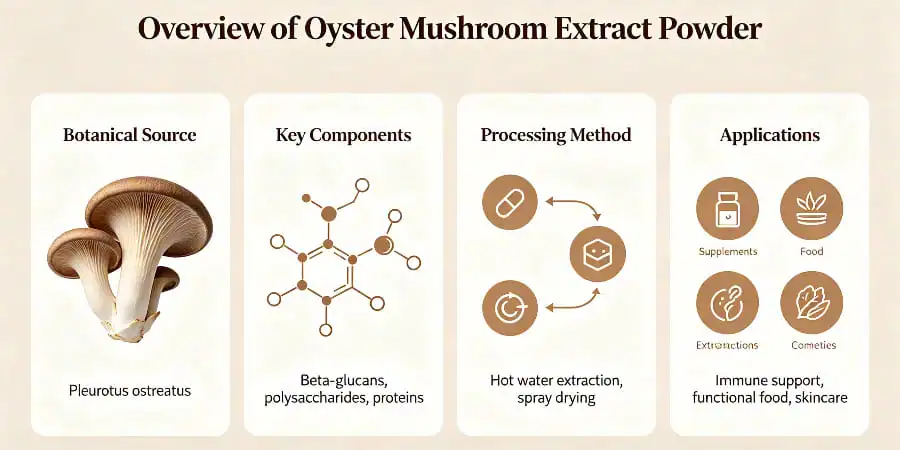
Oyster mushroom extract powder is a concentrated form that comes from Pleurotus ostreatus. It is made in different forms, such as fine powders, ultra-fine particles, and standardized extracts. Bioactive elements like beta-glucan polysaccharides, dietary fiber, plant-based proteins, important vitamins, and trace minerals are found in this natural ingredient. The high nutritional value and low fat and calorie content of this extract make it a great ingredient for making healthy products.
Industrial Applications Across Sectors
The immune-modulating and anti-inflammatory qualities of oyster mushroom extract powder are used in many business areas by the B2B market. Manufacturers of nutraceuticals put it in pills and tablets to help the immune system. Functional food companies mix it with other ingredients to make protein shakes, meal replacements, and health drinks. People who make cosmetics like its gentle reactive profile for skin care items. Pharmaceutical firms are looking into how it could be used to make new plant drugs. The extract is popular across many industries because it is clean-label, comes from plants, and has a natural umami taste that can improve food without using artificial chemicals.
Market Momentum and Clean-Label Trends
More and more people around the world, especially in North America and Europe, want plant-based protein sources, clean-label products, and useful food components. Oyster mushroom extract fits right in with these trends because it doesn't contain any GMOs or additives, which is what consumers want. The powder is one of the main ingredients in the mushroom functional ingredient group, which is growing. It helps product makers who are looking for natural options to synthetic enhancers and conventional proteins.
Traditional vs Modern Manufacturing Methods of Oyster Mushroom Extract Powder
Evolution from Traditional Processing
In the past, making mushroom powders was as easy as letting them dry out in the sun or at low temperatures and then grinding them by hand. These methods kept the basic nutritional value, but they often led to particles of different sizes, less bioavailability of active chemicals, and the possibility of bacteria contamination. It was hard to get the group uniformity needed for modern B2B buying in the past because there weren't any standardization processes in place.
Advanced Extraction Technologies
Modern making uses advanced methods that keep beneficial substances in the product longer and make it purer. Under controlled temperature and pH settings, enzymes break down complex polysaccharides into smaller molecules that are easier for cells to use. Ultrasound-assisted extraction makes it easier for compounds to leave cell structures without exposing them to too much heat, which could damage nutrients that are sensitive to it. These current methods are in line with GMP standards and produce outputs that can be scaled up for large-scale industrial production. Now, manufacturers can standardize the amount of polysaccharides in their products, change how small the particles are, and change how easily they dissolve in water to meet the needs of each client.
Step-by-Step Production Phases
The process of making something starts with choosing the raw materials. Fresh oyster mushrooms are cleaned very well to get rid of base dust and other contaminants. Quality control teams check batches to make sure they are fully ripe, have the right amount of wetness, and don't have any physical flaws. After the mushrooms are cleaned, they are put into controlled drying rooms where producers can use either spray drying or freeze drying, depending on the end use. Spray drying saves money and makes fine oyster mushroom extract powders that are easy to dissolve, so they can be used in drinking uses. Freeze-drying keeps the most effective components and makes powders with better nutrient profiles, which are ideal for high-end nutraceutical products.
After being dried, the material is precisely ground to get specific mesh sizes, from normal powders to ultra-fine particles smaller than 200 mesh. This control over particle size has a direct effect on how well finished goods dissolve, mix, and feel. Some companies use extra steps like centrifugation or membrane filtration to separate and clean the product even more. This helps to focus certain bioactive parts or get rid of unwanted fiber components.
Quality Assurance and Packaging Standards
During production, makers use key control points to check for heavy metals, pesticide leftovers, microbial counts, and the presence of mycotoxins. Protocols for testing make sure that the amounts of total plate numbers, yeast, mold, and pathogens stay within strict food-grade guidelines. The finished powder is packed in multi-layer metal foil bags that are then put inside fiber drums. This keeps the powder safe from air, light, and moisture while it is being shipped and stored. Each batch comes with a lot of paperwork, like Certificates of Analysis that list the nutrients, bacteria data, and heavy metal screenings.
Certification and Traceability Compliance
European and American business-to-business clients want supply lines that are clear and backed by accepted certifications. When making approved organic versions, reputable companies keep their ISO 22000 food safety management systems, GMP facility certifications, and organic qualifications up to date. Traceability systems keep track of each batch from the time the mushrooms are grown until they are packaged. This lets quality questions be answered quickly and helps businesses follow the rules. When working with pharmaceutical clients who need tested methods and full records of the chain of custody, this paperwork system comes in very handy.
Factors Influencing Quality and Performance of Oyster Mushroom Extract Powder
Cultivation Practices and Raw Material Sourcing
How the plants are grown is the first step in achieving quality. Organic farming methods get rid of exposure to manmade pesticides and produce goods that meet strict waste limits that health-conscious markets demand. Controlled indoor cultivation settings keep the substrate's makeup, temperature, humidity, and air quality all the same. This lets growers make mushrooms with known nutritional profiles. When suppliers put money into high-quality farming infrastructure, they get more stable raw materials than when they buy from outdoor farms that are spread out and have changing growing conditions.
Extraction Method Impact on Bioactivity
Bioactive chemicals are extracted in different ways that produce different amounts of them. Water separation is a good way to get polysaccharides, but it might miss some lipophilic parts. By using both water and ethanol in the extraction process, more compounds can be found. Enzymatic treatment makes polysaccharides easier to access and raises the amount of small molecules and peptides present. The way you choose should be right for the job. For example, high polysaccharide concentrations are good for immune support formulations, while amino acid and nucleotide content might be more important for umami-enhancing food uses.
Drying Technology Selection
The drying stage has a big effect on the properties of the powder. Spray drying uses higher temperatures but finishes quickly, so the total time the item is exposed to heat is kept to a minimum. The powder that is made can be easily mixed with other ingredients to make quick drinks. Freeze-drying works at temperatures below freezing, which protects vitamins and enzymes that are damaged by heat while keeping the structure of cells. The oyster mushroom extract powder that is made has great restorative qualities and better bioactive retention, which justifies the higher cost of production for high-end supplement uses. Vacuum drying is a way to get a good balance between price and quality.
Particle Size and Solubility Optimization
The mesh size standard has a direct effect on how well the product works in different situations. For filling capsules and pressing tablets, coarse powders about 80 mesh work well. Particles smaller than 100 to 200 mesh blend easily into food mixes and vitamin powders. Ultra-fine powders that are less than 200 mesh dissolve better in cold water, which is important for making ready-to-drink drinks. Manufacturers that offer more than one mesh choice give product developers who work with different delivery forms more options.
Packaging Integrity and Shelf Stability
Using the right packing keeps wetness from absorbing, which could cause clumping or the growth of microbes. Oxygen that could damage sensitive chemicals can't get into multi-layer foil bags that fill with nitrogen. Moisture-proof packaging keeps powders' ability to run and stops them from caking over time. For bulk sales, extra safety is needed in the form of secondary containers like fiber drums with sealed inner liners. Temperature-controlled logistics during delivery make even more sure that goods get to customers in perfect condition and keep the quality characteristics that were promised in the specs.
Choosing the Right Oyster Mushroom Extract Powder Supplier
Certification Verification and Compliance
One way to start evaluating possible sellers is to look at their list of certifications. GMP facility approval shows that a company is dedicated to using clean production methods and quality control systems. ISO standards show that food safety and quality control are managed in an organized way. Organic approvals from the USDA, the EU, or similar groups show that organic farming standards are being met. Halal and Kosher approvals help goods that are aimed at certain groups of people reach a wider audience. To back up claims, get current certificates and check with the organizations that issued them to make sure they are still valid.
Manufacturing Capacity and the Ability to Grow
You should check to see if a supplier's production ability meets your present and future volume needs. Companies that have more than one production line and a good supply of raw materials can handle big orders without having to rush deliveries. Find out how much is made each year, how long it takes to get regular orders, and if there is any room for rush orders. Suppliers who keep large inventory gaps show that they are financially stable and lower the risk of supply interruptions. Production flexibility is very important when a new product comes out and the market adopts it quickly.
Customization and Help with Technology
Better sellers give you more than just basic ingredients; they also offer expert support. Look for companies that can change the sizes of the mesh, the amounts of polysaccharides, the types of mushrooms that are mixed, or the formulas that they make themselves. With OEM and private label options, you can build your business without having to spend a lot of money on manufacturing facilities. Technical teams should help with formulation problems, help with stable tests, and share their knowledge about how to use products. This way of working together speeds up product development and raises the chances of success in the market.
Quality Documentation and Testing Transparency
Ask for sample Certificates of Analysis to see how thorough the testing was. As part of a full COA, the nutrients, polysaccharide content, moisture levels, ash percentage, heavy metal screens, pesticide traces, and full microbiology tests are all included. Suppliers who test in batches instead of just once in a while show a better commitment to quality. Find out if the lab is accredited and if internal results are backed up by tests done by a third party. Being open about how tests are done and ready to share detailed test reports helps build trust in long-term relationships.
Pricing Structure and Contract Terms
When you compare prices from several approved providers, keep in mind that the cheapest price doesn't always mean the best value. Prices should be looked at in light of quality standards, testing procedures, and service levels. Learn about the minimum order sizes, payment terms, and ways to get discounts for buying in bulk. Talk about yearly supply deals that lock in prices and include terms that allow changes to specifications. Clear contract terms about quality issues, returns, and who is responsible for what protect both parties and build professional relationships based on mutual respect.
Conclusion
When procurement workers know the whole process of making oyster mushroom extract powder, they can make smart choices about where to buy it that affect product quality, regulatory compliance, and business success. Each step in the production process, from growing the plants to the tools used for extraction, drying, and packaging, affects how well the end ingredient works. Quality providers set themselves apart by having clear testing methods, the right licenses, the ability to offer expert help, and the ability to increase or decrease production capacity. Oyster mushroom extract is a key ingredient in nutraceuticals, functional foods, cosmetics, and pharmaceuticals because of the growing need for plant-based, clean-label chemicals. For integration to work, suppliers need to be carefully evaluated, specifications need to be communicated clearly, and relationships need to be built on shared promises to quality.
FAQ
What polysaccharide content should I specify for immune support applications?
Oyster mushroom extract powder standardized to 20–40% polysaccharides measured as beta-glucans is often good for immune support formulas. Higher concentrations allow smaller doses to still work, which is important for pill size limits. Different analytical techniques give different results, so make sure that the measurement method is reliable by asking for information about the test method. Extracts in this dose range are usually used in clinical studies that show immune system effects.
How do microbial specifications differ between food-grade and nutraceutical applications?
Plate counts of up to 100,000 CFU/g are common for food-grade oyster mushroom extract powder, while standards for yeast and mold are around 1,000 CFU/g. For nutritional uses, stricter controls are needed, with total plate counts of up to 10,000 CFU/g and yeast and mold counts of up to 100 CFU/g. Pathogen tests should show that Salmonella, E. coli, and Staphylococcus aureus are absent, no matter what they are used for. Always make sure that the supplier's specs meet the legal requirements of the market you want to reach.
Why does particle size matter for different applications?
Solubility, texture, and absorption are all directly affected by the size of the particles. For a smooth taste and easy mixing with cold water, beverage uses need particles smaller than 200 mesh. When filling capsules, 80–100 mesh powder that moves smoothly through automatic machinery works best. Ultra-fine particles that blend in smoothly without feeling gritty are good for cosmetics that are put on the skin. Talk to providers about your unique application to find out what the best mesh specification is for your formulation.
Partner with Wellgreen for Premium Oyster Mushroom Extract Powder
Wellgreen Technology is a specialized seller of oyster mushroom extract powder that is dedicated to meeting the high standards of makers of nutraceuticals, functional foods, cosmetics, and drugs. Our GMP-certified factory makes standard, ultra-fine, and organic powders with mesh sizes and polysaccharide amounts that can be changed to meet your particular needs. We keep a close eye on heavy metals, chemical residues, and microbial factors to make sure we meet EU and US food-grade standards. Our thorough testing methods include full Certificates of Analysis and bacteria reports for each batch. This gives your regulatory teams the clear paperwork they need. Wellgreen provides more than just ingredients; we also offer partnering. Our stable supply capacity supports long-term purchasing relationships, our OEM and private label services are open, and our expert teams are ready to help with formulation development. You can email us at wgt@allwellcn.com to talk about your unique needs, ask for samples, or find out how our oyster mushroom extract powder for sale can help your business.
References
Chang, S.T., & Wasser, S.P. (2017). "The Cultivation and Environmental Impact of Mushrooms." Oxford University Press.
Friedman, M. (2016). "Mushroom Polysaccharides: Chemistry and Antioxidative Activities in Extracts from Edible Species." Journal of Agricultural and Food Chemistry, 64(29), 5653-5664.
Rathore, H., Prasad, S., & Sharma, S. (2017). "Mushroom Nutraceuticals for Improved Nutrition and Better Human Health: A Review." PharmaNutrition, 5(2), 35-46.
Valverde, M.E., Hernández-Pérez, T., & Paredes-López, O. (2015). "Edible Mushrooms: Improving Human Health and Promoting Quality Life." International Journal of Microbiology, Article ID 376387.
Zhang, Y., Mills, G.L., & Nair, M.G. (2002). "Cyclooxygenase Inhibitory and Antioxidant Compounds from the Mycelia of the Edible Mushroom Pleurotus ostreatus." Journal of Agricultural and Food Chemistry, 50(26), 7581-7585.
Zhu, F., Du, B., & Xu, B. (2016). "A Critical Review on Production and Industrial Applications of Beta-Glucans." Food Hydrocolloids, 52, 275-288.