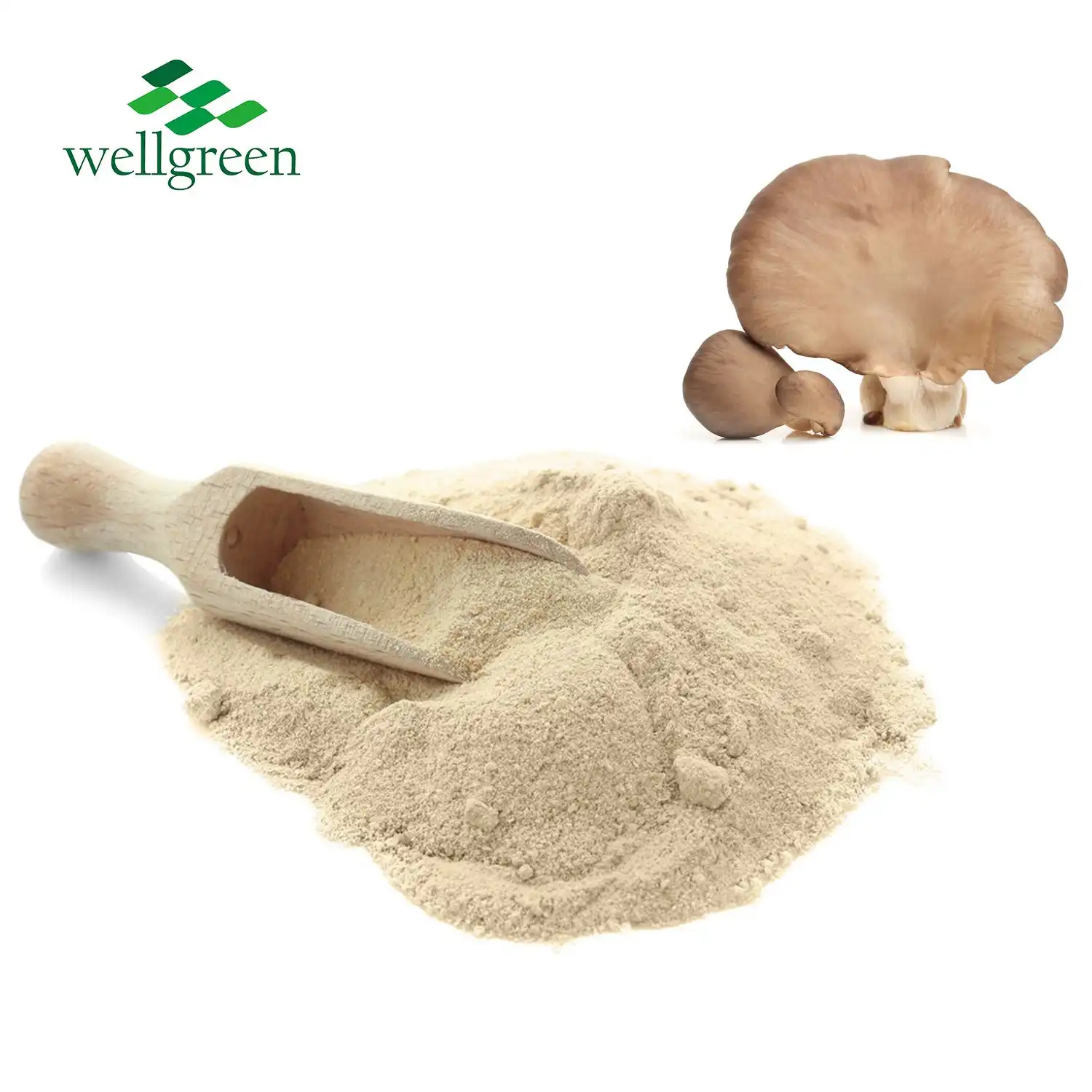
What Should Food Manufacturers Check Before Buying Ube Purple Yam Powder in Bulk?
2026-10-05 14:00:01
Most bulk-ingredient disputes do not start with price. They start with a purchase order that described the material too loosely, and with a delivery that matched the loose description rather than the product the development team actually trialled. Buying Ube Purple Yam Powder in bulk is a good example: the powder is bought for its colour and its flavour, yet the paperwork often specifies nothing more precise than "purple powder". Wellgreen's own ube purple yam powder page shows how much of that ambiguity a supplier can resolve on paper, and the checklist below is written for the person who has to close the remaining gaps before the order is released and again when the container is opened.
Define the material in writing before you request a quote
A purchase order is a contract, and a contract is only as good as its definitions. Four definitions do most of the work.
Species and part used
Ube is Dioscorea alata L., a yam from the Dioscoreaceae family, and it is not the same plant as purple sweet potato. That distinction belongs in the specification, not only in the marketing copy, because a supplier serving both categories can substitute without breaching a vague order. State the botanical name, the common name, and the part used: the dried tuber. If the supplier's own documentation names a different species or a root other than the tuber, stop and resolve it before pricing discussions continue.
Dried and milled tuber versus extract
These are two different commodities. A dried, milled tuber powder carries the whole tuber's starch, fibre and pigments, which is what gives the material its bulk, its mouthfeel and its natural shade. An extract is a concentrated fraction obtained by selective extraction of pigments or other constituents relative to the rest of the tuber, and in the European Union that selective extraction is precisely the line at which a preparation obtained from food can fall inside the food-additive rules rather than outside them [5]. Write down which one you are buying, and require the certificate of analysis to distinguish them.
Mesh and particle-size distribution
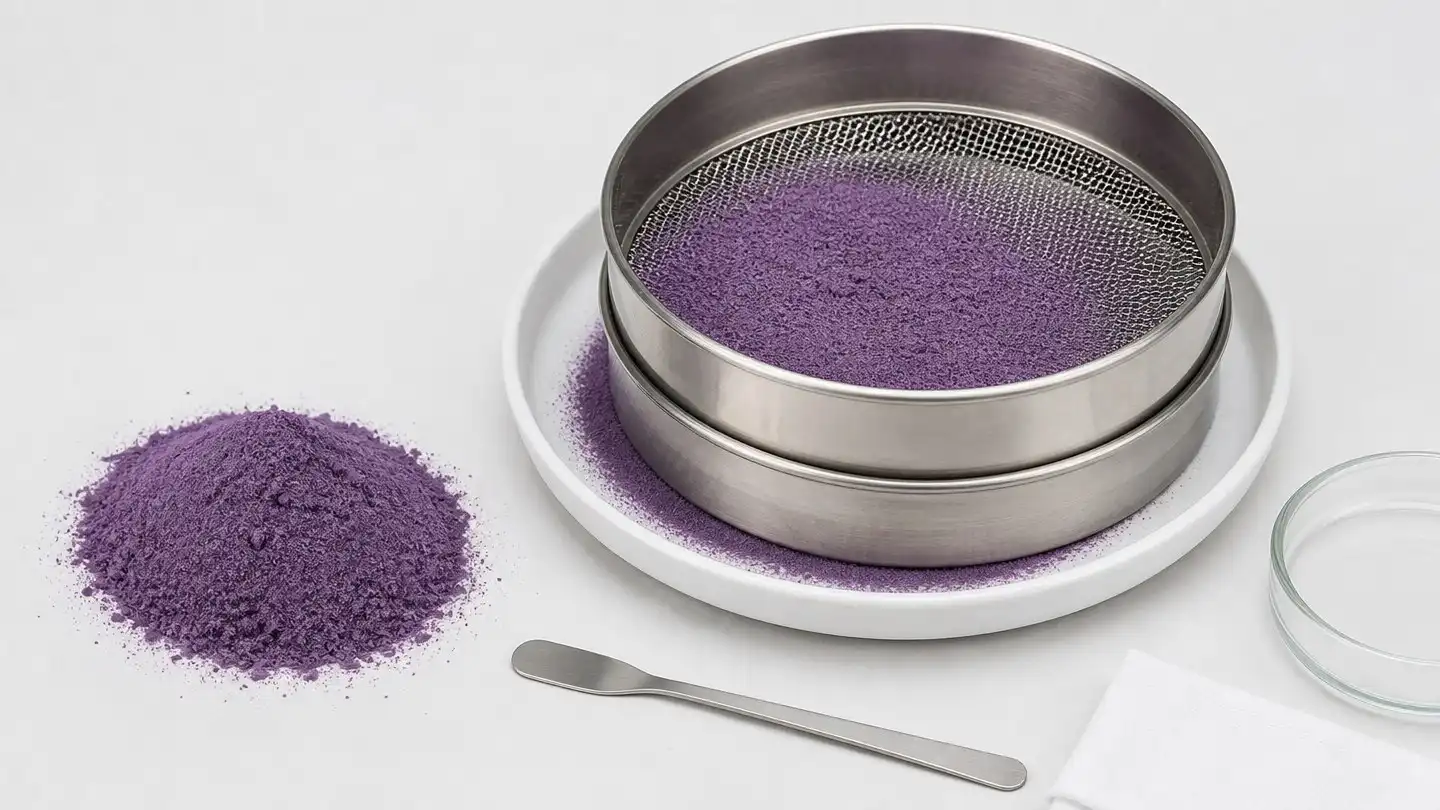
A single mesh figure is a target, not a distribution. Ask for the milling route, the nominal mesh range and, where it matters to your process, the share of fines and oversize material. Wellgreen's product page lists an 80–100 mesh size for its ube powder, which is a useful anchor: if your filler or your beverage line was validated on a narrower or wider band, say so in the specification rather than discovering the difference at the hopper. The same page lists a moisture limit of ≤ 7.0%, an appearance of a fine, vibrant deep purple powder, and ISO22000, HALAL, KOSHER and Non-GMO certification — those are the supplier's stated figures, and they belong in the file next to your own acceptance limits.
The table below sets out the parameters worth pinning down in a first purchase order.
| Parameter | What to write in the specification | What to ask for as evidence |
|---|---|---|
| Identity | Dioscorea alata L., dried tuber, milled; state whether whole-tuber powder or an extract | Specification sheet plus origin and part-used statement |
| Colour reference | Instrumental colour values for a defined measured sample, plus a physical reference retained by both parties | Colour data on the certificate of analysis and a sealed colour chip |
| Particle size | Nominal mesh range and acceptable fines/oversize tolerance | Sieve or particle-size distribution record |
| Moisture and water activity | Upper limit for moisture and a stated water-activity ceiling | Batch result on the certificate of analysis with the test method |
| Microbiology | Panel agreed in advance, with limits and methods | Batch microbiology certificate |
| Contaminants | Heavy-metal panel and pesticide screening position | Third-party or in-house contaminant report |
| Declarations | Carrier, diluent and anti-caking agents; allergen, gluten and non-GMO statements | Signed declaration and ingredient statement |
| Packaging and shelf life | Pack format, liner specification, light protection, net weight, shelf life and storage statement | Packaging specification and stability statement |
The colour-strength question: state a reference standard, or you cannot compare lots
Two deliveries of the same grade from the same supplier can differ in shade, and both can be perfectly compliant with a specification that says only "deep purple". That is the single most common cause of an argument at goods-in. Before you buy, agree on a reference standard in one of two forms.
A visual standard is the cheaper option: a retained physical sample, ideally a pressed colour chip, sealed and labelled, held by both buyer and supplier. It works well for comparing an incoming lot against a known-good lot, provided the chip is protected from light and heat. An instrumental standard is more robust. Ask for colour values measured on a defined sample preparation — powder pressed or packed to a controlled thickness, measured in a defined illuminant and observer — and for those values to be reported on the certificate of analysis. The point is not which scale is used; the point is that the measurement conditions are written down, because an L*a*b* value without a stated preparation is not repeatable. Colour measurement in milled tuber systems is directly affected by the drying route and by how the material is milled and sieved, which is why the standard and the process description should be filed together [8].
For suppliers running more than one purple botanical, the same discipline applies across the portfolio; the quality-control logic in this purple sweet potato powder quality and stability guide translates directly to ube even though the two materials are botanically unrelated.
Moisture, water activity, caking and hygroscopicity in transit
Moisture content tells you how much water is present; water activity tells you how much of it is available. They are not interchangeable, and for a fine botanical powder travelling through a humid port they answer different questions [2]. Agree an upper moisture limit for the incoming material and a water-activity ceiling, and require both on the batch record.
Then think about the journey rather than the certificate. Fine tuber powder is hygroscopic: it takes up moisture from ambient air, and the first visible symptom is caking — lumps that will not pass your sieve, followed by poor dispersion in the mixer. The practical controls are a moisture-barrier liner rather than a plain sack, a desiccant where the route justifies one, intact seals on every unit, and a receiving check that records whether the liner was still under vacuum or still intact. Containers that have sat on a hot quay are also worth sampling before the pallet goes into racking. The same incoming checks are standard practice across bulk botanical powders generally, and a mature green-powder programme such as this B2B guide to sourcing bulk organic matcha powder documents them in a comparable format.
Microbiology and heavy metals: the panel, not just the result
A certificate that reports "microbiology: compliant" tells you nothing you can challenge. Agree the panel, the limits and the test methods at the quotation stage, then match the incoming certificate line by line. A food-grade botanical panel normally carries total plate count, yeasts and moulds, E. coli, Salmonella and, where the material is used in a ready-to-eat or high-care application, Listeria. State the units as well, so that results from different laboratories remain comparable.
For contaminants, the useful question is which limits apply in the destination market. In the European Union, maximum levels for contaminants in food are set by Commission Regulation (EU) 2023/915 [7], and a supplier selling into that market should be able to say on which basis the batch was screened. Heavy metals worth naming in the specification are lead, cadmium, arsenic and mercury; the arsenic and lead specifications for a root-derived botanical are usually the ones that decide whether a lot is released. Supplier qualification and verification duties sit inside the receiving facility's food safety plan, which is worth checking against the relevant preventive-controls framework [1]. Where you also buy other fruit and vegetable powders, the screening questions in this guide to choosing high-quality pomegranate fruit powder are a useful cross-check on how a supplier documents its testing.
Carrier, diluent and anti-caking declarations
Ask, in writing, whether anything other than the tuber is in the bag. Carriers and diluents are common in spray-dried and reconstituted powder formats, and anti-caking agents are often added to keep a hygroscopic material flowing. None of that is automatically a problem, but an undeclared carrier is: it changes your ingredient statement, it can change your allergen position, and it can shift the colour of a finished batch. Require the full ingredient statement for the exact grade you are buying, name any processing aids and carriers, and confirm the diluent position for colouring preparations where those rules apply to your market [4]. If the answer is "the tuber, and nothing else", get that in writing too, because it is a useful control on the next delivery.
Allergen, gluten and pesticide statements
Three declarations cover most of the compliance risk on a botanical powder. The allergen statement should say whether any of the major food allergens are present in the material or handled on the same line, with the cleaning and segregation controls described [9]. The gluten statement matters because a plant tuber is naturally gluten-free but a shared milling line may not be; "gluten-free" is a regulated claim in many markets, so agree the basis on which the supplier is making it, and check it against the rules that apply where you will sell [3]. For pesticides, agree whether the material is screened to a defined maximum-residue-level basis, and which one: in the European Union that basis is Regulation (EC) No 396/2005 [6]. Non-GMO status should be a declaration with a stated scope, not an adjective.
Packaging, light protection and shelf life
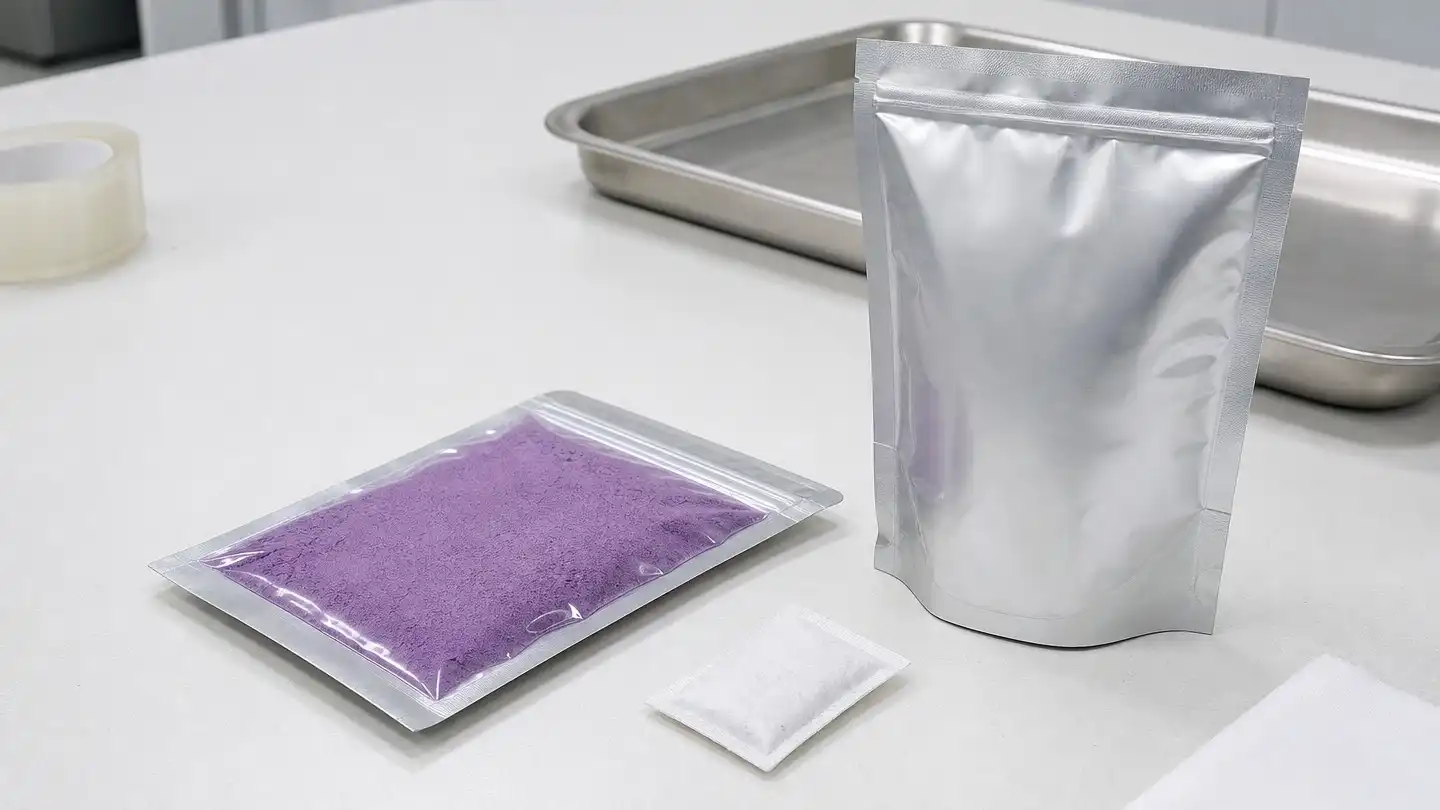
Purple pigments are sensitive to light and heat, so packaging is a quality parameter rather than a logistics detail. Agree the pack format, the liner and its barrier properties, the net weight with tolerance, the seal integrity requirement, and whether the outer packaging excludes light. Then agree the shelf life, the storage statement that supports it, and the labelling that must appear on each unit. A shelf life quoted without a storage condition cannot be audited. Ask for the stated storage temperature and humidity range, and check your own facility can hold it for the full period you intend to carry stock.
The sample-approval workflow that makes a repeat order reproducible
The work done before the first order is what makes the fifth order boring. Run it as a short, documented sequence.
- Request a sample against the written specification. Ask for enough material for your own trial and a retained portion, and for the production batch it came from.
- Approve the sample formally. Record the batch, the date, the specification version and the person who approved it. An approval by email thread is not a record.
- Make a colour chip and a sealed reference. Press a chip from the approved sample, seal it against light and moisture, label it with the batch and date, and store a duplicate with the supplier. This is the artefact your goods-in team compares against.
- Retain an incoming sample from every delivery. Keep it for the shelf life of the material, under the same conditions, so that a later complaint can be investigated against the lot as received.
- Re-approve when anything changes. A new raw-material origin, a new drying route, a new milling supplier or a new pack format is a new approval, not a continuation of the old one.
This workflow is the discipline behind any colour portfolio you build on natural pigments, and the same logic underpins the comparison set out in this review of natural food colorants: the reference standard, not the marketing name, is what keeps consecutive production runs in the same colour family.
Lot release: the incoming panel to agree on
Write the goods-in check as a table in the quality plan so that acceptance is a decision, not an opinion.
| Check on arrival | Acceptance basis agreed in advance | Action if it fails |
|---|---|---|
| Documentation | Certificate of analysis for the delivered batch, matched line by line to the specification | Hold the pallet and request the correct batch certificate |
| Identification | Batch number, pack count, net weight and labels match the order | Quarantine and raise a supplier deviation |
| Colour | Within the agreed tolerance of the approved reference chip or the agreed instrumental values | Retain a sample, notify the supplier, agree a disposition |
| Moisture and water activity | Within the specified ceiling on your own measurement | Reject or rework by agreement; do not release to production |
| Powder condition | Free-flowing, no caking, no off-odour, no visible foreign matter | Segregate and investigate the transit conditions |
| Packaging integrity | Liner intact, seals unbroken, no evidence of moisture ingress | Photograph, hold and claim against the carrier or supplier |
| Retained sample | Portion taken, labelled and stored under the specified conditions | Treat the lot as unreleased until a sample is retained |
None of these checks is exotic. Together they turn a vague order into a defined commodity, which is what a supplier needs in order to quote accurately and what your quality team needs in order to release a lot without a debate. Wellgreen supplies ube purple yam powder with batch documentation, and the team can confirm the specification fields, packaging options and sample arrangements for your application — write to wgt@allwellcn.com with your target market and application.
Disclaimer: This article provides technical and commercial information for food-industry professionals and is not medical or nutritional advice; permitted use levels, regulatory status and any label claims must be confirmed against the rules of your target market and your own product data.
References
- U.S. Food and Drug Administration. 21 CFR Part 117 — Current Good Manufacturing Practice, Hazard Analysis, and Risk-Based Preventive Controls for Human Food. Electronic Code of Federal Regulations. https://www.ecfr.gov/current/title-21/chapter-I/subchapter-A/part-117
- U.S. Food and Drug Administration. Water Activity (aw) in Foods. Inspection Technical Guide. https://www.fda.gov/inspections-compliance-enforcement-and-criminal-investigations/inspection-technical-guides/water-activity-aw-foods
- U.S. Food and Drug Administration. Gluten-Free Labeling of Foods. https://www.fda.gov/food/food-labeling-nutrition/gluten-free-labeling-foods
- U.S. Food and Drug Administration. 21 CFR § 73.260 — Vegetable juice (colour additive). Electronic Code of Federal Regulations. https://www.ecfr.gov/current/title-21/chapter-I/subchapter-A/part-73/subpart-A/section-73.260
- Regulation (EC) No 1333/2008 of the European Parliament and of the Council of 16 December 2008 on food additives. OJ L 354, 31.12.2008, pp. 16–33. https://eur-lex.europa.eu/legal-content/EN/TXT/?uri=CELEX%3A32008R1333
- Regulation (EC) No 396/2005 of the European Parliament and of the Council of 23 February 2005 on maximum residue levels of pesticides in or on food and feed of plant and animal origin. https://eur-lex.europa.eu/legal-content/EN/TXT/?uri=CELEX%3A32005R0396
- Commission Regulation (EU) 2023/915 of 25 April 2023 on maximum levels for certain contaminants in food and repealing Regulation (EC) No 1881/2006. https://eur-lex.europa.eu/legal-content/EN/TXT/?uri=CELEX%3A32023R0915
- Setyawan, N.; Maninang, J. S.; Suzuki, S.; Fujii, Y. Variation in the Physical and Functional Properties of Yam (Dioscorea spp.) Flour Produced by Different Processing Techniques. Foods 2021, 10(6), 1341. https://doi.org/10.3390/foods10061341
- U.S. Food and Drug Administration. Food Allergies. https://www.fda.gov/food/food-labeling-nutrition/food-allergies