Bacopa Monniera Extract: Benefits, How It's Used, and Comparisons
2026-07-20 14:08:17
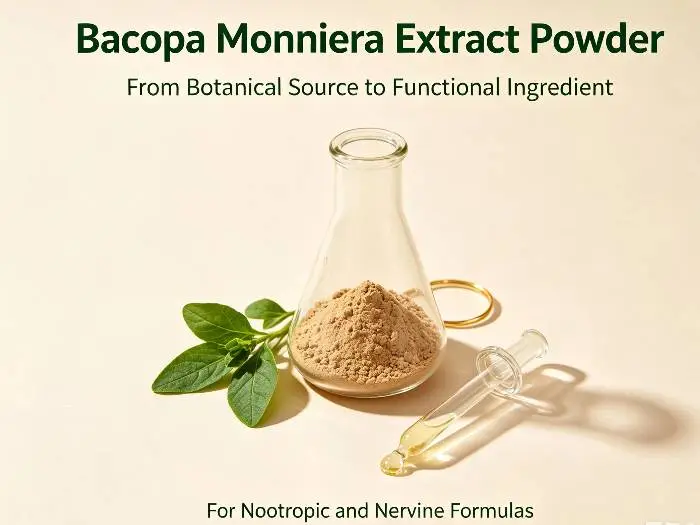
Bacopa Monniera Extract, which comes from the traditional plant Bacopa monnieri (also called Brahmi), is one of the most important ingredients in current brain health products. This powdered herbal extract has the right amount of bacosides, which are saponin compounds along with flavonoids and polyphenols that help improve memory, focus, and brain health. As the need for brain-healthy and nootropic ingredients grows in North America and Europe, it's important for product developers, procurement managers, and formulation teams looking for reliable botanical solutions for nutraceutical, pharmaceutical, and functional food uses to understand this extract's uses, quality parameters, and competitive positioning.
Understanding Bacopa Monniera Extract: Benefits and Scientific Insights
Botanical Origins and Active Components
Bacopa monnieri grows best in wetland areas in India and other tropical places. For hundreds of years, this plant has been used in traditional medicine systems there. The process of extraction creates a concentrated powder that is high in bacosides, specifically Bacoside A3, Bacopaside II, Bacopaside X, and Bacopasaponin C. These are the main bioactive markers. High-quality extracts undergo dual-solvent extraction using water and ethanol to capture the full spectrum of secondary metabolites, including alkaloids like brahmine and flavonoids such as luteolin. This complete phytochemical profile tells the difference between high-quality materials and basic extracts.
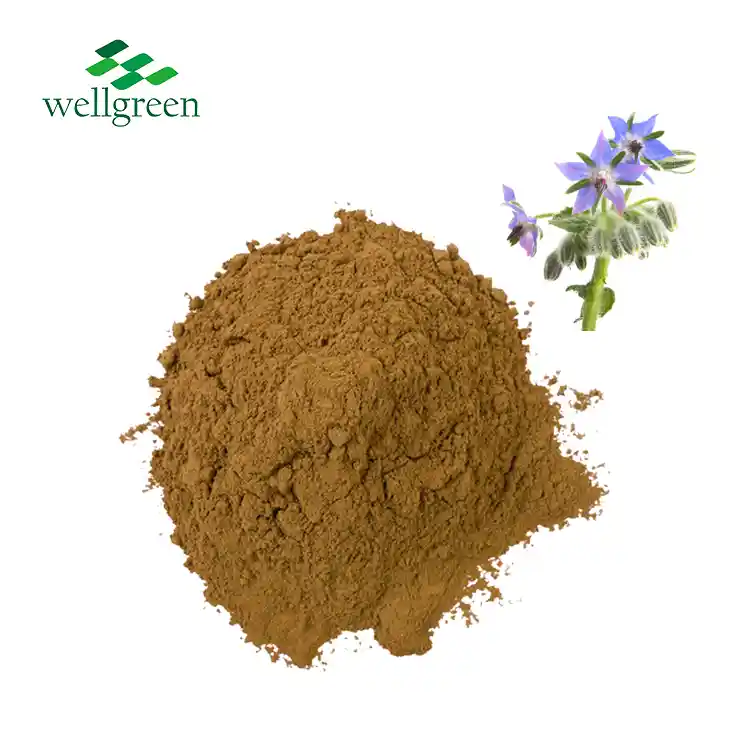
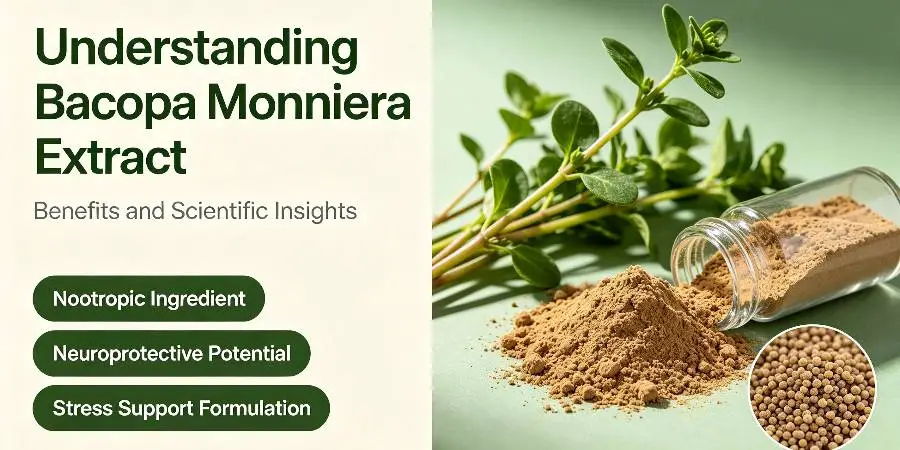
Standardization amounts are usually between twenty and fifty percent of the total bacosides. This is measured by HPLC analysis instead of UV spectrophotometry, which is not as accurate. Physically, it is a brown to greenish-brown powder that absorbs water and has a strong plant smell and a slightly bitter taste. Specifications for mesh sizes usually say that 100% of the material has to go through 80 mesh screens. This makes sure that the material blends evenly during the packaging process and is spread out evenly in the finished product.
Scientific Evidence for Cognitive Enhancement
Clinical research shows that Brahmi extract helps the brain work in many ways through different biochemical pathways. The chemicals change the cholinergic system by stopping acetylcholinesterase. This helps keep neurotransmitter levels at the right level without using up neurochemical stores. This process varies fundamentally from synthetic nootropics and adds to prolonged cognitive support rather than temporary stimulation.
Studies show that taking supplements regularly can help people remember things and learn new things. This is especially true for people who are aging and/or have a lot of mental work to do. The adaptogenic qualities show up by changing the production of Hsp70, which makes it easier for the nervous system to handle oxidative stress. Lowering lipid peroxidation in neural tissues adds another layer of neuroprotection, which makes this ingredient useful for formulas that aim to keep brain health at all stages of life.
Wellness Applications Beyond Cognition
More and more, this plant ingredient is being used in products to help people deal with stress and improve their happiness. The adaptogenic resilience helps people keep their minds clear during tough times, which supports emotional balance without making people sleepy. This two-action profile, which affects both cognitive function and stress response, makes it possible to use this profile in more types of nutraceuticals.
When dosage guidelines are followed and quality standards are kept, safety profiles stay good. Regulatory managers should be aware that the ingredient works as a long-term supportive substance rather than having instant effects. This affects how consumers are educated and how marketing materials set realistic expectations.
How Bacopa Monniera Extract Is Used in Different Forms: Practical Applications for B2B Buyers
Supplement Format Considerations
Procurement experts face several practical factors when selecting brahmi extract forms for different product groups. Powder extracts provide the greatest flexibility for supplement manufacturing, allowing manufacturers to adjust the dosage precisely in capsules, tablets, and blended supplements. The bulk density is usually between 0.40 and 0.60 grams per milliliter, which affects capsule filling weight and production efficiency. The bacoside content remains stable at normal processing temperatures due to good heat stability during packaging procedures. However, moisture control becomes especially important because the powder is highly porous and can easily absorb water.
The easiest way to use the extract is in capsule form, where it works well with other ingredients that work well together, like L-theanine, phosphatidylserine, or omega-3 fatty acids, without needing too many fillers. The powder's density works well with hard-shell capsules, which keep the content consistent across production batches. When you crush plant materials into tablets, you need to be careful which binder you choose so that the tablets stay the same hardness.
Functional drinking uses come with their own set of technology problems that need unique answers. People may not like ready-to-drink versions of standard extracts because they have a bitter taste and don't mix well with water. Micro-encapsulation or nano-emulsification technologies are used in new formulation methods to hide bitterness and keep liquids from settling in low-pH environments. With these changes, it's now possible to include it in energy drinks, relaxation drinks, and wellness shots while still keeping the clean-label positioning.
Dosage Standards and Regulatory Compliance
The United States and the European Union both have regulatory frameworks that set safe levels of use for dietary supplements and functional foods. Product makers usually use dosage ranges that are in line with clinical research methods and take into account how different ingredients can work together to make a stronger recipe. Third-party testing procedures check for bacoside content, pesticide residues according to USP standards, and heavy metal levels staying below strict regulatory limits. This is especially important because the plant grows in water.
Quality assurance rules need to cover a number of contamination risks that come with botanical raw materials. Heavy metals like lead, arsenic, cadmium, and mercury are more likely to be present in wetlands where crops are grown. Reliable suppliers use ICP-MS testing to make sure that levels of lead stay below two parts per million and that levels of other metals stay within similarly strict limits. Polycyclic aromatic hydrocarbon screening is needed when source materials come from places where farming is common or where factories are close by.
The Certificate of Analysis should include HPTLC fingerprint results that prove the identity of the plant and rule out mixing it with other plant species that look similar. This chromatographic validation gives procurement teams confidence in the authenticity of materials, which protects brand integrity and lowers the risk of not following the rules in regulated markets.
Emerging Market Trends
The cognitive health industry keeps growing as more people learn about how to improve mental performance and how to help older adults keep their minds sharp. Key consumer groups that want to improve their focus and mental energy without the side effects of stimulants are students and working professionals. This need has led to the creation of handy forms like candies, powders that dissolve in water, and functional snacks that contain standardized Brahmi extract along with other nutrients that support it.
This plant ingredient also shows benefits in helping with anxiety, which is another growth area. Formulation teams mix it with other herbs or amino acids that calm the body to make complete stress-response products that people who want natural alternatives to traditional methods l, like will like. Positioning on clean labels and compatibility with vegan diets increases market appeal across all social groups that value clear ingredient sources.
Bacopa Monniera Extract vs Other Popular Nootropics: Making Informed Procurement Decisions
Comparative Analysis with Established Ingredients
For strategic product positioning, you need to know how Brahmi extract works, how it affects the brain, and how the market sees it compared to other ingredients that support brain health. Ginkgo biloba extract mainly works to improve blood flow to the brain and protect cells from free radicals. This helps brain tissues get more oxygen and nutrients. The two ingredients work well together in combination formulas, where the cholinergic modulation from bacosides and the circulation support from Ginkgo work together.
Bacopa Monniera Extract improves brain function by supporting neurotransmitter balance and cognitive performance, while the Ashwagandha ingredient helps control stress hormones and influence cortisol levels. It also has calming effects that may reduce mental fatigue during periods of high stress. Even though both Brahmi and Ashwagandha are adaptogens, their biochemical pathways are different enough that they can work better when combined. Product designers can use these complementary mechanisms to create comprehensive brain health formulas that address multiple aspects of mental wellness at the same time.
Lion's mane mushroom extract helps nerve growth factor production and neurogenesis. It does this in a way that is different from how bacoside-rich plants support brain health. The polysaccharides and hericenone in Lion's Mane work well with the saponins in Brahmi extract, which opens up the possibility of making goods that help keep your brain healthy over time. Teams in charge of buying things should think about these ingredients based on the uses they're meant for, what customers want, and where they want to place themselves in competitive market areas.
Organic versus Conventional Extract Selection
Differences in quality between organic and standard extracts affect both how much they cost and how appealing they are to customers. Organic approval requires that farming methods be checked to make sure they don't use synthetic pesticides and fertilizers. This lowers the risk of contamination and appeals to customers who want to buy clean products and are willing to pay more. Third parties check the farming methods, processing facilities, and supply chain documentation as part of the certification process. This makes the process more complicated, but also makes natural products easier to sell.
Conventional extracts from reputable sources can meet strict quality standards by going through thorough testing methods. They are also cheaper, which helps margins in competitive market segments. Instead of assuming that organic and conventional materials are better, the choice between them should be based on brand positioning, target consumer demographics, and the needs of the distribution channel. When deciding if a material is right for a job, testing quality and supplier dependability are more important than just its certification status.
Supplier Evaluation Criteria
To find the right extract suppliers, you need to look at more than just prices when making your choice. Bacoside standardization methodology is an important part of the evaluation process because suppliers who use gravimetric saponin measurement instead of HPLC quantification of specific bacoside compounds may give you different amounts of active ingredients. Procurement teams can find sellers with strong quality control systems by asking for information on the analytical method and looking over several examples of COAs.
Manufacturing compliance licenses, such as GMP registration, show that a company is dedicated to quality control and stability from batch to batch. For large-scale partnerships where supply stability and quality directly affect business operations, site audits or inspection reports from a third party provide extra proof. Formulation support services, such as help with stability testing, regulatory documentation, and technical advice, add value beyond the supply of basic materials. This is especially true for businesses that are creating new uses for materials or entering new market segments.
Global Procurement Guide: Buying Bacopa Monniera Extract for B2B Supply Chains
Regional Supplier Landscape
India is the main source area for Brahmi extract because it is grown there,e and the machinery for extraction is well-established. Botanical extraction hubs are places where many makers work together to offer different levels of quality and standardization. Sourcing experts should know that the quality of Indian suppliers varies, so they should do individual evaluations instead of thinking that all suppliers are the same. Leading companies in this area have created advanced quality control and extraction technologies that meet international standards for pharmaceuticals and nutraceuticals.
North American manufacturers usually get their raw materials for Bacopa Monniera Extract from other countries, but they extract, test, and package them in the United States. This approach works well for brands in the US market that want to make their supply chains more transparent and improve regulatory compliance. European suppliers also combine imported botanical materials with processing expertise developed in their own countries. They often place strong emphasis on organic certification and stricter quality standards that align with EU requirements. Distribution partnerships with established ingredient sources give emerging brands and product development teams access to technical support and lower minimum order quantities.
Certification and Documentation Requirements
GMP certification shows that factories follow organized quality control procedures that include keeping equipment in good shape, training workers, moving materials safely, and keeping an eye on the environment. As goods move into more popular retail outlets and are closely watched by regulators, this certification becomes more important. To get organic approval from the USDA, the EU, or similar programs, you have to show proof of your supply line from the farm to the finished product. This makes it easier to track your food, but it also limits your choices for suppliers and raises costs.
Kosher and Halal certifications make it easier for certain types of customers and delivery routes to get into the market. This is especially helpful for brands that want to sell their products in more countries or form partnerships with specialty retailers. Some markets have extra labeling standards that are met by allergen statements and GMO-free verification. Contracts for buying things should make it clear what certifications are needed and include ways to keep checking for compliance by sending in new paperwork.
Pricing Structures and Value Assessment
Market prices depend on many things, such as the level of standardization, the organic status, the number of orders, and the service capabilities of the supplier. Higher concentrations of bacoside are more expensive because they require more raw materials and are harder to process. Gradually decreasing prices are usually the result of volume commitments, but minimum order amounts vary a lot between suppliers, rs depending on how much they make and how they handle their inventory.
For a full picture of cost-effectiveness, you need to look at more than just the price per kilogram. You also need to look at the costs of tests, the money that might be needed to redo the formula because of quality problems, and the business risks that come with supply gaps. In the long run, it's often more valuable to build relationships with dependable suppliers who provide consistent quality and good communication than to look for the lowest unit cost from sources you don't know. Payment terms, lead times, and the ability to make changes to specifications all add to the overall value of the relationship beyond the initial price negotiations.
Logistics and Storage Considerations
The rules for packaging have a big effect on how stable things are and how long they last while being stored and shipped. Hygroscopic powder is kept safe from absorbing water and breaking down due to oxygen by multi-layer barrier bags that are flushed with nitrogen. Damage to goods during shipping can be avoided by properly sealing and secondary storage in fiber drums or cardboard boxes. During times of extreme weather, temperature-controlled transportation may be needed, especially for international shipments that go through more than one climate zone.
To keep the bacoside content intact for the two years that most products are stored, they should be kept in cool, dry places that aren't exposed to direct light. Quality doesn't get worse over time when inventory is rotated regularly based on when it was made. It's especially important to have climate-controlled storage in wet areas, where water can get into the powder and make it less stable for microbes.
Building Trust and Long-Term Partnerships with Bacopa Monniera Extract Suppliers
Verification and Due Diligence
To build trust in a supplier, you should start by looking at all of their paperwork, such as their business licenses, facility certifications, insurance coverage, and references from past customers. Independent facilities that test first samples for a third party provide neutral confirmation of specs and quality claims. Putting money into approval up front keeps problems from getting worse when low-quality materials get into production.
By visiting the factory in person or taking a virtual tour, you can see firsthand how Bacopa Monniera Extract is produced, stored, and checked for quality. Finding out about a supplier's production capacity, equipment, and technical expertise can help you determine whether they can meet your needs for both high-volume manufacturing and custom product development. Suppliers who are willing to share process details, analytical methods, and quality issues in a transparent way are more likely to be partnership-oriented rather than transactional vendors.
Custom Formulation and Private Label Support
OEM partnerships work best when suppliers are willing to be flexible and come up with custom specifications that fit the product's positioning and performance needs. Being able to change bacoside concentrations, make custom mixes with ingredients that work well together, or change physical qualities like particle size makes it possible for products to stand out in crowded markets. Getting technical advice on things like formulation stability, dosage optimization, and regulatory compliance is very helpful during the development stages of a product.
When a supplier offers private labeling, brands can focus on marketing and distribution while the supplier handles manufacturing, quality control, and regulatory paperwork. For private label relationships to work, there needs to be clear communication about company standards, quality goals, and packaging needs. Agreements to keep things secret protect secret formulas and business plans, which build trust in working together.
Strategic Alignment and Growth Planning
Long-term partnerships form when business goals are matched, and both parties plan for progress. Suppliers who put in the time to learn about their customers' market strategies, target consumers, and product roadmaps can predict what their customers will need in the future and suggest innovations that will meet those needs. Reviews of the business on a regular basis create places to talk about quality performance, supply forecasts, and changes in the market that affect ingredient strategies.
Partners trust each other when they can keep their promises about when they will deliver goods and keep the quality of each batch of goods the same. Responding to contact during supply problems, solving problems before they happen, and being ready to talk about concerns in a clear way show that a seller cares about the success of their customers beyond just one transaction.
Conclusion
Bacopa Monniera Extract is becoming more popular as a cognitive health ingredient that has been backed by science in nutraceutical, pharmaceutical, and functional food applications. Procurement experts can make smart sourcing choices that support product quality and business goals when they understand the technical specifications, quality control requirements, and application factors. Comparing different nootropic ingredients helps with strategic positioning in competitive markets, and understanding the global supply landscape makes choosing a reliable provider easier. In the growing brain health market, long-term competitive advantages are created by building strong supplier relationships based on transparency, technical expertise, and shared growth goals.
FAQ
What standardization levels should I look for when sourcing?
HPLC analysis shows that the standard concentration range for the industry is twenty to fifty percent total bacosides. Twenty percent standardization works well for applications that need to save money and combination formulas where more than one active ingredient helps the formula work. Forty to fifty percent concentrations are better for high-end goods that want to get the most out of each dose. Ask for detailed analytical methods and look over several batch COAs to make sure that they are all the same across production runs. For quality control, specifications should list specific bacoside compounds instead of general saponin content.
How long does it take to see effects in end consumers?
This plant-based substance works as a long-term boost instead of giving you quick benefits like caffeine or other stimulants. Clinical study methods usually last between eight and twelve weeks, and after daily use for a while, cognitive benefits can be seen. Product designers should teach customers about reasonable timelines and stress that long-term benefits are more important than quick results. Because of this trait, marketing strategies, packaging claims, and customer retention programs that focus on longer consumption cycles are all affected.
Can the extract be combined with other nootropic ingredients?
Combining Brahmi with other ingredients that work well together often results in better results than using just one ingredient. Ginkgo biloba, phosphatidylserine, DHA omega-3, Lion's Mane mushroom, and L-theanine are all popular supplements that work together to improve brain health in different ways. Stability testing should make sure that the mixtures are compatible in certain formulation matrices, especially when it comes to how sensitive they are to moisture and how they might interact with each other. Professional recipe support helps find the best amounts of ingredients for maximum effectiveness while still making production possible and following all regulations.
Partner with a Reliable Bacopa Monniera Extract Supplier
Wellgreen Technology makes high-quality botanical extract powders that meet the strict quality standards needed by functional food manufacturers, nutraceutical brands, and pharmaceutical companies. Our GMP-approved factory makes standardized Brahmi extract with bacoside concentrations of twenty to forty percent, which is proven by HPLC testing and full COA documentation. We keep a lot of inventory on hand so that we can accommodate different order sizes and quick delivery times in both North America and Europe.
Our expert team can help you speed up the process of making new products by giving you advice on formulations, running stable tests, and writing up regulatory paperwork. We offer consistent quality that is backed by strict heavy metal screening, pesticide testing, and microbial control, whether you need unique specs, private label solutions, or the ability to work with other companies as an OEM partner. Get in touch with our team at wgt@allwellcn.com to talk about your cognitive health ingredient needs and find out how working with an experienced supplier can help you stand out in the growing brain health market.
References
1. Calabrese, C., Gregory, W.L., Leo, M., Kraemer, D., Bone, K., & Oken, B. (2008). Effects of a standardized Bacopa monnieri extract on cognitive performance, anxiety, and depression in the elderly: a randomized, double-blind, placebo-controlled trial. Journal of Alternative and Complementary Medicine, 14(6), 707-713.
2. Morgan, A., & Stevens, J. (2010). Does Bacopa monnieri improve memory performance in older persons? Results of a randomized, placebo-controlled, double-blind trial. Journal of Alternative and Complementary Medicine, 16(7), 753-759.
3. Stough, C., Lloyd, J., Clarke, J., Downey, L.A., Hutchison, C.W., Rodgers, T., & Nathan, P.J. (2001). The chronic effects of an extract of Bacopa monniera (Brahmi) on cognitive function in healthy human subjects. Psychopharmacology, 156(4), 481-484.
4. Pase, M.P., Kean, J., Sarris, J., Neale, C., Scholey, A.B., & Stough, C. (2012). The cognitive-enhancing effects of Bacopa monnieri: a systematic review of randomized, controlled human clinical trials. Journal of Alternative and Complementary Medicine, 18(7), 647-652.
5. Aguiar, S., & Borowski, T. (2013). Neuropharmacological review of the nootropic herb Bacopa monnieri. Rejuvenation Research, 16(4), 313-326.
6. Russo, A., & Borrelli, F. (2005). Bacopa monniera, a reputed nootropic plant: an overview. Phytomedicine, 12(4), 305-317.