
How Shilajit Extract Supports Mineral-Based Ingredient Development
2026-09-21 14:00:02
Shilajit Extract has moved from the traditional-medicine shelf to the technical data sheet, and that shift changes the questions formulators ask. For a brand developing mineral-based capsules, stick packs, or powder blends, the useful question is no longer what shilajit is, but how reliably it can be specified, tested, blended, and released. The focus here is the development and quality-control side: fulvic acid standardization, powder versus resin processing, compatibility in mineral blends, moisture and flow behaviour, heavy metal and PAH control, batch consistency, and adulteration screening.
Understanding Shilajit Extract and Its Unique Mineral Composition
What Makes Its Profile Distinct?
Shilajit is a mineral-organic exudate — a mineral pitch that accumulates in high-altitude rock formations — rather than a plant extract. Wellgreen's product specification names the source as Himalayan mineral pitch (Asphaltum) and lists fulvic acid, humic acid, and 84+ trace minerals, with fulvic acid as the standardizing marker. The point that matters on a formulation bench is structural: the organic and inorganic fractions are naturally associated, not combined afterwards as a formulator blends a mineral salt with a carrier. The commercial routes behind the material are covered in Wellgreen's overview of natural sourcing options for shilajit extract.
Fulvic acid is the fraction most specifications are written around. Chemically it is the low-molecular-weight, acid-soluble portion of humic substances, carrying a high density of carboxylic and phenolic functional groups. Those groups make fulvic acid a polydentate ligand that binds metal cations — behaviour characterised on shilajit by Schepetkin et al. (2009), who fractionated commercial extracts by anion-exchange and size-exclusion chromatography and compared the isolated fractions against standardized fulvic acid references. Humic acid is the higher-molecular-weight companion fraction and, with the mineral load, forms the matrix a specification tries to hold constant.
The material is analytically more complex than a single-number specification suggests. A 2025 method-development study (PMID 41330163) built an HPLC assay for fulvic acid, hippuric acid, and urolithin A, added HPTLC and LC-MS for identity confirmation, used gravimetric analysis for total fulvic acid, and quantified 14 elements by ICP-MS; reviews also list dibenzo-α-pyrones among the characterised constituents (Stohs, 2014). The buyer's takeaway: "50% fulvic acid" is not a universal number, because gravimetric and HPLC/UV determination answer different questions and will not return identical values on the same lot. The method belongs in the specification.
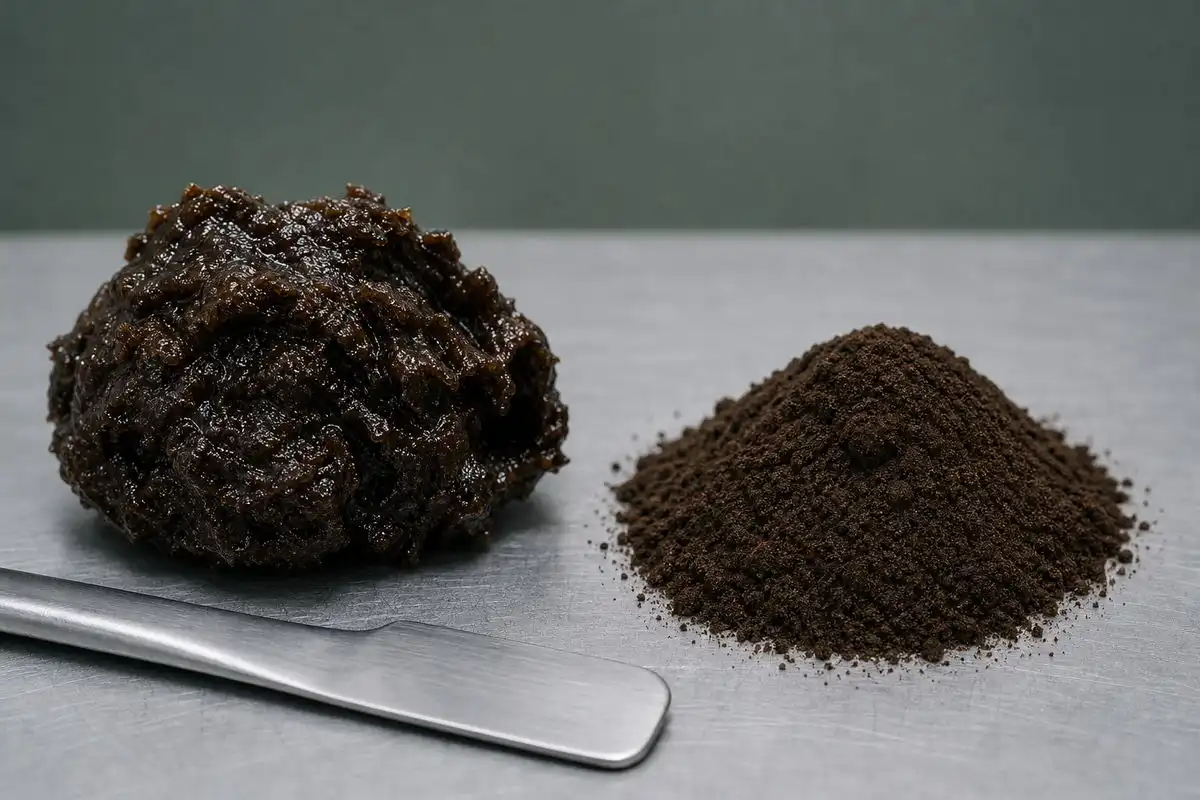
Wellgreen supplies Shilajit Extract standardized to 50% fulvic acid, customizable from 10% to 60%, as powder, resin (paste), or finished capsules — three formats that behave very differently in production. The same fulvic acid is also offered as a standalone fulvic acid powder for projects that want the carrier fraction without the mineral load.
The Role of Shilajit Extract in Mineral-Based Ingredient Innovation
Working With Inorganic Mineral Sources in Dry Blends
Inorganic mineral sources — oxides, carbonates, and sulfates — carry familiar formulation liabilities: high use levels to reach a declared elemental value, chalky or metallic notes in drink mixes, and interactions with other actives across a shelf life. A mineral-organic ingredient such as Shilajit Extract is therefore interesting to formulators as a matrix, not as a mineral salt substitute.
The property most often cited is fulvic acid's ligand behaviour: its carboxylic and phenolic groups bind metal ions. That is a statement about chemistry, not about outcome. Whether a fulvic acid carrier measurably changes the delivery of a co-formulated mineral depends on pH, competing ligands in the blend, the mineral species, and the dose ratio — variables a brand has to resolve with its own evidence or with ingredient-specific literature. What can be specified and verified at purchase is the fulvic acid content, the analytical method behind it, and the mineral profile that comes with the raw material.
Declaration strategy follows from the same point: shilajit's minerals are naturally present, whereas an added mineral salt is an intentionally added nutrient, and the two routes produce different label declarations and different substantiation files — a choice usually made at concept stage.
Comparing Shilajit Extract to Other Mineral-Based and Herbal Ingredients
Extract Versus Raw Resin: Why Processing Matters
Raw resin is the material as collected, and it is hard to control: fulvic acid content varies by lot, viscosity makes accurate weighing and uniform blending difficult, and without purification the heavy metal fraction inherited from the geological matrix is uncontrolled. That risk is not theoretical. Aldakheel et al. (2022) analysed commercially traded Indian and Pakistani shilajit samples by LIBS, ICP-OES/MS, and EDX and reported Al, Sr, Mn, Ba, Zn, Ni, B, Cr and the toxic elements Pb, As, and Hg above standard permissible limits — which is the practical reason to specify a purified, standardized extract rather than raw resin.
Standardized Shilajit Extract powder comes from aqueous or hydro-ethanolic extraction followed by staged filtration, drying, and assay-based standardization. Wellgreen states on its product page that it uses low-temperature extraction and multiple filtration cycles to remove soil, sand, and harmful levels of lead, arsenic, and mercury, and that each shipment carries a batch-specific COA covering fulvic acid content, trace mineral analysis, heavy metals, and microbiological purity. The trade-off is handling: humic-rich powders are hygroscopic, so blending-room humidity, weighing exposure, and moisture-barrier packaging become process parameters rather than afterthoughts.
| Attribute | Standardized powder | Resin (paste) | Finished capsules (OEM) |
|---|---|---|---|
| Specification held | 50% fulvic acid minimum by HPLC/UV as listed on the product page; 10%–60% available as a customized assay | Supplied as a standardized paste; assay is set with the supplier rather than by blending | Fill and packaging defined with the brand; assay carries over from the input material |
| Physical handling | Fine, free-flowing powder; weighable and blendable for uniformity | Thick, sticky, temperature-sensitive; weighing accuracy and transfer losses are difficult to control | No powder handling at the brand's site; the supplier controls fill weight |
| Moisture and hygroscopicity risk | Hygroscopic; requires controlled blending-room humidity and moisture-barrier packaging | High moisture relative to powder; migration into hygroscopic co-ingredients is a real risk | Sealed unit-dose format limits moisture exchange with the environment |
| Dose uniformity | Best control — the assay is fixed before blending | Poorest control — viscous material resists even dispersion in dry blends | Determined by the encapsulation process rather than by the brand's blending step |
| Typical fit | Capsules, tablets, stick packs, dry functional blends | Traditional-format products and spreads where a paste texture is the intended presentation | Brands launching a retail-ready SKU without in-house encapsulation |
On a formulator's bench, Shilajit Extract is complementary rather than competing. Botanical actives such as ashwagandha, rhodiola, or ginseng are specified on a single marker and contribute no mineral load; shilajit is specified on fulvic acid while also delivering a broad trace-mineral profile. In multi-botanical blends the practical compatibility questions are excipient-related: whether the humic fraction adsorbs onto a botanical carrier, whether colour and taste drift in a hygroscopic blend, and whether the assay stays in specification after blending and storage.
Practical Considerations for Procuring Shilajit Extract in Bulk
What B2B Buyers Should Verify Before Committing
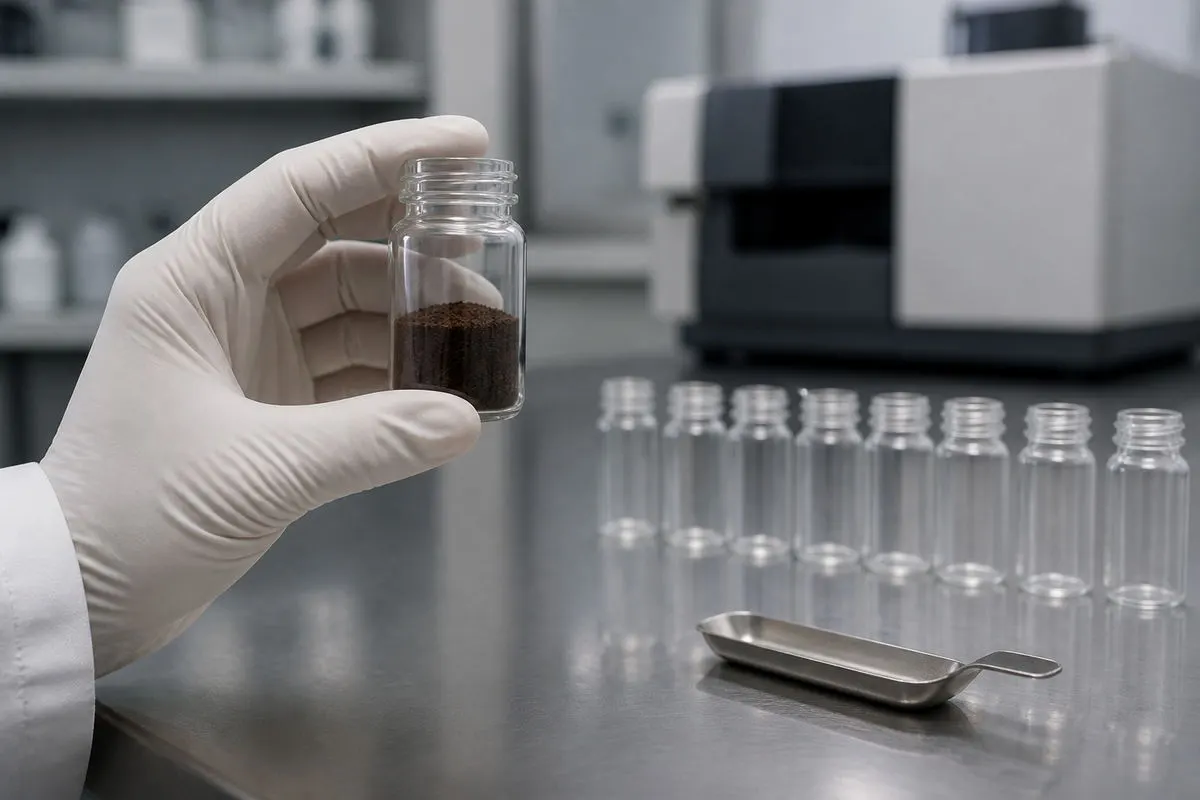
Purchasing Shilajit Extract in bulk needs a more technical file than a routine botanical powder. The criteria in Wellgreen's bulk sourcing guide for shilajit extract hold here as well; a buying team should verify, and be able to defend, the following:
- Fulvic acid assay and the method behind it. Gravimetric determination and HPLC/UV quantification are not interchangeable, so state which method generated the number (PMID 41330163; on standardized quantification methods, see Lamar et al., 2014) and request the method summary and validation data, not just a result.
- Heavy metals by ICP-MS. Lead, arsenic, cadmium, and mercury are inherent to a geological raw material, and published surveys of traded shilajit have found several above permissible limits (Aldakheel et al., 2022). Set limits against the standards the destination market applies — California Proposition 65 thresholds, and USP <232> for a pharmaceutical-grade pathway.
- PAH screening. A Dutch monitoring programme reported benzo[a]pyrene above the limit of quantification in 44% of 1,258 supplement samples (lower-bound mean 3.37 µg/kg), with PAH4 at 33.5 µg/kg (PMID 21574084) — so a third-party PAH panel belongs in the specification.
- Microbiological release testing. Total aerobic count, yeast and mould, E. coli, and Salmonella, reported per batch against the brand's own cGMP release limits.
- Moisture and water activity. Wellgreen's published sourcing guidance treats moisture below 5% as the working target, because excess moisture drives both caking and microbial risk in storage and transit.
- Authenticity screening. The substitutions seen in the trade are peat-derived material, ozokerite (a mineral wax), and added coal-derived humates or fulvic acid. An HPTLC fingerprint plus the HPLC and LC-MS marker profile separates genuine shilajit from these, and a fulvic acid value that rises without a matching marker profile is a warning sign, not a bargain.
- Batch consistency. Request three consecutive batch COAs and trend fulvic acid content and loss on drying across them; consistency over three lots predicts reliability better than one certificate.
Beyond the analytical file, agree three points in writing: the method that defines the fulvic acid specification, a reference retention sample held by both parties, and change-control notification.
| Verification item | Method or document | Why it matters in formulation |
|---|---|---|
| Fulvic acid content | HPLC or HPLC/UV quantification; gravimetric determination as a cross-check; method summary and validation data | Determines the assay declaration and the blend ratio; different methods return different values on the same lot |
| Identity / authenticity | HPTLC botanical fingerprint plus HPLC and LC-MS marker profile | Detects peat, ozokerite, and added humate material before a launch depends on them |
| Mineral profile | ICP-MS elemental panel (the method-development study quantified 14 elements) | Confirms the declared trace-mineral profile and flags geological variability between lots |
| Heavy metals | ICP-MS for As, Pb, Hg, Cd against buyer-specified limits (Prop 65 thresholds; USP <232> where applicable) | Contamination is inherited from the geological source and is controlled by purification, not by claims |
| PAH | Third-party panel reported as benzo[a]pyrene plus EFSA PAH4 | PAH are a documented contaminant class in supplements and are not covered by a heavy metal panel |
| Microbiology | Total aerobic count, yeast and mould, E. coli, Salmonella | Required for cGMP release and for any finished-product stability programme |
| Moisture / flow | Loss on drying (client guidance: below 5%) plus a practical flowability check | Drives caking, blend uniformity, capsule fill-weight variation, and shelf life |
| Batch consistency | Three consecutive batch COAs with trend review | Separates a supplier with process control from one with a good first certificate |
Addressing Safety, Specification, and Regulatory Aspects for B2B Clients
Navigating Compliance Across U.S. and Global Markets
In the U.S., dietary supplement manufacturers operate under the FDA's cGMP regulation for dietary supplements, 21 CFR Part 111, covering personnel, plant, production and process controls, quality control, and records. Ingredient suppliers feed that system, so each shipment should arrive with a batch-specific COA, a specification sheet, a safety data sheet, an allergen statement, and country-of-origin documentation; exporters are normally also asked for ISO 22000 or equivalent certification.
The safety literature on purified shilajit is reasonably developed; it is worth describing what those studies did rather than extrapolating from them. A 91-day repeated-dose oral toxicity study in Wistar rats (24 animals, four groups) tested doses of 500, 2,500, and 5,000 mg/kg/day, evaluating body weight, organ weights, histopathology, and iron status, and reported no adverse effects on the vital organs examined (PMC3609271). A review by Stohs (2014) concluded that the safety of shilajit is documented in animal and human studies while noting that further well-controlled studies using standardized products are needed. Both are inputs to a supplier qualification file, not substitutes for the brand's own regulatory assessment.
Two disciplines apply to the specification rather than to marketing copy. Elemental impurity limits are set by the destination market: U.S. buyers typically reference California Proposition 65 thresholds and USP <232> limits, with ICP-MS as the method. This article states those as requirements a purchaser should impose; it does not assert compliance for any lot, which is established only by that lot's COA. Certification marks on a supplier's product page — ISO 22000, HALAL, KOSHER, and GMP compliance — are scheme- and scope-specific, so the certificate should be checked against the exact material and site, and organic or non-GMO claims used only where a valid certificate covers the material.
No dosing or intake guidance is provided here: dose selection, label claims, and market-specific compliance decisions belong to the brand and its regulatory advisers.
Conclusion
Shilajit Extract rewards formulators who treat it as an engineered raw material rather than a folk ingredient. The decisions that matter are concrete: agree the analytical method before agreeing the fulvic acid number, choose the format — powder, resin, or finished capsules — against the dose-uniformity and moisture risks of the delivery system, screen the humic and fulvic fractions against the rest of the blend, and write heavy metal, PAH, microbiological, and moisture limits into the specification. Batch-to-batch consistency and a complete COA file do more for a launch than any single certificate.
FAQ
How do we verify the authenticity of shilajit extract from a supplier?
Ask for more than a fulvic acid figure. Request an HPTLC fingerprint alongside the HPLC and LC-MS marker profile, and check that the marker data matches the mineral panel. Genuine shilajit shows a combination of organic markers and a broad trace-mineral profile that peat, ozokerite, and added humates do not reproduce; three consecutive batch COAs complete the picture.
Which fulvic acid specification should be written into a purchase specification?
Wellgreen's product page lists 50% fulvic acid as the primary specification, with customization from 10% to 60%. The more important clause is the method: state whether the value is established gravimetrically or by HPLC/UV, because the two approaches give different results on the same material, and require the method summary with the COA.
What documentation should accompany a bulk shipment?
A batch-specific COA covering fulvic acid content, trace mineral analysis, heavy metals, and microbiological purity, as listed on Wellgreen's product page, plus the specification sheet, safety data sheet, allergen statement, and country-of-origin documentation — and a retained reference sample.
Partner With Wellgreen for Standardized Shilajit Extract Supply
Wellgreen manufactures Shilajit Extract standardized to 50% fulvic acid, with custom assays from 10% to 60%, as powder, resin (paste), or finished capsules. If you are selecting a format for a mineral-based formulation, or you need the analytical package and specification language to take into a supplier audit, contact the technical team at wgt@allwellcn.com, review the full specification on the Shilajit Extract product page, or explore finished-format development through Wellgreen's OEM & ODM services.
This article provides technical and commercial information for industry professionals evaluating ingredients. It is not medical advice and does not provide dosing guidance.
References
1. Schepetkin, I. A., Xie, G., Jutila, M. A., & Quinn, M. T. (2009). Complement-fixing Activity of Fulvic Acid from Shilajit and Other Natural Sources. Phytotherapy Research, 23(3), 373–384. PMID 19107845. https://pubmed.ncbi.nlm.nih.gov/19107845/
2. Stohs, S. J. (2014). Safety and Efficacy of Shilajit (Mumie, Moomiyo). Phytotherapy Research, 28(4), 475–479. PMID 23733436. https://pubmed.ncbi.nlm.nih.gov/23733436/
3. Shilajit — Analytical Study to Understand the Phyto Complex Present in Shilajit Raw Material, Extract and Resin by Using Hyphenated Techniques. (2025). Journal of Chromatography A. DOI: 10.1016/j.chroma.2025.466570. PMID 41330163. https://pubmed.ncbi.nlm.nih.gov/41330163/
4. Aldakheel, R. K., Gondal, M. A., Alsayed, H. N., Almessiere, M. A., Nasr, M. M., & Shemsi, A. M. (2022). Rapid Determination and Quantification of Nutritional and Poisonous Metals in Vastly Consumed Ayurvedic Herbal Medicine (Rejuvenator Shilajit) by Humans Using Three Advanced Analytical Techniques. Biological Trace Element Research, 200(9), 4199–4216. PMID 34800280. https://pubmed.ncbi.nlm.nih.gov/34800280/
5. Evaluation of Safety Profile of Black Shilajit After 91 Days Repeated Administration in Rats. Asian Pacific Journal of Tropical Biomedicine, 2(3), 210–214. PMC3609271. https://pmc.ncbi.nlm.nih.gov/articles/PMC3609271/
6. Lamar, R. T., Olk, D. C., et al. (2014). A New Standardized Method for Quantification of Humic and Fulvic Acids in Humic Ores and Commercial Products. Journal of AOAC International, 97(3), 721–730. PMID 25051616. https://pubmed.ncbi.nlm.nih.gov/25051616/
7. Monitoring of Polycyclic Aromatic Hydrocarbons (PAH) in Food Supplements Containing Botanicals and Other Ingredients on the Dutch Market. (2011). Food Additives & Contaminants: Part A. DOI: 10.1080/19440049.2011.569573. PMID 21574084. https://pubmed.ncbi.nlm.nih.gov/21574084/
8. U.S. Food and Drug Administration. 21 CFR Part 111 — Current Good Manufacturing Practice in Manufacturing, Packaging, Labeling, or Holding Operations for Dietary Supplements (electronic Code of Federal Regulations). https://www.ecfr.gov/current/title-21/chapter-I/subchapter-H/part-111