
Steam Sterilized vs. ETO-Treated Organic Ginger Extract Powder: Buyer Requirements
2026-11-03 09:55:47
A purchase order for organic ginger extract powder usually pins down assay, mesh, moisture and microbiology, then stops. The sterilization step sits upstream of all four and quietly resets each of them. It is the last unit operation that touches the entire lot before packing, and the one most often described in a single word on a specification sheet: steam, ETO, or irradiated. That word is not enough to qualify a supplier or release a batch.
This guide is written for the people who sign the release: QA managers, purchasing leads and technical buyers. It compares the routes used on ginger powder on process grounds only, sets out the data to hold before approving a lot, and gives contract language that keeps the declared method enforceable. Which route is permitted in a destination market is a question for your regulatory team and your customer.
Sterilization Is a Purchasing Decision, Not a Processing Detail
Three teams care about this step for different reasons.
It moves four specification lines at once
Microbial count falls, but colour, odour, moisture and bulk density can move with it. A lot that met the specification before sterilization may sit outside it afterwards, particularly on water content and flow. Acceptance criteria must therefore describe the post-sterilization state.
It determines which documents exist
Steam leaves cycle records. ETO adds residue and aeration records. Irradiation adds dose records and a declaration. A supplier who cannot produce the set for the route they claim has not controlled the step.
It is fixed at quotation, and changed quietly afterwards
Method is selected when the specification is agreed, because it drives cost, lead time and the toll processor used, and substitution happens when capacity tightens. Without a locked clause and a notice period, the buyer learns about it from the COA, if at all.
Four Routes, Compared on Process Grounds
The table is deliberately qualitative: what each route does to the material, and what evidence it generates. It does not rank routes by permissibility, because that answer changes with the destination market, product category and customer specification.
| Route | Principle | Effect on microorganisms | Effect on colour and flavour | Residues and documentation | What the buyer should request |
|---|---|---|---|---|---|
| Saturated steam (moist heat under pressure) | Condensing steam releases latent heat; a typical cycle runs near 121 °C in a pressure vessel, with time and temperature set by a validated cycle | Broad reduction of vegetative bacteria, yeasts and moulds; spore reduction depends on the validated time and temperature, not on the nominal set point alone | Darkening and volatile loss rise with temperature and dwell time; the material picks up moisture during the cycle | No chemical residue expected; the evidence is the cycle record, not a residue test | Per-lot cycle record with temperature, pressure, dwell and load pattern; validation report; post-cycle drying record |
| Superheated steam (steam raised above saturation) | Steam heated beyond its saturation temperature so it carries more sensible heat and condenses less on the load | Comparable lethality when validated, but penetration into a dense powder bed has to be demonstrated rather than assumed | Lower moisture pickup, higher dry-bulb temperature; volatile loss can be equal to or greater than with saturated steam | No chemical residue expected; cycle records as above | Heat distribution and penetration study; inlet and outlet temperature log; dwell time; moisture result after the cycle |
| Ethylene oxide (ETO) | Alkylating gas applied at low temperature in a sealed chamber, followed by aeration to desorb the gas | Effective at low temperature and on packed material, but depends on gas concentration, humidity, temperature and penetration through the load and packaging | Low thermal load, so heat-driven colour change is limited; the volatile profile can still shift and off-notes can appear | Residues and reaction products are possible, so the route generates residue data and aeration records in addition to cycle records | Residue and by-product test data with method and limit of quantification; aeration record; chamber parameters; packaging specification; declaration of the exact method used |
| Irradiation (gamma or electron beam) | Ionizing energy passes through the material and the packaging; the delivered dose is validated and mapped | Dose-dependent reduction; the achieved reduction depends on the validated dose and on the microbial load entering the step | Minimal heat load; colour and volatile changes are dose- and matrix-dependent and should be checked on retained samples | No chemical residue, but declaration and labelling obligations vary by market, and a dose record exists | Written statement of whether the lot was irradiated; dose record; confirmation of which party irradiated; label artwork reviewed against the destination market |
| Dry heat | Hot air or contact heat in an oven, relying on conduction and convection | Lethality at the surface is easier to achieve than in the centre of a powder bed; penetration is slow and uneven | Greater colour change for equivalent lethality; volatile loss is typically high | No chemical residue; oven records only | Temperature distribution study, load configuration, dwell time and a post-cycle moisture result |
Steam and Superheated Steam: What the Heat Actually Does
Steam is the route most buyers assume they are buying, and where the gap between claim and file is widest. Two details decide whether a cycle did what the specification needed.
Saturated versus superheated is not a marketing distinction
Saturated steam kills by condensation, releasing latent heat onto the particle surface. Superheated steam condenses less, reducing moisture pickup but raising the dry-bulb temperature the powder sees. These are opposite trade-offs on a heat-sensitive material, so the specification should name which is used rather than saying "steam".
Dense powder beds are the hard case
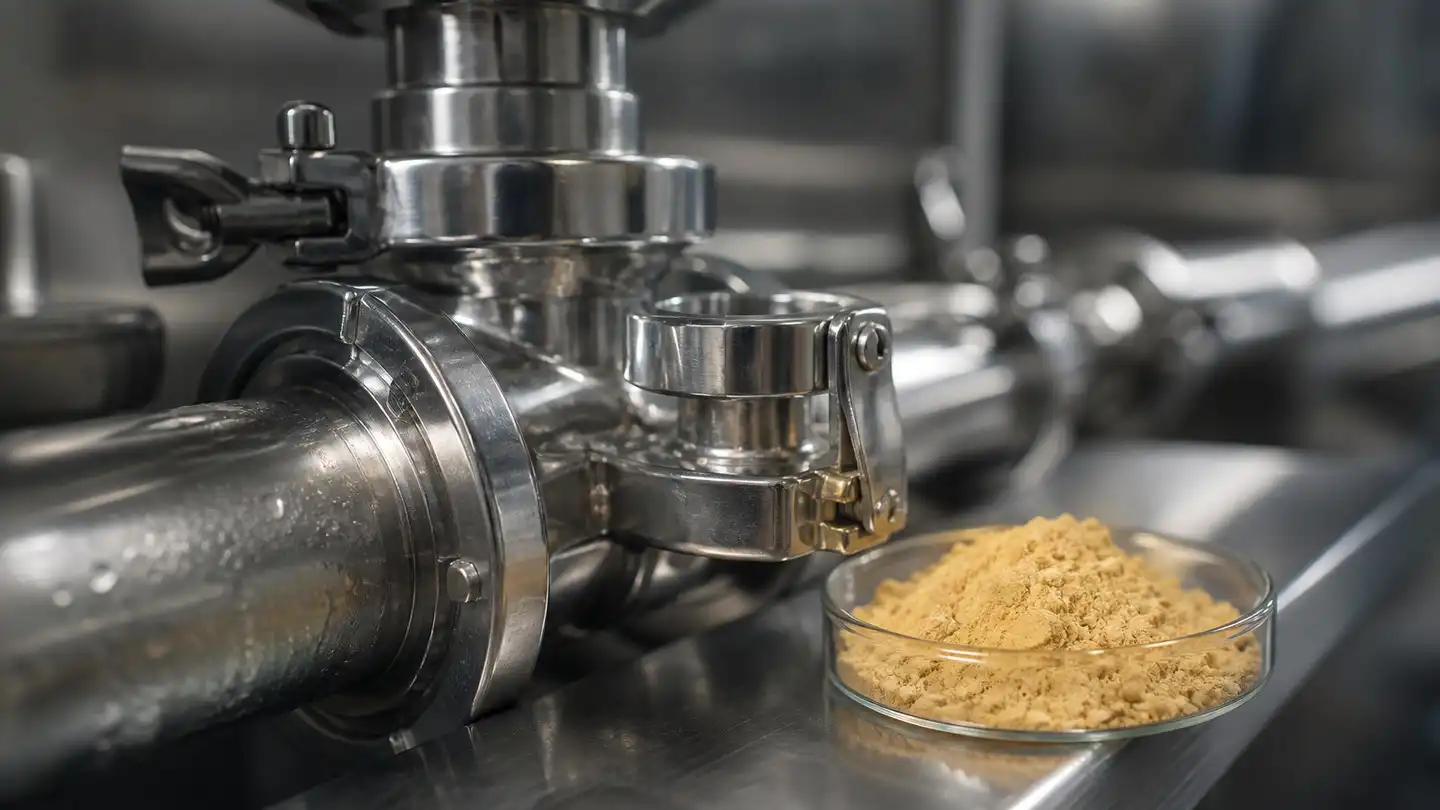
Steam penetrates a thin layer easily and a 25 kg drum of fine powder poorly. Validation therefore has to identify the coldest point in the load and place a biological indicator there. A chamber record of 121 °C proves the chamber reached temperature, not the centre of the load.
Moisture comes back with the steam
Any steam cycle adds water, which then has to be removed to return the powder to its declared water content. That drying step is a second thermal exposure and a second chance for contamination if it happens in a non-controlled area. Ask for the water result after drying, not before sterilization.
ETO: What a Buyer Should Ask For, and Why
ETO is used because it works at low temperature and penetrates packaged material. Both advantages create obligations that the word "ETO" on a specification sheet does not satisfy.
Residues and reaction products need numbers, not assurances
Ethylene oxide can remain in the material, and it can react with chloride and water in the matrix to form ethylene chlorohydrin and ethylene glycol. A declaration that the lot is "residue free" is not data. What is useful is a report per lot or per validated campaign naming the analytes, the method, the limit of quantification and the limit applied — and that limit must come from your destination market, confirmed in writing by your regulatory team before the first order.
Aeration and packaging permeability decide the result
Desorption needs time, temperature and airflow, and it depends on the packaging: a sealed foil laminate holds gas in, a permeable liner lets it leave. Two questions resolve most of this. Is aeration completed before primary packing, and how was the aeration time established for this format? Both answers belong in the batch record.
Documents that should exist before the batch moves
For an ETO lot the minimum file is a sterilization certificate naming chamber, load, cycle parameters and date; a residue and by-product report; an aeration record; the packaging format used in the cycle; and a declaration that the lot was not re-sterilized after a failed cycle. If a toll processor runs the step, the certificate should name that facility.
Changing the method is a major change
A switch between steam, ETO and irradiation is not a process tweak. It changes the residue profile, the document set, the sensory result and often the organic notification requirement. It should trigger change control with a notice period, a fresh validation summary and customer approval before shipment. That clause is the only reliable way to learn about it before the drum arrives.
Irradiation: Declarations, Labels and Dose Records
Irradiation is the route buyers meet by accident, because it is often applied by a toll operator upstream of the company that sells the powder. The declaration therefore has to reach back through the chain.
Ask for a written statement, per lot, of whether the material was irradiated at any stage, including the raw rhizome and any intermediate. Ask which facility performed it and for the dose record, without prescribing a figure: the number that matters is the one your market requires, and the record should show what was delivered against it. Labelling obligations differ between markets, so artwork should be reviewed by the party responsible for the finished product.
Why Ginger Is Harder to Sterilize Than Most Botanicals
Ginger powder is a high-volatile, strongly aromatic material with a fine particle size. Those properties make every route more intrusive than on a bland, coarse powder.
Heat-sensitive volatiles and aroma decay
The characteristic aroma is carried by a volatile oil fraction sensitive to temperature and time. A cycle that is microbiologically adequate can still flatten the top notes, and the loss is invisible on a standard COA. Buyers with a flavour brief should ask for volatile oil content by the method in their specification, plus a retained-sample comparison of pre- and post-sterilization material assessed by the same panel. How gingerol is extracted from ginger also matters: a standardized ginger extract powder carries a different volatile load from a dried rhizome powder.
Caking, moisture regain and flow
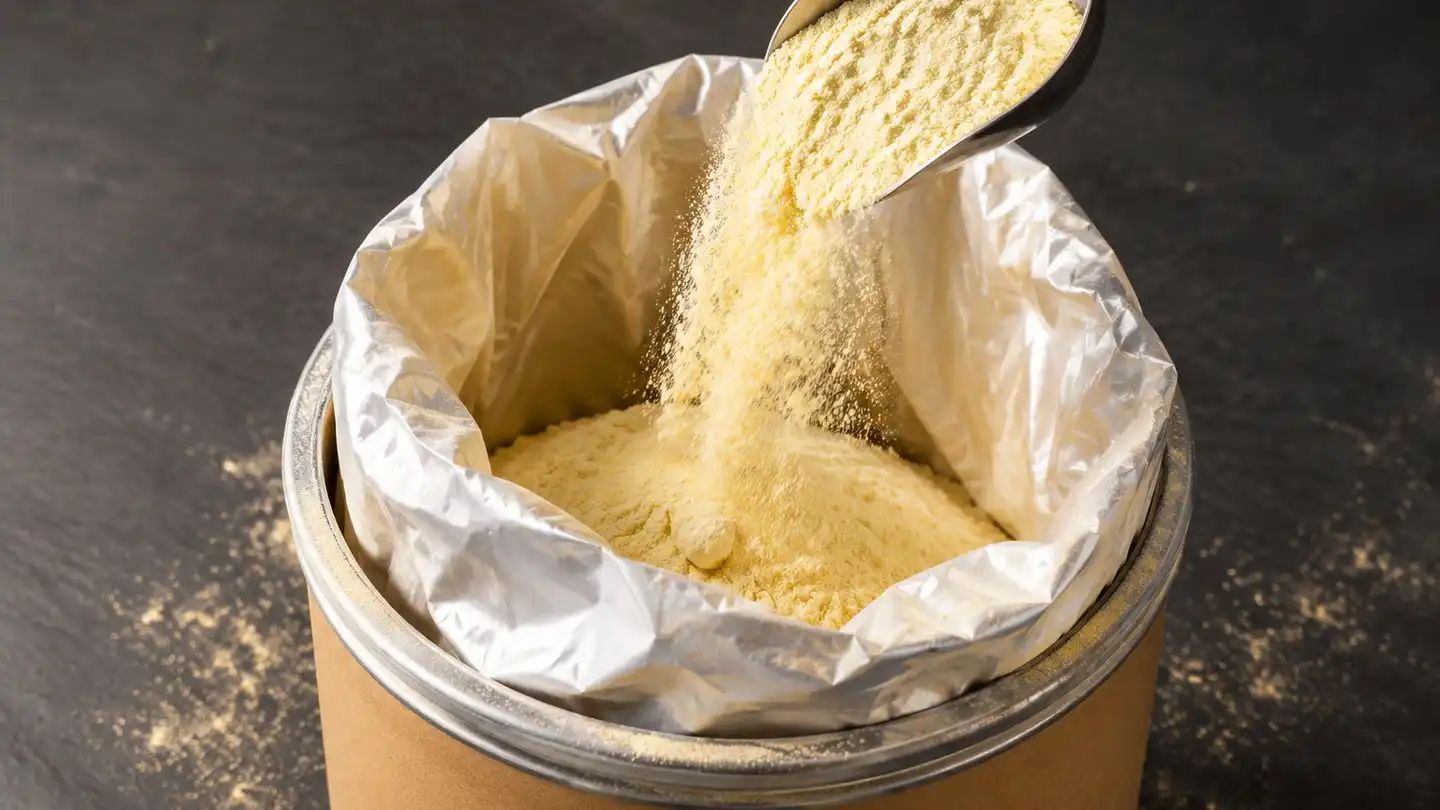
Steam adds moisture, drying removes it unevenly, and the powder may clump in the bag and flow differently on the filling line. Bulk density and sieve performance show it. The product page COA for this material declares 40–70 g/100 ml and 85% passing 80 mesh, and a sterilized lot should be checked against the same window, because a shift at either end changes filling behaviour.
Re-testing after sterilization is not optional
Sterilization is not terminal for a powder that is later dried, sieved, blended or packed. Each step can re-introduce organisms, and moisture regain lets survivors recover before the lot is tested. Release sampling should therefore follow final packing and cover water, total plate count, yeast and mould, and absence of E. coli and Salmonella.
What a Sterilization Validation Package Should Contain
Validation separates a supplier who owns a sterilizer from one who controls it. The file answers three questions: how the cycle was proven, how each production cycle is monitored, and what happens when one fails.
Validation, routine monitoring and revalidation
The report should describe the load configuration tested, where indicators or dosimeters sat, the results, and the worst case accepted. Routine monitoring should show a record for every production cycle. Revalidation should be triggered by a defined interval and by any change to equipment, load pattern or packaging — written down, not decided case by case.
| Document | What it demonstrates | What it does not demonstrate | Expected frequency |
|---|---|---|---|
| Validation report with biological indicators or dose mapping | The cycle achieves the intended reduction in the tested load configuration | That a different load, packaging or chamber performs the same way | At qualification and at revalidation |
| Per-cycle record (temperature, pressure, gas concentration, humidity, dwell) | The defined parameters were met on that cycle | That the powder at the cold point reached the parameter | Every production cycle |
| Heat distribution and penetration study | The coldest location in the load has been identified and monitored | That a changed load pattern behaves identically | At qualification, and after load changes |
| Aeration record (ETO routes) | Desorption was completed before release | That residue is below the limit that applies to your market | Every ETO cycle |
| Deviation and CAPA log for the sterilization step | Failed cycles are detected, investigated and dispositioned | That the disposition rule matches your own quality agreement | Reviewed at each audit |
Deviations are the part of the file buyers skip
A supplier with zero deviations on a step that runs daily is either very good or not recording. Ask how a failed biological indicator is handled, whether the lot is reprocessed, and whether reprocessing is allowed by your specification. A second cycle is a legitimate decision in some quality systems and undisclosed rework in others; the only way to know which you are buying is to ask.
Does Sterilization Change the Organic Status?
Organic certification controls inputs, processing aids and chain integrity, and where a sterilization step sits in that framework is a question for the certifier holding the certificate. The buyer's position is to require confirmation, not assume it.
Inputs and processing aids need written confirmation
Ask the supplier to confirm in writing that the declared method, including any carrier gas, humidity source or processing aid associated with it, has been reviewed with their certifying body and is covered by the scope of their certificate. Where a toll processor runs the step, the same confirmation is needed for that facility, and it should be documented per supplier because answers differ between programmes.
Documents that make the organic chain auditable
The file should include the organic certificate with the product scope visible, a transaction certificate per lot, a processing declaration naming the method, and a subcontractor list. This is the document logic described in organic versus regular ginger powder, applied to one processing step.
Contract Terms That Make the Method Enforceable
Most disputes about sterilization are not about science. They are about a specification that named a method without defining what would prove it.
| Clause | What to write | Evidence to attach |
|---|---|---|
| Method lock | Named method and, for steam, saturated or superheated; named facility; no substitution without written approval | Approved specification; facility list; sample sterilization certificate |
| Microbial and residue criteria | Limits tested on the post-sterilization, post-packing sample; named test methods; residue limits per destination market | COA template; method list; residue test report format |
| Document set per lot | Enumerated list released with each batch, not on request | Batch documentation package |
| Change notification | Defined notice period before any change of method, facility, packaging or cycle parameters | Change control procedure; notification template |
| Non-conforming lot disposition | Who decides reprocessing, retesting or rejection; prohibition on undisclosed re-sterilization | Deviation procedure; CAPA record |
| Audit access | Right to audit the sterilization step and any toll processor | Audit report; certificate scope |
A Reference Specification to Compare Against
The parameters below are published on the product page COA for this material. They are not a sterilization specification, but they are the baseline a cycle has to preserve, and give the buyer fixed numbers while the method is debated.
| Parameter | Specification (product page COA) |
|---|---|
| Appearance | Yellow fine powder |
| Odour and taste | Spicy |
| Water content | ≤8% |
| Solubility | ≥78% |
| Sieve | 85% pass 80 mesh |
| Bulk density | 40–70 g/100 ml |
| Acid insoluble ash | ≤12.0% |
| Heavy metals | ≤10 ppm |
| Lead / arsenic / mercury / cadmium | Pb ≤1 ppm; As ≤2 ppm; Hg ≤1 ppm; Cd ≤0.1 ppm |
| Total plate count | ≤1000 cfu/g |
| Yeast and mould | ≤100 cfu/g |
| E. coli / Salmonella | Not detected |
| Shelf life and storage | 2 years, cool and dry |
Two lines deserve attention afterwards. Water content is the one most likely to move, because steam adds moisture and drying removes it unevenly. Sieve and bulk density are the ones most likely to move unnoticed, because they are rarely re-tested on the finished lot.
Ten Questions to Send Before You Approve a Supplier
- Which sterilization method is used for this product, at which facility, and is it saturated or superheated steam?
- Can you send the validation report, including the load configuration and the location of indicators or dosimeters?
- What does a routine cycle record contain, and can I see a redacted example for a recent lot?
- Is the microbial result on the COA from a sample taken after final packing? If not, where was it taken?
- For ETO: which residue and by-product analytes are tested, by which method, and what limit is applied?
- For ETO: is aeration completed before primary packing, and how was the aeration time established for this packaging?
- For irradiation: can you confirm in writing whether the lot, or the raw material upstream of it, was irradiated?
- Has your organic certifier reviewed this sterilization method and any associated processing aid for this product scope?
- What is your notice period and approval process if the method, facility or packaging changes?
- How is a failed biological indicator or a failed cycle dispositioned, and is reprocessing ever performed without customer notification?
Next Step
Wellgreen supplies organic ginger extract powder with the method stated on the specification and the batch documentation package released with each lot, and can discuss method selection against your market and application. Specification sheets, COA samples and retained-sample comparisons are available on request, and our quality accreditation page lists the systems behind the documentation. Send your specification and target market to wgt@allwellcn.com and we will reply with the document set for your case.
References
1. International Organization for Standardization. ISO 6571 — Spices, condiments and herbs: determination of volatile oil content. 2008.
2. International Organization for Standardization. ISO 4833-1 — Microbiology of the food chain: horizontal method for the enumeration of microorganisms, colony count at 30 °C. 2013.
3. International Organization for Standardization. ISO 6579-1 — Microbiology of the food chain: horizontal method for the detection of Salmonella spp. 2017.
4. International Organization for Standardization. ISO 21527-1 — Microbiology of food and animal feeding stuffs: enumeration of yeasts and moulds, colony count technique in products with water activity greater than 0.95. 2008.
5. United States Pharmacopeia. USP–NF Monograph: Ginger. 2023.
6. European Pharmacopoeia. Monograph: Zingiberis rhizoma (Ginger rhizome). 2023.
This article is intended for business-to-business ingredient sourcing and formulation discussion. It does not provide medical, nutritional, or regulatory advice for any specific product or market.