Which Pineapple Powder Is Best for Beverage Production?
2026-07-21 14:07:28
To choose the right tropical fruit ingredient for your drinks, you need to know how to process them and what they can do for you. The best pineapple powder for making drinks usually has three important qualities that work well together: it dissolves quickly for fast drinks, it has the same tropical flavour across production runs, and it keeps its enzyme activity when bromelain functionality is needed. Spray-dried types usually work better in terms of cost and how quickly they dissolve, while freeze-dried types keep their natural smell and beneficial chemicals better. Your best choice will depend on whether your formulation is focused on adding flavour at a low cost or making a high-end functional drink with active enzymes.
Understanding Pineapple Powder and Its Role in Beverage Production
Logistics issues with fresh fruit are always a problem for the beverage industry. Seasonal changes in availability, high transportation costs, and fast spoilage cause big problems. This is where concentrated tropical fruit ingredients change the way things are made.
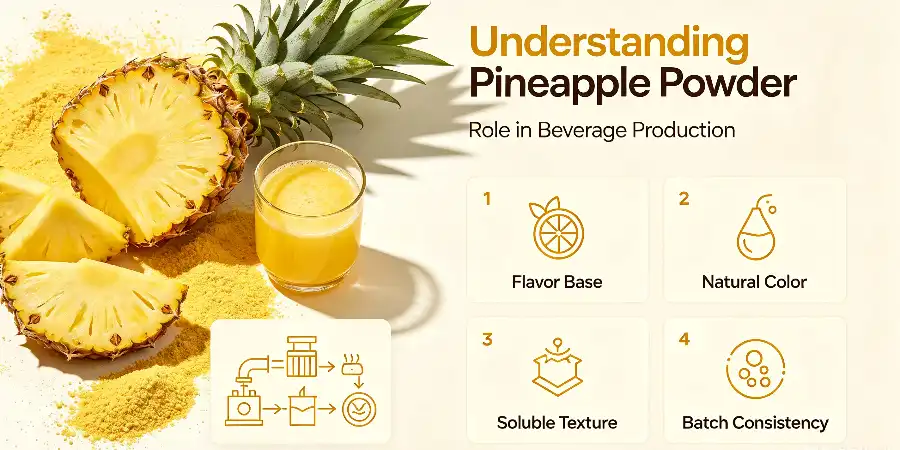
What Makes This Ingredient Essential for Modern Beverage Formulation
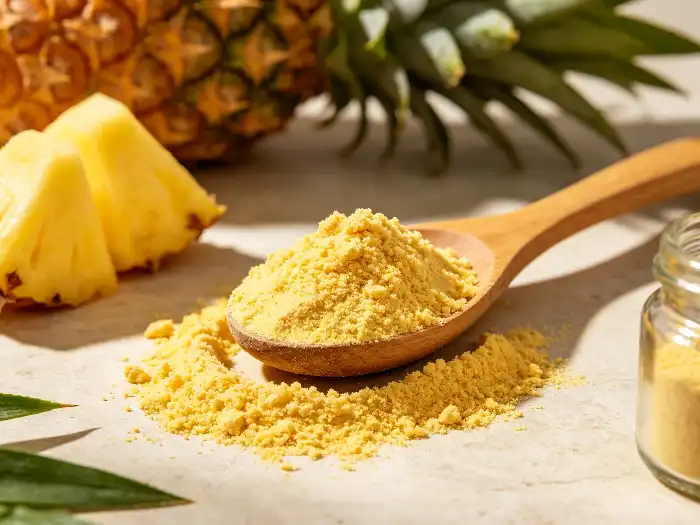
This natural ingredient comes from high-quality Ananas comosus fruit and is made using advanced dehydration technologies. It fixes several problems in manufacturing at the same time. Fresh fruit needs to be shipped and processed right away through a cold chain. Dried fruit, on the other hand, stays the same for a long time, which makes inventory management easier and cuts down on waste. Naturally, the dehydration process focuses on flavours. This means that makers can get better flavour profiles with smaller amounts compared to juice concentrates or purees.
In addition to adding flavour, the retained bromelain enzyme content makes the product more useful, which is appealing to health-conscious customers today. When made properly, this proteolytic enzyme backs up claims of gut health, putting drinks in the growing market segment for functional drinks. The standard format makes sure that each batch is the same, which is very important when going from small pilot runs to full business numbers.
Processing Methods That Determine Quality Outcomes
The market for pineapple powder is dominated by two main production methods, and each has its own benefits. Through hot air streams, spray-drying technology quickly transforms liquid fruit extract into fine particles. This method produces powders with excellent solubility, making them ideal for instant drink mixes and ready-to-drink formulations that require rapid dissolution. To protect heat-sensitive compounds, controlled heat exposure requires careful temperature management. However, modern processing equipment helps minimize nutrient degradation while maintaining product quality.
Freeze-drying is the best way to process things because it removes moisture under pressure at temperatures below zero. This gentle method keeps more volatile flavour molecules and fragile nutrients, giving the food better sensory qualities and more enzyme activity that is kept. In exchange, production costs go up, and bulk density usually goes down, which changes how much it costs to ship and how much space is needed.
Key Criteria to Consider When Choosing Pineapple Powder for Beverage Production
Before making a decision about a supplier, beverage developers and procurement managers have to look at a number of technical factors. The decision framework includes more than just comparing prices; it also looks at quality assurance, functional performance, and the reliability of the supply chain.
Quality Certifications and Purity Standards
Organic approval from the USDA or an organization similar to it in the EU is proof that the farming and processes are done without using pesticides. These qualifications are becoming more important as clean-label trends take over the North American and European markets. Verification that there are no GMOs adds another layer of transparency. This is especially important when going after high-end beverage markets or export markets with strict biotechnology rules.
Heavy metal content and germ safety are quality standards that can't be lowered. Reliable suppliers give full Certificates of Analysis that show the levels of lead, cadmium, and mercury, as well as total plate counts and pathogen testing. To make sure that their supply chain can be tracked, beverage makers should ask for batch-specific paperwork instead of general specification sheets.
Functional Performance Factors
Solubility traits have a direct effect on how well a product is made and how good it is in the end. Water-dispersible powders that dissolve quickly in water without sticking cut down on mixing time and keep finished drinks from settling. Testing samples in your unique production settings, like the temperature, pH level, and mixing tools you use, shows how they work in the real world, which lab tests might not be able to do.
Premium ingredients are different from cheap alternatives because of their flavour intensity and consistency. When tropical notes change without warning from batch to batch, it causes problems with recipes and customer issues. Established sellers keep flavours consistent by following strict rules for finding and mixing raw materials, which are often backed up by evaluations from sensory panels.
When making functional drinks, it's important to pay close attention to the levels of bromelain activity. Some processing methods lower enzyme activity on purpose to stop protein interactions in dairy-based drinks, while others keep enzyme activity at its highest level to support gut health. Figuring out what your specific formulation needs are can help you decide whether high-activity or stabilized-enzyme variants will help you reach your product development goals more effectively.
Supply Chain Reliability and Economic Considerations
Consistent availability of pineapple powder is very important when launching new drinks or maintaining existing distribution. If a supplier has a well-established network for sourcing tropical fruits and sufficient processing capacity, the risks caused by crop failures or seasonal supply gaps are reduced. Clear communication about lead times helps improve production planning, especially when coordinating the delivery of multiple ingredients for complex formulations.
Different types of packaging affect both how fresh the ingredients are and how easy it is to use them. Manufacturers who make a lot of things and run continuous production lines can use bulk formats in multi-layer moisture-barrier bags. Smaller packaging sizes are good for contract makers who work with different client recipes or brands that are trying a lot of different SKUs with different tropical profiles.
Comparing Leading Types of Pineapple Powder for Beverage Use
There are many different types of products on the market, and each one is designed to meet the needs of a particular purpose and meet certain performance goals. Knowing these differences can help you avoid expensive re-formulation processes and get your products on the market faster.
Organic Versus Conventional Sourcing
Organic versions cost more, but they let you reach growing markets that want approved natural materials. Consumer surveys show that people are always willing to pay more for drinks that have organic fruit in them, especially functional drinks and premium juice blends. In line with clean-label standards, the certification process makes sure that no synthetic fertilisers or pesticides touch the raw fruit.
Conventional choices save money in ways that matter for marketing value-level beverages or large-format commercial goods. Even though they aren't organic, these vegetables meet high food safety standards thanks to modern farming methods and thorough residue testing. Most of the time, the choice is based on the target shopping outlets and brand positioning strategy, not on safety issues.
Whole Fruit Powder Versus Juice Powder Formulations
Processing whole fruits includes both the flesh and the pulp, which makes products with more natural fibre and a fuller mouthfeel. These types work great in smoothies, protein shakes, and other functional drinks where body and texture make the product seem better. The fibre content backs up claims about gut health and helps you feel full in meal replacement uses.
Juice powders concentrate flavour compounds without adding bulk from fibre, so they can make very tropical profiles with very low doses. This style works great for clear drinks with bright flavours, like flavoured waters, sports drinks, and boozy cocktails, where taste and clarity are more important than texture. The lower particle load keeps the water from becoming cloudy and gives it a real tropical taste.
Spray-Dried Versus Freeze-Dried Selections
Spray-dried products are the most common way to make commercial beverages because they are cheap and easy to dissolve. The small particles move easily through liquids, and the lower wetness level makes the food last longer in a normal warehouse setting. Because it's easy to make more of these, this format is perfect for brands that want to expand from regional to national distribution.
Premium names that focus on keeping as many nutrients as possible and making the food smell better, like freeze-dried options. The process keeps flavour compounds that evaporate during thermal drying, giving the food a more authentic fresh-fruit taste. Craft beverage makers and high-end functional drink brands often use freeze-dried ingredients to make their drinks taste different and justify their higher prices.
Recommended Pineapple Powder Suppliers for Beverage Production
To find trustworthy supply partners, you need to look at more than just the abundance of products. You need to look at their technical skills, quality systems, and customer service infrastructure.
Established Brand Options
A number of providers have built strong reputations by supplying business beverage makers with consistent quality and complete documentation for ingredients such as pineapple powder. Anthony's Goods ships certified organic items to major US markets with affordable transportation options and clear third-party testing. Their documentation usually includes allergen statements and country-of-origin statements that help make regulatory compliance easier.
Terrasoul Superfoods has strict quality standards that natural beverage brands like. Their goods are certified organic and non-GMO, and each batch comes with a certificate of authenticity (COA). Their customer service team knows how hard it can be to make drinks and can offer technical advice during the product development process.
Navitas Organics has a lot of experience in the natural products business and has set up delivery networks that make it easy to get products to both sides. Heavy metal testing and microbial analysis are part of their quality assurance protocols, which meet the strict needs of the beverage industry.
Evaluating Wholesale Suppliers
Dedicated B2B sellers offer more than just branded consumer goods. They can also customise products and have flexible minimum order numbers, which are better for beverage makers. When looking at possible partners, we suggest getting samples from more than one production run to check for consistency. Testing for flavour and stability under your own specific processing conditions shows how it works in the real world, which is something that standard sheets can't do.
Independent of what the supplier says, third-party laboratory verification is a very important way to make sure the quality. Look for sellers who send their goods to ISO-accredited testing labs on a regular basis and are happy to share the results of the tests that check for heavy metals, pesticide residues, and microbiological safety. This openness shows a culture that cares about quality rather than just meeting the bare minimum requirements.
Being close to your production sites affects both transportation costs and carbon footprint, which is becoming more and more important to beverage brands that care about the environment. When compared to direct imports that need to go through customs, domestic suppliers or those with established US warehouses cut down on lead times and make communication easier.
Best Practices for Using Pineapple Powder in Beverage Production
For integration into finished beverage products to go smoothly, formulation chemistry, storage guidelines, and regulatory compliance frameworks must be carefully thought out to protect both product quality and brand reputation.
Optimal Formulation Techniques
Dosage rates for Pineapple Fruit Powder usually fall between 0.5% and 3% by weight, but this depends on the desired flavour intensity and whether the ingredient is mainly used as a natural flavouring or a functional component. Tropical flavour profiles work best when powders are fully hydrated before other ingredients are added. This helps prevent proteins or fats introduced later in the mixing sequence from masking the flavours.
Bromelain may interact with casein or whey proteins in dairy-based or protein-fortified drinks, so it's important to think about how it works with these proteins. If these interactions are not managed properly, they can lead to bitter off-flavors or changes in texture that are not desirable. If needed, heat treatment after adding the ingredients can turn off the enzymes, or choosing stabilized-enzyme versions takes care of any worries while keeping the tropical flavour delivery.
Changing the pH affects both how the flavours taste and how stable the ingredients stay over time. Tropical fruit flavours come out best in slightly acidic environments (pH 3.5 to 4.5), which also kills microbes and makes the food last longer. Functional drinks with alkaline ingredients might need buffering systems to keep the pH level stable while they are being stored.
Storage and Handling Protocols
Controlling moisture is the hardest part of keeping the quality of ingredients while they are stored in warehouses and used on the production floor. Even hygroscopic powders that are stored in damaged packaging can absorb moisture from the air, which can cause them to clump and make it harder to dose correctly and dissolve. When parts of bags will be used in more than one production run, we store opened packages in sealed containers with desiccant packs.
Temperature resilience is important, especially for enzyme-active types, because too much heat weakens bromelain. Keeping temperatures below 77°F in climate-controlled storage keeps useful qualities intact for the normal shelf life of an ingredient. Light can also change the stability of colours, so dark storage areas and opaque packages stop oxidative browning that could ruin the look of the final drink.
Regulatory Compliance and Labeling
Clean-label ingredient statements are very important to people today who are looking closely at beverage labels for artificial ingredients. Natural tropical fruit powder lets you list the ingredients in a clear way, without using chemical names that make people nervous. When a product has an organic certification, making sure that all of its ingredients, including this one, meet organic standards saves the certification and keeps the product from having to go through expensive reformulation or label changes.
Because of the chance of cross-contamination during processing, allergen labelling rules apply even to tropical fruit ingredients. Suppliers should give allergy labels that show if common allergens like tree nuts, soy, or dairy are handled by processing equipment. This paperwork helps make sure that finished products are labelled correctly and protects people who are sensitive to food.
For nutritional contribution calculations, suppliers need to give accurate compositional data, such as the amount of vitamin C, natural sugars, and fibre in whole fruit varieties. These numbers are used to figure out the Nutrition Facts panel and back up any claims about the food's nutrients that are made on the packaging or in marketing materials.
Conclusion
There are many technical and business factors to consider when choosing the best tropical fruit ingredient, such as pineapple powder, for making drinks. These factors go beyond just delivering flavor. Manufacturers of high-quality products compare solubility, enzymatic activity, and certification levels with specific formulation requirements and brand positioning goals. When comparing the performance of spray-dried and freeze-dried processing methods, it becomes clear that each method is suitable for different types of beverages and price points. Third-party testing, transparent documentation, and responsive technical support from reliable suppliers demonstrate consistent quality and help beverage manufacturers overcome formulation challenges. Using proper storage methods and understanding regulatory compliance requirements protects both ingredient functionality and brand reputation throughout the product development and launch stages.
FAQ
How do I determine the right enzymatic activity level for my beverage formulation?
How much bromelain you need depends on the type of product you're making and how it's supposed to work. Low-activity or enzyme-deactivated variants are often better for smoothies or protein drinks that contain dairy because they stop protein breakdown and the development of a bitter flavour. On the other hand, digestive health drinks that are designed to supplement enzymes need ingredients that are very active and have been shown to be effective using standard units. Instead of general "enzyme-active" claims, ask for COAs that show real enzyme activity levels. Also, make sure the stability of the product is tested under the conditions that apply to your recipe. Many suppliers offer different levels of activity, so you can find the right enzyme levels for your needs without affecting the taste or texture.
What solubility testing should I conduct before committing to large-scale orders?
The most useful performance information comes from practical dissolution tests done in your real production circumstances. Mix samples at the percentage you want to use in your drink, using the same water temperature, pH level, and speed of the mixing equipment that is used on the production line. Check to see how quickly the powder mixes without clumping, if any sediment forms after standing, and if the tropical flavour stays the same. Testing at both the lowest and highest temperatures that can be predicted during keeping shows that the solubility may change with the seasons. Documenting these results sets a baseline for what to expect and gives you objective comparison data when looking at different suppliers or product grades.
Partner With Wellgreen for Premium Pineapple Powder Solutions
Wellgreen Technology is your dedicated pineapple powder company. They have the skills to serve functional beverage makers and nutrition brands all over North America. Our processing facilities are GMP-certified and make both spray-dried and freeze-dried versions. You can customise the specs to meet your unique needs for solubility, flavour intensity, and enzymatic activity levels. We keep a large inventory to make sure that the supply chain is always reliable, even during busy holiday seasons. Our thorough quality documentation includes batch-specific COAs, heavy metal analysis, and microbial testing that meet strict US and EU food-grade standards.
Our technical team can help you with formulation, so you can get the most out of your product's use rates and avoid problems with protein interactions or pH stability as it's being developed. Our flexible minimum order amounts and quick sampling options help you get your products to market faster, whether you need an OEM relationship, private label services, or a large ingredient supply for well-known beverage lines. Beverage developers and procurement managers can email our team at wgt@allwellcn.com to talk about their specific needs and ask for samples that show how committed we are to quality. Visit wellgreenherb.com to see our full selection of botanical extracts and learn how our experience as a supplier can help your functional beverage recipes.
References
1. Smith, J.R., & Chen, L. (2022). "Enzymatic Stability in Fruit-Derived Beverage Ingredients: Processing Methods and Functional Retention." Journal of Food Science and Technology, 59(8), 3142-3156.
2. Anderson, M.K. (2021). "Clean Label Trends in North American Beverage Markets: Consumer Preferences and Ingredient Selection Criteria." Food Industry Research Quarterly, 34(2), 78-94.
3. Williams, D.P., Thompson, R.L., & Garcia, S. (2023). "Comparative Analysis of Spray-Drying and Freeze-Drying Technologies for Tropical Fruit Powder Production." International Journal of Food Engineering, 19(4), 445-462.
4. Martinez, C.A., & Lee, H.Y. (2022). "Bromelain Activity Preservation in Dehydrated Pineapple Products: Impact of Processing Parameters." Enzyme and Microbial Technology, 156, 109912-109924.
5. Roberts, E.N. (2023). "Supply Chain Management for Tropical Fruit Ingredients: Quality Assurance and Traceability in Global Sourcing." Food Quality and Preference, 105, 104756-104768.
6. Zhang, W., Kumar, P., & O'Brien, T. (2021). "Functional Beverage Formulation: Optimizing Natural Fruit Powder Integration for Enhanced Sensory and Nutritional Profiles." Beverage Technology and Innovation, 12(3), 201-218.