
Why Choose Rosemary Extract Antioxidant for Natural Preservation?
2026-09-28 14:00:03
Rosemary extract antioxidant is not a drop-in swap for BHA, BHT or TBHQ. It partitions differently between fat and water, carries a different thermal profile, and reaches the market by a different regulatory route. Reformulations fail when a project starts as a one-for-one substitution and only later discovers that the dose, the point of addition and the validation method had to move together. Where our other rosemary articles cover what the ingredient does, which categories it suits and how stability is measured, this one covers the decision to switch and the route from BHA, BHT or TBHQ to a natural system. The grades assumed here are those Wellgreen manufactures — 5% to 20% carnosic acid in lipid-soluble oil and water-dispersible powder (Rosemary Extract Antioxidant) — and the framework works the same way in a food plant and a feed mill.
What You Are Actually Switching To
Rosemary extract carries two fractions that behave differently inside a product. Carnosic acid and carnosol are lipid-soluble diterpene phenols and carry most of the activity; rosmarinic acid is the water-soluble partner. In a bulk oil or a fat coating, the lipid-soluble fraction disperses where oxidation begins; in an emulsion, sauce or cooked meat system, the water-soluble fraction reaches the oil–water interface that a purely fat-soluble antioxidant never contacts. Loussouarn and colleagues showed that the two diterpenes act through different mechanisms.
The Dose Has to Be Re-Expressed
A synthetic antioxidant is specified as one molecule at a defined percentage. A rosemary grade is specified as an extract standardised to a carnosic acid content, so inclusion rates are quoted on that basis. When a formula moves across, translate the old dose into the active you will actually add: a grade at the top of the standardisation range supplies more carnosic acid per kilogram than one at the bottom, and "2% of extract" therefore means two different things.
Heat Behaviour Differs From Tocopherols
Where the old system was paired with mixed tocopherols, note that the two do not respond to heat alike. Birtić and colleagues reviewed carnosic acid as a diterpene phenol whose function persists through thermal processing, while tocopherols are consumed under repeated high-temperature load. A formula that relied on tocopherols for a frying or extrusion step may need rebalancing rather than a straight substitution.
The Reformulation Decision Checklist
Four questions decide whether the switch is worth doing, and they should be answered before bench work starts.
- Regulatory and label pressure. Is the driver a market where the synthetic option is restricted, under review or already removed? The EU denial of authorisation for ethoxyquin as a feed additive is the clearest recent example of an antioxidant leaving a market by regulation.
- Customer requirement. A retail customer asking for a shorter ingredient list is a stronger driver than an internal preference, because it arrives with a deadline.
- System fit. Does the matrix contain a fat phase for the lipid-soluble fraction, and does the process bring the antioxidant into contact with it? An all-aqueous, low-fat system is not where rosemary extract performs at its best.
- Cost basis. Are you comparing price per kilogram of raw material, or cost per tonne of finished product? The two rankings do not always agree.
There are also good reasons not to switch. A fragile flavour profile, a matrix with no fat phase, or a short remaining shelf life may argue for keeping the current system and reopening the question at the next reformulation window. Both sides are set out below; the food and feed scenarios are treated in more depth in our companion article on rosemary extract antioxidant applications in food and feed preservation.
| Dimension | Synthetic system (BHA / BHT / TBHQ) | Rosemary extract system | What it means for the switch |
|---|---|---|---|
| Active and specification | Single defined molecule | Extract standardised to carnosic acid, typically 5%–20% | Dose must be re-expressed on a carnosic acid basis |
| Solubility | One phase only | Lipid-soluble plus water-soluble fraction | Emulsion and meat systems gain coverage; bulk oil needs only the fat-phase route |
| Thermal behaviour | High, but under regulatory and consumer scrutiny | Retains function through baking and frying; complementary to tocopherols rather than interchangeable with them | Re-check the point of addition and the thermal load at that point |
| Regulatory route | Permitted additives with use limits and continuing review | EU food additive E 392 with maxima set per food category; US route via the GRAS listing for rosemary in 21 CFR 182.20 | Authorisation is not a use level — the file has to be reopened for each market and category |
| Label outcome | "Chemical preservative" wording | Declared as a rosemary extract or extract of rosemary | Consumer-facing benefit is real but must be checked against the target market's naming rules |
| Validation burden | Established data set | Product-specific; endpoints can disagree | Budget an accelerated test, a real-time confirmation and a sensory panel |
Reformulating from BHA, BHT or TBHQ: The Sequence
Work through these steps in order. Skipping the baseline is the most common reason a reformulation cannot be explained afterwards.
Step 1 — Capture a Baseline You Can Beat
Before anything changes, record what the current system achieves: peroxide and anisidine values on the fat, TOTOX through an accelerated storage test, sensory notes at the end, and the process conditions the antioxidant survives. These are the acceptance criteria for everything that follows.
Step 2 — Re-Standardise the Dose
Pick the carnosic acid grade the target now calls for, then set the inclusion rate from the baseline rather than from the old synthetic number. Where the previous system used a blend, replace the synthetic component first so that the effect is visible.
Step 3 — Choose the Format and the Point of Addition
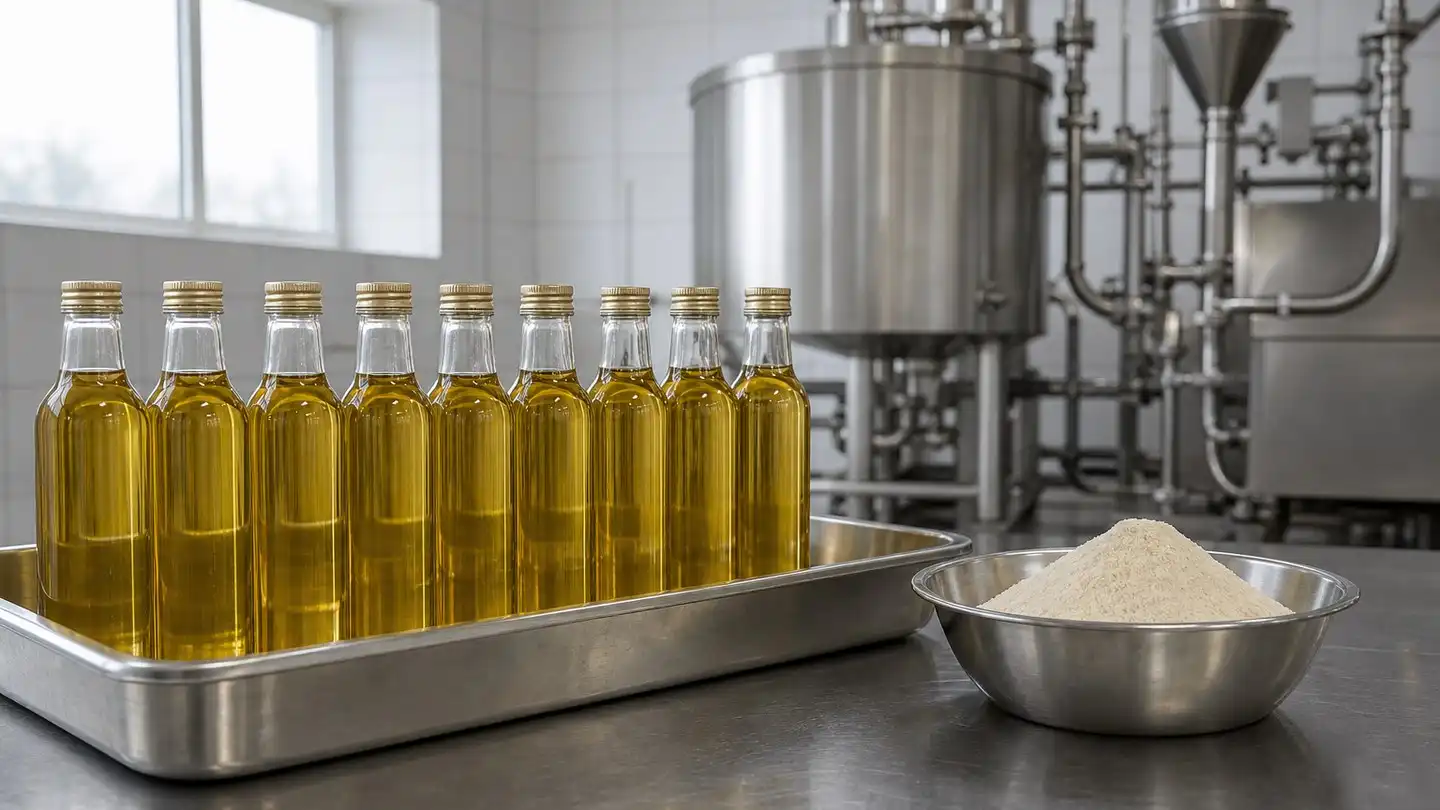
Format is decided by the line. A lipid-soluble oil goes into the fat stream; a water-dispersible powder goes into the dry blend. Where both routes exist, the fat route puts the antioxidant closer to the phase that will oxidise and away from mineral premixes carrying catalytic metals. The food and supplement grade used in dry systems is described on the rosemary extract powder page.
Step 4 — Re-Dose the Partners
Antioxidant systems are rarely single ingredients. Ascorbyl palmitate, tocopherols and chelators such as citric acid were tuned around the old active and need re-tuning. Ibsch and colleagues tested ascorbyl palmitate, a tocopherol mix and rosemary extract alone and in combination in soybean oil: a mixture of ascorbyl palmitate and rosemary extract beat TBHQ on one endpoint and trailed it on another — a trade-off visible only when both endpoints are measured.
Step 5 — Re-Check the Process Window
Confirm the temperature at the point of addition and the order of addition. Where a mineral premix is present, dosing the antioxidant into the fat before that fat meets the premix keeps the active and the catalyst apart — a formulation decision, not a dosing decision.
| Step | What changes | Data you need before signing off | Failure if skipped |
|---|---|---|---|
| 1. Baseline | Nothing — measurement only | Peroxide and anisidine values, TOTOX, sensory notes, process temperatures | No acceptance criteria; results cannot be interpreted |
| 2. Dose | Inclusion rate re-expressed on a carnosic acid basis | Grade specification, certificate of analysis for the lot used | Over- or under-dosing against an unknown active level |
| 3. Format and point of addition | Oil into the fat stream, powder into the dry blend | Line diagram, dosing accuracy, dispersion check | Antioxidant present but not where oxidation occurs |
| 4. Partners | Tocopherols, ascorbyl palmitate and chelator levels re-tuned | Combination trial data on your own matrix | Interaction that helps on paper and hurts in the pack |
| 5. Process window | Order of addition, temperature at the addition point | Conditioning and thermal history at that point | Active consumed before the product reaches the shelf |
| 6. Validation | Accelerated test, real-time confirmation, sensory panel | Matched endpoints against baseline, blind sensory protocol, colour measurement | A switch that is claimed rather than demonstrated |
Proving Equivalence: Do the Two Systems Really Match?
Equivalence has to be proven on your product, with endpoints that match the way your product fails. Three tests carry the argument:
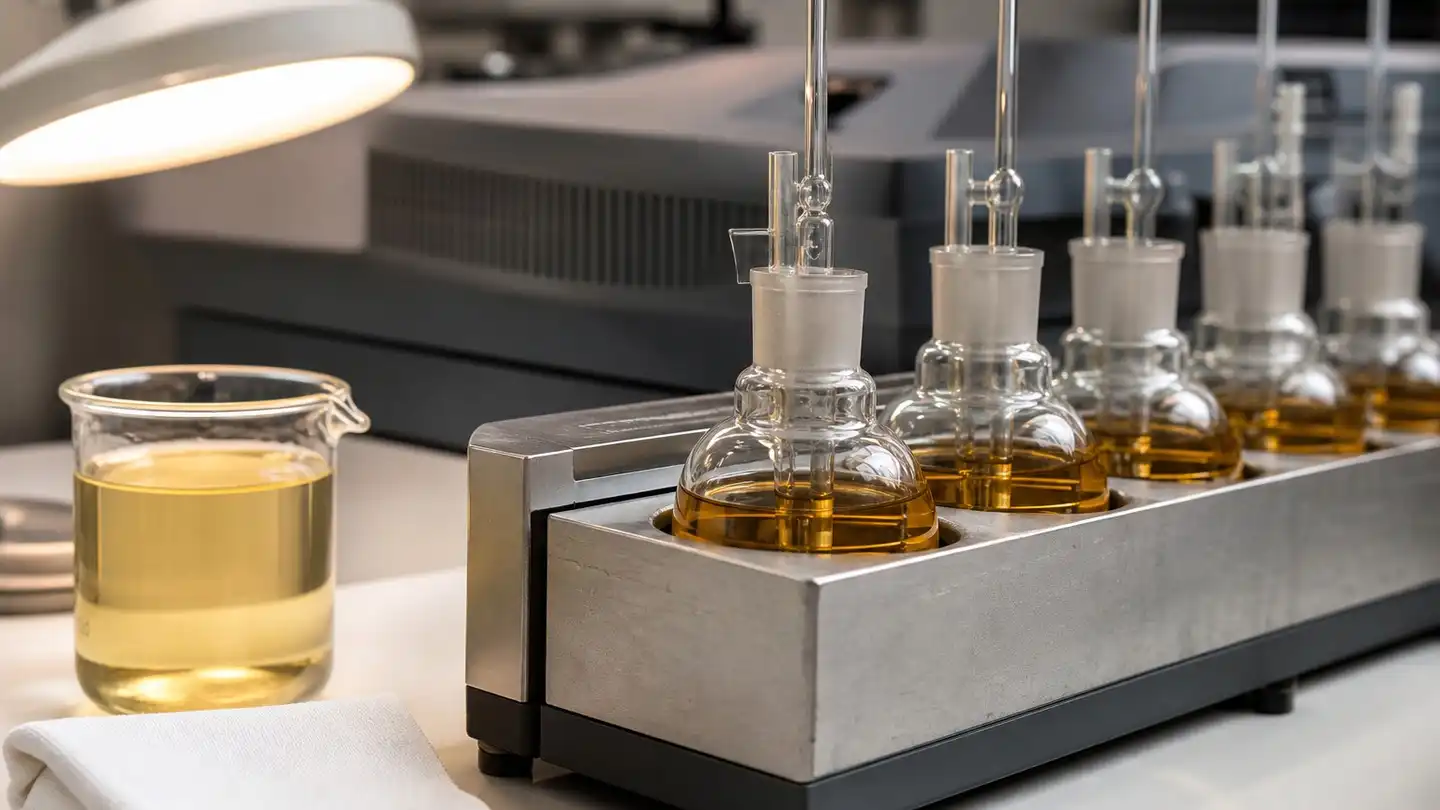
- Accelerated oxidation. A heated storage trial with peroxide and anisidine values combined into TOTOX is the standard approach for oils and fats. Endpoints can disagree: in the soybean oil study cited above, the ascorbyl palmitate and rosemary extract combination produced a statistically lower TOTOX than TBHQ, while its Oxidative Stability Index measured by Rancimat at 120 °C was statistically lower than TBHQ's. An isothermal induction-time test and a storage trial answer different questions.
- Real-time shelf life. Run at least one confirmation batch at the storage conditions the product will meet, for the duration you intend to claim. Accelerated data predicts; it does not replace the confirmation.
- Sensory and colour. A blind panel comparing reformulated and reference samples at the end of the test catches the two failures chemistry panels miss: a flavour tail and a colour shift that consumers notice before any analytical value moves.
Build a redundancy margin into the result. A formulation that only just matches the baseline has no allowance for lot-to-lot variation in the raw material or the extract's active content. Where several lines run different thermal histories, validate on the harshest line and treat that as the fleet number.
Label and Compliance Consequences
The two main routes into market behave differently, and the difference has to be planned before artwork is signed off. In the European Union, extracts of rosemary are authorised as the food additive E 392 under Regulation (EC) No 1333/2008, with maximum permitted levels set per food category in Annex II rather than as a single figure. In the United States, rosemary is listed among the essential oils, oleoresins and natural extractives generally recognised as safe in 21 CFR 182.20. Authorisation is not the same as an unrestricted use level.
Feed sits in a separate legal framework. Additives for animal nutrition are governed by Regulation (EC) No 1831/2003, and authorisation is granted additive by additive and species by species, so a switch that is straightforward in food can be a regulatory project in feed. Reopen the regulatory file whenever the market, category, species or label wording changes; the supporting technical background is in our guide to how rosemary extract antioxidant is used in food manufacturing.
Costing the Switch: Per Tonne, Not Per Kilogram
Ingredient price lists are the wrong basis for this decision. The number that matters is the antioxidant cost per tonne of finished product, which follows from the inclusion rate, the carnosic acid content of the grade you buy, the handling step the format requires, and the one-off validation cost. A higher-grade extract at a lower inclusion rate can cost less per tonne than a cheaper grade dosed harder. Because prices, grades and volumes move with the market, we publish no figures: the calculation has to run on your inclusion rate, your line and your shelf life.
Three inputs are worth collecting before the model is finalised: a declared active content with the method behind it, batch-level certificates of analysis, and both delivery formats from one source.
Where Reformulations Go Wrong
- Flavour tail. The volatile fraction is what a panel detects first; grades produced by supercritical CO₂ extraction and molecular distillation carry a lower volatile load, so the extraction route belongs in the specification.
- Colour migration. A rosemary fraction in a pale system can shift appearance over storage — a matrix question, caught by measuring colour at the end of the storage trial, not the start.
- Matrix mismatch. Dosing a fat-phase antioxidant into a low-fat aqueous system, or into a dry blend that never contacts the fat, leaves the protection in the wrong place.
- Single-endpoint validation. Reporting the one favourable test hides the trade-off the reformulation actually made.
- No re-validation after the switch. Changing the fat source, the process temperature or the extract grade without repeating the trial invalidates the original data.
Conclusion
Moving from a synthetic antioxidant to rosemary extract is a reformulation, not a substitution. Four decisions carry the risk: the grade and the dose on a carnosic acid basis; the format and the point of addition; the re-tuning of partner antioxidants; and an equivalence programme that measures the endpoints your product actually fails on. Wellgreen supplies 5% to 20% carnosic acid grades in oil and water-dispersible powder, each batch released against a certificate of analysis.
Planning a switch? Send your matrix, fat source, process temperatures and target shelf life, and our technical team will reply with a grade recommendation and a trial sample. Write to wgt@allwellcn.com or review the feed-grade specification on the Rosemary Extract Antioxidant product page.
FAQ
Can rosemary extract replace BHA, BHT or TBHQ one for one?
Not on a weight-for-weight basis. The dose has to be re-expressed on a carnosic acid basis, because a rosemary grade is an extract standardised to an active content rather than a single molecule. Where a system used a blend, replacing the synthetic component first keeps the change measurable.
Does the switch change what goes on the label?
Yes, and the wording follows the market. In the EU the additive is declared as E 392 with its permitted level set by food category; in the US the route is the GRAS listing for rosemary; feed is a separate framework with its own authorisation per additive and species. Confirm the wording and the permitted level for each market and category before the artwork is finalised.
This article is technical and commercial information for food and feed industry professionals. It is not medical advice and not a dosing instruction. Inclusion levels, regulatory status and label claims depend on the target market, the product category and your own product data, and must be confirmed against the applicable regulation and your own validation results before commercial use.
References
- Regulation (EC) No 1333/2008 of the European Parliament and of the Council of 16 December 2008 on food additives (extracts of rosemary, E 392). EUR-Lex, CELEX:32008R1333. eur-lex.europa.eu
- Commission Implementing Regulation (EU) 2022/1375 of 5 August 2022 concerning the denial of authorisation of ethoxyquin as a feed additive belonging to the group of technological additives. EUR-Lex, CELEX:32022R1375. eur-lex.europa.eu
- Regulation (EC) No 1831/2003 of the European Parliament and of the Council of 22 September 2003 on additives for use in animal nutrition. EUR-Lex, CELEX:32003R1831. eur-lex.europa.eu
- 21 CFR 182.20 — Essential oils, oleoresins (solvent-free), and natural extractives (including distillates); entry for rosemary (Rosmarinus officinalis L.). eCFR. ecfr.gov
- Ibsch, R. B. M., Reiter, M. G. R., Bertoli, S. L., & de Souza, C. K. (2020). Study of pure and combined antioxidants for replacing TBHQ in soybean oil packed in pet bottles. Journal of Food Science and Technology, 57(3), 821–831. doi:10.1007/s13197-019-04112-x · PMC7026364
- Alizadeh-Salmani, B., Arab, M., Sadeghizadeh-Yazdi, J., Yousefi, M., & Jambarsang, S. (2025). Buckwheat and rosemary as antioxidants in soybean oil: comparison with synthetic antioxidant. Food Science & Nutrition, 13(6), e70416. doi:10.1002/fsn3.70416 · PMC12152201
- Aruoma, O. I., Halliwell, B., Aeschbach, R., & Löligers, J. (1992). Antioxidant and pro-oxidant properties of active rosemary constituents: carnosol and carnosic acid. Xenobiotica, 22(2), 257–268. doi:10.3109/00498259209046624
- Birtić, S., Dussort, P., Pierre, F. X., Bily, A. C., & Roller, M. (2015). Carnosic acid. Phytochemistry, 115, 9–19. doi:10.1016/j.phytochem.2014.12.026
- Loussouarn, M., Krieger-Liszkay, A., Svilar, L., Bily, A., Birtić, S., & Havaux, M. (2017). Carnosic acid and carnosol, two major antioxidants of rosemary, act through different mechanisms. Plant Physiology, 175(3), 1381–1394. doi:10.1104/pp.17.01183