
Quillaja Extract Applications in Modern Animal Feed Additive Formulas
2026-09-25 14:00:01
Quillaja Extract has moved from novelty to line item on premix bills of materials. Buyers now ask less about what the ingredient is and more about what it does to the mixer. Wellgreen’s Quillaja Extract product page lists saponin specifications from 10% to 98% in powder form, with liquid formats available — the range in which handling behaviour starts to diverge between grades.
This article works on the plant side of that problem: where surface activity turns into foam or airborne dust, how carriers and dilution steps shape blend behaviour, which additive neighbours deserve a bench check, whether to feed the ingredient dry or in liquid, and which control points keep batch records comparable. The mechanism is covered in how quillaja saponins work in animal feed; commercial acceptance and lot verification belong to the companion buying guide on this site.
Why Surface Activity Is a Process Variable
Saponins are surface-active by structure. The property that makes a saponin useful in an emulsion also makes foam whenever water, air and mechanical energy meet — not a defect, but a predictable consequence to design around.
It is also not a fixed number. Mitra and Dungan measured how temperature, salt concentration and pH change the solution properties of quillaja saponin, so its behaviour in your plant water is not its behaviour in a supplier’s laboratory water. Two sites running one formula on different water specs can see different foam behaviour with no change in the raw material. Treat process water, ionic load and mechanical energy as formulation variables.
Foam in the Wet Route
Foam appears wherever powder meets water under energy: liquid premix make-up tanks, spray-on systems, in-line dilution stations, recirculation loops. The trigger is usually how the ingredient is introduced — powder dumped into a moving liquid stream, a pump entraining air, a return line discharging into a part-filled tank, or a high-shear mixer run longer than the batch needs.
The countermeasures are process design, not chemistry. Hydrate the base premix slurry first and bring the saponin in afterwards; keep tanks as full as the batch allows so less surface is free for air entrainment; check whether the transfer pump draws air on the suction side; and give the batch a settling window before transfer instead of stirring it to the moment of discharge. Verify spray patterns with the finished liquid rather than with water alone.
Record foam height and drainage time in the batch record. Foam is a cheap early indicator, and its trend will show whether a change came from the water supply, the carrier or the incoming lot before a customer does.
Dust, Static and Containment in the Dry Route
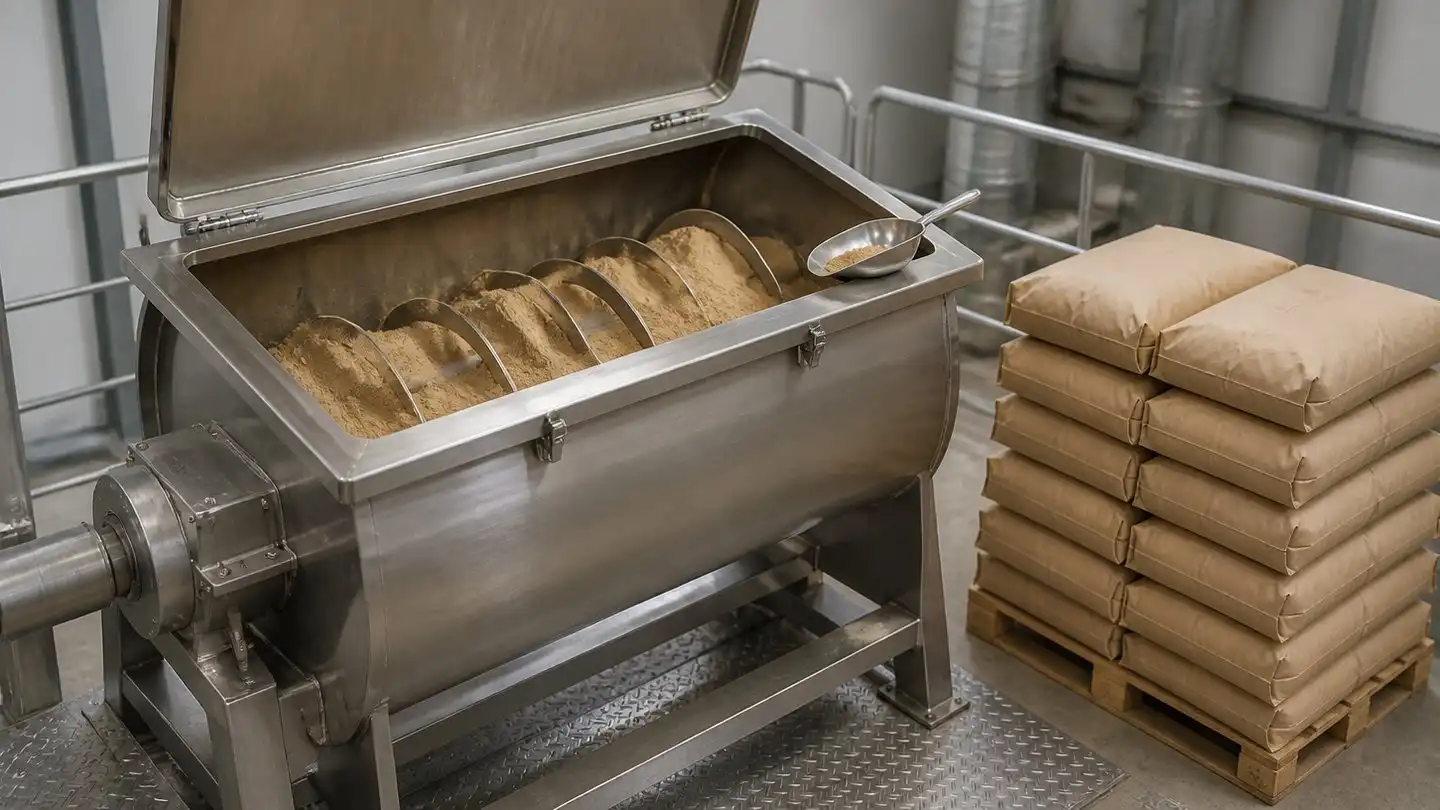
Spray-dried extract powders are fine and low in bulk density, and high-concentration grades are weighed in very small mass per batch. That produces airborne dust and electrostatic charging, which is why industrial hygiene belongs in the formulation review and not only in the safety file. The EFSA opinion on a feed additive built from Quillaja saponaria and Yucca schidigera powders found the additive not irritant to skin but irritant to the eyes and respiratory system, so inhalation and eye exposure are the recognised handling hazards for this ingredient family.
The engineering response is familiar from other fine actives: contained unloading, local exhaust ventilation at the weighing station, hopper and sieve, and closed transfer where the layout allows; manual open weighing of a 90%-plus grade should be a documented decision. Charge also varies with ambient humidity, so review liners, hoses, sieves and grounding with your engineering and safety teams instead of assuming a previous site’s practice transfers. Adhesion to mixer walls matters for a second reason — carryover. A clinging powder can appear in the next batch at a level no scale ever dispensed, so clean-out between segregated campaigns belongs in the same discussion as the addition point.
Carriers, Grades and Dilution Practice
The published description of commercial quillaia extract is a useful starting point. Unpurified extracts contain roughly 20% saponins on a solids basis and semi-purified spray-dried material reaches about 75–80%; the powder as sold contains carriers such as lactose and maltodextrin, while the concentrate may also be sold as a liquid at approximately 550 g/L solids. The carrier is therefore part of the delivered product’s physical behaviour, not an inert footnote, and an exchange rate between two grades is not linear, because carrier fraction and powder morphology change with saponin content.
Choosing a carrier system
A workable carrier choice answers four questions. Does the blend still flow after the saponin is added? Is the particle size distribution close enough to the base premix to avoid segregation in conveying and bagging? Is the water activity acceptable for the most moisture-sensitive active in the same bag? And is the blend dustier than the starting powder?
Sugar-based carriers are convenient but hygroscopic, so they suit a dehumidified plant better than one where bags are opened in humid air. Mineral diluents flow well and resist caking, but their density sits far from an extract powder, which moves the segregation risk from the mixer to the conveying line. Record the reasoning behind the choice; whoever changes the carrier next will need it.
Dilution ladders
High-concentration grades should not be weighed directly into a bulk mixer. A stepwise pre-dilution — saponin into carrier, then that pre-blend into a larger carrier quantity — keeps each weighed mass large enough for the scale to resolve and reduces the chance that a small charge is lost to the wall or the filter. Document the ladder, and validate it by assaying the pre-blend rather than the finished feed alone.
Compatibility With Other Additives in the Same Premix
Most incompatibility questions in a premix are scheduling and physics questions rather than chemistry questions, and two principles organise them. A surfactant changes how other powders wet, disperse and dust, so adding it can alter the behaviour of neighbours even when nothing reacts. And the saponin’s own behaviour depends on pH and ionic strength, both of which the rest of the premix sets. Where a natural antioxidant such as rosemary extract shares the premix, the two are routinely used together; each is simply treated as an active with a defined addition point.
Table 1 lists the combinations worth a bench check. It is a set of checks to run rather than a list of forbidden pairings, because the outcome depends on carriers, addition points and your own equipment.
| Additive class in the same premix | What the interaction actually is | Where it bites | Control to write on the formula card |
|---|---|---|---|
| Enzymes (phytase, xylanase, protease) | Different carrier systems, different particle sizes, and two heat-sensitive actives in one bag | Steam conditioning and pelleting; shared weighing and dust area | Fix the addition point for both after a blend-uniformity check; base the heat allowance on your own conditioning data, not on a generic figure |
| Direct-fed microbial cultures | Viable cultures need low water activity; sugar-based saponin carriers are hygroscopic | Moisture migration inside the premix bag and over shelf life | Match carrier systems, keep the premix closed and dry, and verify counts at end of shelf life |
| Organic acids and acidifiers | Saponin solution behaviour is pH-dependent | Liquid premix make-up and finished liquid pH | Measure pH at make-up and in the finished liquid, not only in the incoming water |
| Mineral and trace-element premixes | High ionic load and divalent cations change solution behaviour; density mismatch drives segregation | Liquid addition into mineral-rich blends; dry blending over a dense base | Use a dedicated pre-dilution where the mineral load is high; sample across the blend, not only at the discharge outlet |
| Antioxidants | No documented chemical incompatibility; the shared risk is process (heat, air, moisture) | Conditioning, conveying and storage of the finished premix | Treat both as actives with a defined addition point and confirm by assaying the finished premix |
| Fat-soluble vitamin premixes | Surfactant behaviour changes how powders wet and disperse in an oil-bearing base | Dispersion quality in oil- or fat-coated premixes | Run a bench wetting and dispersion check before scaling to the mixer |
| Co-blended botanical saponins (for example yucca) | Two saponin sources change total surface activity, not just total saponin content | Foam in the wet route; dustiness and flow in the dry route | Repeat the handling checks after any change in the saponin ratio; see how saponin purity is selected for a feed formula |
Heat is the variable most often underestimated. Inborr and Bedford showed that feed enzymes lose activity under steam pelleting, and the lesson generalises: any active placed upstream of a conditioner inherits that step’s temperature, moisture and residence time. Whether saponin belongs before or after conditioning is answered with your own line data.
Co-blending carries a regulatory dimension that formulation teams should not discover late. A formally assessed feed additive of Quillaja saponaria and Yucca schidigera powders, declared at 3.58% saponins, was assessed by EFSA at 250 mg/kg complete feed for chickens for fattening with a 20-fold margin of safety, and the panel could not conclude on efficacy. Those are the conditions of a regulatory assessment for one defined additive: not inclusion-rate guidance, and not transferable to a blend of your own design, since under the EU framework each single additive in a mixture must meet the conditions of its own authorisation.
Dry Premix or Liquid Addition
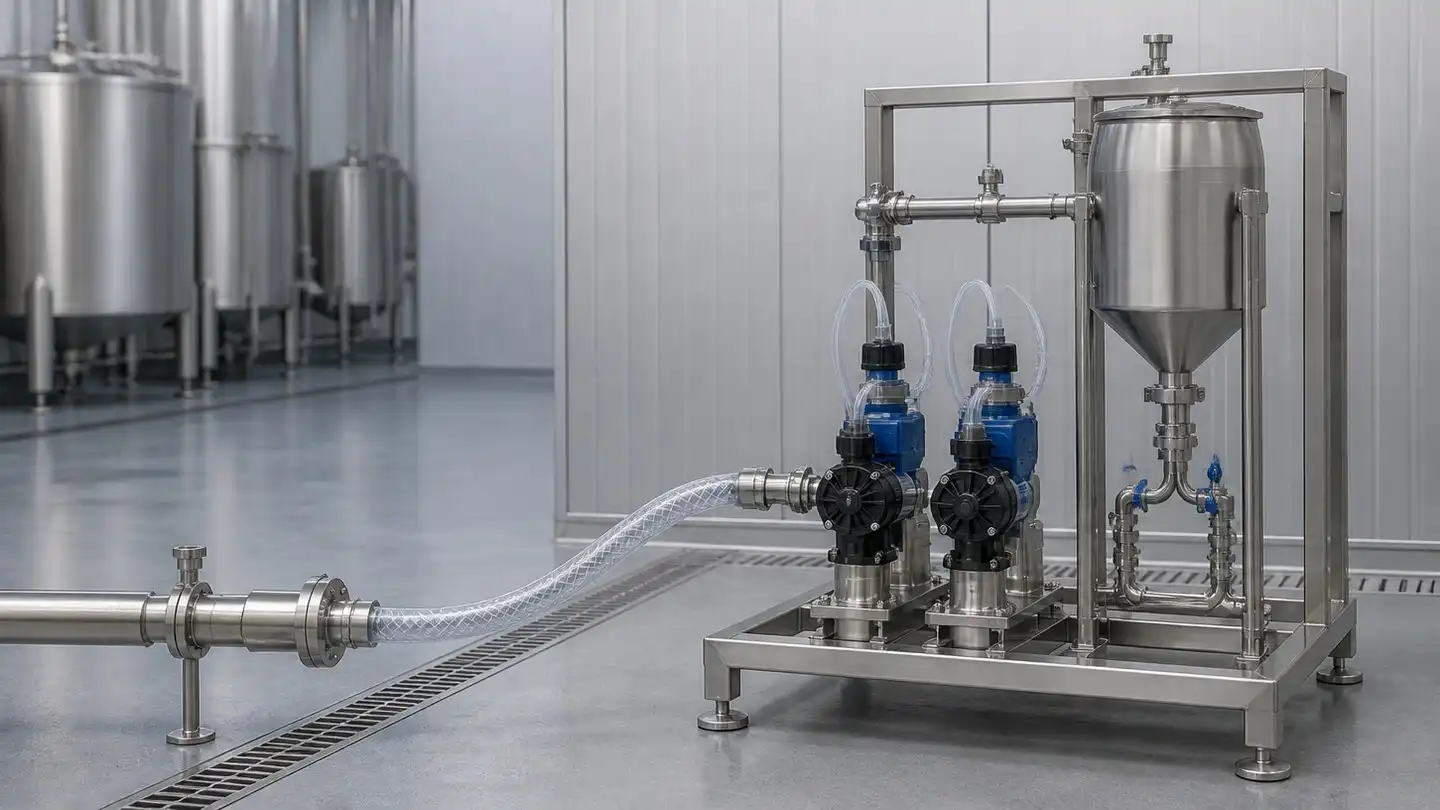
Both routes work, and the choice is usually made for plant reasons. Dry dosing suits a site that already runs contained powder handling and has the scale resolution for small charges. Liquid addition suits a site with metering pumps, stainless tankage and a validated cleaning regime, and it removes airborne dust at the price of adding water to a dry business. Hybrids are common: concentrate where the plant already handles liquids, dry for mash and pelleted lines. If both run, keep one analytical method and one reporting basis for saponin content.
| Decision criterion | Dry premix route | Liquid addition route |
|---|---|---|
| Dosing accuracy at small inclusion | Depends on scale resolution; a dilution ladder is usually required at high grades | Volume or mass metering can be precise at low rates once the pump is calibrated |
| Dust and exposure control | The main engineering task: contained unloading, exhaust at weighing and sieving | Largely eliminated at the point of use if make-up is enclosed |
| Foam risk | Low in the dry blend; appears only if the premix is later slurried | The main engineering task: fill level, pump type, aeration and settling time |
| Heat exposure | Set by the conditioning and pelleting step downstream | Set by the conditioner plus any post-pellet application window |
| Logistics and storage | Bags or totes; simple, but hygroscopic carriers need a dry store | Tankage, temperature control and shorter practical hold times |
| Quality verification | Assay the pre-blend and the finished premix by HPLC | Assay the make-up liquid and the finished premix; add solids content and pH to the routine |
| Water and feed interaction | No added water activity from this ingredient | Introduces water activity, microbial control and freeze or separation risk |
| Changeover flexibility | Grade or carrier changes are quick; segregation checks are needed each time | Concentration changes are easy; cleaning validation between products is not |
Batch Consistency: Control Points and Sampling
Consistency is built from a few control points with named owners. Incoming identity and saponin content come first: UV spectrophotometry is useful as a screen, while HPLC-based quantification is the reference for identity and concentration. Moisture and water activity follow, since they govern caking and microbial risk in any premix carrying a sugar-based carrier. Particle size and flowability decide whether the powder will segregate on the way to the bag.
Blend uniformity is the control point most often tested too narrowly. Sampling only at the discharge outlet can report an even blend while the top of the mixer is not, so cover the beginning, middle and end of the discharge plus at least two depths with a consistent sampling tool. Set the coefficient of variation target with your quality team and hold the plan steady; a changing plan makes every trend unreadable. On the liquid route, add solids content, pH and ionic strength, and define a maximum make-up hold time.
Finished-product verification is the last line and is worth keeping separate from incoming-goods testing. A 2026 study in Poultry Science developed an HPLC–QToF-MS confirmation approach for quillaja saponins in poultry feed products and reported non-quillaja saponin sources, including Madhuca longifolia marker saponins, in commercial material. The assay on the incoming certificate and the assay on the finished premix answer different questions, and both are needed for batch release. Retention samples labelled with grade, carrier and addition point close the loop, and any change — carrier, grade, saponin ratio, water source or addition point — reopens a defined bench verification.
Questions Formulators Ask
Does the saponin figure on the specification predict mixing behaviour?
No. It describes how much surfactant is present per kilogram, not how the powder flows, dusts or disperses. Two lots at the same saponin content can handle very differently if the carrier or particle size distribution differs, which is why a handling sample is worth requesting before a first production batch.
Should the ingredient go in before or after the heat step?
That depends on your line. Published work on feed enzymes under steam pelleting shows that thermostability is ingredient- and process-specific, and the same discipline applies here: establish the survivable window from your own conditioning data.
Can two saponin sources be used in one premix?
Yes in principle, and a regulated additive built from quillaja and yucca powders has been through a formal assessment — for one defined additive. Blend saponin sources yourself and you are creating a new product with its own documentation, stability and verification obligations.
Build the Process Around the Ingredient
Wellgreen supplies standardized Quillaja Extract as a brownish yellow fine powder across the bands published on its product page — 10% to 30% for standard feed grade, 60% to 80% for high-concentration work and 90% to 98% for ultra-purity applications — with customized concentrations and liquid formats available. That page lists FAMI-QS, ISO 22000, HALAL and KOSHER certification, batch certificates of analysis covering saponin content, moisture, ash, heavy metals and microbiological purity, and samples from 1 kg. Send your process conditions — carrier in use, addition point, mash or pelleted line, and water spec — to wgt@allwellcn.com and the technical team will confirm the grade that fits.
Disclaimer: this article provides technical and commercial information for feed industry professionals. It is not veterinary advice and it is not a recommendation of inclusion rates. Usage levels, regulatory status and any label claims must be confirmed against the requirements of the target market and the user’s own product data.
References
1. Joint FAO/WHO Expert Committee on Food Additives (2004). Quillaia Extracts. WHO Food Additives Series 48. https://www.inchem.org/documents/jecfa/jecmono/v48je03.htm
2. Mitra, S., & Dungan, S. R. (1997). Micellar properties of Quillaja saponin. 1. Effects of temperature, salt, and pH on solution properties. Journal of Agricultural and Food Chemistry, 45(5), 1587–1595. https://doi.org/10.1021/jf960349z
3. San Martín, R., & Briones, R. (1999). Industrial uses and sustainable supply of Quillaja saponaria (Rosaceae) saponins. Economic Botany, 53(3), 302–311. https://doi.org/10.1007/BF02866642
4. Francis, G., Kerem, Z., Makkar, H. P. S., & Becker, K. (2002). The biological action of saponins in animal systems: a review. British Journal of Nutrition, 88(6), 587–605. https://doi.org/10.1079/BJN2002725
5. Inborr, J., & Bedford, M. R. (1994). Stability of feed enzymes to steam pelleting during feed processing. Animal Feed Science and Technology, 46(3–4), 179–196. https://doi.org/10.1016/0377-8401(94)90138-4
6. EFSA Panel on Additives and Products or Substances used in Animal Feed (FEEDAP) (2024). Safety and efficacy of a feed additive consisting of Quillaja saponaria Molina and Yucca schidigera Roezl ex Ortgies (Magni-PHI®) for all poultry species and ornamental birds. EFSA Journal, 22(7), e8849. https://doi.org/10.2903/j.efsa.2024.8849
7. EFSA Panel on Food Additives and Flavourings (FAF) (2019). Re-evaluation of quillaia extract (E 999) as a food additive. EFSA Journal, 17(3), e5622. https://doi.org/10.2903/j.efsa.2019.5622
8. Regulation (EC) No 1831/2003 of the European Parliament and of the Council of 22 September 2003 on additives for use in animal nutrition. OJ L 268, 18.10.2003, pp. 29–43. https://eur-lex.europa.eu/eli/reg/2003/1831/oj
9. Thalhamer, B., Himmelsbach, M., Klampfl, C. W., & Buchberger, W. (2026). Confirmation of quillaja saponins and detection of Madhuca adulteration in commercial poultry feed by HPLC–QToF-MS. Poultry Science, 105(9), 107177. https://doi.org/10.1016/j.psj.2026.107177
10. Osbourn, A. (2026). The Cinderella tree, Quillaja saponaria – a soap story. Plants, People, Planet, 8(2), 439–451. https://doi.org/10.1002/ppp3.70108