Yucca Extract: an Inevitable For Animal Health
2026-04-17 14:19:45
The stems of Yucca schidigera are used to make yucca extract powder, which is now an important natural ingredient in animal feeding and health management. This plant extract, which is high in steroidal saponins and bioactive polyphenolics, helps solve important problems in aquaculture, pet health, and cattle production. It has been shown to lower ammonia levels, improve gut health, and make feed more efficient. This makes it a smart choice for formulators working on cutting edge animal health solutions. This extract is more than just a supplement; it fixes real metabolic and environmental problems that hurt the health and productivity of many kinds of animals.
Understanding Yucca Extract Powder and Its Benefits for Animal Health
What Makes Yucca Extract Powder Unique?
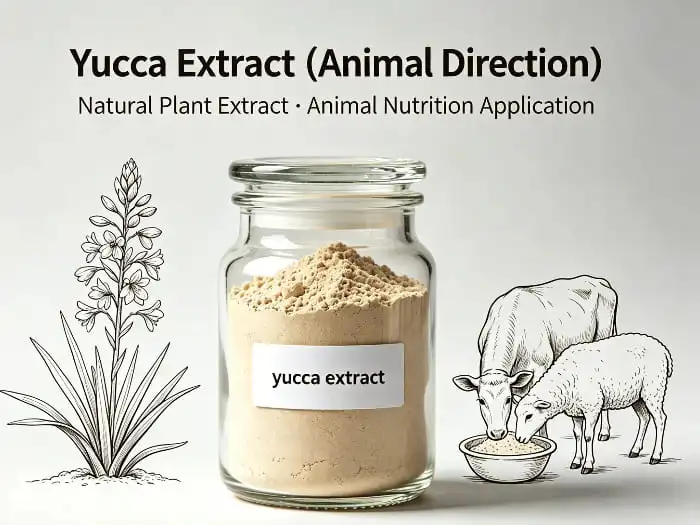
The plant product comes from Yucca schidigera, a desert plant that grows naturally in the southwestern US and Mexico. Unlike other plant powders, this extract has a high concentration of steroidal saponins, which are usually standardized between 30% and 60% but can be anywhere from 10% to 98% based on the needs of the application. As natural urease inhibitors, these saponins stop the enzymes in animals' gut systems from turning urea into ammonia. The extract also has resveratrol and other polyphenolic substances that help the immune system and keep joints healthy by reducing inflammation.
Core Health Benefits Across Species
Animal health experts know that yucca has many benefits for animals. In farms with chickens and pigs, the extract lowers the amount of ammonia in the air by 40 to 60 percent, which directly eases breathing problems and speeds up weight gain. Because saponins bind to ammonia molecules before they escape into the air, the mechanism works in the gut and keeps animals and humans safe.
Another important benefit is that it improves digestion. Yucca saponins are natural surfactants that help the gut wall absorb nutrients better, especially fats and vitamins that dissolve in fat. Better protein utilization helps ruminants, while better feed conversion rates help animals that only eat one type of food. Agricultural research institutions have done studies that show adding 60–120 grams per metric ton of feed can make feed more efficient by 3–7%, which directly leads to economic gains.
The anti-inflammatory properties of saponins and flavonoids are what make them good for joint health. When yucca is added to the diets of senior pets and working animals, joint pain goes away and movement gets better. The compounds change the pathways that cause inflammation without the harmful effects that come with synthetic options. This makes them good for long-term supplementation programs.
Species-Specific Applications
There are clear differences between how different animals react to yucca extract. When broiler chickens are kept in tight spaces with little air flow, they are less likely to die from ascites. Pig farms say that their animals are biting their tails less, which is probably because the air quality is better and they are less stressed. When yucca is added to total mixed rations, dairy cows produce more milk. This is because yucca helps the body digest protein better and lower metabolic stress.
Animals that people keep as pets also gain greatly. When dogs and cats eat foods that contain yucca powder, their poop smells much better because the saponins bind hydrogen sulfide and ammonia in the hindgut. Because of this, the ingredient is especially useful in high-end pet foods aimed at people in cities who are worried about controlling smells inside.
How to Choose and Use Quality Yucca Extract Powder for Animal Health?
Certification and Quality Standards
Quality starts with having the right licenses that prove safety and consistency. Good Manufacturing Practice (GMP) compliance makes sure that production areas meet standards for pharmaceuticals, while ISO 9001 approval shows that quality management systems are strong. For some organic markets, getting USDA Organic or EU Organic certification is necessary. This means making sure that the ingredients aren't genetically modified and that the extraction method doesn't use any synthetic solvents.
Third-party tests by labs like Eurofins or SGS verifies the presence of heavy metals (like lead, cadmium, mercury, and arsenic), pesticide residues, and microbes (like total plate count, coliforms, Salmonella, and E. coli). Before shipping, good suppliers give batch-specific COAs that list these factors. Validated UV spectrophotometry methods should be used to check the saponin content instead of just titration, as this gives a more exact reading of the amount of bioactive compounds present.
Dosage Guidelines by Animal Type
The right rates for addition depend on the species and the goal of the production. Here's what formulation experts need to know about dosing based on species:
Most poultry farms use between 60 and 100 grams of full feed per metric ton of chicken. Continuous supplementation works well for broilers during the grow-out stage. On the other hand, slightly higher rates (80–120 g/MT) may be needed for layer diets to deal with ammonia problems in high-density housing. The extract stays stable through pelleting processes and keeps working even after being exposed to temperatures between 80°C and 85°C, which are usual in the feed manufacturing process.
Formulations for pigs usually have between 60 and 120 grams per metric ton. Higher inclusion rates are better when it's hot outside, because air flow makes ammonia evaporate faster. During the important time after weaning, nursery pig feeds may use up to 150 g/MT to support digestive health and lower environmental stress. The saponins don't react with other popular feed additives like phytase, acidifiers, or probiotics, which lets formulators use a variety of methods.
When ruminants are given supplements, the microbial communities in their stomach need to be carefully thought through. 50 to 100 grams of total mixed feed per metric ton is good for both dairy and beef cattle. The saponins can change the way rumen ferments, which could increase the production of propionate while decreasing the release of methane. This is good for both output and the environment.
Most pet food uses aim for 200 to 500 ppm (parts per million) in the final product. In terms of amounts, this means adding about 0.02% to 0.05% to rice or wet food. At these amounts, the extract still tastes good, and it can go through high-pressure extrusion cooking without losing many of its active compounds.
Safety Considerations and Contraindications
When used at the suggested levels, yucca extract is very safe for wildlife of all kinds. Standard feeding trials have shown that there have been no major negative effects. Because it comes from nature and has been used for a long time in native diets, it is generally thought to be safe. In the US, it is called GRAS (Generally Recognized As Safe), and in the EU, it is allowed as a feed additive.
If the inclusion rate is too high compared to what the manufacturer suggests, you should be careful because saponins in very high concentrations could possibly change the ability of red blood cells to pass through membranes. This is not a problem as long as you stay within the recommended dosage amounts. Studies of interactions show that using this substance with popular nutritional supplements, medicines, or processing aids used in animal feed production does not have any negative effects.
Bulk Procurement and Sourcing Strategies for Yucca Extract Powder
Evaluating Supplier Reliability
Thoroughly checking out suppliers is the first step to building long-lasting relationships. Key signs of dependability include owning or having direct contracts with growing sites that make it possible to track down raw materials and make sure there is a steady supply. When suppliers take care of their own farms, it shows that they are committed to quality control from harvesting to processing. Manufacturing sites should have up-to-date GMP and ISO certifications, as well as audit trails that can be looked over.
The ability to provide technical help is what sets exceptional suppliers apart from average ones. Look for partners that can help you with formulation, give you data on stability tests, and give you application support from animal nutritionists with a lot of experience. Quick responses to technical questions and a desire to send samples for test batches are signs of operations that care about customers and are in line with your product development needs.
Today's regulatory atmosphere makes supply chain transparency more important than ever. Good sellers give full paperwork, like origin certificates, non-GMO declarations, allergen statements, and letters of compliance for BSE and TSE. They keep strong quality systems that keep samples, allow batch tracking, and let people know right away about any problems in the supply chain or changes in quality.
Pricing Dynamics and Volume Strategies
The price is directly related to the amount of saponin in the soap. Higher standards need more concentrated extraction, which raises the cost of production. Standard 30% saponin powder is usually the most cost-effective choice for uses that don't need the highest level of effectiveness. When properly evaluated, premium 60% extracts often have lower cost-per-dose because they give twice as many active compounds for the same weight.
When you commit to a certain amount, you can get big savings of scale. Container-load quantities, which are usually 10 to 20 metric tons, are priced more favorably than pallet amounts. Supply deals that last a year and include deliveries every three months give budgets peace of mind and ensure capacity during times of high demand. Forward contracting methods protect against changes in the prices of raw materials, which is especially important for yucca root extract because it is an agricultural commodity.
Choosing how to package affects the total landing costs. Bulk packing in 25 kg kraft paper bags with PE liners has the lowest cost per unit and works best for people who buy a lot and have enough space to store it. Smaller pack sizes are easier to handle, but they cost more to package. Talking to your sellers about optimizing the packaging can help you find ways to cut costs that fit with your business's capabilities.
Navigating International Compliance
When you buy something across borders, you need to pay attention to the rules in both the exporting and importing countries. There are different rules for botanical extracts used in animal feed in the US, the EU, China, and other big markets. Different places have different rules about product registration, import permits, and customs classification codes, so you need to make sure your paperwork is in line with those rules.
International trade is made more difficult by the need for organic approval. In EU markets, USDA-NOP (National Organic Program) certification doesn't mean the same thing as EU Organic certification unless the seller also has EU Organic certification or works under equivalency arrangements. If you understand these details, you can avoid expensive delays at customs or having packages turned down because they don't have enough paperwork.
Depending on the rules of the target country, phytosanitary certificates and veterinary health certificates may be needed. Suppliers with a lot of experience keep in touch with inspection and certification groups, which speeds up the documentation process. By making sure that suppliers have these skills during the qualification process, problems with logistics that could affect production plans are avoided.
Real-World Applications and Case Studies Demonstrating Yucca Extract Powder's Value
Livestock Production Success Stories
In the southeastern United States, a vertically integrated chicken producer added yucca extract to the feed for 150 houses with 30,000 birds each. The amount of ammonia in the environment dropped by 52% at the bird level, which was matched by a 0.7% rise in comfort and a 3-point rise in the feed conversion ratio. Because there was less ammonia, the business was able to lower the rate of ventilation during the winter. This saved about $0.03 per bird in heating costs while keeping the air quality high.
In the Midwest, a pig farm added yucca to the meals of nursery pigs because they were having trouble breathing during the winter. The number of respiratory treatments dropped by 38% after eight weeks of continued use at 100 g/MT inclusion, and the average daily gain went up by 2.1% during the important 25- to 50-pound growth phase. When the company took into account lower medication costs and better growth performance, the return on investment was more than 4:1.
Companion Animal Applications
Premium pet food companies have started using yucca extract as an ingredient because it helps control smells, which is something that customers are worried about. A well-known grain-free dog food brand added 300 ppm of the extract to their mix for senior joint health. When consumers were polled six months after the product came out, 78% said they could smell a difference in the smell of their pet's poop. The anti-inflammatory properties of yucca also helped the brand's place in the competitive functional pet food market.
A small company that makes cat food for people who live in apartments in cities made a line of food that is especially good for controlling litter box smells. Using yucca extract as a main ingredient along with other plants, the product was able to command high prices and keep customers coming back for more. Testimonials from customers praised the ingredient's ability to control smells, proving that it really does help with real consumer problems.
Emerging Research and Future Applications
New studies are looking into how yucca can be used to make farming more sustainable. Early research with Pacific white shrimp shows that adding 500 ppm of feed lowers the total ammonia nitrogen in the culture water by 25 to 35 percent. This could mean that more shrimp can be kept in a space without adding more biofiltration equipment. This app could have a big effect on how much it costs to farm a lot of shrimp in land-based RAS plants.
Researchers looking into yucca's prebiotic benefits have found possible ways that go beyond just binding ammonia. The molecules of saponin associate with the microbiota in the gut, possibly helping the good bacteria and stopping the bad ones. This area of study could help yucca be used in gut health products in new ways, working with well-known prebiotics like fructooligosaccharides and mannanoligosaccharides.
Conclusion
Yucca extract powder is a scientifically proven and cost-effective way to solve many problems that modern animal agriculture faces. Its unique ability to lower ammonia emissions helps with both animal health and environmental compliance while also making the business more profitable by making feed use more efficient. Because the ingredient can be used for animals, pets, and aquaculture, it is a smart addition to formulators' ingredient libraries. Quality sourcing from certified suppliers guarantees consistent performance and compliance with regulations, which helps a product succeed in the long run in markets that are very competitive.
FAQ
How effectively does yucca extract reduce ammonia in animal facilities?
Controlled studies consistently demonstrate 40-60% reduction in atmospheric ammonia when yucca extract is included at recommended rates of 60-120 g/MT of feed. The effect is measurable within 7-10 days of continuous supplementation as the extract accumulates in the digestive tract and begins inhibiting urease enzyme activity. Environmental monitoring using calibrated ammonia sensors provides objective verification of this benefit.
What saponin concentration should I specify for livestock feed applications?
Most commercial livestock applications perform optimally with 30-40% saponin standardization, balancing efficacy with cost-efficiency. Premium pet food formulations targeting joint health or maximum odor control may justify 60% extracts. The choice depends on your formulation strategy—higher concentrations allow lower inclusion rates, potentially simplifying mixing and reducing overall ingredient inventory.
Does yucca extract maintain stability through pelleting and extrusion?
Yes, quality yucca extract powder maintains saponin activity through standard feed processing. The compounds remain stable at temperatures up to 120°C for the brief exposure times typical in pelleting (15-30 seconds). Extrusion cooking used in pet food manufacturing operates at higher temperatures but short residence times, preserving sufficient activity for efficacy. Stability testing data should be available from reputable suppliers to confirm performance in your specific processing conditions.
Partner with a Trusted Yucca Extract Powder Supplier
Wellgreen Technology specializes in manufacturing premium yucca extract powder standardized to your exact specifications, with saponin content ranging from 10% to 98%. Our GMP-certified facility and self-owned cultivation bases guarantee consistent quality and reliable supply for your formulation needs. We provide complete documentation including Eurofins and SGS third-party testing certificates verifying compliance with international standards for heavy metals and pesticide residues. Our technical team offers comprehensive support for dosage optimization and application guidance across all animal species. Contact us at wgt@allwellcn.com to discuss your bulk requirements and receive customized samples that demonstrate why leading nutraceutical brands trust Wellgreen as their preferred yucca extract powder manufacturer.
References
Cheeke, P.R. (2000). "Actual and potential applications of Yucca schidigera and Quillaja saponaria saponins in human and animal nutrition." Journal of Animal Science, Vol. 77, pp. 1-10.
Mader, T.L., Dahlquist, J.M., and Gaughan, J.B. (1999). "Wind protection effects and airflow patterns in outside feedlots." Journal of Animal Science, Vol. 77, pp. 2065-2073.
Colina, J.J., Lewis, A.J., Miller, P.S., and Fischer, R.L. (2001). "Dietary manipulation to reduce aerial ammonia concentrations in nursery pig facilities." Journal of Animal Science, Vol. 79, pp. 3096-3103.
Santacruz-Reyes, R.A. and Chien, Y.H. (2009). "Efficacy of Yucca schidigera extract for ammonia reduction in freshwater: effectiveness analysis and empirical modelling approach." Aquaculture, Vol. 297, pp. 106-111.
Oleszek, W. and Bialy, Z. (2006). "Chromatographic determination of plant saponins—an update (2002-2005)." Journal of Chromatography A, Vol. 1112, pp. 78-91.
Wang, Y., McAllister, T.A., Yanke, L.J., and Cheeke, P.R. (2000). "Effect of steroidal saponin from Yucca schidigera extract on ruminal microbes." Journal of Applied Microbiology, Vol. 88, pp. 887-896.